
REVIEW · WINE TASTINGS
Apulia: Guided Wine Tasting with Local Appetizers
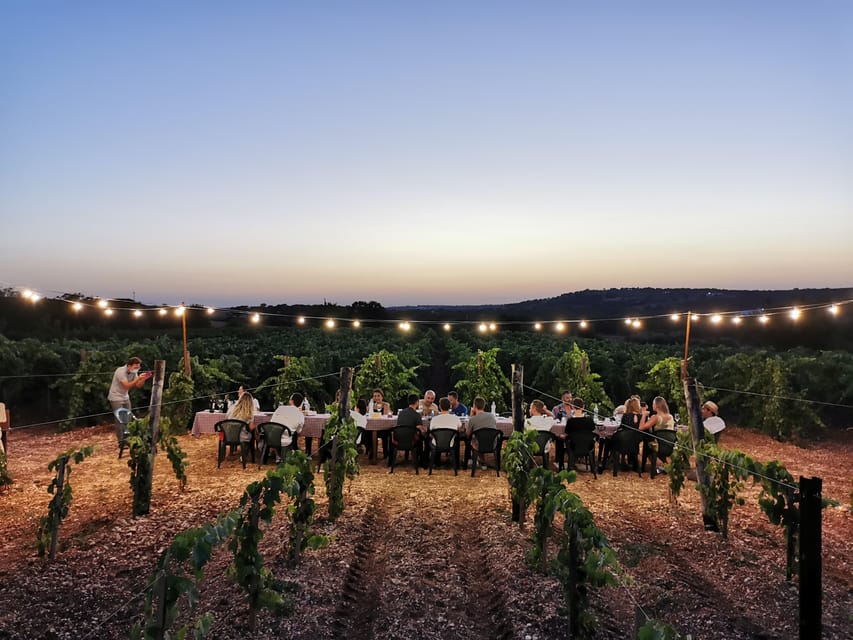
Good wine tastes better among the vines. This two-hour tasting at Vigna il Castagno brings you into the Itria Valley for four wines made from local grapes, plus homemade Apulian appetizers matched to each glass. I like the family-run feel and the chance to taste grape varieties you may not meet often outside Puglia. The main consideration is that the wines can change with availability, so the exact lineup is not guaranteed.
I also like the setting: a farm and vineyard rather than a formal city tasting room. Guides explain how the grapes are grown, harvested, and made into different wines, and the pace leaves room for conversation. At $37 per person, the experience offers solid value if you want local food, four pours, and a short vineyard walk in one easy outing.
Key points at a glance
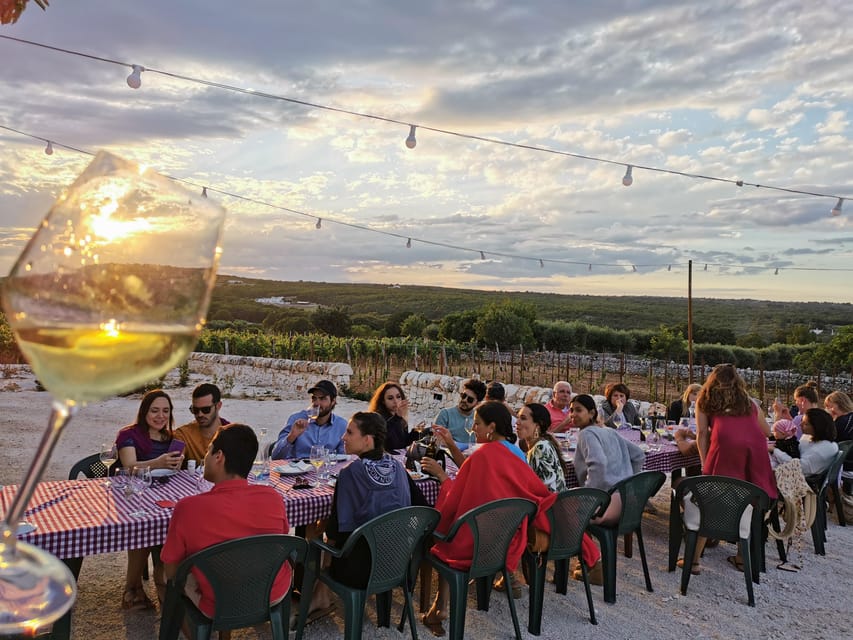
- Four indigenous-grape wines: Taste Verdeca, Moscato, Nero di Troia rosé, and Nero di Troia red in one sitting.
- One appetizer with each wine: Four typical Apulian bites are included, giving the tasting a clear food-and-wine focus.
- A real farm setting: You walk among the vines at Vigna il Castagno instead of sitting only indoors.
- English and Italian guidance: The live guide explains the grapes, wines, and farming traditions in either language.
- Strong atmosphere: The vineyard is especially appealing around sunset, when the setting becomes part of the experience.
- Easy booking terms: You can cancel up to 24 hours ahead for a full refund and reserve now without paying immediately.
A vineyard setting in the Itria Valley
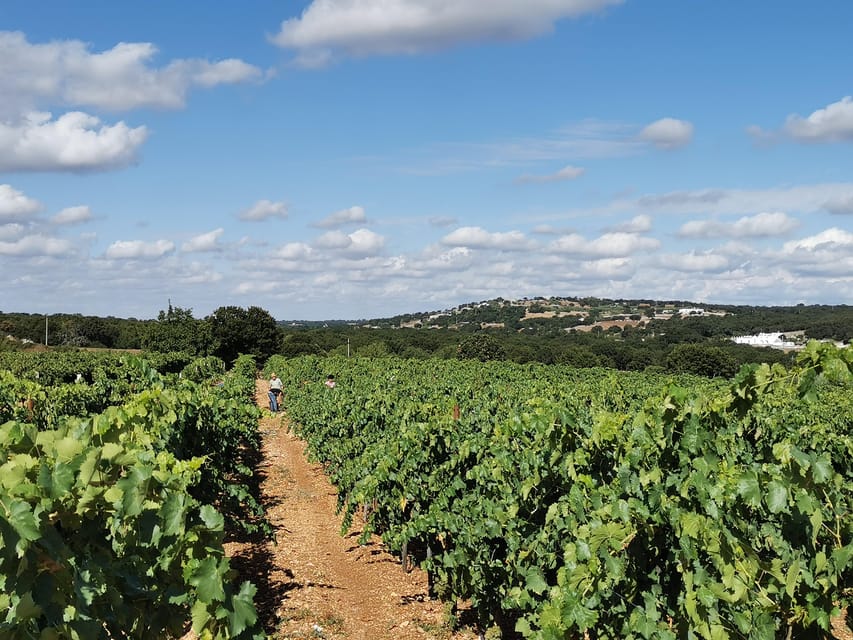
The best part of this tasting is the place itself. Vigna il Castagno is a working farm in Apulia, surrounded by rows of vines and tied closely to local agriculture. You are not simply handed four glasses at a counter. The visit begins with a walk through the vineyard, which gives the wine a sense of place before the tasting starts.
That short walk matters. It helps you connect the bottle with the soil, the vines, and the farming work behind it. The experience is not presented as a technical wine class alone. It links wine to the everyday food traditions of Apulia, a region where farms, olive trees, vineyards, and home cooking remain central to local life.
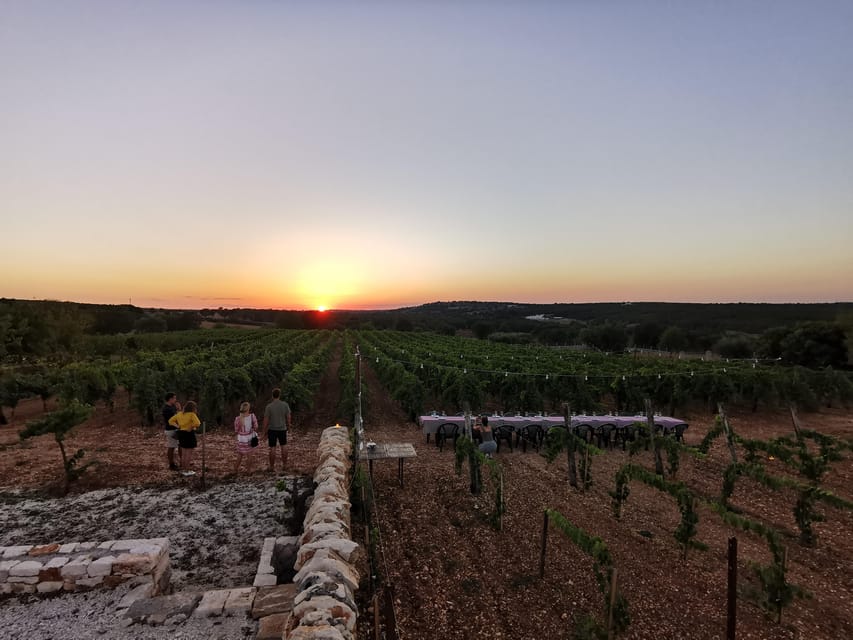
The setting has earned particularly warm praise for its beauty and calm atmosphere. A sunset visit can make the outing feel like one of the evening’s main events, not just a pre-dinner stop. Still, keep your expectations realistic: the supplied details describe a vineyard walk and guided tasting, not a long agricultural tour or a visit through extensive production facilities.
More Wine Tastings in Italy
- Florence: Chianti Wineries Tour with Wine Tasting
★ 4.5 · 10,071 reviews - Small-Group Wine Tasting Experience in the Tuscan Countryside
★ 5.0 · 7,392 reviews - Rome: Tuscany & Montepulciano Day Trip with Lunch & Wine Tasting
★ 4.5 · 5,232 reviews
What happens during the two hours
The experience follows a simple, sensible order. You walk among the vines, hear about Apulian grape growing, and then taste four wines with four small appetizers. The tasting is guided in English or Italian, and the host explains how each grape can produce a different style of wine.
You can expect the focus to remain on flavor and local practice rather than on advanced wine theory. That makes this a good fit if you enjoy wine but do not want a stiff classroom. Experienced drinkers still have enough variety to compare grape types, colors, sweetness, and structure.
The group moves through four wines, each paired with a typical Apulian bite. The food is not an extra purchase or a token bowl of snacks. It is part of the design of the tasting, helping you understand how local wines work with local ingredients.
The exact wine order may vary, and the available bottles can change. That small uncertainty is worth noting if you are booking specifically for one label. The listed selection gives you a strong idea of the intended tasting, but the host may make substitutions.
Four wines from local grape varieties
The selection covers white, rosé, and red styles, giving the tasting a useful range.
Pietra Viva Verdeca
Pietra Viva is a still white made from 100 percent Verdeca, an indigenous grape from the Valle d’Itria area. It is listed as IGP Valle d’Itria and has 12 percent alcohol by volume.
For you, this is a chance to taste a local white rather than a familiar international variety. Verdeca is part of the regional identity of the tasting, and its place at the start of the lineup gives you a lighter point of comparison before moving into the other wines.
Same region, a very different glass:
- Tuscany Day Trip from Florence: Siena, San Gimignano, Pisa and Lunch at a Winery
★ 5.0 · 21,634 reviews - Florence: Pasta Cooking Class with Unlimited Wine
★ 4.9 · 10,285 reviews - Florence: Pasta & Tiramisu Cooking Class with Unlimited Wine
★ 4.9 · 6,708 reviews - Florence: Pasta Cooking Class with Unlimited Wine
★ 5.0 · 6,413 reviews
1929 Moscato
The second white is 1929 Moscato, made entirely from Moscato di Trani grapes. It is described as a dry white wine with natural color, listed as IGP Puglia, with 12.5 percent alcohol by volume.
The dry style is useful here. Many people associate Moscato with sweet wines, so this bottle may challenge that assumption. If you usually skip Moscato because you expect a sugary pour, this is the wine to pay attention to. Its regional connection to Trani also adds another layer to the tasting.
July 1st Nero di Troia rosé
The rosé, called July 1st, is made from 100 percent Nero di Troia and listed as IGP Puglia. It has 12.5 percent alcohol by volume.
This is the middle point of the tasting, moving you from the white wines toward the fuller red. Nero di Troia is especially useful for comparison because it appears again in the final wine. You can consider how the same grape works in a rosé format and then in a red.
Terra Viva Nero di Troia red
Terra Viva is a still red made from 100 percent Nero di Troia. It is listed as IGP Puglia and has 13 percent alcohol by volume.
Ending with the red gives the tasting a natural progression. You move from lighter whites to rosé and then to the most substantial pour. That structure is easy to follow, even if you know little about wine, while experienced tasters can focus on what changes when Nero di Troia is presented in two different styles.
Why the food pairings matter
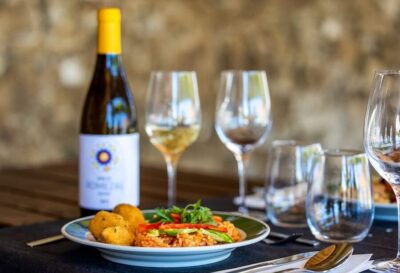
Each glass comes with a homemade appetizer. You receive four typical Apulian appetizers in total, one paired with each wine. The available information does not name the individual dishes, so you should not expect a fixed menu.
That flexibility is normal for a farm-based tasting. The point is to show how the wine fits with the food of the area, not to provide a restaurant meal with a printed menu. The snacks make the tasting more satisfying, but I would still treat them as appetizers rather than a full dinner.
The pairings also help casual drinkers. If a wine tastes sharp, dry, fruity, or full on its own, the food can change the balance. You gain a better sense of how local wine is enjoyed at the table, which is often more useful than memorizing tasting terms.
Several guests specifically found the antipasti generous and enjoyable. That is good news for an evening booking, when four tastings alone might leave you wanting more. If you have dietary restrictions, the supplied details do not state what substitutions are possible, so ask the provider before booking.
The guide makes the difference
The guide is central to this experience. The strongest feedback focuses on friendly, clear explanations and an easygoing tone. You are likely to get more from the tasting if you ask questions about the grapes, the harvest, and the farm’s move toward organic farming.
One guide named in the feedback is Vincenzo. He received special praise for helping arrange pickup and drop-off for one person, though you should treat that as individual assistance rather than a standard part of the package. Transportation is not listed among the included features.
The explanations cover how one grape can create different wines and how the grapes are harvested. That gives the visit more substance than a basic pour-and-leave stop. You can learn something useful without needing previous wine knowledge.
The tone also seems well suited to mixed groups. Couples, families, and groups of friends can enjoy the farm atmosphere, while serious wine drinkers can ask more detailed questions. It does not appear designed as a formal certification-style tasting, and that is probably a strength for most holidaymakers.
A family-run feel rather than a polished production show
Vigna il Castagno is presented as a family business with a friendly atmosphere. That matters in Apulia, where the appeal often comes from meeting people connected to the land rather than ticking off grand attractions.
You may also find olive oil, wine, and spices for sale at the farm. This gives you a chance to take home something connected to the tasting, though purchases are not part of the $37 fee. The selection can be useful if you want a practical souvenir instead of another decorative item.
The farm setting does not mean the experience is rough or disorganized. The visit is described as well organized, with clear explanations and a smooth flow. At the same time, you should expect a personal agricultural setting, not a large commercial winery with elaborate visitor facilities.
That distinction helps set the right mood. Come for local character, generous hospitality, and a direct connection to Apulian food and wine. Do not book it expecting a grand museum-style wine attraction.
How much value do you get for $37?
At $37 per person, the price is fair for a two-hour outing that includes a vineyard walk, four glasses of wine, four appetizers, and a live guide. You are paying for more than the liquid in the glasses. The cost also covers the setting, the explanations, the food pairings, and the chance to taste several indigenous grapes in one place.
The value is strongest if you are already planning an evening in the Itria Valley. A vineyard visit can replace a simple aperitivo and add more local context. It also works well as a relaxed activity between sightseeing days, since the experience is long enough to feel worthwhile without taking over an entire day.
The value is weaker if you want a large meal or a lengthy winery production tour. Four small appetizers are included, but this is not advertised as dinner. The tour lasts two hours, so the format is compact and focused.
The option to reserve now and pay later gives you some planning flexibility. You can also cancel up to 24 hours in advance for a full refund. Check the starting times when booking, since the schedule depends on availability.
Who will enjoy this tasting most?
I would recommend this experience to you if you want an introduction to Apulian wine without needing specialist knowledge. The English-language guidance, modest duration, and food pairings make it approachable.
It is also a good choice for:
- Couples looking for a relaxed evening in the countryside
- Friends who want a social tasting with food
- Wine drinkers interested in indigenous Italian grapes
- Visitors staying near the Itria Valley
- People who enjoy family-run farms and local products
- Anyone who prefers an experience with a strong sense of place
You may want to choose another activity if you need a full meal, a detailed cellar tour, or guaranteed access to a specific bottle. The lineup may change, and the included description does not promise a large production-area visit.
The experience also suits travelers who are curious but not confident about wine. You do not need to arrive knowing the difference between Verdeca and Nero di Troia. The guide’s explanations give you a framework, and the food makes the tasting less intimidating.
Practical tips for getting the most from it
Check the meeting details and starting time carefully, especially if you are relying on public transport or a taxi. Pickup and drop-off were arranged for one booking, but transport is not listed as a standard inclusion, so do not assume it comes with every reservation.
If you want the most scenic atmosphere, look for a time near sunset when available. The vineyard setting is one of the experience’s main pleasures, and the evening light can make the walk and tasting feel more special.
Eat a light meal beforehand rather than arriving very hungry. The four appetizers sound generous for a tasting, but they are still described as appetizers. This simple bit of planning will let you focus on the wines without expecting a full supper.
Ask about the day’s exact lineup if you have your heart set on one of the four named wines. The planned selection includes Terra Viva, Pietra Viva, July 1st, and 1929 Moscato, but availability can lead to changes.
Finally, leave room in your luggage for a bottle or two. Olive oil, spices, and wine may be available for purchase, giving you a useful reminder of the farm after you return home.
My verdict: should you book it?
Yes, if you want a friendly, grounded introduction to Apulian wine. The combination of four indigenous-grape wines, homemade food, vineyard walking, and clear guidance offers more substance than a quick tasting bar visit.
I especially like the chance to compare Verdeca, Moscato, and Nero di Troia in one sitting. The family-run setting and sunset atmosphere add the local character that makes this kind of outing memorable. At $37, the package is well priced for a two-hour experience.
Skip it only if you are looking for a full dinner, guaranteed bottles, or an extensive winery tour. For everyone else, Vigna il Castagno looks like a smart choice for an evening in the Itria Valley, particularly if authentic farm hospitality matters more to you than polished spectacle.
FAQ
How long does the Apulia wine tasting last?
The experience lasts two hours.
How many wines are included?
Four glasses of Vigna il Castagno wine are included. The planned selection features Verdeca, Moscato, Nero di Troia rosé, and Nero di Troia red.
What food is included?
You receive four typical Apulian appetizers, with one homemade appetizer paired with each wine.
Which grape varieties will I taste?
The listed wines use 100 percent Verdeca, 100 percent Moscato, and 100 percent Nero di Troia. Nero di Troia appears in both the rosé and red wines.
Is the experience available in English?
Yes. A live guide provides the experience in English or Italian.
Can the wines change?
Yes. The wine selection may vary depending on availability.
Can I cancel my booking?
You can cancel up to 24 hours in advance for a full refund. You can also reserve now and pay later.
Newly added around Italy
- Etna trekking and wine tasting★ 5.0 · 28 reviews
- Etna Tour and Lunch in a Winery with Wine Tasting★ 5.0 · 97 reviews
- Cooking Class and Wine Pairing in Capri★ 5.0 · 57 reviews
- WINE TOUR with sommelier in a winery near Cagliari★ 5.0 · 27 reviews
- Cagliari 3 Hours Luxury Motorboat Tour – Wine and Snorkeling★ 5.0 · 118 reviews
- Cagliari Boat Tour by Maxi Rib – Wine and Snorkeling★ 5.0 · 128 reviews
- Small-Group Food and Wine Tour from Cagliari★ 5.0 · 237 reviews
- Wine Experience: vineyard, wines and food★ 5.0 · 155 reviews
Wine Tastings, compared.
Douro Valley w/ Boat Tour, Wine Tasting & Lunch
Read our review →
Complete Douro Valley Wine Tour with Lunch, Wine Tastings and River Cruise
Read our review →

Small-Group Wine Tasting Experience in the Tuscan Countryside
Read our review →
Montserrat & Cogwheel Train, Gourmet Wine Tasting & Tapas/Lunch
Read our review →
Tuscany & Montepulciano Day Trip with Lunch & Wine Tasting
Read our review →Browse the lists this tour appears in