
REVIEW · ETNA & VOLCANIC WINE TOURS
Pompeii: Archeological Tour & Wine Tasting at Mt. Vesuvius
Pompeii rewards a guided visit. This five-hour experience pairs a focused archaeological tour with a generous Vesuvian lunch and wine tasting at Casa Setaro Winery. I like the small group limit of 10, and I like that a professional archaeologist leads you through the ruins rather than simply pointing out the most famous buildings.
The two-hour Pompeii visit covers the Forum, temples, baths, homes, shops, restaurants, theatres, and Gladiators Barracks. Afterward, a short minibus ride takes you to the foot of Mt. Vesuvius for four local wines, a limoncello shot, and a chef-prepared meal. The main trade-off is time: two hours gives you a strong introduction, but Pompeii is too large to see in full, and the winery transfer leaves little room to linger independently at the site.
Key points at a glance
- A real archaeological guide: Your guide explains how Pompeii worked as a Roman town, not just what each ruin is called.
- Porta Marina Superiore meeting point: You enter near the original Porta Marina gate and benefit from a priority entrance.
- Newly opened Roman homes: The route includes striking houses with frescoes and mosaics when access allows.
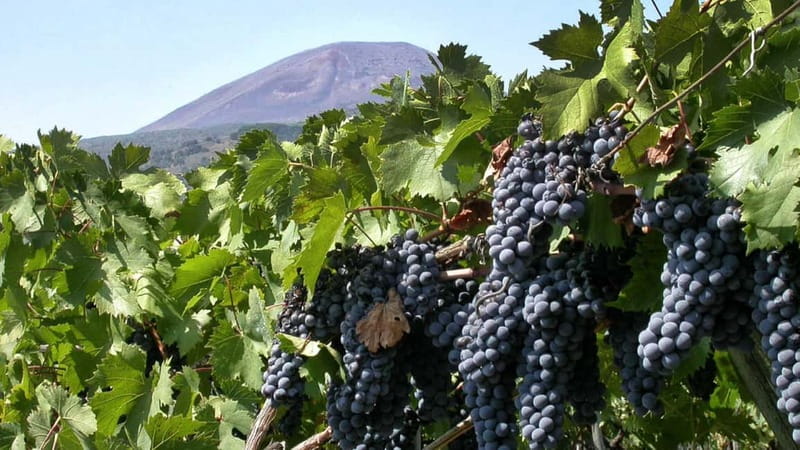
- Four wines with a full Vesuvian meal: Expect Lacryma Christi selections, local dishes, dessert, and limoncello.
- Small group of up to 10: This makes it easier to hear the guide and ask questions.
- Fixed pace and fixed route: You get an efficient overview, but not the freedom or time of a full-day Pompeii visit.
Why this pairing works so well

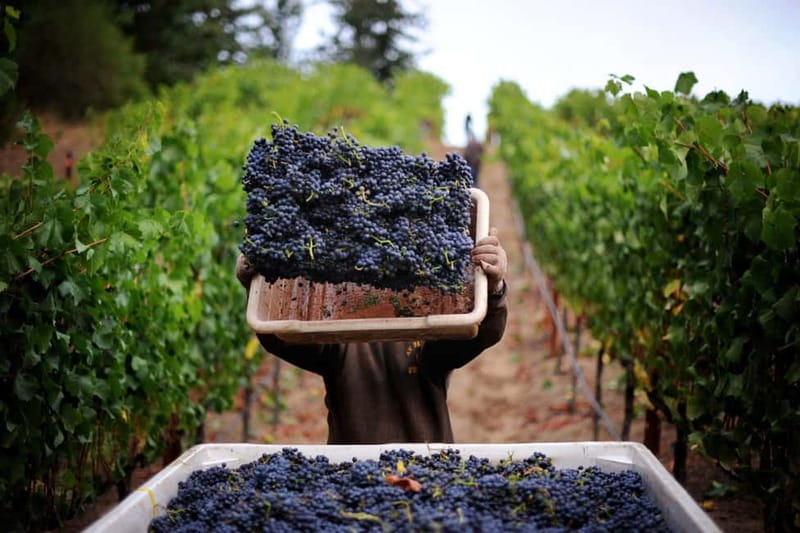
Pompeii and Vesuvius belong together. The volcano shaped the land, the food, and the local wine, while Pompeii shows how people lived beneath it nearly 2,000 years ago. Seeing the ruins first, then sitting down to food and wine from the same volcanic area, gives the day a clear sense of place.
I especially like the change of pace. Pompeii can feel demanding under the sun, with uneven stone streets and a lot of visual information arriving at once. The winery offers a comfortable second half, where you can sit, eat, taste, and look toward Mt. Vesuvius rather than spend another few hours on your feet.
At $135.94 per person, this is not the cheapest way to visit Pompeii. Still, the price includes the archaeological park ticket, a licensed guide with archaeological training, transportation to and from the winery, lunch, and wine. If you already planned to pay separately for a guided Pompeii visit and a vineyard meal, the package offers solid value. If you only want to see the ruins quickly, you may find it expensive.
More Wine Tastings in Italy
- Florence: Chianti Wineries Tour with Wine Tasting
★ 4.5 · 10,071 reviews - Small-Group Wine Tasting Experience in the Tuscan Countryside
★ 5.0 · 7,392 reviews - Rome: Tuscany & Montepulciano Day Trip with Lunch & Wine Tasting
★ 4.5 · 5,232 reviews
Meeting your guide at Porta Marina Superiore
The tour begins at Porta Marina Superiore, one of Pompeii’s main entrances. Arrive 10 minutes early. This matters because Pompeii tickets now require each participant’s full name, including children’s names, and you must carry the original passport or identity card used for the booking.
The separate priority entrance helps avoid the regular ticket office line, but it does not remove the need to be punctual. Personal tickets cannot simply be handed to someone else, so a late arrival can create a real problem.
From the entrance, the route takes you through the original Porta Marina gate. You can also see Mt. Vesuvius from the site, a useful reminder that this was not just an ancient city abandoned by chance. The volcano is part of the setting at nearly every stage of the day.
Two hours among Pompeii’s most important ruins
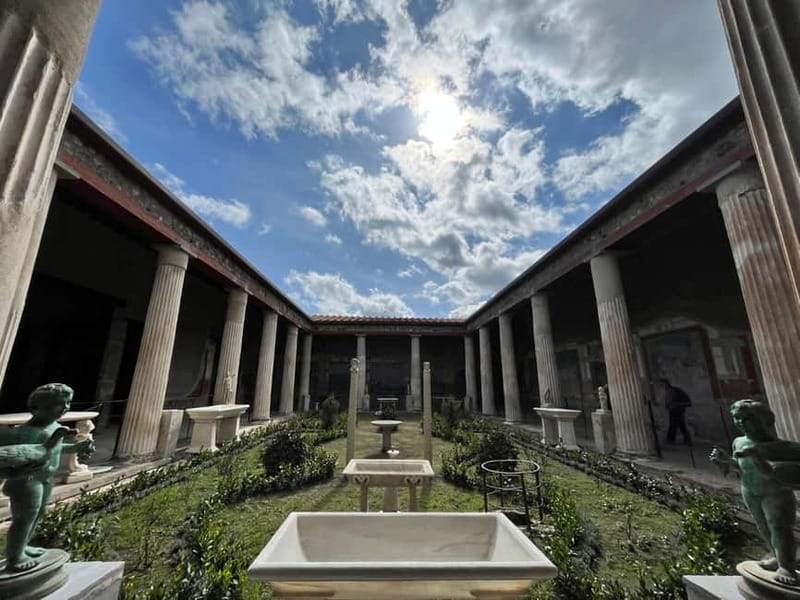
The guided visit lasts about two hours. That is enough for a well-planned first look, especially if you want the major sights explained in context rather than wandering without a plan.
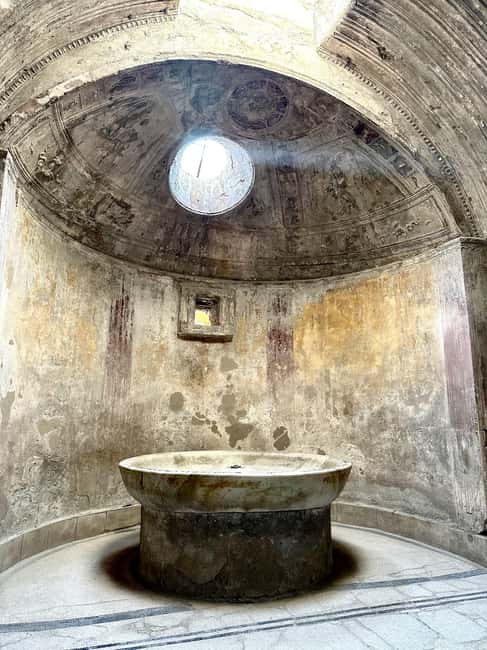
You begin near the Suburban Baths, then continue toward the Basilica and the Forum. The Forum was the civic center, and the nearby temples and market help you understand how public, religious, and commercial life met in one place. A guide can make these open spaces easier to read because much of Pompeii is made up of foundations, walls, and partial structures.
The route continues along the Decumanus Major, one of the city’s main streets. Here, you see shops, restaurants, and other signs of ordinary Roman life. The experience is strongest when the guide shifts between large events and small details: public buildings explain the city’s power, while bakeries, counters, homes, and street layouts show how people actually lived.
One memorable stop is a Roman sign linked to sexuality. Pompeii is unusually direct about adult life, and the guide can explain the meaning without reducing the site to cheap jokes. This is one reason an archaeological guide helps. The ruins are full of details that are easy to miss or misunderstand when you walk alone.
Frescoes, mosaics, body casts, and Roman homes
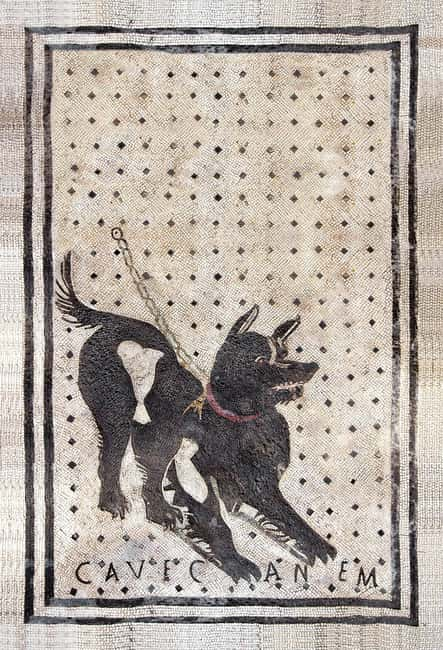
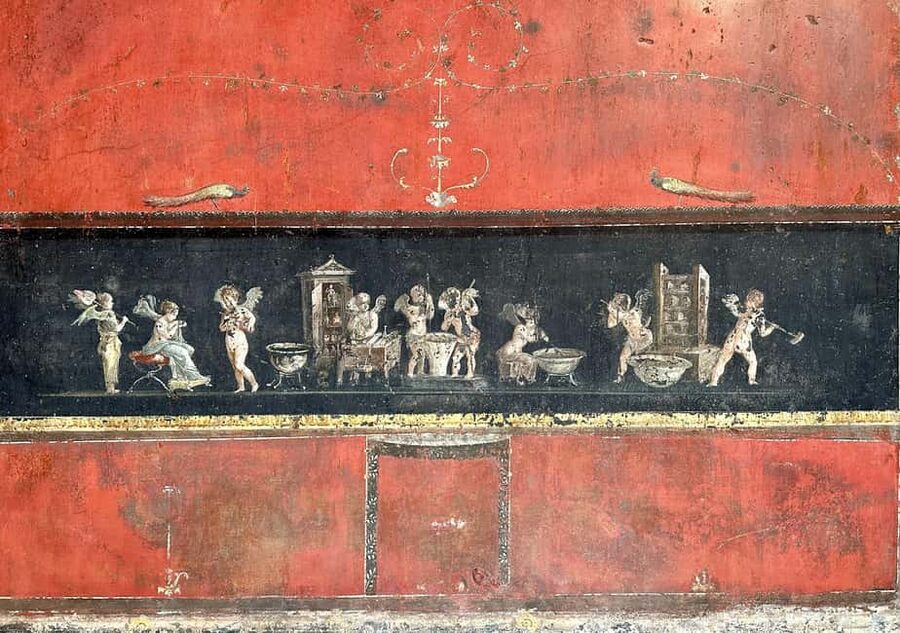
The tour includes several domus, or Roman homes, with frescoes and mosaics. Some recently opened houses may be included, depending on current access and maintenance. These interiors are among the most rewarding parts of Pompeii because they bring the private world of the city into view.
A large public building can show how Pompeii functioned, but a house reveals taste, status, family life, and the desire to impress visitors. Painted walls and patterned floors also make clear that Roman homes were not the plain stone rooms you might picture from a quick glance at the ruins.
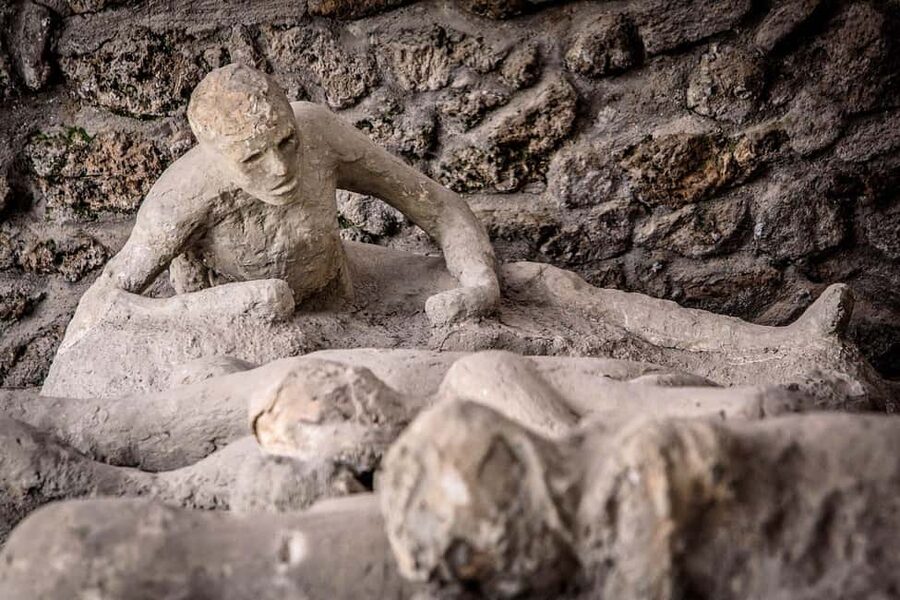
The route can include the famous plaster casts of victims. Access to particular casts may vary, so do not assume every figure will be on view. The same is true of the theatre, which may be closed for maintenance. The guide can still explain the role these places played, but the exact selection of open buildings can change.
You also visit the Gladiators Barracks. Together with the theatre, shops, homes, and Forum, this gives you a broad picture of Pompeii rather than a single theme. You see religion, government, entertainment, trade, domestic life, and the human cost of the eruption.
The supplied headsets are useful in larger open areas. You can step aside to look at a mosaic or wall painting while still hearing the explanation. In hot weather, shade stops are especially welcome. Guides such as Roberta, Enrica, Sonia, Nenna, Livio, and Ricardo have been praised for making the history clear, lively, and easy to follow.
More Volcanic Wine Tours in Italy:
- Naples: Pompeii and Mt. Vesuvius with Lunch and Wine Tasting
★ 4.5 · 2,454 reviews - Etna, Wine and Alcantara Tour – From Taormina
★ 5.0 · 464 reviews - Taormina: Guided Etna Wine Tasting Half-Day Tour
★ 4.7 · 444 reviews - Private 6-Hour Tour of Three Etna Wineries with food&wine tasting
★ 5.0 · 417 reviews
What two hours can and cannot do
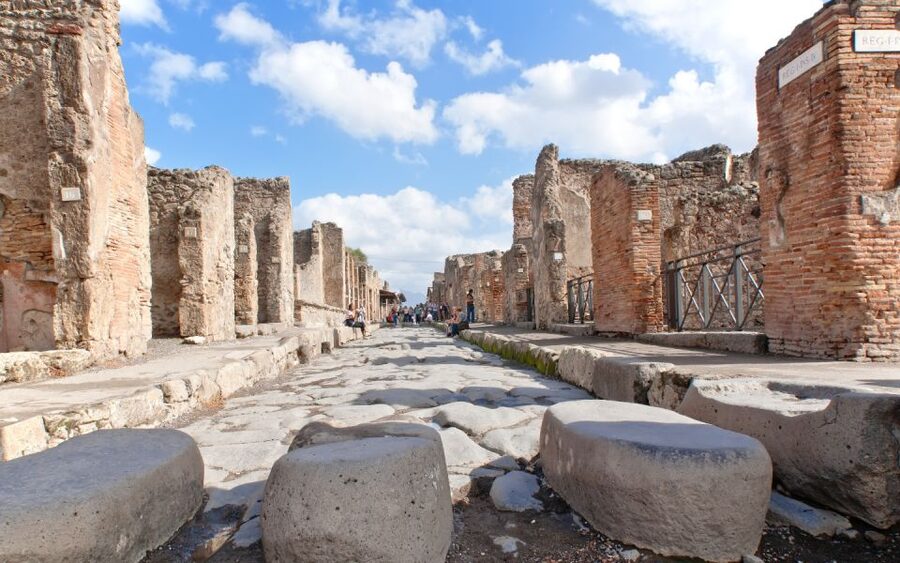
Two hours is a sensible length for a mixed Pompeii and wine tour. You cover the highlights without spending the entire day walking over ancient paving stones. Guides have been especially praised for keeping a good pace, adding context, and finding shade when possible.
But two hours is still short for Pompeii. You will not see every street, house, garden, theatre, and body cast. This is a highlights tour, not a complete archaeological study.
I would choose this format if you are visiting Pompeii for the first time and want a strong framework for understanding the site. You can stay inside the archaeological park after the guided portion only if your schedule allows, but this tour moves on to the winery, so you should not count on having a long period for independent exploration.
Wear supportive shoes. The ancient streets can be uneven, and the site is exposed to sun and rain. Bring sunscreen, a hat, water if permitted, an umbrella or rain gear, and comfortable clothing. One summer tip from the day’s practical advice: a small handheld fan can be useful in hot weather.
The 15-minute ride to Casa Setaro Winery
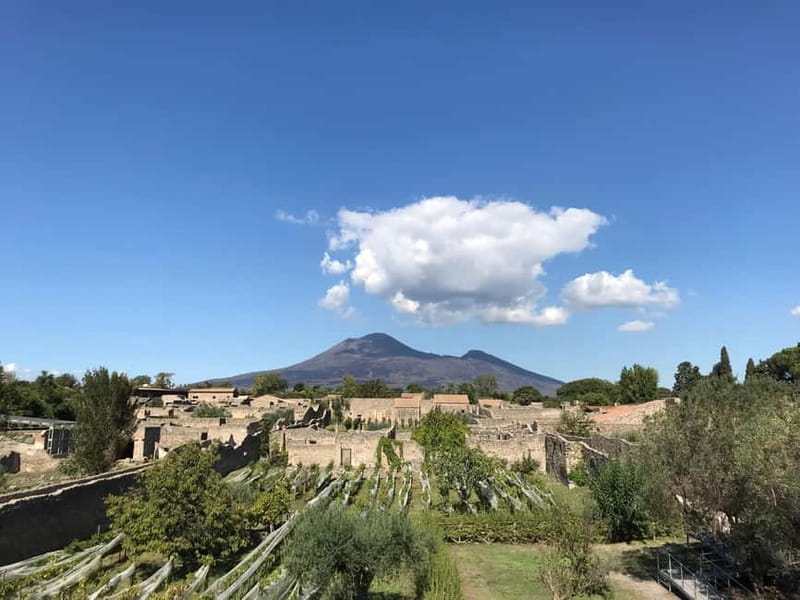
After Pompeii, your guide takes you to the free shuttle service for the winery. The ride takes about 15 minutes each way. This is not a long journey, but it changes the mood quickly from archaeological site to vineyard.
The minibus transfer is included, which saves you the trouble of arranging a taxi or finding public transport to a winery on the slopes of Vesuvius. The return ride brings you back to the Pompeii meeting point, making this useful if you arrived by train or are continuing from the area.
Do keep the transfer in mind when planning the rest of your day. You are not booking a Pompeii tour followed by a short tasting in the same building. There is a set movement from the ruins to the winery, then back again. The vehicle is practical rather than luxurious, and the driver may not speak much English, so listen carefully to your guide about where and when to meet.
Three generations of Vesuvian wine making
Casa Setaro focuses on local viticulture and has developed its wine making over more than three generations. The winery visit is not just a quick pour at the end of a bus tour. You get an introduction to the local methods, followed by a seated tasting and meal.
The wine selection includes Lacryma Christi wines, a well-known Vesuvian style. Four wines are served, along with a limoncello shot at the end. The tasting works best as a regional introduction because you can compare several bottles while eating dishes built around local ingredients.
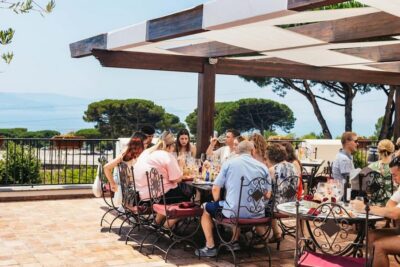
The setting is a major part of the appeal. You are at the foot of Mt. Vesuvius, with views toward the volcano and vineyard surroundings. After the crowded streets and hard surfaces of Pompeii, the winery feels calm and spacious.
The experience can vary slightly in pace. Some sittings feel relaxed and personal, while others may move quickly, especially when the dining room is busy. That is worth knowing if you want a slow, technical wine lesson. This is better understood as a food, wine, and place experience with useful vineyard information, not a long professional tasting course.
A proper lunch, not just a few nibbles
The meal is one of the strongest reasons to choose this combination. It begins with an aperitif and three small finger foods, followed by handmade bread, buffalo butter, local anchovies, olives, and an antipasto.
Next comes Neapolitan ragù with local pasta, then a large caponata made with red and yellow tomatoes. Dessert is tiramisu, served with the limoncello digestive. The menu gives you a broad taste of Campanian cooking, from salty preserved fish and olives to slow-cooked sauce, pasta, vegetables, and sweets.
The exact sense of portion size can vary. Some people may find the meal light, while others consider it generous, especially with the bread, tasting plates, wine, pasta, main vegetable course, and dessert. Either way, this is much more substantial than a tasting built around crackers and a few sips.
Gluten-free menus are available, but you must request one in advance. Mention dietary needs before the tour date rather than waiting until you sit down. The information provided does not promise a range of other dietary adaptations, so ask ahead if you have restrictions beyond gluten.
Group size, language, and guide quality
The group is limited to 10 people, which is a useful middle ground. You get more personal attention than on a large coach excursion, but you still share the winery meal with a small social group. Several people have enjoyed the easy conversation that develops around the table.
Guiding is available in English and Italian. The strongest part of the experience depends on the individual guide, and the praise for guides such as Ricardo, Roberta, Enrica, Sonia, Nenna, and Livio is consistent in one important way: they explain clearly, keep the group moving, and connect facts to daily Roman life.
Ricardo has been especially praised for his command of Roman history and culture, while Roberta has been noted for balancing detail with a friendly pace. Enrica has received praise for using headsets well and giving people time to look around. These details matter because Pompeii can become a blur of walls and columns without a guide who knows when to stop and when to move on.
Who should book this experience?
I would recommend it to you if you want three things in one half-day: a guided introduction to Pompeii, an easy transfer to a local winery, and a proper Campanian lunch. It suits first-time visitors, couples, families with older children, and anyone who enjoys history but does not want a full day spent entirely on archaeological ruins.
It is also a good choice if you are staying near Pompeii or arriving independently and want a straightforward plan. You only need to reach Porta Marina Superiore, and transportation to the winery is arranged for you.
You may want another option if your main goal is to explore every corner of Pompeii. A two-hour guided route cannot provide that. Independent visitors who want the theatres, villas, casts, and outlying streets at their own pace may prefer a longer site visit, then arrange food separately.
The tour is officially not suitable for wheelchair users, and electric wheelchairs are not allowed. One difficult outing was made possible with staff assistance, but you should not rely on that. Contact the provider before booking if anyone in your party has limited mobility.
Is this Pompeii and wine tour worth $135.94?
For $135.94, you are paying for more than admission. You receive a small-group archaeological tour, a priority entrance, a licensed guide, the shuttle to and from the winery, a local meal, several wines, and limoncello. The value is strongest when you would otherwise book both a guided Pompeii visit and a vineyard lunch.
The weaker value comes if you do not care about wine or want a long, unhurried day at Pompeii. The schedule is fixed, and two hours at the ruins leaves plenty unseen. Still, the pairing feels thoughtfully designed rather than random: ancient Pompeii first, local volcanic food and wine second.
Final verdict: book it for the balance
Book this tour if you want an efficient, well-explained Pompeii visit followed by food, wine, and views of Vesuvius. The archaeologist-led route, small group, and excellent lunch make it more rewarding than a simple site entrance.
Skip it if you want to spend most of your day inside Pompeii or prefer to choose your own winery and restaurant. For everyone else, this is a strong half-day plan, especially when your Italy schedule is tight and you want history and local flavor in the same outing.
FAQ
Where does the Pompeii tour begin?
The meeting point is Porta Marina Superiore at the Pompeii ruins. Arrive 10 minutes before the scheduled start time.
How long does the experience last?
The full experience lasts about five hours. The guided Pompeii visit takes about two hours, each winery transfer takes about 15 minutes, and the winery visit with lunch and tasting lasts about 100 minutes.
Is transportation to the winery included?
Yes. A free shuttle or minibus takes you from Pompeii to the winery and returns you to the Pompeii meeting point.
What food and drinks are included?
The meal includes finger foods, handmade bread, buffalo butter, anchovies, olives, antipasto, Neapolitan ragù with local pasta, caponata with red and yellow tomatoes, tiramisu, four wines, and a limoncello shot.
Is a gluten-free meal available?
Yes. Gluten-free menus are available, but you must notify the provider in advance.
What identification should I bring?
Bring the original passport or identity card for every participant, including children. Pompeii tickets require each person’s full name.
Is the tour available in English?
Yes. The live guide is available in English and Italian.
Is the tour suitable for wheelchair users?
The activity is listed as not suitable for wheelchair users, and electric wheelchairs are not allowed. Contact the provider before booking if you have mobility concerns.
Can I cancel the tour?
You can cancel up to 24 hours in advance for a full refund. The reserve-now-and-pay-later option is also available.
Newly added around Italy
- Etna trekking and wine tasting★ 5.0 · 28 reviews
- Etna Tour and Lunch in a Winery with Wine Tasting★ 5.0 · 97 reviews
- Cooking Class and Wine Pairing in Capri★ 5.0 · 57 reviews
- WINE TOUR with sommelier in a winery near Cagliari★ 5.0 · 27 reviews
- Cagliari 3 Hours Luxury Motorboat Tour – Wine and Snorkeling★ 5.0 · 118 reviews
- Cagliari Boat Tour by Maxi Rib – Wine and Snorkeling★ 5.0 · 128 reviews
- Small-Group Food and Wine Tour from Cagliari★ 5.0 · 237 reviews
- Wine Experience: vineyard, wines and food★ 5.0 · 155 reviews
Etna & Volcanic Wine Tours, compared.
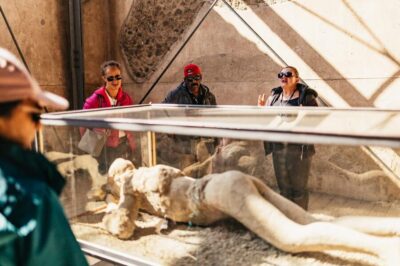
Pompeii and Mt. Vesuvius with Lunch and Wine Tasting
Read our review →


Private 6-Hour Tour of Three Etna Wineries with food&wine tasting
Read our review →

Browse the lists this tour appears in