
REVIEW · PORT WINE TASTINGS
Port Wine class with 3 or 5 Port tasting and pairings
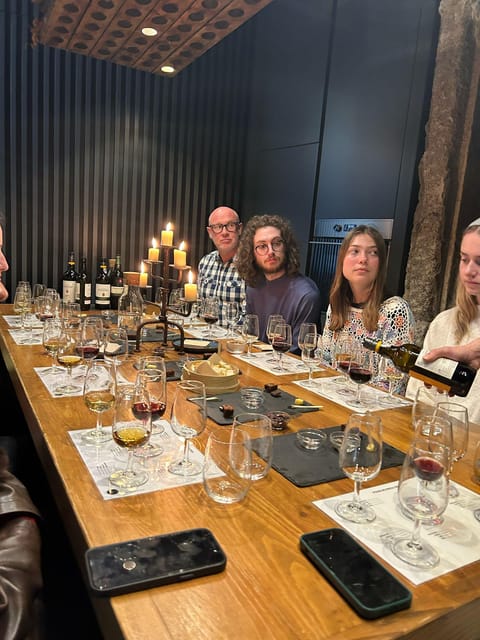
Port becomes much clearer over snacks. This central Porto class makes Port wine approachable, with a short lesson, three or five styles, and Portuguese pairings in a small room across from Palácio da Bolsa. I like the compact format and the chance to compare white, tawny, ruby, and Late Bottled Vintage Port side by side. The main drawback is that this is a shop-based tasting, not a tour of a traditional wine cellar.
I also like the price: at $23 per person, the five-Port option gives you a useful introduction without taking half a day. Hosts such as Rui, Ruan, João, and Pedro are praised for mixing clear explanations with humor, music, and generous pours. If you have time, choose five Ports rather than three. The extra styles make the lesson far more useful.
Key points at a glance
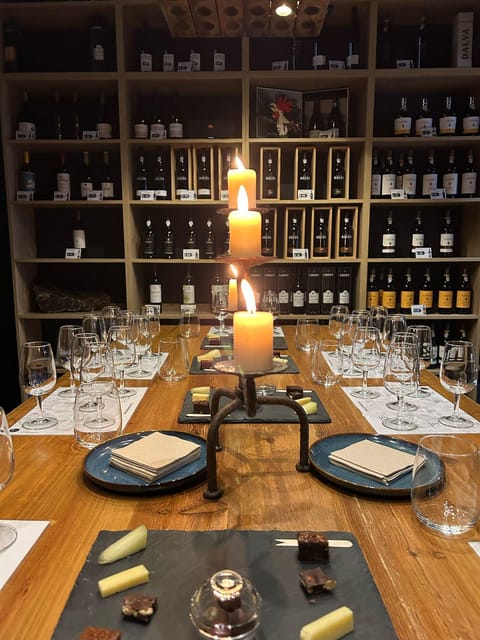
- Five distinct Ports: The full tasting includes two white Ports, one tawny, one Ruby Reserve, and one LBV.
- Across from Palácio da Bolsa: You are right in Porto’s historic center, with no trip to Vila Nova de Gaia required.
- Small groups of up to 10: The setting can feel personal, especially when fewer people book a session.
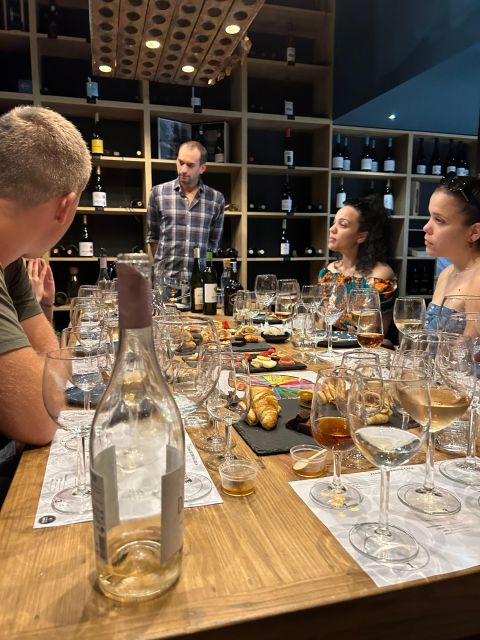
- Portuguese food pairings: Olives, fruit, chocolate, cheese, and brownie are served with the wines.
- More than a lecture: Rui and other hosts have added guitar, singing, jokes, and a surprise ending.
- Short and easy to fit in: Allow about 45 minutes for three Ports or around 75 minutes for five.
A Port lesson in Porto’s most convenient corner
The meeting point is the provider’s shop directly across from Palácio da Bolsa, one of the city’s best-known buildings. This puts the tasting in an easy spot for a walking day in central Porto, close to the sights around the old commercial center.
You do not enter a grand aging cellar. Instead, you check in at the tourist office, which is in the same building as the tasting room. That detail matters because the storefront may not look exactly like a wine cellar. One participant found the address confusing at first and expected a more obvious wine shop, so look for the tourist office rather than wandering around for barrels and underground tunnels.
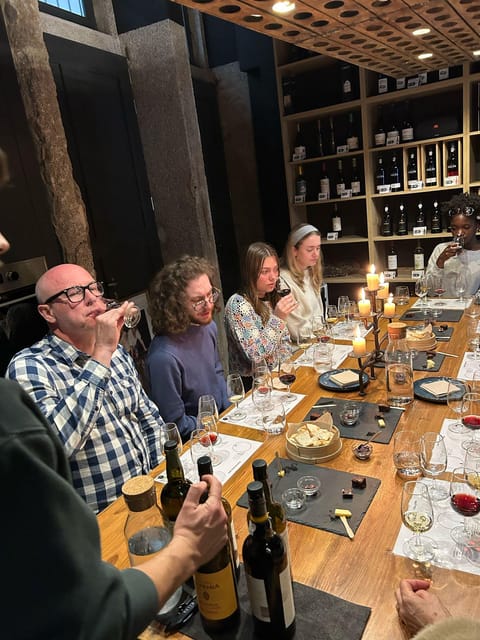
The room is described as intimate, clean, and air-conditioned. That can be a real treat on a warm afternoon, when Porto’s steep streets and bright stone pavement begin to wear you down. The trade-off is atmosphere. If you want old casks, dim corridors, and the grand scale of a famous Port lodge, this experience will feel modest.
For me, the location is one of the strongest points. You can schedule the class before or after Palácio da Bolsa, São Francisco Church, or a walk toward the river. Since the lesson takes less than 90 minutes, it fits neatly into a full day rather than taking over your itinerary.
More Wine and Food Pairings in Porto
- Authentic Food and Wine Tour in Porto by Food Lover Tour
★ 5.0 · 1,057 reviews - Porto: Delicious Food and Wine Walking Tour
★ 4.8 · 977 reviews - Porto: 3 or 5 Port Wine Tasting with Pairings
★ 4.9 · 152 reviews
The opening lesson: how Port came to be
The session begins with an introduction to Port wine. The host explains how Port was invented, why it developed, and how production changed over time. The purpose is not to turn you into a winemaker. It is to give you enough background to understand why the wines in your glass taste and look different.
That foundation is useful because Port is often treated as one single drink. It is not. The tasting gives you a chance to see the broad families of Port, from pale and fresh white versions to darker, fruitier ruby styles and older, more mellow tawny wine.
The best hosts make this part conversational. Rui, Ruan, João, and Pedro are repeatedly praised for explaining technical points in plain language and keeping the room involved. Rui, in particular, is described as funny, warm, and able to talk about both Port and Porto itself. That combination helps if you are new to fortified wine or unsure what questions to ask.
You may also hear about the Douro Valley, Gaia, grape growing, production methods, and the connection between Porto and the wine trade. One useful feature of the class is that it does not treat tasting as a silent exercise. You can ask questions, compare impressions with the people at your table, and learn why a Port works with a certain food.
Choosing between three and five Ports
There are two tasting options. The three-Port class takes about 45 minutes, while the five-Port version usually lasts about one hour and 15 minutes. The stated overall duration is one to 90 minutes, since questions and conversation can stretch the session a little.
The three-Port option makes sense if your schedule is tight or you want a quick introduction before dinner. It gives you a basic sense of Port styles without asking you to spend a long period drinking fortified wine. You might also prefer it if you are not sure how much Port you want to taste.
Still, I would choose the five-Port option for most people. It gives you a clearer comparison and costs only a little more if the options are priced differently at booking. The full selection is:
- Two white Ports
- One tawny Port
- One Ruby Reserve Port
- One Late Bottled Vintage, or LBV, Port
This lineup covers enough ground to make the tasting educational rather than simply decorative. The two white Ports let you compare variations within one style. The tawny offers a different character, while the Ruby Reserve and LBV show you darker, fuller examples.
The experience can also include a top-up of a favorite wine, according to one account. That should not be treated as a guaranteed part of every session, but it helps explain why several people found the pours generous. Port is stronger than ordinary table wine, so pace yourself and use the food to keep the tasting comfortable.
What the Portuguese pairings add
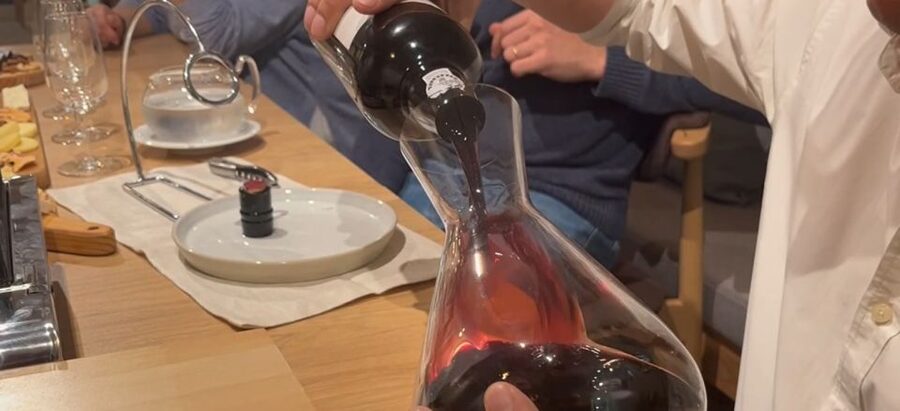
The wine is served with olives, fruit, chocolate, cheese, and brownie. These are not just snacks placed on the table to keep you occupied. They show how the character of Port changes when you taste it with something sweet, salty, creamy, or rich.
Olives provide a salty contrast to the wine. Fruit can make a white Port feel lighter and fresher. Cheese gives you a more substantial match, while chocolate and brownie suit the sweeter, darker styles. The pairings are simple, but they help you understand why Port is often served at the end of a meal or alongside dessert.
Several people singled out the pairings as carefully chosen and well presented. I would keep expectations sensible: this is not a full meal, and it should not replace lunch or dinner. It is enough food to make the tasting more pleasant and to give each style a useful point of comparison.
This is also a good setting for beginners. You do not need to arrive with a trained palate. If you normally find wine language fussy, the food gives you a direct way to judge what you like. Instead of asking whether a Port is complex, you can simply decide whether it works better with cheese, fruit, or chocolate.
More Wine and Food Pairings in Portugal
- Lisbon: Food and Wine Small Group Walking Tour
★ 4.9 · 4,082 reviews - Lisbon Small-Group Portuguese Food and Wine Tour
★ 5.0 · 3,972 reviews - Vila Nova de Gaia: Port Wine Tasting with Cheese Pairing
★ 4.8 · 1,074 reviews - Madeira: Food and Wine Walking Tour in Funchal
★ 4.8 · 469 reviews
The hosts make the hour work
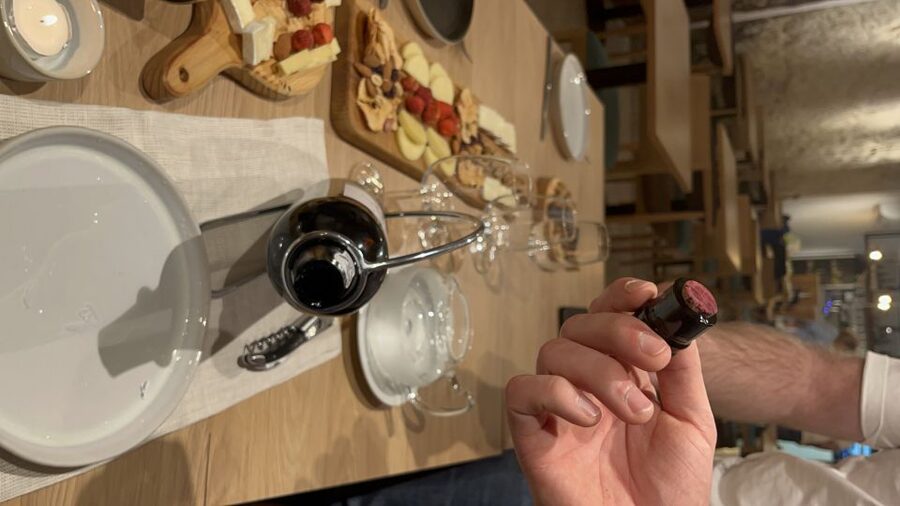
The wine selection matters, but the host determines whether the session feels like a class or a sales pitch. Here, the strongest feature is the personality and skill of the presenters.
Rui is often described as both entertaining and well informed, with a talent for drawing the whole group into the conversation. Ruan is praised for humor, detailed explanations, and an easy manner with solo participants. João is noted for clear, professional instruction and a friendly approach. Other hosts, including Pedro and José, are also described as warm and engaging.
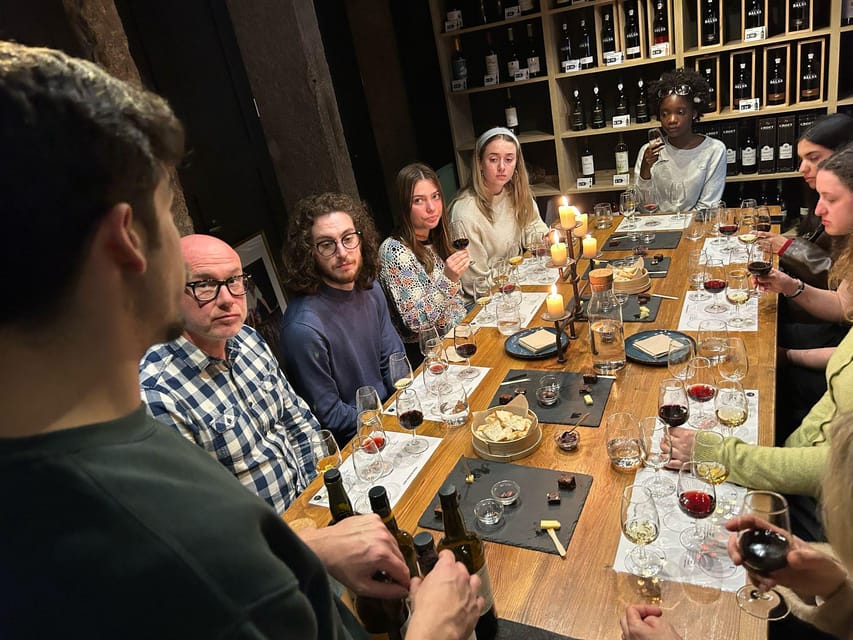
The atmosphere can change with the group size. The maximum is 10 people, but some sessions have had only two, three, or a handful of participants. A very small group gives you more time to ask questions and may feel almost private. A fuller class can be livelier, with more opinions around the table.
This makes the experience a pleasant choice for solo visitors. One solo participant ended up joining another solo visitor before the tasting and later went for drinks with people from the class. That social side is not guaranteed, but the small table format gives you a natural chance to talk with others.
There can also be a playful performance at the end. Depending on the host and the session, you might hear guitar, flamenco, or fado. A surprise ending has also been mentioned, but it is best left unexplained. Think of these touches as an extra, not as the main reason to book. The core experience is still the Port lesson and tasting.
What this is not: a Gaia cellar tour
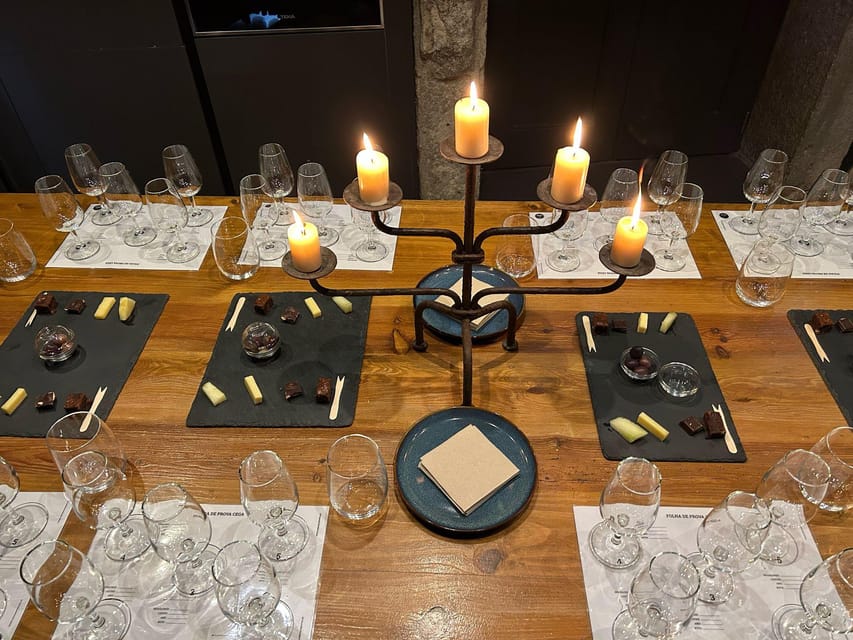
Porto and Vila Nova de Gaia are closely tied to Port wine, and many visitors picture a tasting in a historic lodge filled with barrels. This class does not offer that setting. It takes place in a room inside a central Porto shop, not in a cellar.
That limitation is worth considering before you book. If you want to see where wine is stored, walk through a cellar, or learn about a specific producer’s facilities, you should choose a dedicated lodge visit or a Douro Valley outing instead. One participant specifically wished for a longer tour in the valley after the tasting.
On the other hand, the central location is a major advantage. You do not need to cross the river, arrange transport, or give up several hours. You get a broad introduction to Port styles in one sitting, then remain free to explore Porto’s churches, viewpoints, shops, and restaurants.
For a first visit, I see this as a useful starting point. You can learn which types you prefer, then use that information when choosing a cellar tour, ordering a glass, or buying a bottle. It is a tasting lesson, not a winery visit, and it succeeds best when you judge it on those terms.
Is $23 a fair price?
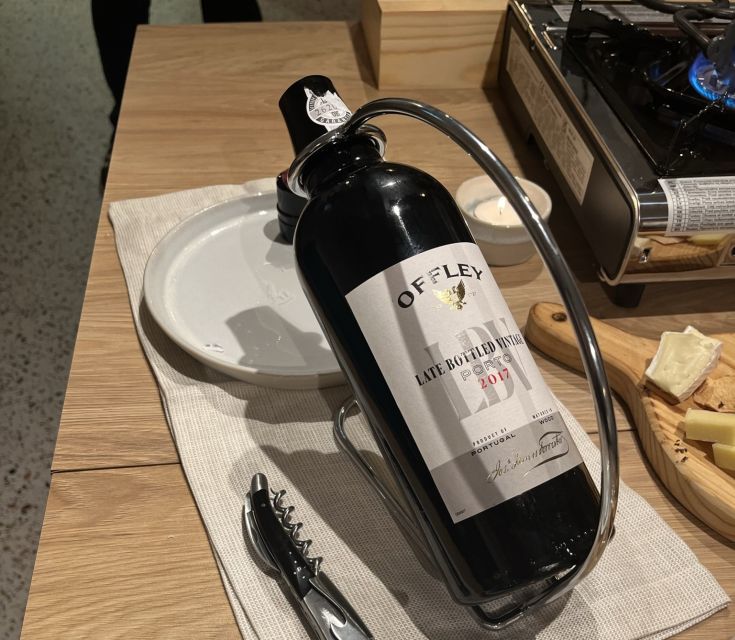
At $23 per person, this is strong value if you choose it for the compact lesson, five tastings, food, and central location. Port tastings in historic cellars can cost more, especially when they include a longer visit or a named producer. Here, you are paying for access to several styles and an instructor who explains what you are drinking.
The value is especially good for people who have limited time. You can spend about an hour learning the basics, then continue sightseeing. The air-conditioned room also gives you a comfortable break during a hot day.
The price is less compelling if you expect a full meal, a cellar tour, or a detailed look at vineyard work in the Douro Valley. Those are different experiences. You are buying a focused introduction, not a complete Port education.
I would also compare the three and five-Port options carefully before booking. The five-wine class gives you a more complete picture and appears to be the better choice for anyone who already enjoys fortified wine. The three-wine class is enough for a quick overview, but you may leave wishing you had sampled the extra styles.
Practical details before you go
The activity is conducted in English, with an English-speaking host or greeter. The room is wheelchair accessible. Groups are limited to 10 participants, though the actual number can be smaller.
Allow at least 75 minutes for the five-Port version if you want to enjoy the explanations without rushing. The three-Port option may finish in about 45 minutes, but questions can change the timing. Avoid scheduling something immediately afterward if you want to take part in the discussion.
The class is best placed in the middle or late part of your sightseeing day. It works well after visiting nearby central Porto sights, or as a calm stop before an evening meal. Since Port is fortified, you may prefer not to book it as your first activity of the morning unless that suits your plans.
Cancellation is free up to 24 hours before the start time, and you can reserve now and pay later. These policies help if your Porto schedule is still shifting. Check the available starting times when you book, since the exact schedule is not fixed here.
Who should book this Port tasting?
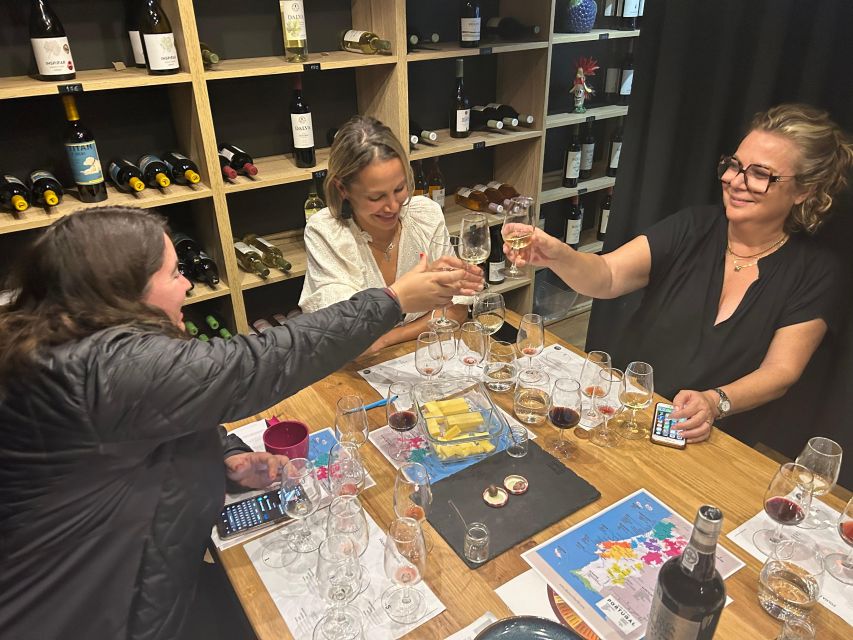
I would recommend it to first-time Port drinkers, curious wine drinkers, couples, solo visitors, and anyone who wants a short cultural activity close to Porto’s main sights. It is also useful if you do not have time for a cellar visit in Gaia.
You will get the most from it if you ask questions and compare the styles rather than simply drinking each glass. The class gives you practical knowledge you can use later, especially when choosing between white, tawny, ruby, and LBV Port.
I would look elsewhere if your priority is vineyard scenery, cellar architecture, or a full-day wine excursion. The room is pleasant but not historic, and the tasting is designed for accessibility rather than ceremony. Seating may also be on benches in some sessions, which one participant found less comfortable than chairs.
Should you book it?
Yes, if you want a friendly, central, low-cost introduction to Port. The five-Port option is the better buy for most people, since the broader selection makes the differences easier to understand. The hosts bring humor and warmth, the pairings are useful, and the small group limit keeps the class personal.
Skip it only if you specifically want a cellar tour or a day in the Douro Valley. For everyone else, this is an easy way to turn Porto’s signature drink from a vague after-dinner habit into something you can order with confidence.
FAQ
Where does the Port wine class take place?
It takes place in a shop in Porto city center, directly across from Palácio da Bolsa. Check in at the tourist office in the same building, since the tasting room is not a traditional cellar.
How many Port wines can I taste?
You can choose a tasting of three or five Ports. The five-Port selection includes two white Ports, one tawny Port, one Ruby Reserve Port, and one LBV Port.
How long does the experience last?
The three-Port option takes about 45 minutes. The five-Port option takes around one hour and 15 minutes, with the overall activity listed as lasting between one and 90 minutes depending on questions.
What food is served with the Port?
The tasting includes olives, fruit, chocolate, cheese, and brownie. These are paired with the different Port styles.
Is the class suitable for wheelchair users?
Yes. The activity is listed as wheelchair accessible.
Can I cancel the booking?
Yes. You can cancel up to 24 hours before the activity for a full refund. You can also reserve and pay later to keep your plans flexible.
More Workshops in Porto
- Porto: Tile Painting Workshop with Porto Wine – Sé do Porto
★ 4.9 · 1,095 reviews - Porto: Pastel de Nata Cooking Class with Port Wine – Sé
★ 4.8 · 888 reviews - Porto: Tile Painting Workshop with Tea and Port Wine
★ 4.9 · 66 reviews - Florence: Pasta Cooking Class with Unlimited Wine
★ 4.9 · 10,285 reviews
More Port Wine Tastings in Porto
- Porto: Bridges Cruise & Sunset & Port Wine Cellar Option
★ 4.2 · 4,180 reviews - Porto: Fado & Port Wine in Traditional Portuguese Music Shop
★ 4.8 · 2,906 reviews - Porto: What is Fado? Commented Live Concert with Port Wine
★ 4.8 · 2,839 reviews - Port Wine Lodges Tour Including 7 Port Wine Tastings (English)
★ 5.0 · 2,041 reviews
Newly added around Porto
- Porto: Tuk tuk Tours with Port Wine Tasting★ 4.5 · 65 reviews
- Porto: Tile Painting Workshop with Tea and Port Wine★ 4.9 · 66 reviews
- Porto: Douro River Boat Tour with Wine Tasting★ 4.9 · 167 reviews
- Porto: Sunset Walking Tour with Port Wine and Views★ 4.6 · 95 reviews
- Porto Wine Tasting Experience with Portuguese Tapas Plate★ 4.7 · 356 reviews
- Porto: Douro River Cruise w/ Portuguese Wines & Local Host★ 4.9 · 166 reviews
- Porto: Self-Guided Bike and Boat Tour with Port Wine Tasting★ 4.7 · 52 reviews
- Porto: Taylor’s Port Cellar Tour & WOW The Wine Experience★ 4.5 · 136 reviews
Port Wine Tastings, compared.
Bridges Cruise & Sunset & Port Wine Cellar Option
Read our review →
Fado & Port Wine in Traditional Portuguese Music Shop
Read our review →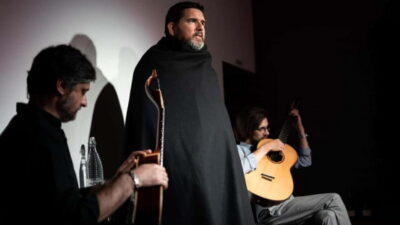
What is Fado? Commented Live Concert with Port Wine
Read our review →
Port Wine Lodges Tour Including 7 Port Wine Tastings (English)
Read our review →
Charming Sailboat Cruise with Port Wine,Sunset Option
Read our review →
Douro River Boat Cruise with Port Wine Tasting
Read our review →
Graham’s Port Lodge Tour with Premium Wine Tastings
Read our review →
Intimate Fado Show & Port Wine in Trindade Noble Hall
Read our review →Browse the lists this tour appears in