
REVIEW · PORT WINE TASTINGS
Porto: What is Fado? Commented Live Concert with Port Wine
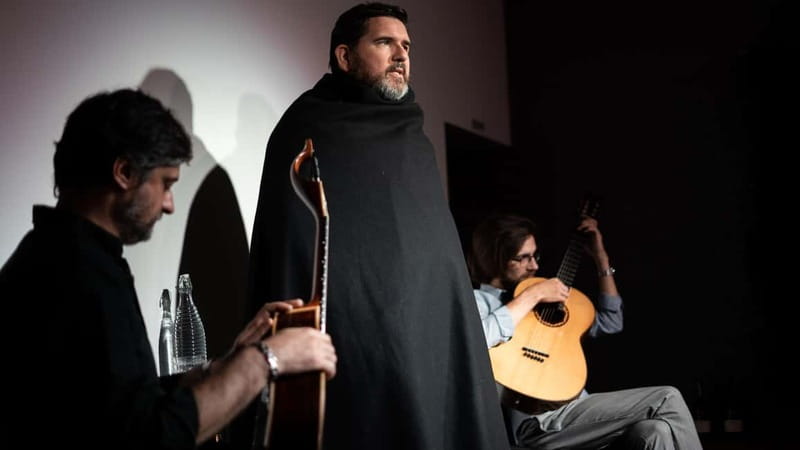
Fado makes more sense when you know its story. This one-hour performance in Porto combines live singers and top musicians with short films, personal testimonials, and clear commentary in several languages, making the music easier to understand even if you arrive knowing little about it. I especially like the mix of Lisbon Fado and Coimbra Fado, plus the chance to hear the distinctive Portuguese guitar while sipping Tawny Port.
The small auditorium in a 19th-century building near the Douro River gives the show an intimate setting. I also like the careful pacing: the explanations add context without taking over the music. The main consideration is that one hour may feel short, especially once you become absorbed in the singing. A few people have also found the chairs more vintage than comfortable.
Key points about the Fado na Baixa performance
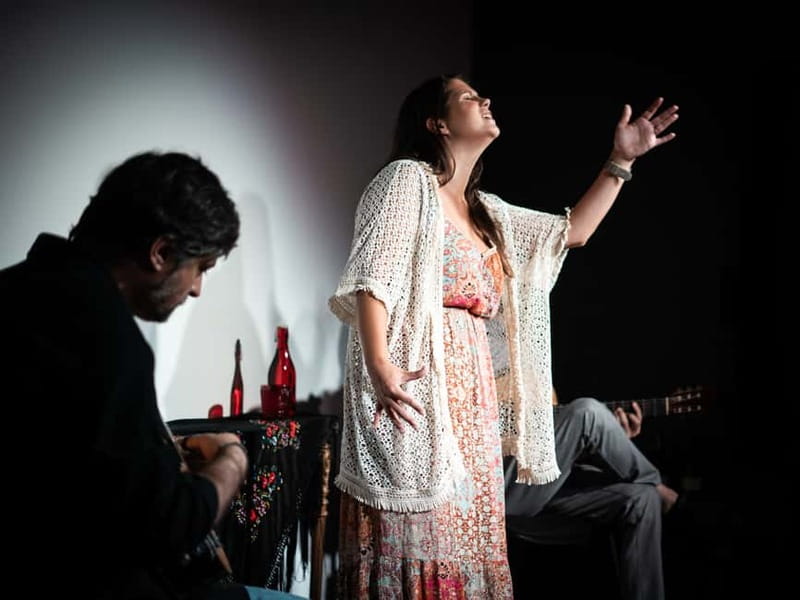
- Two Fado traditions in one show: Hear the intense Lisbon style alongside Coimbra Fado, traditionally sung by male university students.
- Live music with useful context: Short films and testimonials explain the songs, instruments, and customs in English, French, Spanish, or Portuguese.
- Portuguese guitar close-up: The unusual instrument receives its own explanation, followed by live playing.
- A glass of Tawny Port included: The wine pairing adds a simple but fitting Portuguese touch.
- Central Ribeira location: The licensed auditorium is at R. de São João 99, close to the Douro River.
- An easy evening activity: The one-hour length works well after sightseeing, dinner, or a long day on Porto’s steep streets.
Why Fado is easier to appreciate with an explanation
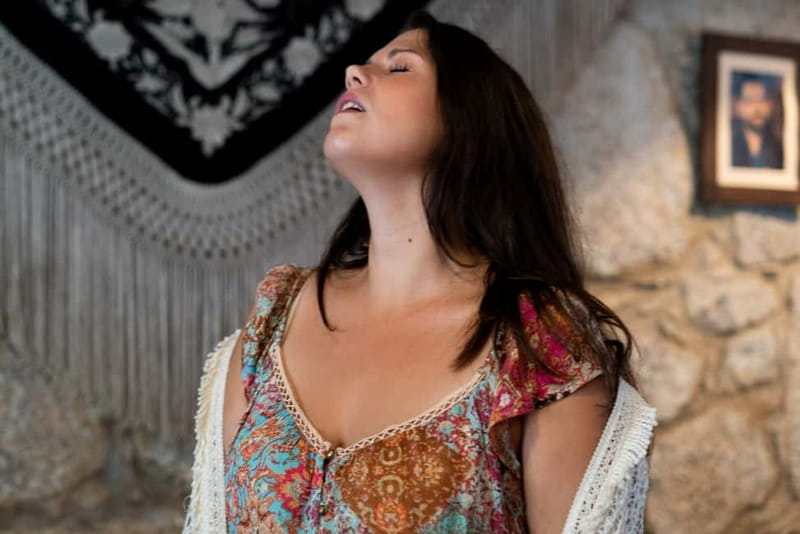
Fado can be powerful even when you do not understand the words, but the music becomes more meaningful when you know what you are hearing. The word is often linked with fate or destiny, and the songs commonly carry longing, separation, love, work, memory, and the pull of home.
That emotional weight can be hard to grasp during a standard concert. You hear a beautiful voice, see serious faces, and watch the Portuguese guitar flash through its notes, but you may not know why the audience reacts so strongly. Fado na Baixa addresses that gap directly.
The performance uses short video segments and personal testimonials in different languages. These sections explain the place of Fado in Portuguese life without asking you to read a long program or listen to a lecture before the music begins. The films appear between live numbers, so the evening keeps changing shape.
I think this approach is especially useful if you are visiting Portugal for the first time. You receive enough background to follow the progression, but not so much that the music becomes a classroom exercise. One person found the history section slightly long, though most of the feedback praised the balance between explanation and performance.
More Port Wine Tastings in Porto:
- Porto: Bridges Cruise & Sunset & Port Wine Cellar Option
★ 4.2 · 4,180 reviews - Porto: Fado & Port Wine in Traditional Portuguese Music Shop
★ 4.8 · 2,906 reviews - Port Wine Lodges Tour Including 7 Port Wine Tastings (English)
★ 5.0 · 2,041 reviews
Entering the Ribeira auditorium on R. de São João
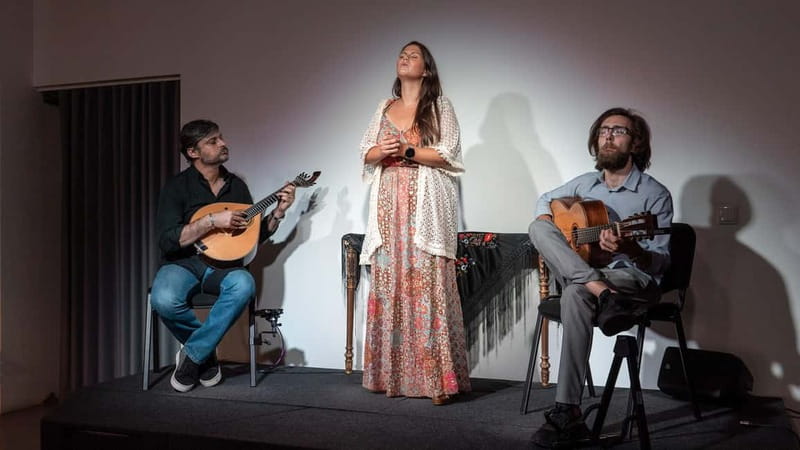
The venue is Fado na Baixa, at R. de São João 99, in the heart of Porto’s Ribeira district. It sits near the Douro River in a licensed auditorium inside a 19th-century building.
That location matters. Fado is best heard in a close setting, where the voice and instruments can carry the room without a large concert hall swallowing the mood. The auditorium is described as cozy and intimate, and the compact setting suits a performance built around eye contact, storytelling, and quiet listening.
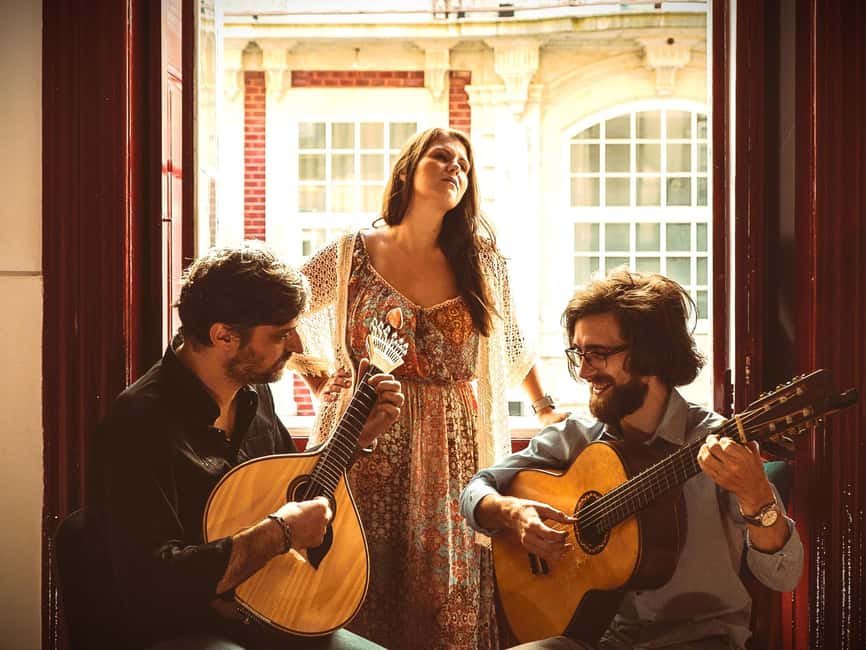
You should not expect a grand theater production. This is a focused cultural performance with four artists: male and female Fado singers, a guitarist, and a Portuguese guitar player. The smaller scale lets you pay attention to the contrast between the voices and the two stringed instruments.
The seats have drawn a mild complaint. One Portuguese attendee described them as needing an upgrade, though also said they were adequate for a one-hour show. If you have mobility or comfort concerns, the venue is wheelchair accessible, but the seating detail may be worth asking about before you arrive.
The opening: traditional Lisbon Fado
The first musical section presents traditional Lisbon Fado, the style most commonly associated with the capital. It is intense, direct, and emotionally exposed, with the singer carrying the feeling while the instruments provide a spare but highly expressive frame.
This opening is a smart choice because it gives you the sound many visitors expect when they hear the word Fado. You may recognize the basic mood from Lisbon restaurants or recordings, but hearing it live in a small room gives the vocal phrasing more force.
The performance does not simply place a singer onstage and leave you to guess at the meaning. Commentary and visual material help explain how the genre developed and why it has such a strong emotional identity in Portugal.
The male and female voices also provide useful contrast. Several comments praise the different vocal colors, and that variety keeps the opening section from feeling like a single long musical block. You hear how a song can change in character depending on who carries it.
The Portuguese guitar and the Tawny Port pairing
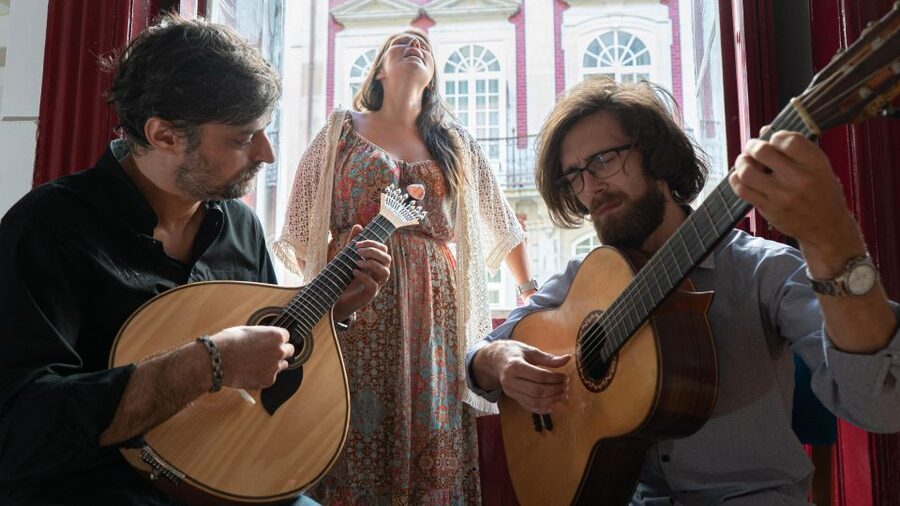
The Portuguese guitar is one of the evening’s most distinctive features. It looks familiar enough to be mistaken for a standard guitar, but its sound and playing technique are notably different. The show explains the instrument before giving you a close listen to its bright, ringing phrases.
This is particularly valuable if you play guitar or simply enjoy instrumental music. A guitarist who attended the performance singled out the skill of the Portuguese guitar player, and another attendee praised Mário Henriques by name. Rato is also identified as one of the musicians associated with the performance. Lineups can change, so check the current details if a particular artist matters to you.
During this section, you receive a glass of Tawny Port. It is not a full wine tasting, and you should not expect a lesson in Port production. Instead, the drink works as a cultural pairing: a small taste of one of Portugal’s best-known drinks while you listen to one of the country’s signature musical traditions.
The Port is widely praised for its flavor and fits naturally into the setting. If you do not drink alcohol, keep in mind that the advertised inclusion is a glass of Port, and a nonalcoholic replacement is not specified. It would be sensible to ask the venue about options before booking if that matters to you.
A few more wine tours around Porto worth a look
- Porto: Fado Live Music, Wine & Cultural Introduction
★ 4.9 · 150 reviews - Warsaw Concert: Chopin – Painted by Candlelights with Wine
★ 4.8 · 1,442 reviews - Porto: Authentic Fado Concert With Port Wine & Views
★ 4.8 · 543 reviews - Krakow: Chopin Concert by Candlelight with Wine
★ 4.6 · 447 reviews
Lisbon and Coimbra Fado are not the same thing
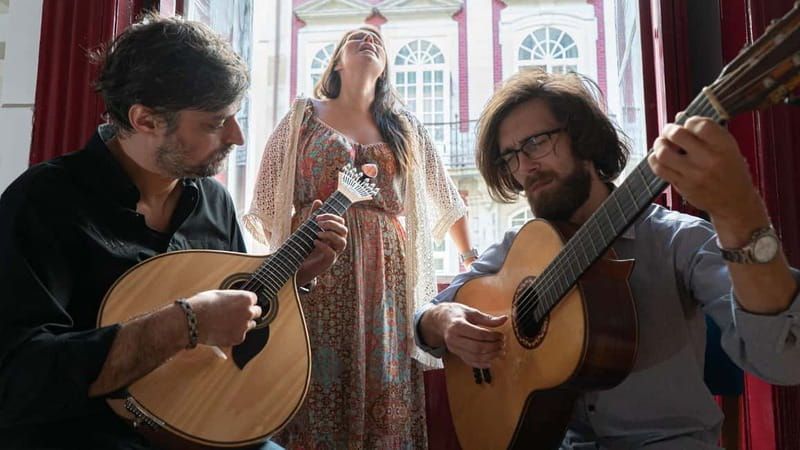
The performance then turns to Coimbra Fado, a style tied closely to the city’s university tradition. This is not simply Lisbon Fado performed in another town. Coimbra Fado has its own sound, subject matter, and customs.
The show presents it through a male singer who is a former Coimbra University student, following the tradition associated with the genre. This detail gives the section a strong sense of place. You are not only hearing another musical variation, but also learning how student life shaped the way the songs are performed and remembered.
A former student’s personal reflections add another layer. The program includes material about university life and songs connected with student experience. One especially affecting selection is Balada de Despedida, which can carry a strong feeling of farewell and memory.
This part may be the biggest surprise for people who arrive expecting only the Lisbon sound. It shows that Portuguese Fado is not one fixed formula. The two traditions share emotional depth, but the Coimbra segment gives the evening a broader national perspective.
Amália Rodrigues and the changing face of Fado
The next section focuses on Amália Rodrigues, widely known as the queen of Portuguese Fado. Her importance is explained not simply through praise, but by showing how she changed the form and helped bring it international recognition.
This is a useful turning point in the program. You first hear traditional Fado, then learn about Coimbra’s particular style, and then see how a major singer helped move the music into a wider public sphere.
The emphasis on Amália also helps explain why Fado continues to sound both old and current. A tradition can keep its central emotional language while changing its arrangements, poetry, and audience. That is the thread this section prepares you to follow.
You will see how Fado can honor older forms without being frozen in the past. The music survives through new lyrics, combinations with other musical styles, and performers who treat tradition as a starting point rather than a museum display.
A little audience participation, handled with care
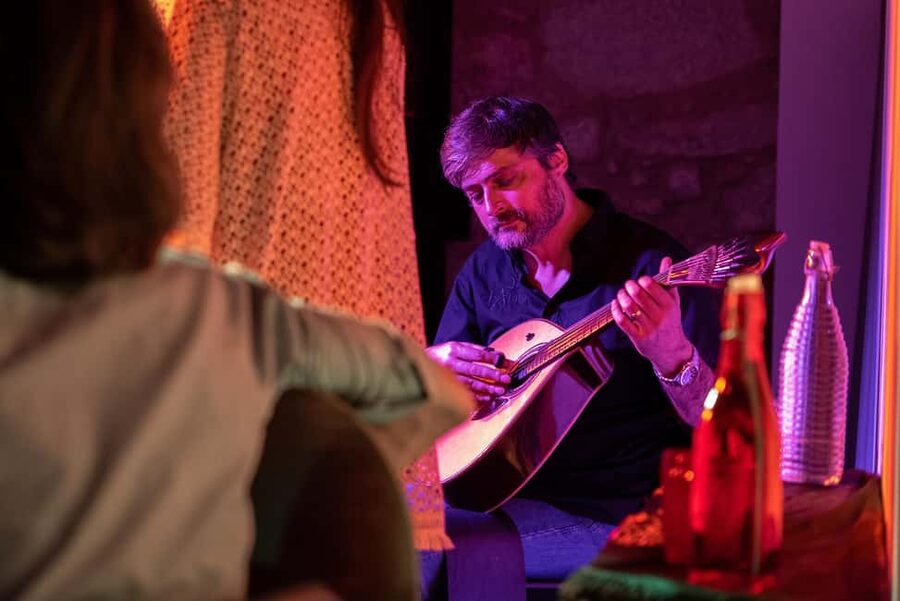
This is not a concert where you are expected to sing along from the first note. The audience participation appears in selected parts, with the singers guiding you through sections of a few songs.
That touch has been warmly received because it makes the room feel shared without turning the evening into a loud group activity. You are given a chance to take part, but the professional musicians remain at the center.
If you prefer to sit quietly and listen, you will not be asked to perform. If you enjoy a modest amount of interaction, the sing-along sections add a welcome change of pace. They also make the music feel less distant, especially for people who have never heard Fado live.
The show’s hosts and greeters speak Portuguese, Spanish, English, and French. An audio guide is available in those same four languages, which makes the experience practical for an international audience. Check the available language support when booking if you have a preference.
What the one-hour length means for your Porto plans
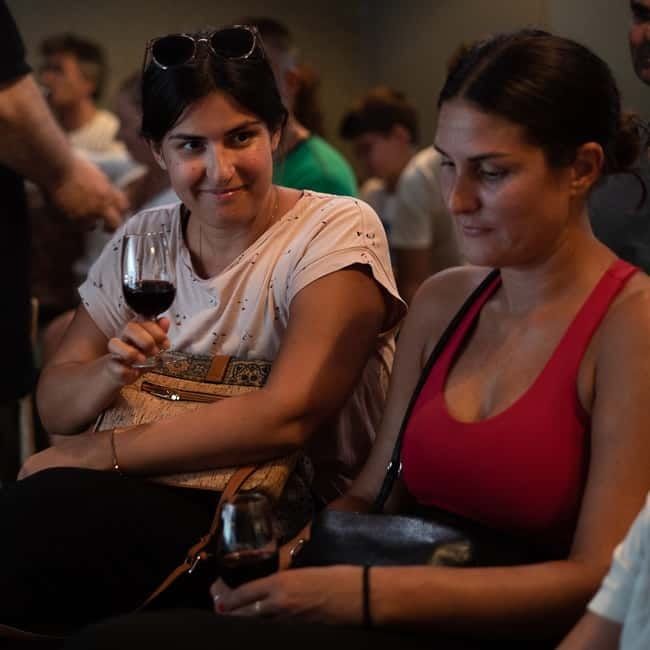
The compact duration is one of the strongest practical features. You can fit the show into an evening without giving up an entire night, and it works well after a day spent walking Porto’s hills and riverfront.
An hour is enough time to hear several expressions of Fado, understand the main historical points, meet the major themes, and enjoy a glass of Port. It also keeps the program focused. You are unlikely to feel trapped in a long lecture or a concert that repeats the same mood.
The tradeoff is simple: if the singers and musicians win you over, you may want more. One attendee specifically wished the performance lasted longer, and another said they could have listened all night. This is best viewed as a polished introduction rather than a complete evening of uninterrupted Fado.
For a deeper musical night, you could pair this with a separate Fado performance. For a first encounter, the shorter format is a strength because it gives you a clear foundation before you decide how far you want to pursue the genre.
Is $18 a good value?
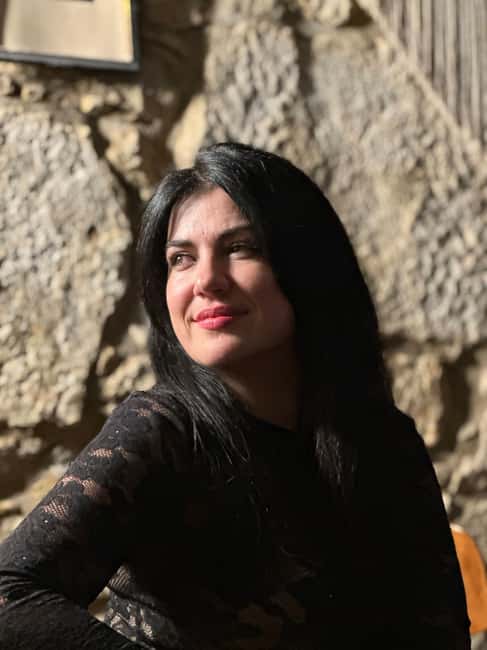
At $18 per person, the experience offers more than a basic concert ticket. Your price includes the live performance, multimedia material, commentary or audio support, and a glass of Tawny Port.
The value is strongest if you are new to Fado. A regular concert may give you beautiful music but leave you guessing about the difference between Lisbon and Coimbra styles, the role of the Portuguese guitar, or the importance of Amália Rodrigues. Here, those pieces are placed into a clear sequence.
It is also a sensible choice for couples, families with older children, and solo visitors who want a cultural activity without committing to a late dinner show. The one-hour format and central location make it easy to combine with other plans.
If you already know Fado well, your calculation changes. You may prefer a longer concert with less commentary and more uninterrupted music. The strength here is explanation and variety, not an extended recital by one singer.
Who will enjoy Fado na Baixa most?
I would recommend this show to you if you want a gentle entry into Portuguese music, especially if you are unsure how to approach Fado. The explanations remove much of the mystery, while the live singing keeps the event from feeling academic.
It suits you particularly well if you enjoy:
- Cultural performances with background information
- Live vocals and acoustic instruments
- Short evening activities near Ribeira
- Portuguese food and drink traditions
- Experiences that compare regional styles
- Small venues rather than large productions
You may want to choose another option if you want a long, uninterrupted concert, a full Port tasting, or a highly formal performance with premium seating. The show is designed as an introduction, and that purpose shapes every part of the hour.
Practical details before you book
The meeting point is Fado na Baixa at R. de São João 99, 4050-553 Porto. It is in Ribeira, near the Douro River, so you can combine it with time in the historic center.
The duration is one hour, but starting times vary. Check availability for the date of your visit. The experience is wheelchair accessible, and host or greeter support is available in Portuguese, Spanish, English, and French.
You can cancel up to 24 hours in advance for a full refund. A reserve-now, pay-later option is also available, which helps if you are still arranging your Porto schedule.
Bring an open mind rather than detailed Fado knowledge. The program is built for people who may know only the name of the music, yet it still offers useful contrasts for anyone who has already heard Fado elsewhere.
Should you book this Porto Fado experience?
I would book Fado na Baixa if you want an informative first taste of Fado, not simply background music over dinner. The live voices, Portuguese guitar, Coimbra segment, Amália Rodrigues section, audience participation, and Port pairing give you a lot for $18.
The main limitation is the short running time. You receive a carefully shaped introduction, not a full night of songs. Still, that is exactly why it fits so well into a Porto itinerary: the show gives you enough understanding to hear Fado differently for the rest of your trip.
If the thought of an intimate auditorium, emotional singing, and a little cultural context appeals to you, book it. If you already know the tradition well and want hours of music, save your money for a longer concert. For most first-time visitors, this is a practical and genuinely moving way to meet Portugal’s most soulful musical form.
FAQ
Where does the Fado performance take place?
It takes place at the Fado na Baixa auditorium at R. de São João 99, 4050-553 Porto, in the Ribeira area near the Douro River.
How long does the experience last?
The performance lasts one hour.
What is included in the ticket?
The ticket includes the live performance, multimedia content, an audio guide, and one glass of Tawny Port.
Which languages are available?
The host or greeter support and audio guide are available in Portuguese, Spanish, English, and French.
Will I hear both Lisbon and Coimbra Fado?
Yes. The program covers traditional Lisbon Fado and Coimbra Fado, which is associated with Portuguese university students and is traditionally sung by a male performer.
Is the Portuguese guitar explained?
Yes. The performance introduces the Portuguese guitar and highlights the differences between Lisbon and Coimbra playing techniques.
Is the venue wheelchair accessible?
Yes, the experience is listed as wheelchair accessible.
Can I cancel my booking?
Yes. You can cancel up to 24 hours in advance for a full refund.
Is there a pay-later booking option?
Yes. You can reserve your place and pay later, allowing you to keep your Porto plans flexible.
Newly added around Porto
- Porto: Tuk tuk Tours with Port Wine Tasting★ 4.5 · 65 reviews
- Porto: Tile Painting Workshop with Tea and Port Wine★ 4.9 · 66 reviews
- Porto Wine Tasting Experience with Portuguese Tapas Plate★ 4.7 · 356 reviews
- Porto: Douro River Boat Tour with Wine Tasting★ 4.9 · 167 reviews
- Porto: Sunset Walking Tour with Port Wine and Views★ 4.6 · 95 reviews
- Porto: Douro River Cruise w/ Portuguese Wines & Local Host★ 4.9 · 166 reviews
- Porto: Self-Guided Bike and Boat Tour with Port Wine Tasting★ 4.7 · 52 reviews
- Porto: Taylor’s Port Cellar Tour & WOW The Wine Experience★ 4.5 · 136 reviews
Port Wine Tastings, compared.

Bridges Cruise & Sunset & Port Wine Cellar Option
Read our review →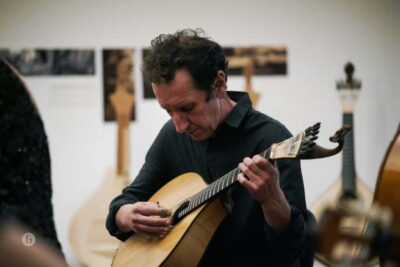
Fado & Port Wine in Traditional Portuguese Music Shop
Read our review →
Port Wine Lodges Tour Including 7 Port Wine Tastings (English)
Read our review →
Charming Sailboat Cruise with Port Wine,Sunset Option
Read our review →
Douro River Boat Cruise with Port Wine Tasting
Read our review →
Graham’s Port Lodge Tour with Premium Wine Tastings
Read our review →
Intimate Fado Show & Port Wine in Trindade Noble Hall
Read our review →
Vila Nova de Gaia: Port Wine Tasting with Cheese Pairing
Read our review →Browse the lists this tour appears in