
REVIEW · WINE TASTINGS
The Turin Chocolate & Wine Tasting Experience
Turin pairs its history with chocolate. This 2.5-hour walk begins at Caffè Elena, moves through elegant squares and old cafés, then settles into tastings of organic chocolate, regional wine, cheese, and cured meats. I like the mix of local food and city sightseeing, and I especially like that the guide explains why these foods belong to Turin rather than simply handing you samples. The main thing to note is that the experience is more of a tasting workshop than a full meal, so arrive hungry but do not expect lunch.
The $81 price is fair if you value a small-group setting, six chocolate tastings, two glasses of Piedmont wine, food pairings, and a local guide who can explain what is in your glass and on your plate. Fabio has earned particular praise for his wine and chocolate expertise, while Sara has been warmly noted for her humor and practical Turin advice. The tour is not suitable for anyone with a hazelnut allergy, and the accessibility information is contradictory, so wheelchair users should confirm the arrangements before booking.
Key points at a glance
- Start with Bicerin at Caffè Elena: Taste Turin’s traditional layered chocolate-and-coffee drink in one of the city’s historic cafés, linked with figures such as Nietzsche.
- Six chocolate samples: Compare organic bean-to-bar chocolate with classic Piedmont treats such as Gianduiotto and Cremino.
- Learn why hazelnuts matter: Gianduja began in Turin when cocoa was scarce and costly, leading confectioners to blend chocolate with finely ground hazelnuts.
- Two Piedmont wines with food: Sip one white and one red wine with organic cured meats and cheese while learning about aromas and pairings.
- A useful city walk: See Piazza Vittorio Veneto, the Gran Madre church, old pharmacies, palaces, and porticoed streets along the way.
- Rain is not a deal breaker: Much of the walking takes place beneath Turin’s broad arcades, though one workshop space is air conditioned.
Why this Turin food walk works
Turin is a good city for a food tour because its eating culture is tied closely to public life. Coffee houses, chocolate shops, aperitivo bars, royal-era squares, and covered walkways all sit close together. You are not being driven from one distant venue to another. Instead, the food gives structure to a pleasant walk through central Turin.
The guide also places the food in the story of Piedmont. The Savoyard state ruled this territory for roughly 800 years, and Turin became an important center of political and cultural life during the development of modern Italy. You will hear how that past helped shape the city’s café culture, confectionery, and wine traditions.
I would choose this experience early in a Turin visit. It gives you a useful sense of place, introduces several local specialties, and points out squares and buildings you may otherwise pass without understanding. It is also a relaxed way to get advice about where to eat later. Sara, in particular, has been praised for suggesting restaurants for the rest of a stay.
The tone is friendly rather than formal. You do not need to be a wine expert or a chocolate connoisseur. Fabio has a background as a chocolatier and is a level-two sommelier, so he can go into detail, but the format remains approachable. His explanations focus on what to taste, how flavors change, and why one pairing works better than another.
More Wine Tastings in Italy
- Florence: Chianti Wineries Tour with Wine Tasting
★ 4.5 · 10,071 reviews - Small-Group Wine Tasting Experience in the Tuscan Countryside
★ 5.0 · 7,392 reviews - Rome: Tuscany & Montepulciano Day Trip with Lunch & Wine Tasting
★ 4.5 · 5,232 reviews
Caffè Elena and Turin’s Bicerin
Meet your guide under the porticos in front of Caffè Elena at Piazza Vittorio Veneto 5/B. The café is one of Turin’s historic meeting places, and it makes a fitting first stop. You begin with Bicerin, the city’s traditional hot drink made with coffee, chocolate, and milk or cream served in distinct layers.
Bicerin is not simply a sweet coffee. The order in which you taste it matters, and the layers give you a quick introduction to Turin’s fondness for polished café rituals. The drink has long been served in the city’s nineteenth-century cafés, where writers, artists, political figures, and curious locals gathered.
The setting adds real value here. You are tasting the drink in an old café rather than learning about it in a modern classroom. One particularly interesting detail is the connection with Nietzsche, who spent time at Caffè Elena. That small piece of literary history gives the opening stop more character.
The café tasting lasts about 20 minutes. One practical point: a four-star assessment suggested that the experience could improve by adding a pastry with the Bicerin, and another espresso at a chocolate stop would be welcome. In other words, the drink is a highlight, but the opening sample alone will not fill you up.
Piazza Vittorio Veneto and the Gran Madre
After the café, the group walks through Piazza Vittorio Veneto, one of Turin’s grand open spaces. You then see the Chiesa Parrocchiale della Gran Madre di Dio, a striking church on the far side of the Po River area. These are short sightseeing stops, around five minutes each, but they help place the food in the city rather than treating it as an isolated tasting event.
The route also passes Farmacia Algostino & Demichelis, an old pharmacy that gives you a glimpse of Turin’s traditional shopfronts and interiors. There is also a brief photo stop at another historical location before the group heads to the main chocolate session.
Do not expect an architectural tour with long lectures at every building. The sightseeing is compact and works as a break between tastings. You get enough context to recognize the places later, but the main purpose is still food and drink.
The porticos are useful in poor weather. The experience can run on rainy days because much of the walk takes place under cover. You will still need to move between venues, so comfortable shoes and a light rain layer make sense, but this is not a tour that collapses at the first shower.
The chocolate workshop: six tastes, two traditions
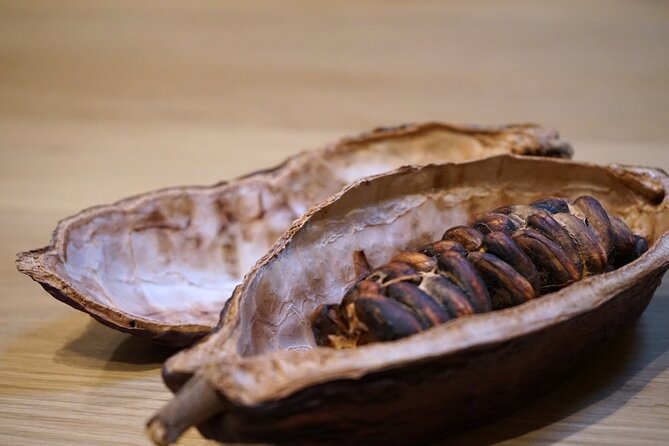
The main chocolate stop lasts about 45 minutes in a cozy venue. Here the guide shifts from city storytelling to a hands-on lesson about chocolate production, taste, and Turin’s confectionery tradition.
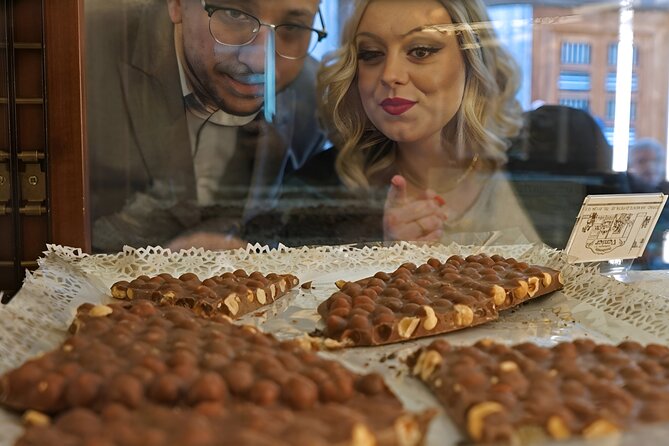
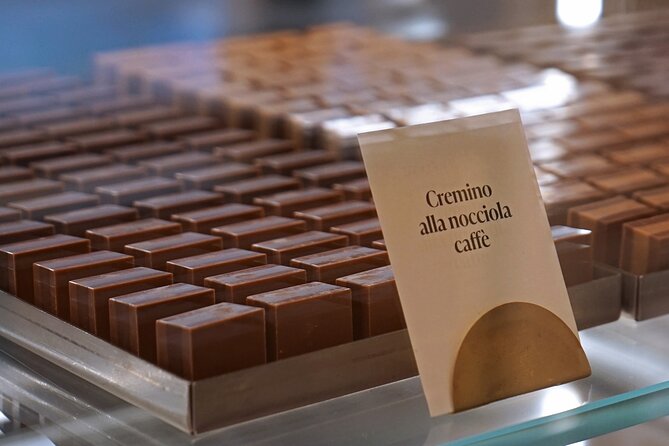
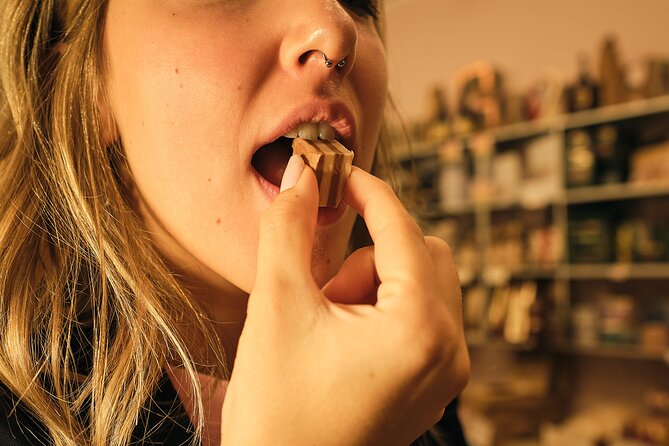
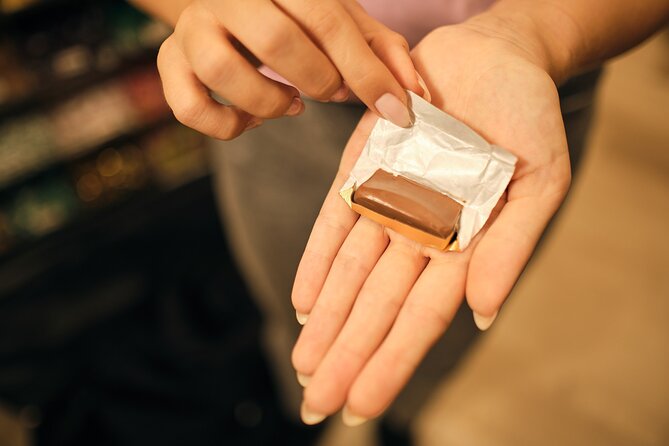
You taste six chocolates in total. The selection includes organic bean-to-bar products, which means the chocolate is made from cocoa beans through the production process rather than being treated as a generic sweet. You also sample classic local chocolates such as Gianduiotto and Cremino.
The point is comparison. You might notice differences in bitterness, texture, sweetness, roast, and the way the chocolate melts. Fabio has been especially praised for showing how to identify these changes and for explaining pairings in a way that makes sense even if you have little tasting experience.
Gianduiotto is the local classic to watch for. Its name comes from Gianduja, a blend of finely ground hazelnuts and chocolate. The style developed in Turin during the nineteenth century, when cocoa was scarce and expensive. Adding hazelnuts stretched the cocoa supply while producing a smooth, rich confection that became closely tied to Piedmont.
That background makes the tasting more than a parade of sweets. You see how economics, local crops, and craftsmanship shaped a product now associated with Turin around the world.
All the chocolate samples are organic and bean to bar products according to the experience details, with traditional chocolates included in the selection. If you are buying chocolate afterward, this section can help you decide what you actually like rather than choosing by attractive packaging alone.
The hazelnut warning is serious. Gianduja and several other Piedmont chocolate specialties depend on hazelnuts, so this experience is not suitable for people with nut allergies or hazelnut intolerance. Ask before booking if you have any dietary concern that is not covered by the stated information.
Same region, a very different glass:
- Tuscany Day Trip from Florence: Siena, San Gimignano, Pisa and Lunch at a Winery
★ 5.0 · 21,634 reviews - Florence: Pasta Cooking Class with Unlimited Wine
★ 4.9 · 10,285 reviews - Florence: Pasta & Tiramisu Cooking Class with Unlimited Wine
★ 4.9 · 6,708 reviews - Florence: Pasta Cooking Class with Unlimited Wine
★ 5.0 · 6,413 reviews
Piedmont wine, cheese, and cured meats
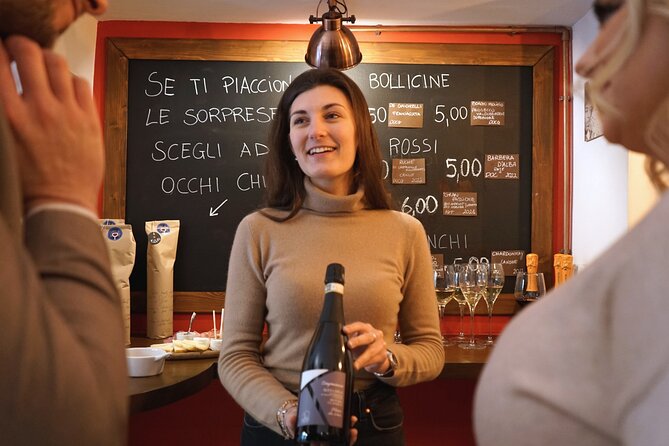
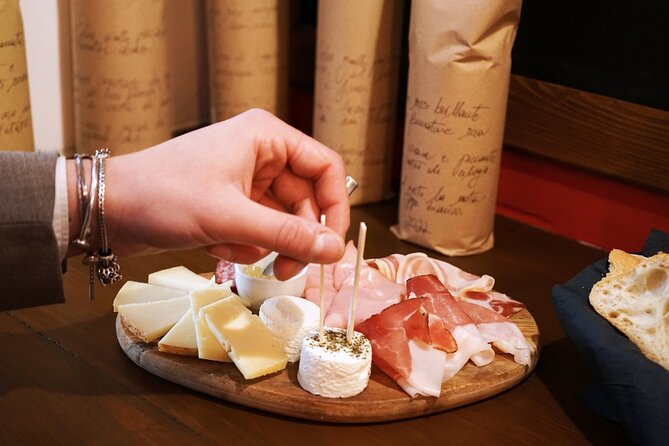
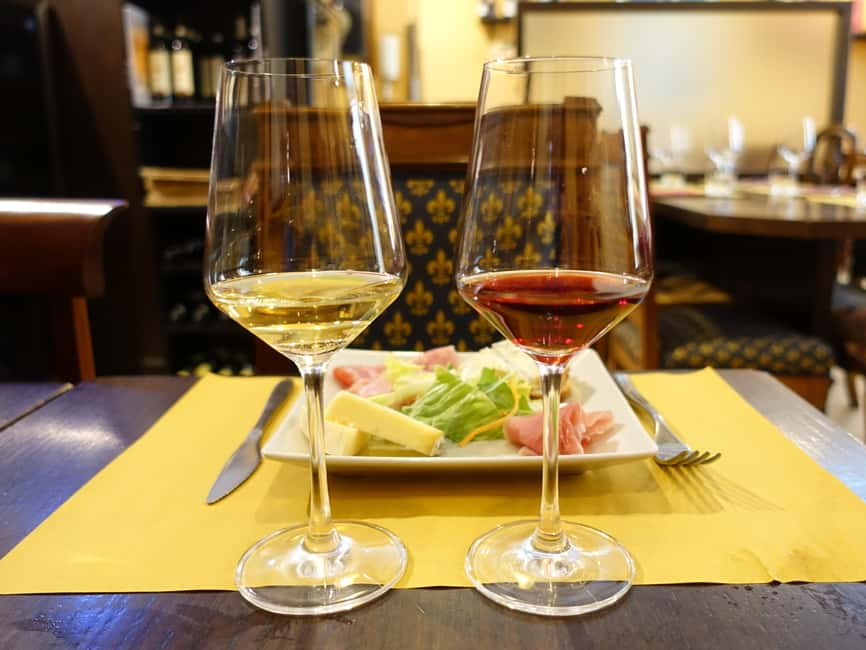
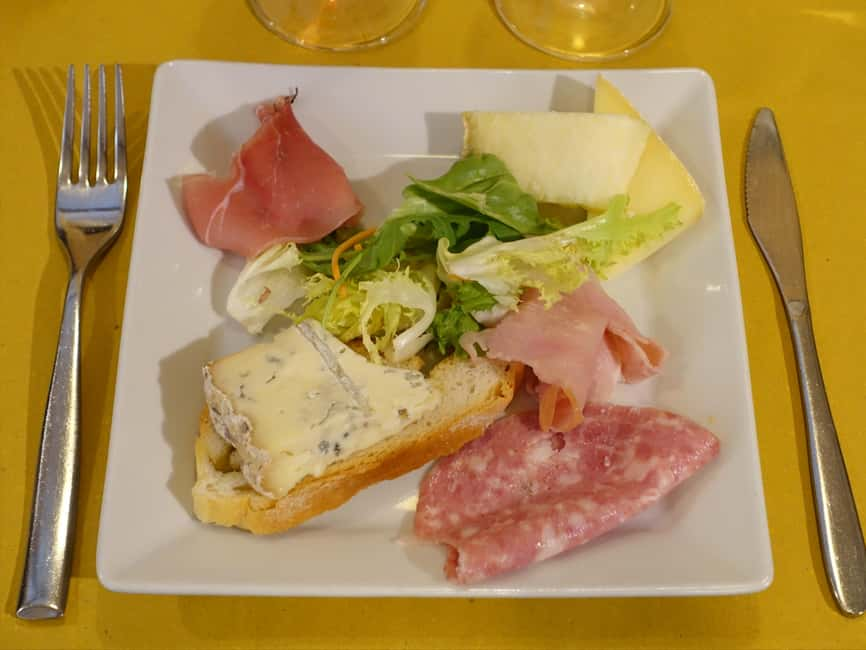
After another short walk, the group settles into a local bar for about 45 minutes of wine tasting. You receive two glasses of Piedmont wine, one white and one red, served with a platter of organic cured meats and cheese.
Piedmont is famous for vineyards set along the foothills and slopes near the Alps. The tasting gives you a compact introduction to that regional identity without turning into a technical wine course. The guide discusses scents, flavor, balance, and the basic logic of matching wine with food.
This is where Fabio’s strengths appear most clearly. He has been praised for explaining how to taste wine and how to pair it with cheese and cured meats. He also welcomes questions, which helps make the session useful for people who want to understand wine rather than simply drink it.
The two-glass format is both a strength and a limit. It keeps the tour manageable and provides a clear comparison between white and red wine. At the same time, one person suggested that a longer wine session would make better use of Fabio’s sommelier training. Another suggested a choice between red wine and Prosecco. If wine is your main interest, you may find this portion too short.
The food pairing also makes the wine taste more approachable. Cheese, cured meat, and wine give you practical examples of how salt, fat, acidity, fruit, and texture interact. You do not need to memorize tasting terms. Pay attention to how the wine changes once you take a bite.
The tour finishes at Bistrot Turin. The stated tastings include the two glasses and paired foods, but do not assume you are receiving a full aperitivo spread or dinner. One person enjoyed staying on at the wine bar after the formal experience, so you may want to keep the rest of the evening flexible.
The guides make the difference
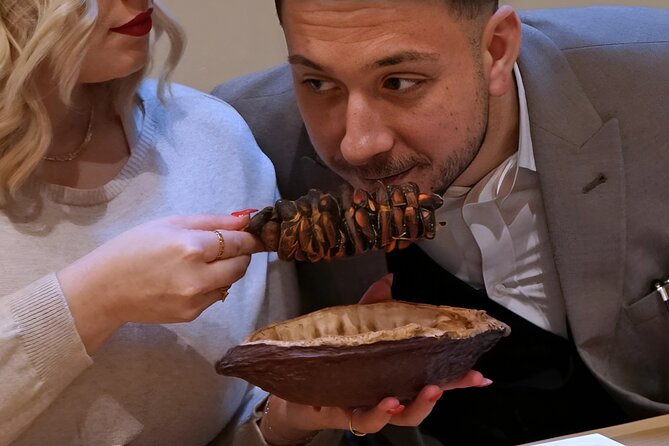
The strongest praise goes to the guides, especially Fabio. He is described as passionate about both chocolate and wine, with a background in chocolate-making and formal sommelier training. That combination matters because many food tours are good at one subject but thin on the other.
Fabio’s explanations focus on taste rather than showing off. You learn what to notice in a chocolate, how to compare samples, and which features make a wine suitable for a certain food. He has also offered to answer future wine-pairing questions, which suggests a generous and personal approach.
Sara has also led the experience successfully. She has been praised for making the walk feel like time spent with a friend, explaining the history of the chocolate shops, and sharing advice about where to eat in Turin. Her approach may appeal to you if you prefer a lighter, more conversational tour.
The guide assigned to your date may vary, so do not assume Fabio will lead every departure. If the booking system allows you to request a guide, Fabio is a sensible choice for travelers who want more detail about wine and chocolate. Sara is a strong choice for a friendly city orientation with food woven through it.
Price, pace, and practical value
At $81 per person, this is not the cheapest way to buy chocolate and two glasses of wine in Turin. You are paying for the guide’s expertise, six chocolate tastings, two wine tastings with food, access to selected venues, and roughly two hours of walking and tasting within a 2.5-hour experience.
I think the value is good for first-time visitors who want context. You could buy individual chocolates and drinks for less, but you would not get the explanation of Gianduja, the café history, the guided comparisons, or the route through Turin’s central sights.
The pace is gentle. The walking sections are short, and the longest stops are the chocolate workshop and wine session, each about 45 minutes. This makes it suitable for a relaxed afternoon or early evening, though the tour time should be checked when booking because starting times vary.
The group may be small, which helps during the tasting sessions. A smaller group gives you more room to ask questions and makes it easier for the guide to watch reactions and explain the differences between samples.
You should still eat lightly beforehand if you need a substantial meal. The chocolate, cheese, cured meat, and wine add up, but the experience is built around tasting rather than serving a complete lunch or dinner.
Italian and English are offered. The workshop venue is air conditioned, so bring a light layer if you are sensitive to cool indoor spaces. Much of the route is sheltered by porticos, making this a practical option during rain.
The accessibility information needs attention. The activity details describe it as wheelchair accessible, but the same information says it is not suitable for wheelchair users. Since the route includes walking between several venues and the wording conflicts, contact the provider before paying if step-free access is important.
Free cancellation is available up to 24 hours before the start for a full refund, and you can reserve now and pay later. Those terms are helpful if your Turin plans are still shifting.
Who should book this experience?
I would choose this for a first visit to Turin, especially if you want an introduction to Piedmont’s food culture without committing to a long, formal culinary class. Couples, small groups of friends, and curious solo visitors should find the balance of tasting and sightseeing easy to manage.
It also suits families with older children who enjoy chocolate. One past participant specifically enjoyed the experience with children, though the wine portion is naturally aimed at adults.
Wine specialists may want a longer tasting with more bottles. People looking for a full meal should book dinner separately. Anyone with a hazelnut allergy should skip this experience, since the chocolate tradition at its center depends heavily on hazelnuts.
If you want to shop, bring room in your bag. The route introduces small food businesses that are generous with samples and time, and buying something from the places you visit is a thoughtful way to support them.
Should you book it?
Book it if you want six organic chocolate tastings, Bicerin, two Piedmont wines, local food pairings, and a compact walk through central Turin. The guides are the main reason to choose it, with Fabio particularly strong for technical food and wine explanations and Sara well suited to a warmer, city-friend style.
Skip it if you have a hazelnut allergy, need a substantial meal, or want a serious multi-wine seminar. Also clarify wheelchair access before booking because the published information is inconsistent.
For most visitors, the experience offers a pleasant and useful introduction to Turin: enough food to learn the city through its flavors, enough history to give the stops meaning, and enough free time afterward to return to the café or wine bar you liked best.
FAQ
Where does the Turin Chocolate & Wine Tasting Experience start?
It starts under the porticos in front of Caffè Elena at Piazza Vittorio Veneto 5/B in Turin.
How long does the experience last?
The experience lasts 2.5 hours, including about two hours of walking and tasting.
What chocolate is included?
You receive six chocolate tastings, including organic bean-to-bar chocolates and traditional Piedmont specialties such as Gianduiotto and Cremino.
What is Bicerin?
Bicerin is Turin’s traditional chocolate drink, served at the opening stop in the historic Caffè Elena.
How much wine do you taste?
The experience includes two glasses of local Piedmont wine, with one white and one red wine tasting.
Is food served with the wine?
Yes. The wines are paired with an organic platter of cured meats and cheese.
Is the experience suitable for people with nut allergies?
No. The experience is not suitable for people with hazelnut allergies or intolerance.
What languages are available?
The live tour is offered in Italian and English.
Can I cancel or pay later?
You can cancel up to 24 hours in advance for a full refund. Reserve-now, pay-later booking is also available.
More Sweet Stops in Italy
- Rome: Pasta Making Class with Wine, Limoncello, and Dessert
★ 4.9 · 3,177 reviews - Florence: Handmade Pasta & Dessert Class with Unlimited Wine
★ 4.8 · 788 reviews - Florence: Pasta Class with Wine, Limoncello and Dessert
★ 4.9 · 674 reviews - Rome Cooking Class: Make Pizza and Pasta with Wine & Dessert
★ 4.5 · 651 reviews
Newly added around Italy
- Etna trekking and wine tasting★ 5.0 · 28 reviews
- Etna Tour and Lunch in a Winery with Wine Tasting★ 5.0 · 97 reviews
- Cooking Class and Wine Pairing in Capri★ 5.0 · 57 reviews
- WINE TOUR with sommelier in a winery near Cagliari★ 5.0 · 27 reviews
- Cagliari 3 Hours Luxury Motorboat Tour – Wine and Snorkeling★ 5.0 · 118 reviews
- Cagliari Boat Tour by Maxi Rib – Wine and Snorkeling★ 5.0 · 128 reviews
- Small-Group Food and Wine Tour from Cagliari★ 5.0 · 237 reviews
- Wine Experience: vineyard, wines and food★ 5.0 · 155 reviews
Wine Tastings, compared.
Douro Valley w/ Boat Tour, Wine Tasting & Lunch
Read our review →
Complete Douro Valley Wine Tour with Lunch, Wine Tastings and River Cruise
Read our review →
Small-Group Wine Tasting Experience in the Tuscan Countryside
Read our review →
Montserrat & Cogwheel Train, Gourmet Wine Tasting & Tapas/Lunch
Read our review →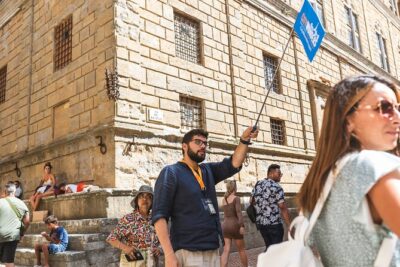
Tuscany & Montepulciano Day Trip with Lunch & Wine Tasting
Read our review →Browse the lists this tour appears in