
REVIEW · WINE TASTINGS
Gastronomy tour and wine tasting in traditional villages
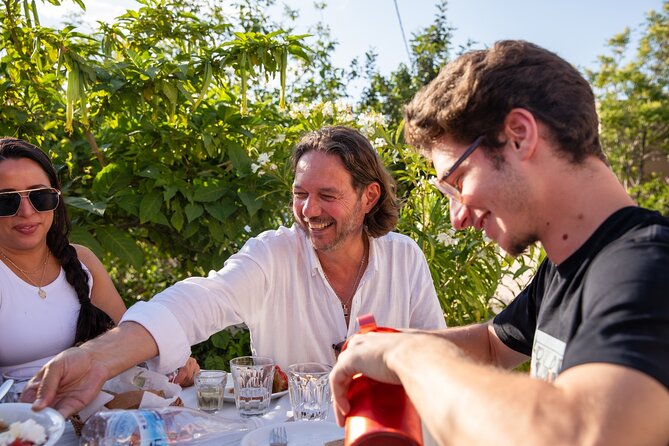
Eat your way beyond Chania. This small-group food tour links quiet villages, old churches, olive oil makers, and family tavernas in one long, generous afternoon. I like the mix of local food and countryside stops, especially the sand-cooked Greek coffee in Armeni and the four Cretan wines served beside Lake Kournas. I also like that guide Yannis focuses on ordinary places and local traditions rather than polished tourist stops.
The main drawback is simple: there is a great deal of food packed into five to six hours. You get two full meals, snacks, cheese, ice cream, raki, wine, and coffee. Some people found the portions too large, and the vehicle may feel tight if the group is full. Still, at $216.25 per person, the transport, guiding, tastings, two meals, and village access make this a strong value for anyone who wants to see beyond Chania without renting a car.
Key points at a glance
- Greek coffee cooked in hot sand: Armeni offers a traditional coffee stop under trees and beside streams.
- Rare Cretan tastes: Try sheep milk ice cream, carob, graviera cheese, raki, and local wines.
- Two substantial meals: One comes beside Lake Kournas, and the second takes place at a family restaurant in Apokoronas.
- A working olive oil mill: Antonis explains how Cretan olive oil is produced, followed by a tasting.
- Small villages instead of city sights: The route reaches places you may not find easily without a car.
- Small-group format: The maximum is 12 people, with pickup and drop-off from your designated spot.
Why this tour works for seeing rural Crete
Chania is easy to enjoy on foot, but the wider region is where Cretan food and village life become more personal. This tour gives you a practical way to reach Armeni, Fres, Apokoronas, Georgioupolis, and Lake Kournas in one outing.
The route is not built around famous monuments. It is built around food, conversation, small producers, old religious sites, and views from family restaurants. That makes it a good choice if you want to understand how people eat and live in western Crete, not just photograph the harbor.
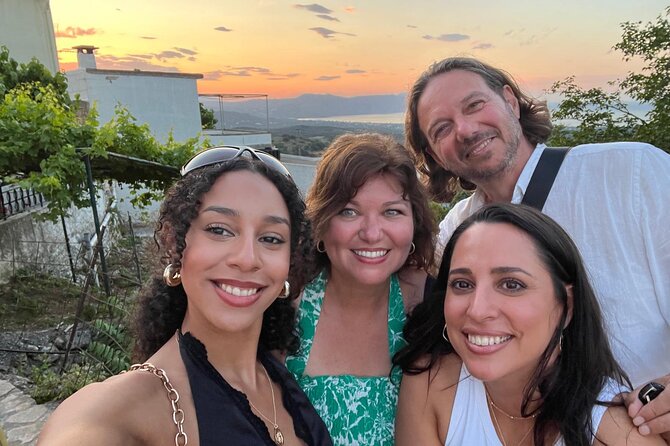
Yannis is a major part of the appeal. The strongest praise centers on his friendly manner, cultural explanations, and willingness to answer questions. He may also take photos for you with your phone, a useful touch when you are traveling alone or want pictures that include the whole group.
The tour is offered in English and accepts a maximum of 12 people. That keeps the outing more personal than a large coach trip, though you should not assume every departure will use a large van. One experience used a sedan that felt cramped with four people plus the guide. If comfort matters to you, ask about the vehicle when booking.
More Wine Tastings in Greece
- PRIVATE Walking Tour with Lunch and Wine Tasting by a Sommelier
★ 5.0 · 113 reviews - Chania: Milia Mountain Tour w/Lunch Olive Oil/Wine Tastings
★ 4.9 · 97 reviews - Santorini: Top Sights Day Trip, Wine Tasting, & Oia Sunset
★ 4.6 · 2,492 reviews
Armeni: Greek coffee the slow way
The first stop is Armeni, a village surrounded by trees and streams. Here you sit at a traditional coffeehouse and watch Greek coffee being cooked slowly in hot sand.
This method is more than a visual trick. The slow heat helps produce the strong, thick coffee associated with the traditional preparation. You will have about 30 minutes here, enough time to taste the coffee and get your first look at village life.
I like this opening because it sets the tone gently. You are not rushed into a long meal right away. Instead, you begin with a drink, a bit of scenery, and an introduction to a local custom.
Greek coffee can be intense, especially if you normally drink filtered coffee. Ask about sweetness if you have a preference. The stop itself is included, so you do not need to budget an extra admission fee.
Fres and the more unusual Cretan flavors
Fres brings some of the tour’s most distinctive tastes. The stop includes sheep milk ice cream, which is available in Chania but not commonly found elsewhere. Carob is another highlight, with an earthy, slightly sweet flavor that has long been part of Cretan cooking.
Cherry and carob ice cream are especially good choices if both are available. The sheep milk gives the ice cream a different character from familiar cow milk versions, and the carob flavor offers a direct connection to a local ingredient rather than a standard dessert.
You also taste graviera, a firm Cretan cheese used for saganaki. Saganaki is often served fried, but here the focus is on trying the cheese itself and understanding one of the ingredients behind a well-known Greek dish.
The cheese shop owner may offer raki, the strong Cretan spirit commonly served after food. It is optional, and you should treat it with respect. Alcoholic drinks are restricted to people aged 18 and over.
This 30-minute stop could be one of the tour’s best moments for curious eaters. It is also the place where you may start to realize the scale of the day’s food. Save room. You are only getting started.
The old church and its garden in Apokoronas
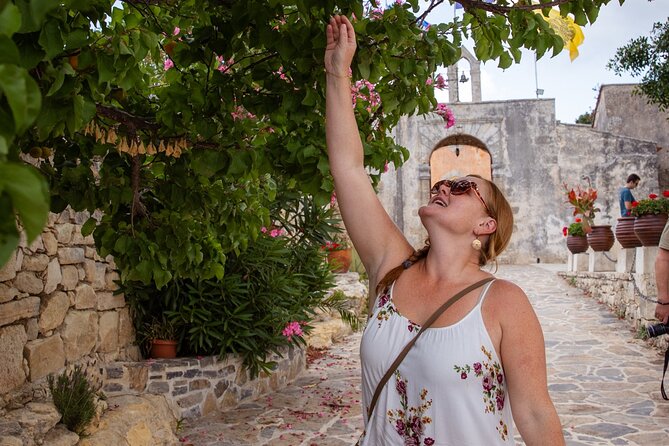
The next major stop is an old church in the Apokoronas area, said to be at least 500 years old. You will see its interior and exterior, along with a garden containing flowers, herbs, and fruit trees.
The garden includes apricot, fig, banana, carob, walnut, and quince trees. That variety gives the visit a strong connection to the food stops around it. In Crete, the line between garden, pantry, and restaurant is often thin. Herbs and fruit are not just decoration here. They are part of daily cooking.
The church offers a change of pace after the coffee and tasting stops. You can focus on architecture, religious tradition, and the older side of village life. The tour also includes a guided look at an ancient olive mill connected with the site.
The visit lasts about 45 minutes. It is not a major museum visit, and the appeal depends on your interest in smaller historical places. If you prefer a packed schedule of famous sights, this may feel quiet. I think that quiet is the point.
More Wine Tastings in Chania:
- From Porto: Douro Valley w/ Boat Tour, Wine Tasting & Lunch
★ 4.7 · 19,061 reviews - Complete Douro Valley Wine Tour with Lunch, Wine Tastings and River Cruise
★ 5.0 · 12,920 reviews - Florence: Chianti Wineries Tour with Wine Tasting
★ 4.5 · 10,071 reviews - From Split: Krka Waterfalls, Food & Wine Tasting Tour
★ 5.0 · 9,326 reviews
A river village and the road between stops
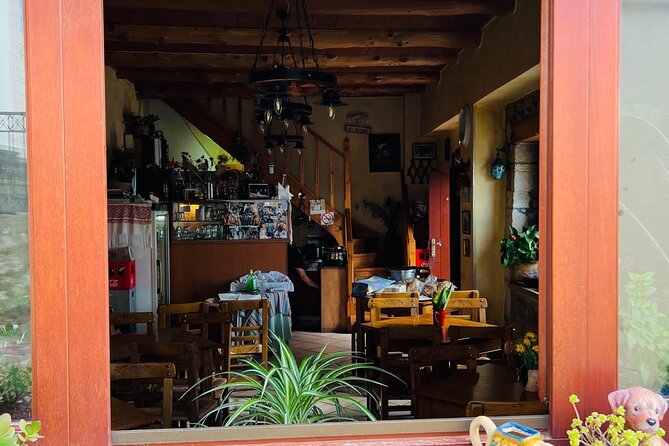
The route also passes through a beautiful village with a river running through it. The information provided does not assign a separate duration to this stop, so treat it as part of the countryside drive rather than a guaranteed long visit.
That distinction matters. The tour lasts five to six hours, but the remaining time is used for driving between villages. You will see more of the region from the road, yet not every place receives a formal walking tour.
This is one reason the outing works well for people without a rental car. You can cover several scattered places while someone else handles the route. The tradeoff is that the day has a fair amount of vehicle time.
Georgioupolis and the working olive oil mill
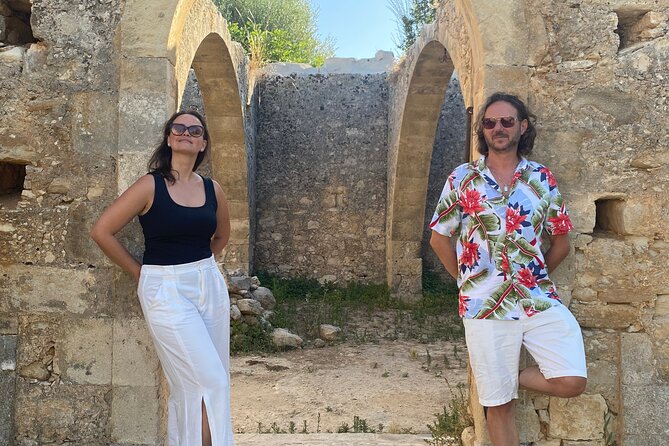
At Georgioupolis, you visit a modern olive oil mill. Antonis, the producer, explains how olive oil is made and answers questions about the process.
This is more useful than a simple tasting table. You can connect the finished oil on your plate with the production behind it. After the explanation, you taste virgin olive oil and olives, then browse an exhibition that may include oil, olives, handmade cooking pots, and other traditional products.
You can buy souvenirs here, but there is no pressure built into the tour description. If you want to take home olive oil, this is the logical place to consider it, since you have just heard how the product is made.
The stop lasts about 45 minutes. I would pay attention to the questions you want to ask before arriving. Good topics include the difference between virgin and extra virgin oil, how oil is stored, and how Cretan households use it in everyday cooking.
Lake Kournas: a long meal with four local wines

The first full meal comes at Lake Kournas, Crete’s largest lake according to the tour information. The restaurant has views toward the lake, mountains, and sea, giving the meal a scenic setting as well as a long list of dishes.
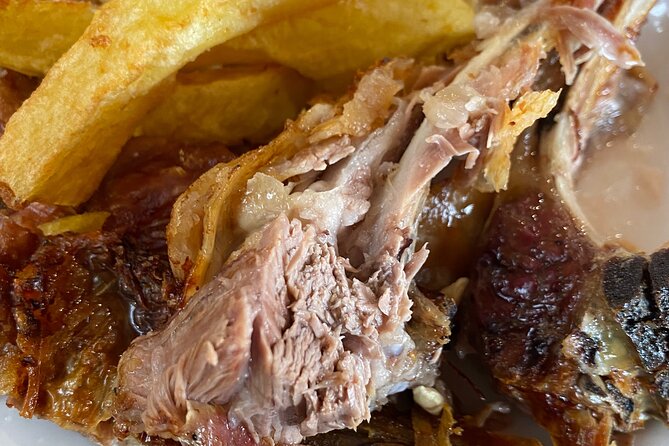
You may taste tsigariasto arni, lamb cooked with oil and wine, and antikristo arni, lamb slowly cooked over fire. Other dishes include stuffed grape leaves, zucchini flowers filled with rice, and imam baildi, an eggplant dish with garlic, onion, fresh tomato sauce, cream cheese, and olive oil.
The meal lasts about 1 hour and 15 minutes. Four local wines are included, giving you a chance to compare several Cretan pours with the food instead of having one drink alongside dinner.
This is a feast, not a quick lunch. You should arrive hungry and pace yourself. The range of dishes is a real strength, but the portions can be more than one person can reasonably eat. If you dislike waste, tell the guide or restaurant staff early that you would rather have smaller servings when possible.
Vegetarian, vegan, and gluten-free options are available. You should still explain your needs when booking and again at the start of the meal, since the food is spread across several dishes and restaurants.
Apokoronas and the second family meal
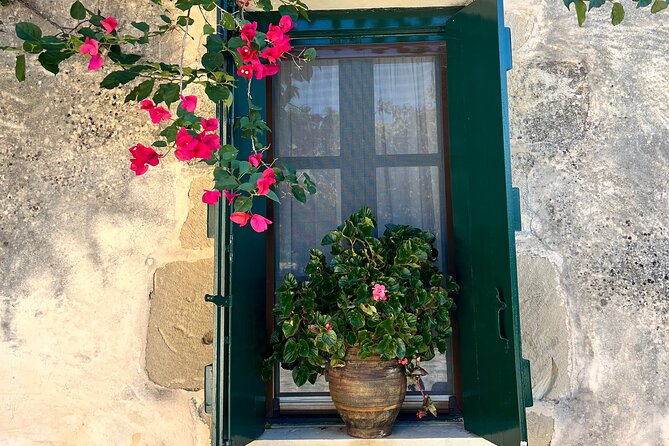
The second meal takes place in Apokoronas at a family restaurant, with a different set of dishes from the lake meal. The idea is to show another side of Cretan cooking rather than repeat the same plates.
Expect chicken cooked with grape juice, pork with tomato sauce and peppers, smoked pork with oregano and sage, and mushrooms marinated with beer. The meal lasts another 1 hour and 15 minutes.
The contrast between the two meals is valuable. At Lake Kournas, lamb and vegetable dishes share the table with four wines and a broad view. In Apokoronas, the focus shifts to other meats, smoked flavors, herbs, and family-style cooking.
The timing may be difficult for some people. The two large meals are relatively close together, and one person found it hard to eat again so soon after lunch. I would make this tour a main food event of your day, not something you schedule between another breakfast and a late dinner.
Price, pace, and what you actually receive
At $216.25 per person, this is not a cheap village outing. It is also not priced like a basic sightseeing transfer. The fee covers air-conditioned transport, pickup and drop-off, a guide, all listed fees and taxes, snacks, two meals, alcoholic drinks, the olive oil mill visit, and the old church visit.
The two meals alone give the price much of its weight, especially with four wines at Lake Kournas and several traditional dishes at both restaurants. You are also paying for the time and access needed to connect scattered villages without driving yourself.
The best value comes if you do not plan to rent a car. One day covers several rural locations, and you can enjoy raki and wine without worrying about driving afterward. If you already have a car and prefer to choose your own restaurants, the price may feel harder to justify.
The duration is listed as approximately five to six hours. Driving takes up part of that time, so do not expect five straight hours of eating and sightseeing. The route is full, but it is not frantic.
Who should book this Cretan food tour?
I would recommend it to you if you:
- Want to see villages beyond Chania without renting a car
- Prefer family restaurants to formal dining rooms
- Like tasting several dishes instead of ordering one main course
- Are curious about olive oil, cheese, carob, raki, and local wine
- Enjoy history in small doses, especially old churches and traditional mills
- Can handle a generous amount of food in one afternoon
- Value a friendly guide and conversation as much as sightseeing
It may be less suitable if you want a light meal, a strict sightseeing schedule, or a large vehicle with lots of personal space. It is also not the best match if you avoid alcohol entirely, though the raki and wine are not mandatory and nonalcoholic food options are available.
The tour has a perfect five-star rating from 32 reviews, with 100 percent recommending it. That strong record fits the experience described: people value Yannis, the authentic food, the scenic restaurants, and the chance to reach villages they might otherwise miss.
Final verdict: book it if you want a very full taste of Crete
I would book this tour if your ideal day includes local food, countryside roads, small villages, and plenty of conversation. The strongest parts are the unusual tastes, the olive oil mill, the old church garden, and the two meals in settings you would be unlikely to find by wandering Chania alone.
Go in hungry, but not starved. Wear comfortable clothes for a long vehicle ride and several hours at the table. If you are sensitive to tight seating, ask about the vehicle before paying.
The $216.25 price makes sense for a visitor without a car who wants transport, guiding, tastings, wine, and two substantial meals bundled together. If you want a light culinary introduction, choose something shorter. If you want a generous, local-style day that reaches well beyond Chania, this is one of the better ways to do it.
FAQ
How long does the gastronomy tour last?
The experience lasts approximately five to six hours. The remaining time is used for driving between the villages and stops.
Where does the tour take place?
The route includes Armeni, Fres, Apokoronas, Georgioupolis, Lake Kournas, and a beautiful village with a river passing through it.
Is hotel pickup available?
Pickup and drop-off are offered from your designated spot.
Are meals included?
Yes. The tour includes lunch at a family restaurant near Lake Kournas and dinner at another family restaurant in Apokoronas.
Are vegetarian, vegan, and gluten-free options available?
Yes. Vegetarian, vegan, and gluten-free food options are available.
Is alcohol included?
Yes. Alcoholic drinks include four local wines and raki. Alcoholic beverages are available only to people aged 18 and over.
What is the cancellation policy?
You can cancel at least 24 hours before the local start time for a full refund. Cancellations or changes made less than 24 hours before the start time are not accepted for a refund.
Newly added around Chania
- From Chania Private half day Winery-Olive factory-Kournas lake★ 5.0 · 50 reviews
- Wine & Olive Oil Tour with lunch at the White Mountains★ 5.0 · 71 reviews
- Manousakis Winery Shuttle Service Tour and Taste★ 4.5 · 34 reviews
- Chania Walking Food And Wine Night Tour★ 4.5 · 31 reviews
- Private tasting of 6 cretan wines in Fres village★ 5.0 · 32 reviews
- Chania: Milia Mountain Tour w/Lunch Olive Oil/Wine Tastings★ 4.9 · 97 reviews
- Chania: Wine, Food, and Sunset Tour with 3-Course Dinner★ 4.9 · 77 reviews
- Chania Area: Food Tasting Tour with Winery Visit★ 4.4 · 99 reviews
Wine Tastings, compared.
Douro Valley w/ Boat Tour, Wine Tasting & Lunch
Read our review →
Complete Douro Valley Wine Tour with Lunch, Wine Tastings and River Cruise
Read our review →
Small-Group Wine Tasting Experience in the Tuscan Countryside
Read our review →
Montserrat & Cogwheel Train, Gourmet Wine Tasting & Tapas/Lunch
Read our review →
Tuscany & Montepulciano Day Trip with Lunch & Wine Tasting
Read our review →Browse the lists this tour appears in