REVIEW · WINE TASTINGS
Bratislava: Wine Tasting Experience in the Dark
Turn off the lights, rethink wine. This 40 to 50 minute experience in a historic cellar gives you four Slovak wines from small family wineries, served in total darkness and explained through an English audio guide. I like the unusual sensory challenge, and I like the chance to try local wines you may not encounter elsewhere. The main consideration is that the pace can feel quick, especially if you prefer to linger over each glass.
The welcome is friendly and relaxed. Boris has earned particular praise for explaining the process clearly, helping with water, and encouraging people to speak up. Tereza and Tatiana have also been warmly received for their humor and personal attention. Just remember that the narration is prerecorded, so this is partly a guided tasting and partly a set audio presentation.
Key points at a glance
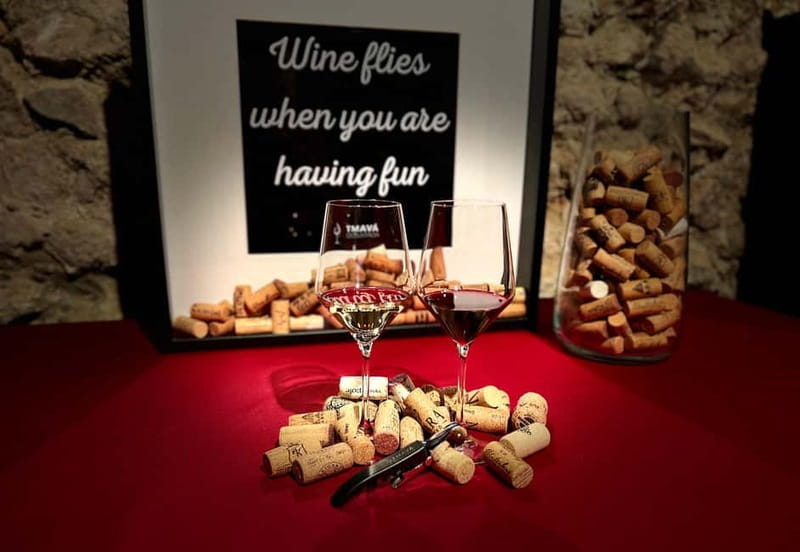
- Four Slovak wines in complete darkness: You taste without seeing the color, label, bottle, or pour.
- A historic cellar on Michalská Street: The setting begins in a traditional old wine cellar beneath the Palace Apartments Hotel.
- A sensory test, not just a wine flight: The darkness makes you rely on smell, taste, texture, and memory.
- English and German support: The main tasting uses an English audioguide, with live guidance available in English or German.
- A short but unusual Bratislava activity: At roughly 40 minutes, it fits neatly between sightseeing, dinner, or shopping.
- No food is included: Eat beforehand if you need more than wine, water, and conversation.
Entering the cellar on Michalská Street
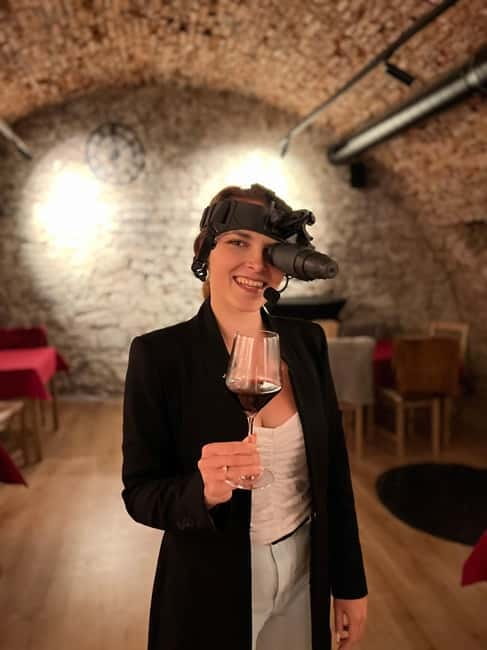
The meeting point is easy to identify once you reach Michalská 3. Go through the courtyard of the Palace Apartments Hotel, next to reception, and look for the large illuminated sign marked Tmavá Degustácia. You should arrive five minutes before your scheduled start. That small buffer matters because the lighting sequence and introduction begin as a group.
At first, the room is lit normally. You can see the cellar, settle into your seat, and get used to the surroundings. This opening period gives the experience a pleasant cultural frame before the main experiment begins. You are not simply handed a glass in a dark room with no explanation.
The cellar setting also helps the tasting feel connected to Bratislava rather than imported from somewhere else. The focus is on Slovak wine, especially bottles made by small family wineries. You get a short introduction to local varieties and wine traditions before the practical work of tasting begins.
More Wine Tastings in the world:
- From Porto: Douro Valley w/ Boat Tour, Wine Tasting & Lunch
★ 4.7 · 19,061 reviews - Complete Douro Valley Wine Tour with Lunch, Wine Tastings and River Cruise
★ 5.0 · 12,920 reviews - Florence: Chianti Wineries Tour with Wine Tasting
★ 4.5 · 10,071 reviews
How the lights change the tasting
After the introductory audio, the lights gradually go out. The slow transition is useful. You have time to adjust, and the host can make sure everyone is comfortable before the room reaches total darkness.
Once the lights are gone, the sommelier pours the first sample. You do not see the bottle, the label, the wine’s color, or the amount in your glass. That removes several clues you normally use without thinking. A pale wine, a dark red, or an orange wine can create expectations before you take a sip. Here, those expectations are gone.
The audio guide leads you through each sample with prompts about aroma, flavor, and sensation. You are encouraged to share your impressions aloud. It is not a formal exam, and you do not need to identify grape varieties correctly. The fun comes from comparing what you think you smell or taste with what the wine actually is.
I like this format because it turns wine tasting into a group activity. Someone might notice fruit, spice, flowers, acidity, or sweetness while another person gets something entirely different. You may find that the wine you enjoy most is not the one you would have chosen after seeing its color or label.
The darkness can also make you pay closer attention. Without a visual distraction, you concentrate on the glass in your hand and the details of each sip. One person found the pace a little fast, particularly because the narration suggested taking small sips while the next stage required finishing the wine. If you like a slow, technical tasting, keep that in mind.
Four Slovak wines, one surprise after another
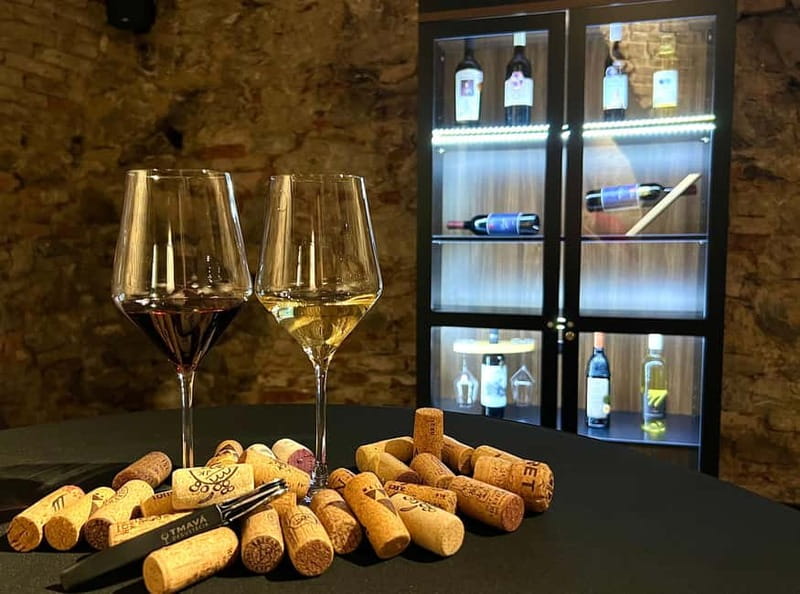
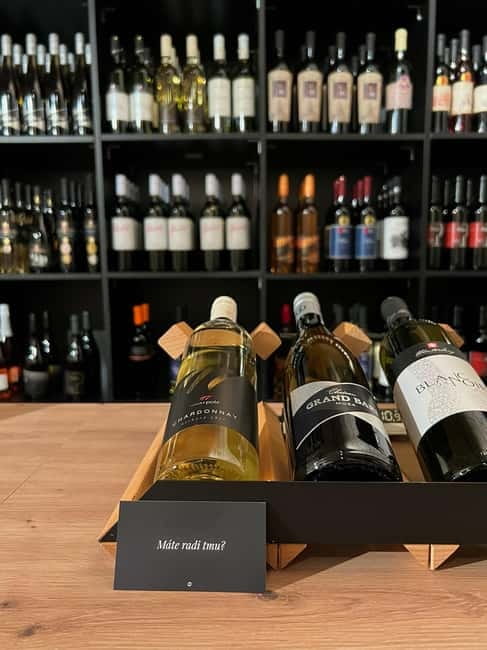
The tasting includes four samples of Slovak wine. The exact wines are not listed in advance, which is part of the point. You are meant to discover them through your senses rather than judge them by reputation, price, producer, or appearance.
The selection has been praised for variety and quality. The experience has introduced people to wines they had never tried before, including orange wine. That style can be especially interesting in darkness because its unusual color cannot influence your first impression.
You will hear information about typical local wines and grape varieties during the session. The presentation aims to keep things light and interactive instead of turning the event into a lecture. The host pours each sample, while the recording sets up the tasting and asks questions for you to consider.
Your sommelier remains available throughout. Boris, in particular, has been praised for explaining how each pour would happen and for checking if people needed water. That live help is important because the audio guide cannot respond to your specific questions or reactions.
The format works best if you talk. Say what you smell, guess what type of wine you have, and listen to how other people describe the same glass. You can also ask the sommelier questions as you go. A quieter group may find the experience less lively, although the narration keeps the tasting moving.
The audio guide and the human host
The prerecorded English narration is a key part of the event. It gives the tasting a clear structure and keeps the four samples moving at a steady rate. English is available for the main experience, and German support is also offered. The activity information describes English and German live guiding, with German available as an optional audio guide.
The recording is not the same as having a sommelier talk continuously in the room. One person specifically noted that the audio was prerecorded but still effective, thanks to the in-person staff who could answer questions. That is a fair description of the format.
I would think of this as a hybrid experience. You receive prepared commentary, prompts, and facts through the audio guide, but you also have a real sommelier managing the pours and responding to you. This gives the tasting more consistency than a completely informal session while keeping a human touch.
The personality of the individual host can shape your experience. Boris has been singled out for a funny, clear, and attentive approach. Tereza was praised for doing an excellent job even while new to the cellar. Tatiana has been remembered as friendly and amusing. These details suggest that the staff make an effort to keep the mood comfortable, not stiff.
A few more wine tours around the world worth a look
- Tuscany Day Trip from Florence: Siena, San Gimignano, Pisa and Lunch at a Winery
★ 5.0 · 21,634 reviews - Florence: Pasta Cooking Class with Unlimited Wine
★ 4.9 · 10,285 reviews - From Split: Krka Waterfalls, Food & Wine Tasting Tour
★ 5.0 · 9,326 reviews - Small-Group Wine Tasting Experience in the Tuscan Countryside
★ 5.0 · 7,392 reviews
The ten minutes after the tasting
The listed itinerary allows about ten minutes of free time for shopping after the main 40-minute tasting. This is a useful extra rather than a second tour. If you discover a wine you like, you may be able to buy bottles tasted during the session. One person specifically noted that the wines could be purchased and described them as a good gift option.
Do not expect a full meal or a long cellar visit in this final period. No food or snack is included, and the activity is built around four samples rather than a food pairing. If you need dinner, arrange it before or after the tasting.
The short length makes this easy to add to a day in central Bratislava. You can schedule it between sightseeing and an evening meal without giving up half a day. At the same time, the compact format means the experience does not offer a large wine flight or extensive producer presentation.
Is $26 a fair price?
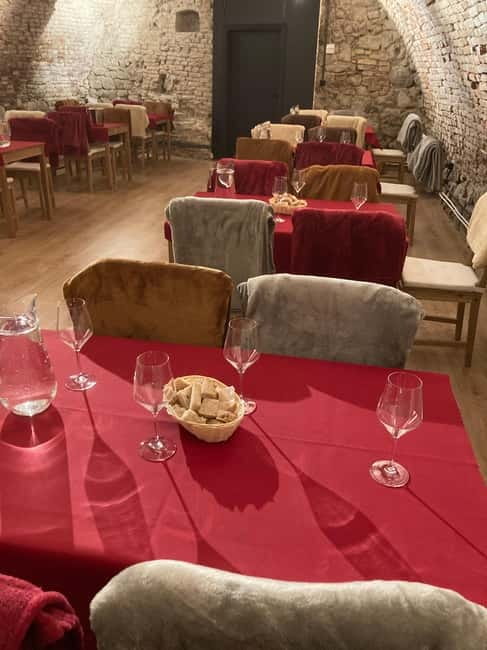
At $26 per person, the value depends on what you want from a wine activity. You receive four Slovak wines, a guided sensory format, an atmospheric cellar, local wine information, and time to ask questions. For a standard tasting, you might compare the price with the number of pours. For this experience, the darkness and structured presentation are part of what you are paying for.
I think the price is reasonable for a special occasion or a first introduction to Slovak wine. It is particularly useful if your Bratislava plans include more than monuments and restaurants. You get a cultural activity that takes less than an hour and gives you a story to talk about afterward.
The value is weaker if your main goal is volume. Four samples are enough for a focused tasting, but not for a long evening of wine discovery. Since food is not included, you should also allow money for a meal or snack elsewhere.
The experience may be a strong choice for a couple, a small group of friends, or a birthday and bachelorette weekend. It also suits people who do not consider themselves wine experts. One person noted that even someone who does not particularly like wine could enjoy the unusual format.
Who should book this experience?
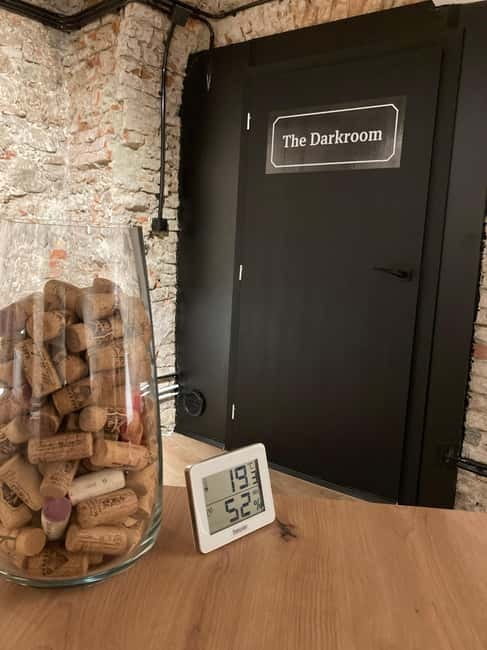
I would recommend it to you if you enjoy trying local specialties in a less predictable way. The darkness gives familiar wine tasting a new set of rules, and the Slovak focus keeps it tied to the destination.
It is also a good fit for people who like interactive activities. You are invited to answer questions aloud and describe what you sense. If you would rather sit quietly and receive a detailed technical explanation, the lively prompts may feel a little basic.
The experience is not suitable for children under 18, and pregnant women are advised not to take part. It is also not suitable for wheelchair users or people with kidney problems. Drivers under 18 are excluded as well. These restrictions should be checked before booking, especially if you are arranging the activity for a larger group.
The room is dark enough to be a real part of the activity, not a dim restaurant setting. If darkness causes you discomfort, consider that carefully. Staff have made a point of checking that people are comfortable, but you should still choose an experience that suits you physically.
Timing, group feel, and practical advice
The advertised duration is 40 to 50 minutes, with the main tasting lasting about 40 minutes and roughly ten minutes for free time and shopping. Arrive five minutes early at the Michalská 3 meeting point. Do not go straight to a random cellar entrance. Use the Palace Apartments Hotel courtyard and look for the Tmavá Degustácia sign.
The experience can be private for your group. If you join a shared session, the atmosphere may depend on how talkative the other people are. One person attended alone and found it slightly awkward at first, but still enjoyed the session. Another solo participant felt lucky to have a private-feeling experience. That is a helpful reminder that a small group can be intimate, while a quiet group can also feel less social.
Book this before a major meal rather than after one if you want to focus on the wine. Since there is no food included, you may prefer to eat something light beforehand. Also leave room for water, which the sommelier can provide during the tasting.
The activity offers free cancellation up to 24 hours in advance, and you can reserve now while paying later. Availability and start times vary, so check the schedule that fits your day in Bratislava.
What the experience teaches you about Slovak wine
The strongest cultural value is that the tasting points your attention toward Slovak producers. You are not simply sampling famous international labels. The four wines come from small family wineries, and the narration explains local varieties and styles.
That makes this a useful introduction for anyone who knows little about Slovak wine. Bratislava is close to important wine-producing areas, yet many visitors arrive with little idea what to order in a local restaurant or wine bar. Even a short tasting can give you a few new reference points.
The darkness also makes a larger point about wine judgment. You often decide what you expect before tasting, based on color, branding, bottle design, or price. Removing those signals lets you notice how much your eyes influence your opinion. You may leave with a better sense of which flavors and textures you actually prefer.
One participant said the experience changed how they thought about the wine they liked. That is a useful outcome for a $26 activity. You may not become a wine expert in 40 minutes, but you can become more curious and less tied to first impressions.
Should you book the Bratislava wine tasting in the dark?
Book it if you want a short, unusual activity with a clear local connection. The four Slovak wines, old cellar, friendly staff, and total darkness create something more memorable than a routine tasting. I especially like it for couples, groups of friends, and anyone looking for a change from churches, viewpoints, and walking tours.
Skip it if you want a long food-and-wine evening, a large number of pours, or a fully live lecture from a sommelier. The prerecorded narration can feel less personal, and the pace may be quick for careful tasters.
For most people who are comfortable in darkness and interested in trying Slovak wine, I think it is a good use of 40 minutes. Arrive early, speak up during the tasting, keep an open mind about orange wine, and save a little time afterward if you want to buy a bottle.
FAQ
Where does the wine tasting in the dark take place?
It takes place at Michalská 3 in Bratislava. The cellar entrance is in the courtyard of the Palace Apartments Hotel next to reception, marked by a large illuminated Tmavá Degustácia sign.
How long does the experience last?
The full activity lasts about 40 to 50 minutes. The guided tasting itself takes about 40 minutes, followed by roughly ten minutes of free time and shopping.
How many wines are included?
You receive four different Slovak wine samples served in complete darkness.
Is food included?
No. The price includes the four wine samples and guided narration, but no food or snack.
What language is the tasting in?
The main tasting uses an English audioguide. English and German live guidance are available, and German can also be selected for the optional audio guide.
Do I need to arrive early?
Yes. You should arrive five minutes before the tasting begins so the staff can welcome you and start the introduction on time.
Can I buy the wines afterward?
Free time for shopping is included after the tasting, and the wines sampled during the experience may be available to purchase.
Who cannot take part?
The activity is not suitable for pregnant women, wheelchair users, children under 18, people with kidney problems, or drivers under 18.
Can I cancel my booking?
You can cancel up to 24 hours in advance for a full refund. Reserve now and pay later is also available, subject to the booking conditions.
Newly added around the world
- Charleston Women and Wine Tour★ 5.0 · 46 reviews
- Jersey Premium Vineyard and Distillery Wine Tour and Tasting★ 5.0 · 176 reviews
- Charleston Winery, Brewery & Sightseeing Tour★ 5.0 · 39 reviews
- From Chania Private half day Winery-Olive factory-Kournas lake★ 5.0 · 50 reviews
- Gastronomy tour and wine tasting in traditional villages★ 5.0 · 32 reviews
- Wine & Olive Oil Tour with lunch at the White Mountains★ 5.0 · 71 reviews
- Chania Walking Food And Wine Night Tour★ 4.5 · 31 reviews
- Manousakis Winery Shuttle Service Tour and Taste★ 4.5 · 34 reviews
Wine Tastings, compared.
Douro Valley w/ Boat Tour, Wine Tasting & Lunch
Read our review →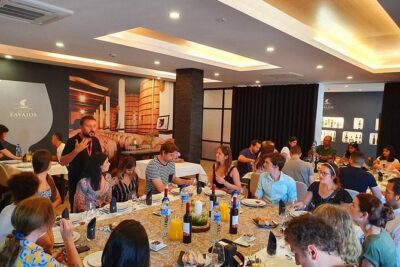
Complete Douro Valley Wine Tour with Lunch, Wine Tastings and River Cruise
Read our review →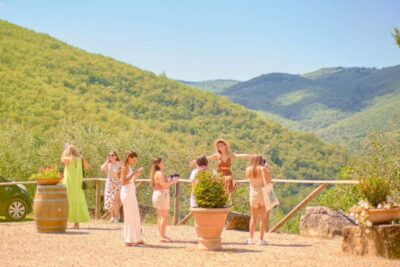
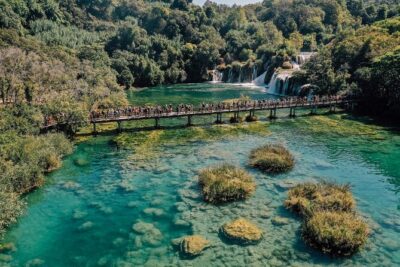
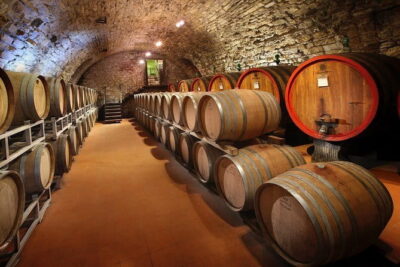
Small-Group Wine Tasting Experience in the Tuscan Countryside
Read our review →
Montserrat & Cogwheel Train, Gourmet Wine Tasting & Tapas/Lunch
Read our review →