
REVIEW · WINERY TOURS
Chania Area: Food Tasting Tour with Winery Visit
Crete tastes best beyond Chania. This seven-hour outing links a 3,000 to 5,000-year-old olive tree, family-run food producers, and Pnevmatikakis Winery in one easy day. I especially like the generous tastings and the chance to see how bread, honey, cheese, olive oil, and wine are made. The main drawback is that the schedule can involve a long bus day, and the winery visit may feel more industrial than intimate.
I also like the excellent value at $44 per person, with hotel pickup, transport, guiding, and tastings included. Guide Linda receives frequent praise for her warmth, clear English, and lively stories about Cretan food and culture. Before booking, check your pickup details carefully, since some passengers have had their meeting point changed more than once.
Key points at a glance
- See an ancient living olive tree: The olive tree at Ano Vouves is estimated to be between 3,000 and 5,000 years old and still produces fruit.
- Taste food at the source: Bread, rusks, olives, cheese, honey, olive oil, and tomatoes form the heart of the tasting stops.
- Meet local producers: The bakery, olive grove, cheese operation, and winery give you a useful look at everyday Cretan food production.
- Enjoy a strong budget price: At $44, the tour combines transport, a guide, several tastings, and a winery visit.
- Expect a full day away from Chania: Pickup may begin around 8:00 a.m., with hotel return scheduled between 4:20 and 5:20 p.m.
- Bring some cash: At least one food stop has not accepted cards.
Why this Chania food tour is worth considering
Crete is easy to experience as a parade of beaches and old towns. This tour takes a different route. You spend the day in villages and working food businesses, tasting the products that define the island’s table.
The tour is not built around one grand attraction. Its appeal comes from the combination: a huge ancient olive tree, a wood-fired bakery, honey and cheese, local olive oil, and wine made in western Crete. Each stop is fairly focused, but together they explain why Cretan food is so simple and so good.
At $44, the price is unusually friendly for a seven-hour excursion with transport and multiple tastings. You are not paying for a formal gourmet class or a small private tour. You are paying for a practical introduction to rural Crete, with someone else handling the driving.
That distinction matters. If you want a quiet, highly polished wine experience, this may not be your ideal choice. If you want to sample a broad range of local products without renting a car, it is a strong deal.
More Winery Tours in Greece
- From Chania Private half day Winery-Olive factory-Kournas lake
★ 5.0 · 50 reviews - Manousakis Winery Shuttle Service Tour and Taste
★ 4.5 · 34 reviews - Santorini: Small-Group Sunset Wine Tour with Santo Winery
★ 4.9 · 801 reviews
Starting from Chania: pickup and the bus ride
Pickup begins around 8:00 a.m., though your exact time depends on your hotel. You are collected at the hotel or at a nearby meeting point, and the final pickup information arrives the day before.
I would check that message carefully. A few people have had pickup locations changed, occasionally to a point far from the hotel, before the matter was corrected. It is worth confirming the location as soon as the details arrive rather than assuming the original point will remain unchanged.
Transport is by an air-conditioned bus, with a driver and an English-speaking guide. The bus makes the day much easier than trying to locate several rural producers yourself. Air conditioning worked well for some passengers, though one account noted that it was not always running and that the ride could feel warm. Crete can be very hot in summer, so sunglasses, a hat, sunscreen, and water are sensible.
Guide Linda is one of the strongest parts of the experience. She is described as energetic, funny, and full of useful facts about Cretan food, culture, and history. A good guide matters on a food tour because the tasting becomes more than a succession of snacks. You learn why olive oil is so central, how local products are made, and what makes a Cretan table different from a standard restaurant meal.
Ano Vouves and the ancient olive tree
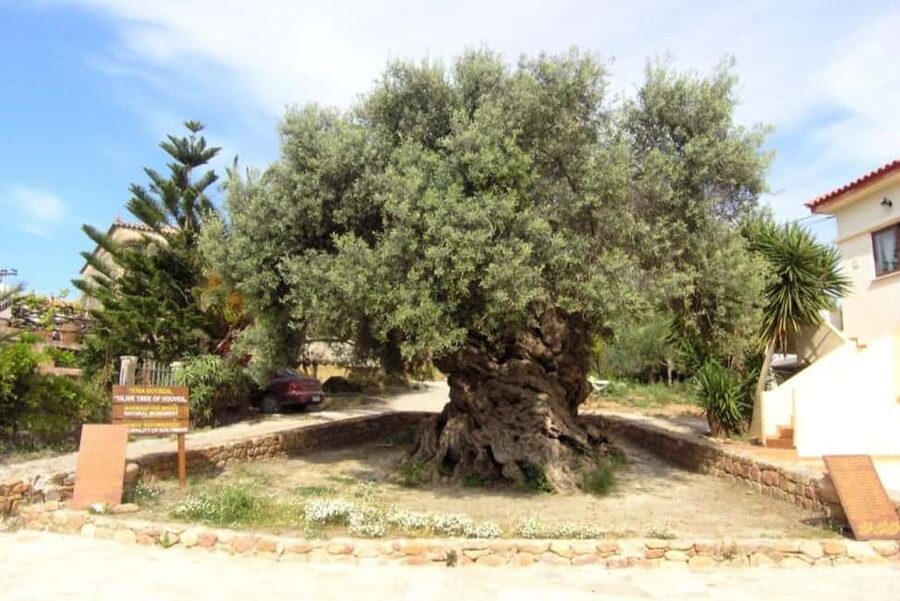
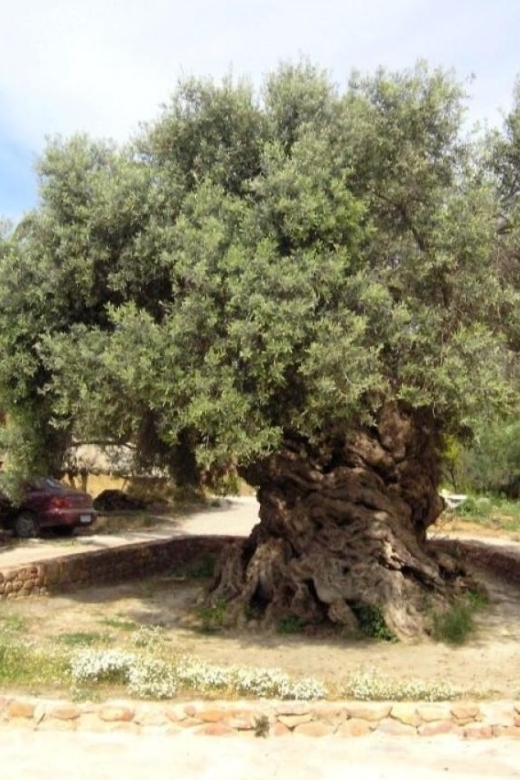
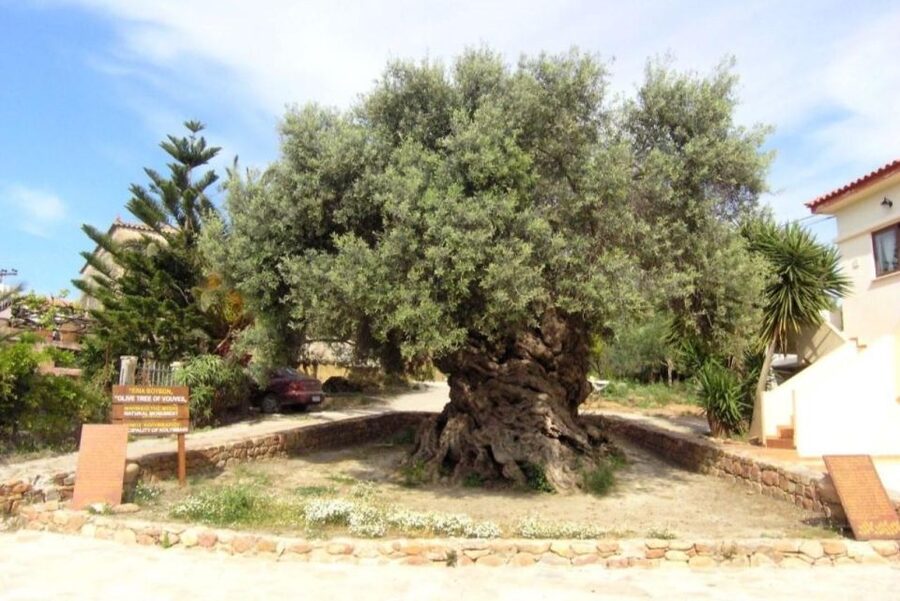
The first major stop is Ano Vouves, home to the famous ancient olive tree. The tree is described as the oldest recorded olive tree in the world, though its exact age cannot be proven. Estimates place it between 3,000 and 5,000 years.
It is still alive and still produces olives. That fact gives the stop real force. You are not looking at a dead archaeological remnant, but at a living tree that has survived through countless generations.
The trunk is the star. Time has hollowed and shaped it into a broad, twisted form that looks almost carved. Its circumference is about 12.5 meters, with a diameter of roughly 4.6 meters. The original base was a wild olive tree, later domesticated by people into the Tsounati variety.
You will not spend the whole morning here. The scheduled visit runs from about 9:45 to 10:15, giving you time to see the tree and take photographs before moving on. One person felt the first stop could be shorter, so keep your expectations realistic. This is a memorable photo and history stop, not an extended archaeological visit.
Still, it gives the food stops that follow a proper beginning. The olive is not just an ingredient in Crete. It is part of the island’s identity, agriculture, and daily cooking.
Perivolakia Village: bread, honey, cheese, and olive oil
Around 10:45, the group reaches Perivolakia Village. This is the main food section of the day, and for many people it is the tour’s best part.
The bakery uses a traditional wood oven, and you get a closer look at how Cretan bread, rusks, and savory baked goods are made. Rusks are especially important in local cooking. They are crisp, dry pieces of bread that keep well and work beautifully with tomatoes, olive oil, cheese, and herbs.
The bakery visit gives you something a restaurant cannot. You see the food before it arrives on a plate. You may find the setting simple rather than polished, but that is part of the point. This is a working food business, not a staged museum display.
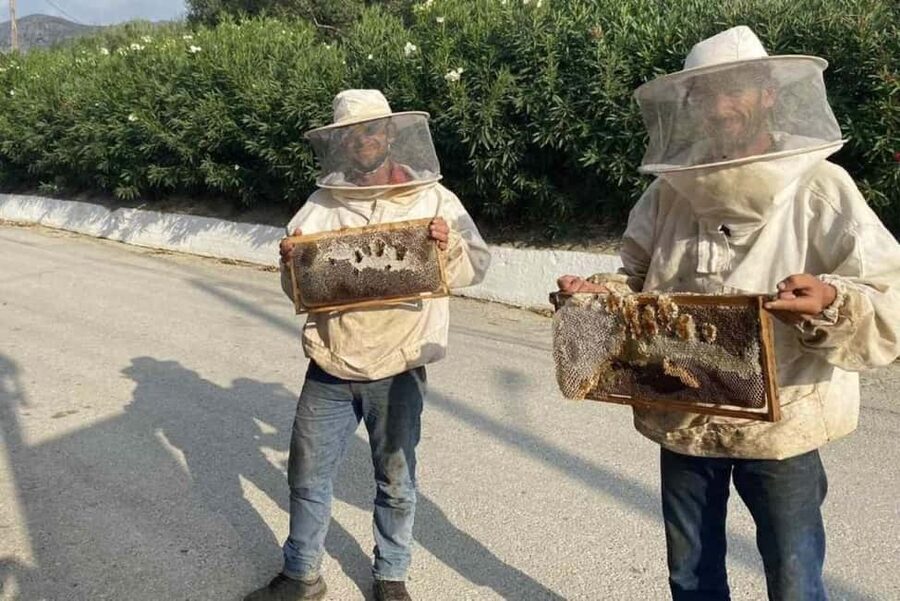
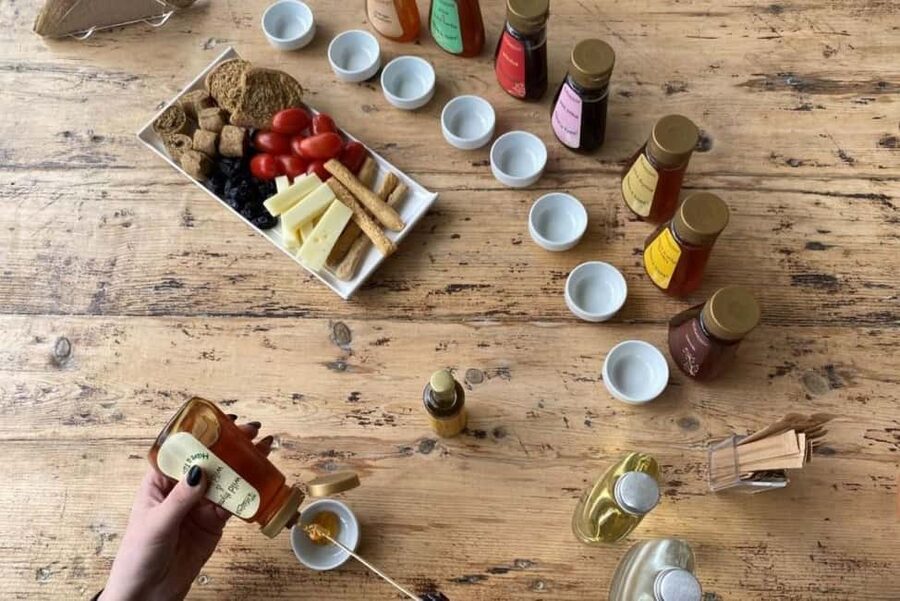
The olive grove adds another layer. You examine the trees and hear how Cretan honey is produced. The honey tasting is widely praised, and the host’s enthusiasm helps turn a small sample into a useful lesson. You taste honey with bread and other local products, and you get a better sense of how sweetness fits into Cretan food.
The olive oil is another highlight. The tasting is paired with familiar local ingredients rather than presented as a technical competition. Bread, tomatoes, olives, cheese, and oil show you how much flavor can come from a few well-made products.
The cheese portion depends on the season. If cheese is being made during your visit, you may enter the traditional cheese operation and see the process closer up. If production is not taking place, the guide explains how it works before the tasting. That seasonal limitation is worth knowing, but it does not remove the food value of the stop.
The tasting platter is substantial enough to feel like a light meal. Expect combinations of olive oil, tomatoes, olives, cheese, honey, and bread. It is not a formal lunch with a menu and table service. Instead, you sample several staples in the way people actually combine them at home.
This is also the point where you may want to buy food to take home. Pastries, honey, olive oil, cheese, and other local products are available at the stops. Bring cash as a backup because card payment has not been available everywhere.
More Winery Tours in Chania:
- Tuscany Day Trip from Florence: Siena, San Gimignano, Pisa and Lunch at a Winery
★ 5.0 · 21,634 reviews - Florence: Chianti Wineries Tour with Wine Tasting
★ 4.5 · 10,071 reviews - Porto: Douro Valley with Winery Lunch, Tastings & Cruise
★ 4.7 · 7,002 reviews - Barcelona: Montserrat, Cogwheel, Black Madonna & Winery Tour
★ 4.8 · 5,633 reviews
Pnevmatikakis Winery and the wine tasting
After leaving Perivolakia at about 12:30, the group reaches Pnevmatikakis Winery around 12:45. This family-run winery in Kissamos has a long connection with Cretan wine production.
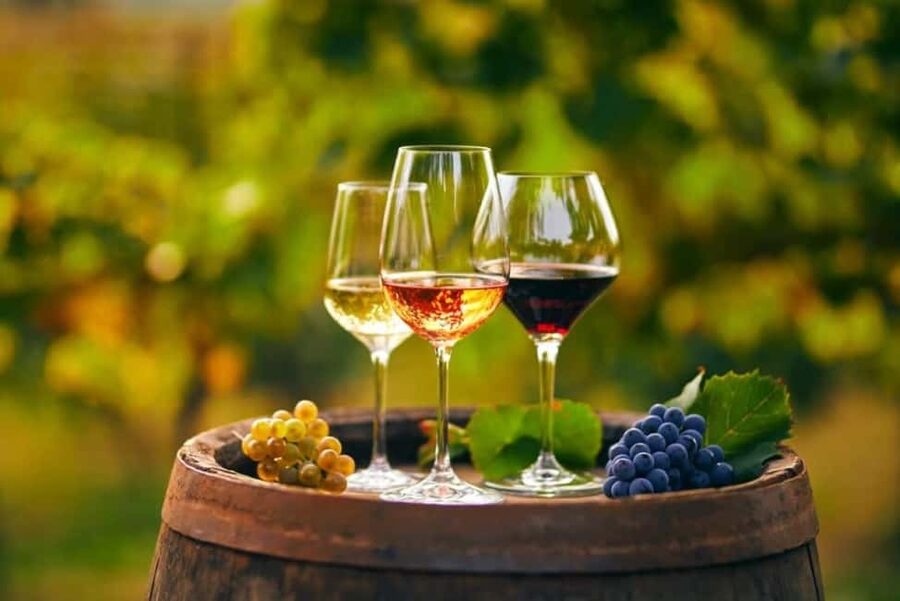
You learn about the winemaking process and taste several local varieties. The wine comes with small local delicacies, which makes sense in Crete. Wine is easier to understand when you have something salty, creamy, or olive-oil based alongside it.
The tasting is designed for a mixed group. Children do not simply sit out while adults drink. The winery provides a special platter and drinks for children, prepared by the family. That makes the stop more comfortable for parents.
The winery is the part of the tour where expectations need the most care. Some people love the range of wines, the setting, and the generous self-service format. One account found the operation more like a large production facility than a specialist boutique winery, with wines that seemed young and lacking depth. Concerns were also raised about cleanliness around the production area.
I would treat this as an introduction to Cretan wine rather than a serious wine seminar. You get to taste several bottles and learn about local production, but the visit may not satisfy someone who has already planned a detailed tour of small, highly specialized wineries.
The timing is compact, with departure scheduled around 1:45. That keeps the day moving, but it also means you should not expect a long technical discussion about every grape or vintage.
Timing, comfort, and the shape of the day
The advertised duration is seven hours, but the pickup and return window can make your day longer. Pickup begins around 8:00 a.m., and hotel arrival is listed between 4:20 and 5:20 p.m. The difference depends on where you are staying and how many pickup points are involved.
That is normal for a shared bus excursion, but it matters if you have evening plans. I would not schedule a tight dinner reservation, ferry connection, or other fixed activity immediately after the tour.
The schedule is active without being frantic. You visit the ancient tree, spend the longest block at the village food producers, then finish with wine. Several people found the day well organized, and the driver received praise for getting the group around safely and on time.
The road ride may be bumpy in places. If you get carsick, sit near the front and carry whatever usually helps you. The air conditioning has generally been a welcome relief, especially in the hottest months, but conditions can vary from one departure to another.
Wear comfortable shoes. The tour is not described as a strenuous hike, but you will move around village businesses, an olive grove, and the winery. A camera is useful, especially at the ancient tree. Sun protection is not optional in July and August.
What the $44 price really buys
The $44 cost is the tour’s strongest practical advantage. Included are hotel pickup and drop-off, an air-conditioned bus, an English-speaking guide, the superior tasting package, and liability insurance.
You also save yourself the trouble of finding the producers and arranging a sober driver after wine tasting. Rental cars in Crete can be useful, but a day built around rural food stops is easier when someone else handles the route.
The price does not buy a luxury culinary workshop. You should not expect private access at every stop, a long sit-down meal, or a highly technical winery class. The group format keeps the cost low and gives you variety instead.
For a first visit to Crete, I think the value is very good. You see a remarkable natural monument, taste several core Cretan foods, and get outside Chania without spending a large amount. The main question is not the price. It is whether you prefer breadth and convenience over a slower, more specialized experience.
Who will enjoy this tour most
I would recommend it to first-time visitors who want to understand Cretan food beyond restaurant menus. It also suits couples, families, and anyone who does not want to drive after wine tasting.
Families should appreciate the child-friendly arrangement at the winery. Children receive their own platter and drinks, so the wine portion is not designed only for adults.
Food lovers will enjoy the bakery, olive oil, honey, cheese, and local produce. Wine enthusiasts should book only if they are happy with an introductory tasting and a production-focused visit.
This is less suitable if you dislike bus tours, need a relaxed pace, or want a private experience with long conversations at each producer. It may also disappoint someone expecting every stop to be immaculate and polished. The appeal is local food production and variety, not luxury presentation.
Practical booking advice
The tour offers free cancellation up to 24 hours before departure and allows you to reserve while paying later. Those terms are useful if your Chania plans are still shifting.
Your pickup voucher arrives one day before the tour. Read it closely, especially the time and meeting point. If the location seems far from your hotel, contact the operator promptly rather than waiting until the morning of departure.
Bring sunglasses, a sun hat, sunscreen, and a camera. Add a little cash for purchases or tastings at places that may not accept cards. If you plan to buy olive oil, honey, wine, or pastries, leave room in your luggage.
Should you book the Chania food tasting tour?
Book it if you want a low-cost, full-day introduction to Cretan food with transport included. The ancient olive tree is a memorable sight, the Perivolakia tastings are the strongest part, and Linda can make the bus time lively and useful.
Think twice if your priority is a refined winery visit. Pnevmatikakis may feel like a working production facility rather than a small, polished tasting room, and the bus schedule leaves limited time at each stop.
For most first-time visitors staying around Chania, I would book it as a broad sampler of western Crete. You get bread, honey, cheese, olives, olive oil, and wine in one outing, plus a tree that has been alive for thousands of years. At $44, that is a lot of Crete for the money.
FAQ
How much does the Chania food tasting tour cost?
The tour costs $44 per person.
How long does the tour last?
The stated duration is seven hours, but the full pickup and return window can run from about 8:00 a.m. until between 4:20 and 5:20 p.m., depending on your hotel location and transport schedule.
Is hotel pickup included?
Yes. Pickup and drop-off are included. You will be collected from your hotel or from the closest designated point.
What language is the tour conducted in?
The live tour guide speaks English.
What food can I expect to taste?
The tasting includes Cretan bread, rusks, tomatoes, olives, cheese, honey, and olive oil, along with local delicacies served at the food stops and winery.
Will I see cheese being made?
You may see the cheese-making process if production is taking place during your visit. If it is not the production period, the guide explains the process before the tasting.
Is the winery suitable for children?
Yes. The winery provides children with a special platter and drinks.
What should I bring?
Bring sunglasses, a sun hat, sunscreen, and a camera. Some cash is also useful because at least one stop may not accept cards.
More Food Experiences in Chania
- Chania: Wine, Food, and Sunset Tour with 3-Course Dinner
★ 4.9 · 77 reviews - Chania Walking Food And Wine Night Tour
★ 4.5 · 31 reviews - From Split: Krka Waterfalls, Food & Wine Tasting Tour
★ 5.0 · 9,326 reviews - From Split: Krka Waterfalls, Food & Wine Tasting Tour
★ 4.9 · 6,598 reviews
Newly added around Chania
- From Chania Private half day Winery-Olive factory-Kournas lake★ 5.0 · 50 reviews
- Gastronomy tour and wine tasting in traditional villages★ 5.0 · 32 reviews
- Wine & Olive Oil Tour with lunch at the White Mountains★ 5.0 · 71 reviews
- Manousakis Winery Shuttle Service Tour and Taste★ 4.5 · 34 reviews
- Chania Walking Food And Wine Night Tour★ 4.5 · 31 reviews
- Private tasting of 6 cretan wines in Fres village★ 5.0 · 32 reviews
- Chania: Milia Mountain Tour w/Lunch Olive Oil/Wine Tastings★ 4.9 · 97 reviews
- Chania: Wine, Food, and Sunset Tour with 3-Course Dinner★ 4.9 · 77 reviews
Winery Tours, compared.
Tuscany Day Trip from Florence: Siena, San Gimignano, Pisa and Lunch at a Winery
Read our review →

Douro Valley with Winery Lunch, Tastings & Cruise
Read our review →
Montserrat, Cogwheel, Black Madonna & Winery Tour
Read our review →
Montserrat with Black Madonna & Medieval Winery with Tapas/Lunch
Read our review →
Siena, San Gimignano, Pisa & Lunch at Winery
Read our review →
Wine Tour: Paarl, Franschhoek & Stellenbosch incl 3 wineries
Read our review →
Douro Valley Tour: 2 Vineyard Visits, River Cruise, Winery Lunch
Read our review →Browse the lists this tour appears in