
REVIEW · WALKING TOURS
Eat & Walk Through Lisbon: A Local Food & Wine Experience
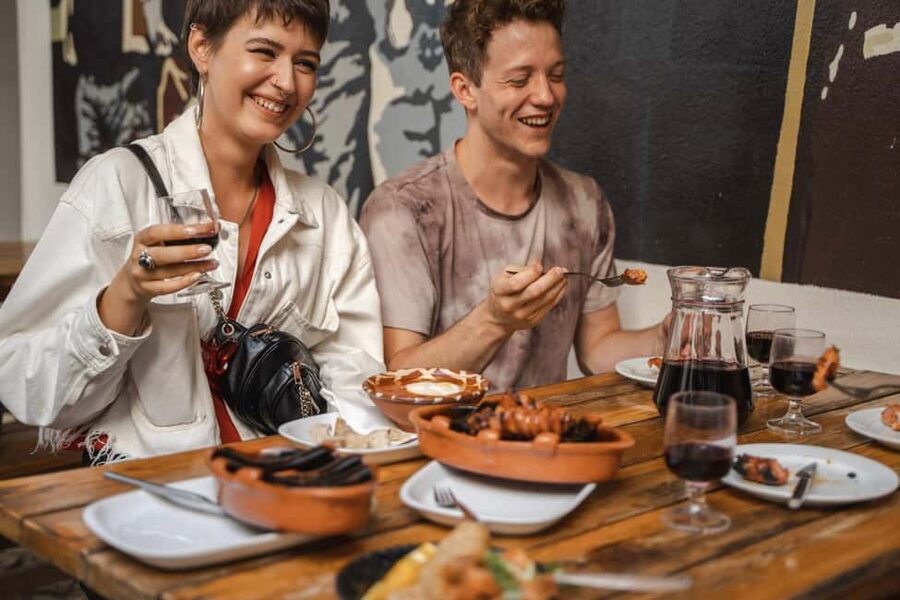
Lisbon tastes better one stop at a time. This three-hour walk through Baixa combines eight traditional tastings with four Portuguese drinks, while guides such as Bruno, Joanna, Maya, and Rodrigo add history and local character between stops. I like the pre-booked tables and the easy, flat route, which lets you focus on food rather than queues or steep streets. The main drawback is dietary: vegetarian choices are available but smaller, and the tour cannot accommodate vegan diets, celiac disease, or every serious allergy.
I also like the way the tour uses food to explain Lisbon’s past, especially the city rebuilt after the 1755 earthquake. You may try petiscos, seafood, bifana, codfish rice, sausage, dessert, Vinho Verde, beer, and Ginjinha, depending on the day’s arrangements. It is not a formal cooking class or a sit-down meal in one restaurant, so expect a moving meal with several stops and a group atmosphere.
Five things to know before you book
- The route is flat: Baixa is Lisbon’s easiest central district for walking, with a fully accessible route described by the operator.
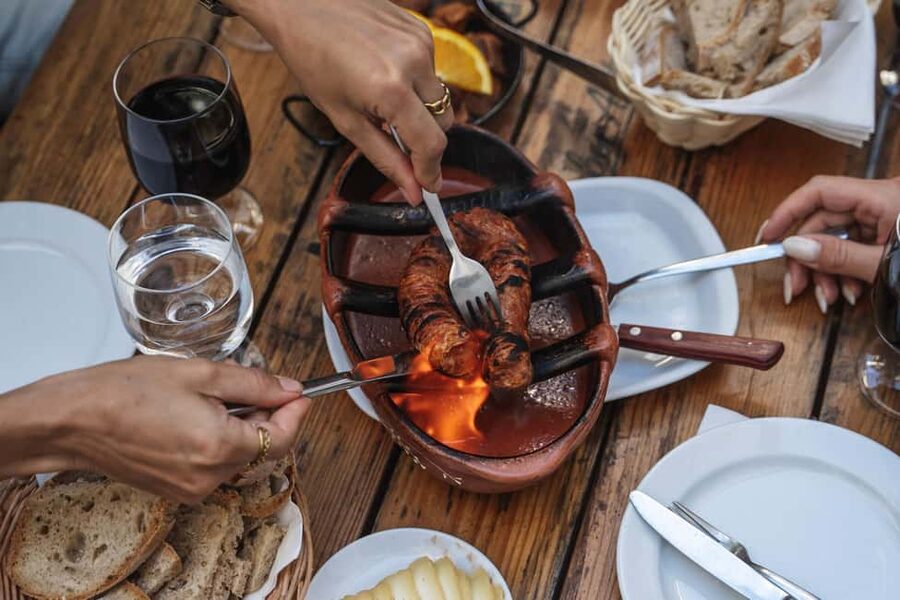
- Eight tastings make this a full meal: You will sample Portuguese dishes, street food, and dessert rather than simply nibble on a few snacks.
- Drinks are part of the plan: Four local pours can include green wine, beer, and Ginjinha, Lisbon’s cherry liqueur.
- History comes between bites: The route links Praça do Comércio, grand squares, Igreja de São Domingos, and streets rebuilt after the earthquake.
- Guides shape the experience: Bruno, Maya, Joanna, Rodrigo, José, Kate, Andre, and others have been praised for humor, food knowledge, and personal attention.
- Dietary limits matter: Vegetarian substitutions are offered, but the vegetarian menu has fewer tastings, and vegan or celiac requirements cannot be handled.
Starting beneath the Portuguese flag
The meeting point is in front of the Supremo Tribunal de Justiça, beneath the portico with the large Portuguese flag. Look for a guide holding a yellow Carpe Diem Tours flag or sign, and arrive 10 minutes early.
The tour begins near Praça do Comércio, the great square facing the Tagus River. This is a sensible place to start because it gives you an immediate sense of Lisbon’s scale. The open waterfront square leads naturally into Baixa’s orderly streets, where the food walk becomes a lesson in how the city was rebuilt and reorganized.
You will be walking for about three hours, but the route is described as flat and fully accessible. That is a useful distinction in Lisbon, where hills and uneven pavement can turn a pleasant outing into hard work. One person using a wheelchair praised guide Moka for taking extra care throughout the route, while another participant with bad hips found the level walking manageable.
The exact pace depends on the group and the guide. You should expect time to listen, taste, ask questions, and move between stops rather than march from restaurant to restaurant. Wear comfortable shoes, but you do not need hiking footwear.
More Food Experiences in Lisbon:
- Winner 2025 Undiscovered Lisbon Food & Wine Tour by Eating Europe
★ 5.0 · 6,390 reviews - Lisbon: Food and Wine Small Group Walking Tour
★ 4.9 · 4,082 reviews - Lisbon Small-Group Portuguese Food and Wine Tour
★ 5.0 · 3,972 reviews
Baixa explains the new Lisbon
Baixa is the only flat neighborhood in central Lisbon, and its broad streets make it a practical setting for a food tour. After the 1755 earthquake, much of this area was rebuilt in a planned grid. The result feels different from the older, hillier quarters, and the guide uses that contrast to explain the city’s changing shape.
The tour passes the Supremo Tribunal de Justiça, Rua dos Fanqueiros, Rua da Vitória, and Rua da Madalena. These are not just connecting streets. They show the mix of shops, old facades, pedestrian movement, and daily life that makes central Lisbon useful for more than sightseeing photographs.
At Rua dos Fanqueiros, the guide provides about 20 minutes of commentary. On Rua da Vitória, the historical portion lasts roughly 30 minutes, making it one of the more substantial stops for architecture and city stories. Rua da Madalena brings another 20 minutes of guided context before the final stretch toward Restauradores.
The food gives those streets a purpose. Instead of hearing a detached lecture about Lisbon, you are learning why local dishes, taverns, drinks, and street food belong to the city you are walking through. I find that connection more useful than a long list of dates.
The tasting menu, from petiscos to dessert
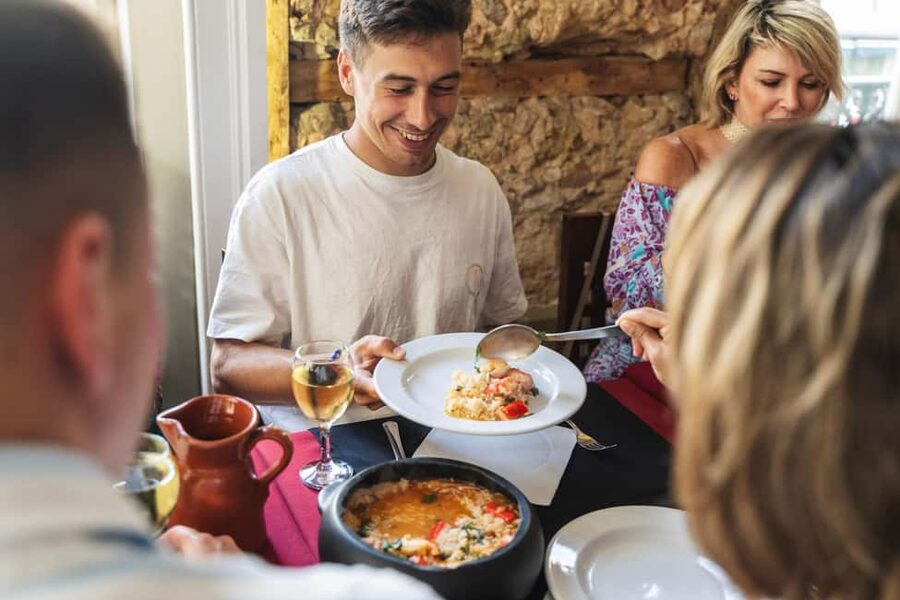
The tour includes eight tastings of Portuguese cuisine, street food, and dessert. The precise menu can vary, so you should not book it expecting one fixed restaurant menu. Still, the examples associated with the experience give you a good idea of the range.
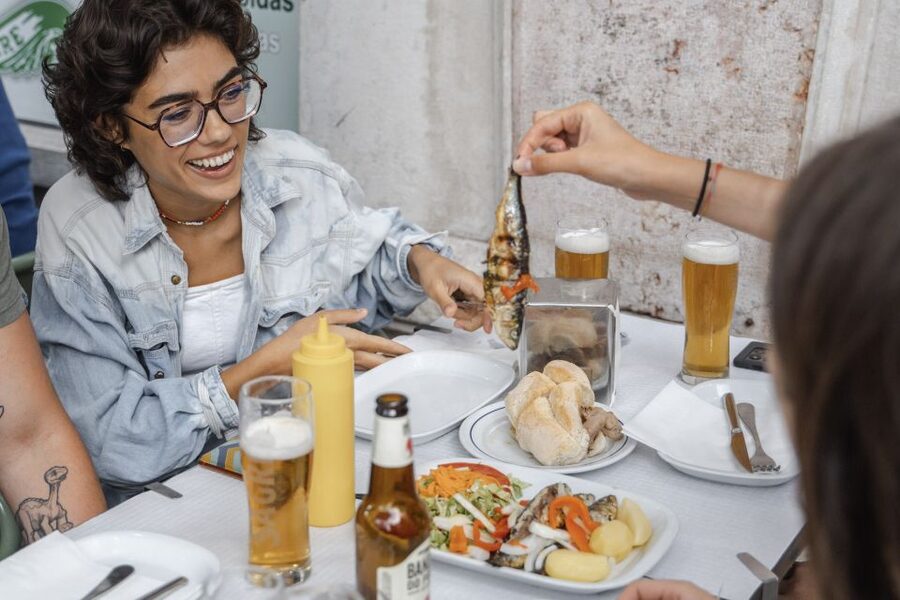
You may encounter petiscos, small Portuguese dishes meant for sharing, along with seafood preparations and the bifana, a seasoned pork sandwich that is one of the country’s most approachable street foods. Other food mentioned by participants includes codfish rice, seafood rice, grilled sausage, sardines, and custard tart.
That range is one of the tour’s strongest points. You can try a dish you might not order on your own, then move on before committing to a full plate. One person specifically described a first taste of sardine as a pleasant surprise, while another enjoyed codfish rice, sausage, seafood rice, and custard tart in the same evening.
The eight tastings should leave you well fed. One participant thought the portions were generous enough that smaller meals might have worked better. That is useful advice if you are planning dinner immediately afterward: treat this as your dinner, not as a warm-up before dinner.
The experience also visits liqueur shops, taverns, family-run restaurants, and street-food locations. Pre-booked tables and priority service reduce the time spent waiting, though the tour still depends on the normal rhythm of each stop. The point is not speed. You are paying to sample several places without having to research them one by one.
Portuguese drinks with a story
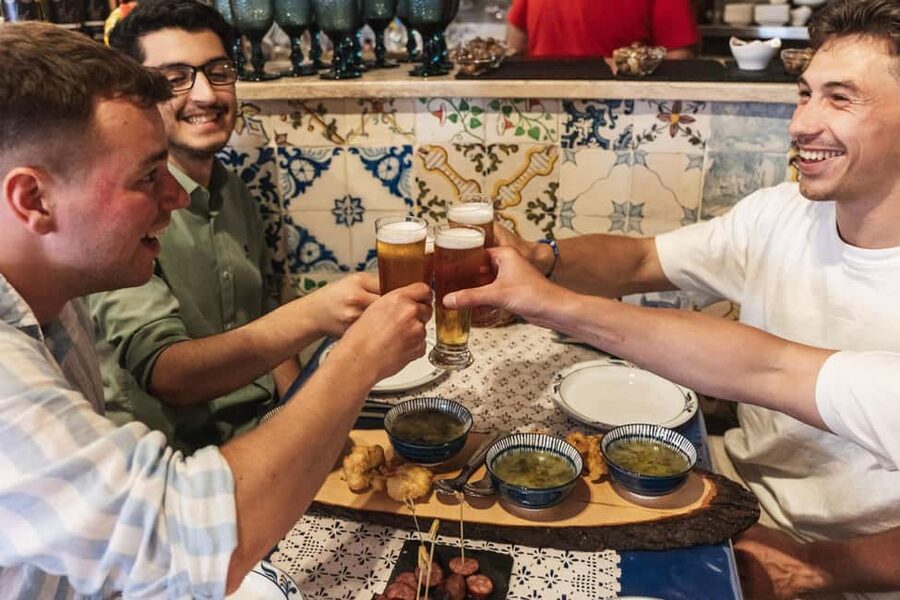
Four local drinks are included. The named choices are Vinho Verde, local beer, and Ginjinha, along with other Portuguese pours depending on the arrangements at each stop.
Vinho Verde is often a highlight for people who have not tried it before. It is a Portuguese green wine, usually light and fresh, and one participant compared its gentle sparkle to something between still and sparkling wine. That description is not a technical definition, but it tells you what to expect: a lively glass rather than a heavy red.
Ginjinha is Lisbon’s cherry liqueur, usually served in a small glass. The tour includes a stop at Ginjinha Sem Rival, where the guide explains the drink and its place in local drinking culture. This is a short guided stop of about 10 minutes, but it gives the tour a clear local signature.
Beer also has a place in the sequence. Having several kinds of drinks alongside food helps you notice how Portuguese eating works socially. You are not simply being handed a drink with no context. The guide explains what you are trying and connects it to the city and its habits.
Alcohol-free options are available at every stop. If you do not drink, you can still take part, though the included pours will be replaced with nonalcoholic choices. You should tell the operator about your needs in advance so the guide can plan properly.
More Walking Tours in Lisbon:
- Lisbon Cultural Food and Wine Walking Tour
★ 5.0 · 374 reviews - Lisbon: Food & Wine Walking Tour Through Baixa
★ 4.9 · 287 reviews - Private Lisbon Walking Tour with Premium Port Wine and Tapas Tasting
★ 5.0 · 61 reviews - Barcelona Tapas and Wine Experience Small-Group Walking Tour
★ 5.0 · 5,804 reviews
A guide-led walk, not a restaurant crawl on autopilot
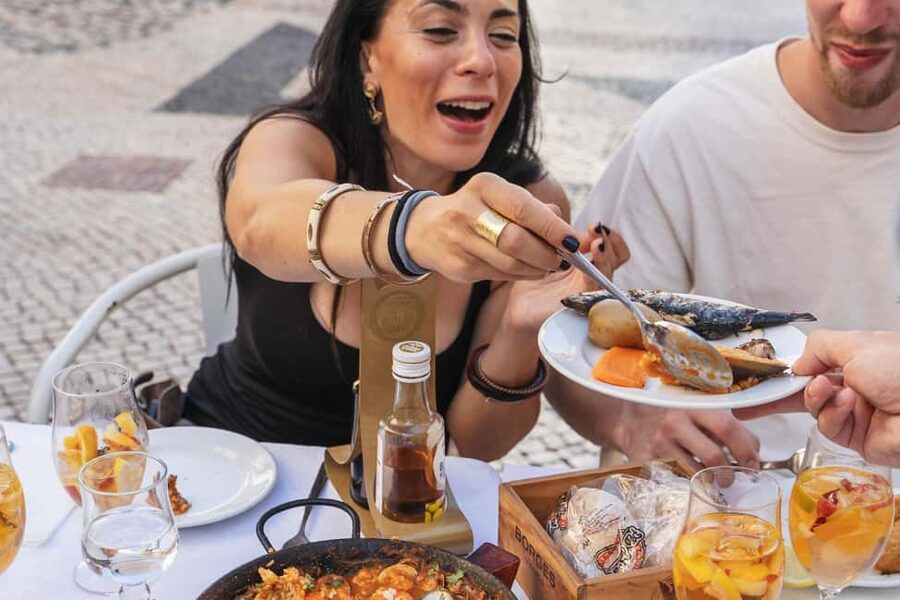
The guide makes or breaks a food tour, and this experience has received repeated praise for its personal style. Bruno is often described as funny, engaging, and well informed about Lisbon’s food and past. Joanna and Joana are praised for clear historical explanations, while Maya, Rodrigo, José, Kate, Andre, Moka, Margarita, and Rod have each been singled out for warmth, humor, or care.
That range of names matters because the experience is guide-led rather than scripted in a stiff way. If the group is small, the guide may make the outing feel almost private. José, known as Zé, received praise for giving extra attention when only two people had booked a particular time. That kind of flexibility is a real benefit for couples.
The group can also become part of the fun. One participant enjoyed meeting people from several countries, while another described the group bonding over food and stories. You should expect conversation and shared tables, not a silent tasting where everyone keeps to themselves.
The strongest pattern is the blend of food, city history, and humor. Several people said the guide shared more about Lisbon’s past during this food tour than they had received on a separate history outing. That may depend on your guide, but the format gives the stories a natural anchor.
Walking through the four main streets
The route is compact but not empty of sightseeing. Here is how the stops fit together.
Supremo Tribunal de Justiça
This is both the meeting point and an early orientation stop. You begin beneath the portico and large flag, then receive the first explanation of where you are in Baixa. The building gives the guide a clear landmark, and the short 10-minute guided portion helps settle the group before the food stops gather momentum.
Rua dos Fanqueiros
The tour spends about 20 minutes here. The street helps show Baixa’s planned structure and commercial character. Listen for the guide’s explanation of how this part of Lisbon was reshaped after the earthquake, then watch how the modern street life sits within that older plan.
Rua da Vitória
This is the longest listed commentary stop at about 30 minutes. It is a good place for the guide to connect architecture, city planning, and food traditions. You may spend more time here listening than eating, so the experience suits you if you want cultural context rather than a nonstop succession of plates.
Rua da Madalena
The route gives this street around 20 minutes of guided attention. It is another chance to see how Baixa links major squares with smaller businesses and local food stops. By this point, you will have a clearer idea of how the tasting sequence moves through the district.
Ginjinha Sem Rival
The short stop at Ginjinha Sem Rival brings the drink side of the tour into focus. It is a distinct change from a restaurant tasting and gives you a chance to try Ginjinha in a setting devoted to the liqueur.
Praça dos Restauradores
The tour finishes at Praça dos Restauradores, a central square at the edge of Baixa. Ending here is practical because you can continue exploring, find another bar, or return to your accommodation without having to retrace the whole route.
Is $100 good value?
At $100 per person, this is not a cheap snack walk. It becomes a reasonable purchase if you value the complete package: eight tastings, four drinks, a three-hour guide-led route, pre-booked tables, and food recommendations you can use for the rest of your stay.
You are also paying to avoid trial and error. Lisbon has plenty of restaurants, but finding several traditional dishes in one evening takes planning, and tourist-focused menus are easy to encounter in central areas. The guide filters the choices and explains what is on your plate.
The value is strongest on your first day or two in Lisbon. You get a useful orientation to Baixa, learn what foods to look for, and finish with a better sense of where to eat later. Several people described it as a strong way to begin a Lisbon visit.
The value is weaker if you want a quiet, formal dinner or if you have strict dietary rules. It is also less suitable if you dislike moving between stops or sharing the experience with a group. Private groups are available, but the supplied information does not state the private-group price.
Who should book this food walk?

I would recommend it to first-time visitors who want food and city context in the same outing. It is especially useful for couples, small groups, and solo visitors who enjoy meeting people over shared tastings.
You should also consider it if you are unsure what Portuguese food to order. The format lets you sample seafood, meat, street food, sweets, and drinks without buying a full serving of each.
It suits you less if you are vegan, have celiac disease, or need strict control over cross-contact and ingredients. Vegetarian choices are offered, but there are fewer tastings than on the standard menu. Serious allergies and other complex restrictions cannot be fully accommodated.
The route works well for people who need level walking, but accessibility can still depend on the specific stop and the guide’s ability to assist. Let the operator know ahead of time. Moka’s care for a wheelchair user is encouraging, but you should still discuss your exact needs before booking.
Final verdict: a strong first evening in Lisbon
This is a food-first introduction to Baixa, with enough history to give the meal a sense of place. The best parts are the generous variety, local drinks, flat route, and guides who bring humor and personality to the streets.
Book it if you want a full evening of tasting and conversation, not merely a list of restaurant samples. If you have strict dietary restrictions or prefer an unhurried dinner at one table, choose another format. For most food-loving visitors who can eat the standard or vegetarian menu, $100 buys a useful introduction to Lisbon that can shape the rest of your stay.
FAQ
How long does the Lisbon food tour last?
The experience lasts three hours.
Where does the tour meet?
The guide waits in front of the Supremo Tribunal de Justiça, under the portico with the large Portuguese flag. Look for a yellow Carpe Diem Tours flag or sign.
How early should I arrive?
You should arrive 10 minutes before the scheduled start time.
How many tastings are included?
The tour includes eight tastings of traditional Portuguese food, street food, and dessert.
Which drinks are included?
Four local drinks are included. They can include Ginjinha, local beer, and Vinho Verde.
Is the tour suitable for vegetarians?
Vegetarian options are available at every stop, but the vegetarian menu includes fewer tastings than the regular menu.
Can the tour accommodate vegans or people with celiac disease?
The provider cannot accommodate vegan diets, celiac disease, or every serious food allergy and restriction. Tell the operator about your dietary needs in advance.
Is the route accessible?
The route is described as flat and fully accessible. If you use a wheelchair or need specific assistance, contact the provider in advance so the guide can prepare appropriately.
Newly added around Lisbon
- Sintra: Full-Day Tour from Lisbon with Wine Tasting★ 4.8 · 58 reviews
- Arrabida Wine Tour – Lisbon: Wineries-Tastings-Tile Factory★ 4.9 · 179 reviews
- Lisbon Sunset Sailing – Small Group (max 10) Wine & History★ 4.8 · 41 reviews
- Lisbon: Sunset Sailing Boat Cruise with Wine★ 5.0 · 75 reviews
- Lisbon: Sintra, Pena Palace & Wine Tasting Small-Group Tour★ 4.9 · 156 reviews
- Lisbon Private Setúbal Region Wine Tasting Tour★ 4.9 · 149 reviews
- Lisbon Small-Group Food & Wine Tour Eat & Drink like a Local★ 4.9 · 77 reviews
- Lisbon: Sunset Sailing with Portuguese Wine and History★ 5.0 · 270 reviews
Walking Tours, compared.

Barcelona Tapas and Wine Experience Small-Group Walking Tour
Read our review →
Tapas Walking Tour with Food, Wine, and History
Read our review →
Madrid Tapas & Wine Tasting Walking Tour – Small Group Local Bars
Read our review →
Guided Food Walking Tour with Wine in Trastevere
Read our review →
Montmartre Hill French Gourmet Food and Wine Tasting Walking Tour
Read our review →
Toledo Tour & Vineyard Walk with Wine Tasting from Madrid
Read our review →
Montmartre Cheese, Wine & Pastry Guided Walking Tour
Read our review →Browse the lists this tour appears in