
REVIEW · NAPLES WINE TOURS
Naples: Premium Pizza Class From Dough to Dessert & Wine
Pizza gets better when you make it. This Naples cooking class takes you inside a 2017 World Pizza Championship-winning pizzeria, where you work with four simple ingredients, learn traditional dough methods, bake your own Margherita, and finish with sweet fried dough. I especially like the individual workstations and the chance to learn staglio, the old technique used to divide dough into neat portions called panetti.
I also like that this is more than a quick pizza demonstration. You knead, shape, stretch, top, and eat your own food, then try a dessert made from the same dough. The main consideration is that the class may include Italian and English speakers together, so some instruction can pass through a translator. There are also no aprons listed, so wear something that can handle a dusting of flour.
Key points at a glance
- Four ingredients, real technique: Learn how water, flour, salt, and yeast become Neapolitan dough.
- A 2017 World Champion setting: The class takes place in a working pizzeria with a traditional wood-fired oven.
- Your own workstation: Small groups give you space to mix, knead, stretch, and top your pizza yourself.
- Savory and sweet in one meal: Make a Margherita, then taste crispy fried dough filled with chocolate spread.
- Local drinks included: The package includes one glass of wine, water, or beer, plus limoncello.
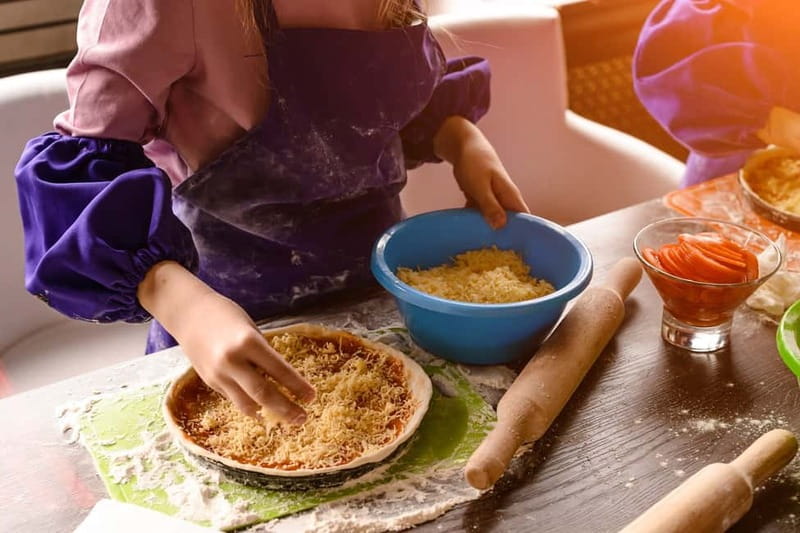
- Useful for families and beginners: No prior cooking skill is required, but children must be at least six years old.
Entering a World Champion Neapolitan pizzeria
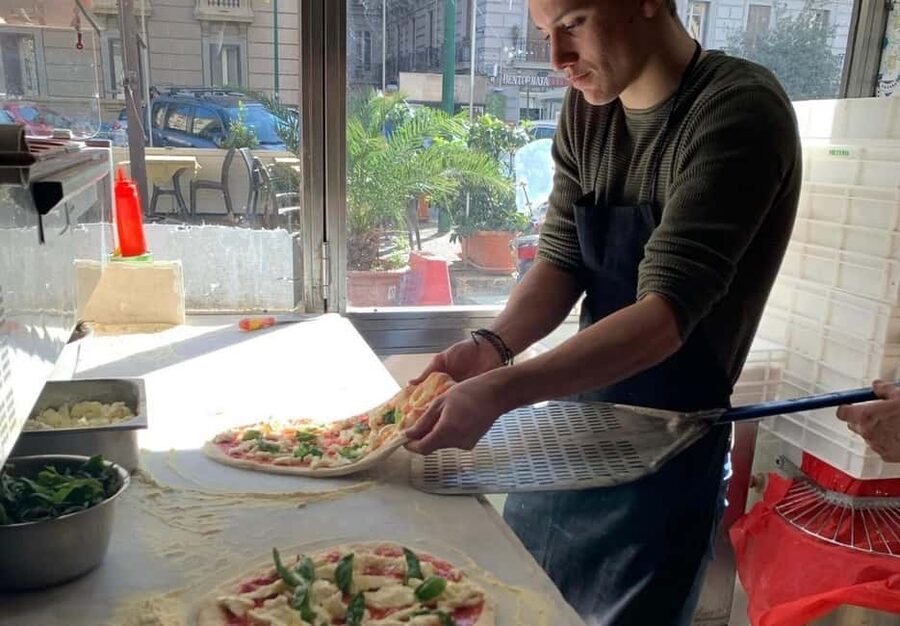
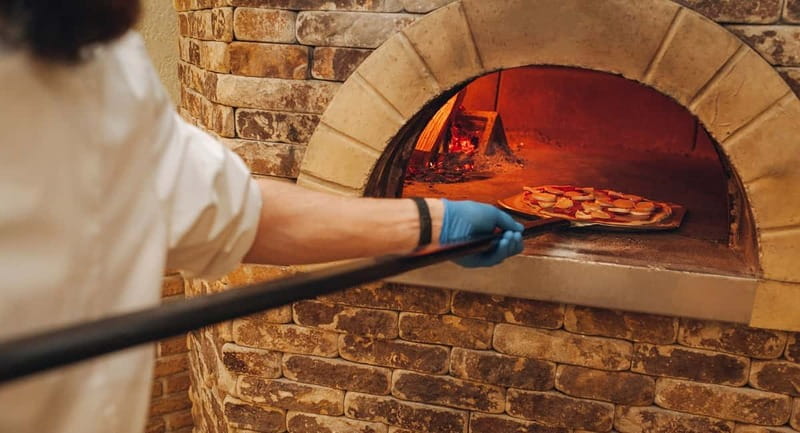
The setting matters here. You are not standing in a hotel kitchen with an instructor who makes pizza only for demonstrations. You are working inside a real Neapolitan pizzeria that won the World Pizza Championship in 2017.
That gives the class a useful sense of place. Pizza in Naples is not simply a dish to copy from a recipe card. It is a local craft built around restraint, timing, heat, and good ingredients. The goal is not to pile on toppings. It is to make a soft, light base that lets the tomato, cheese, basil, and olive oil do their work.
The class lasts about two to three hours. That is long enough for a proper meal and instruction, but short enough to fit into a busy Naples itinerary. I would place it on your first or second day if you want a friendly introduction to local food and a practical activity that does not require a full day away from the city.
The meeting point can vary depending on the option you book, so check the exact details before setting out. This matters in Naples, where a short distance on a map can take longer than expected on foot or by public transport.
More Sweet Stops in Italy:
- Rome: Pasta Making Class with Wine, Limoncello, and Dessert
★ 4.9 · 3,177 reviews - Florence: Handmade Pasta & Dessert Class with Unlimited Wine
★ 4.8 · 788 reviews - Florence: Pasta Class with Wine, Limoncello and Dessert
★ 4.9 · 674 reviews
Four ingredients and the first lesson in dough
The class begins with the basics: water, flour, salt, and yeast. That short list is part of the lesson. With so few ingredients, the quality of each step becomes easy to notice.
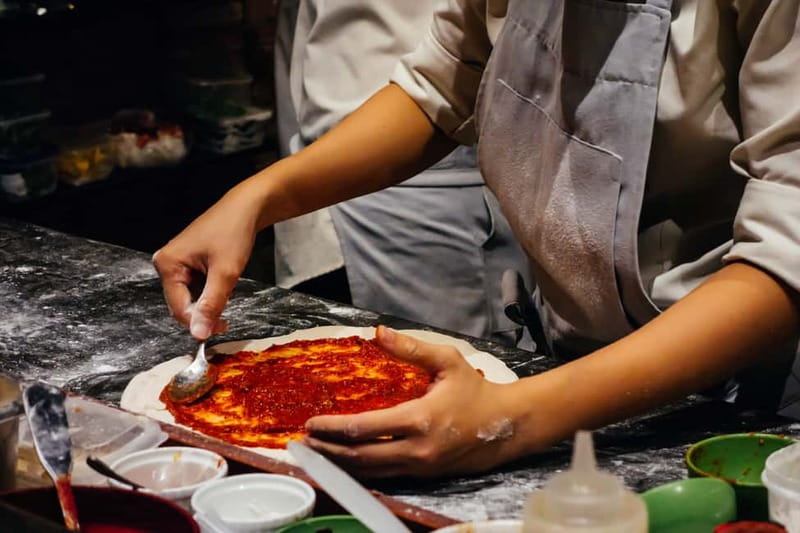
A master pizzaiolo demonstrates how to mix and knead the dough. You then work at your own station instead of simply watching from the side. This is where the class earns much of its value. You can feel when dough is sticky, firm, elastic, or ready to shape. Those are details that are hard to understand from a recipe alone.
The instructors also explain the techniques behind a proper Neapolitan base. You learn how to handle the dough without knocking out all its air, how to shape it by hand, and how to stretch it into a round without turning it into a dense, rigid crust.
One traditional lesson is staglio. This means dividing the larger dough into individual portions, known as panetti. The method sounds simple, but it affects the final shape and texture. If you enjoy taking food skills home, this is one of the most useful parts of the class because it gives you a clear method for managing separate pizza portions.
The class is designed for beginners. Past instruction has been praised for being clear and patient, with demonstrations followed by hands-on practice. Lucia, Francesca, Sabrina, and other instructors have helped keep the lessons friendly and easy to follow, while pizzaioli such as Alessandro, Maurizio, Lorenzo, and Luigi have shown the dough techniques directly.
The precise instructor depends on the session, but the format stays personal. You should expect help when your dough starts behaving badly. That is a good thing. Dough often looks simple until your hands are in it.
San Marzano tomatoes, buffalo mozzarella, and basil
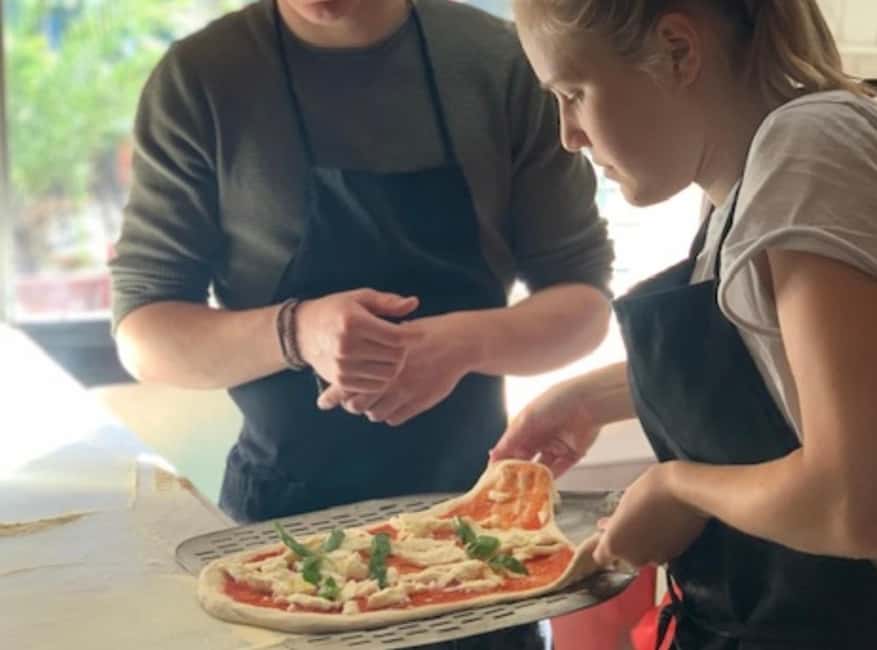
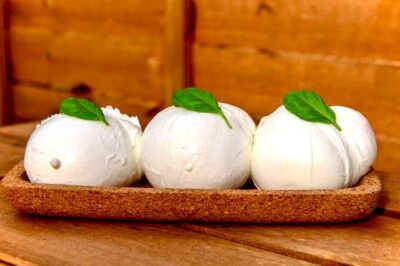
Once the dough is shaped, you add the toppings. The ingredients listed for the class include San Marzano tomatoes, buffalo mozzarella, fresh basil, and DOP extra virgin olive oil.
This is a classic Margherita combination, and it keeps the focus where it belongs: on balance. You do not need a crowded pizza to make a memorable meal. The tomato provides acidity, the mozzarella adds richness, basil brings freshness, and olive oil ties it together.
The class also explains why ingredient choice and quantities matter. That is useful when you return home and try to repeat the recipe. The recipe is supplied digitally, although one participant had to follow up before receiving it. I would confirm that you have the recipe before leaving or check your messages afterward.
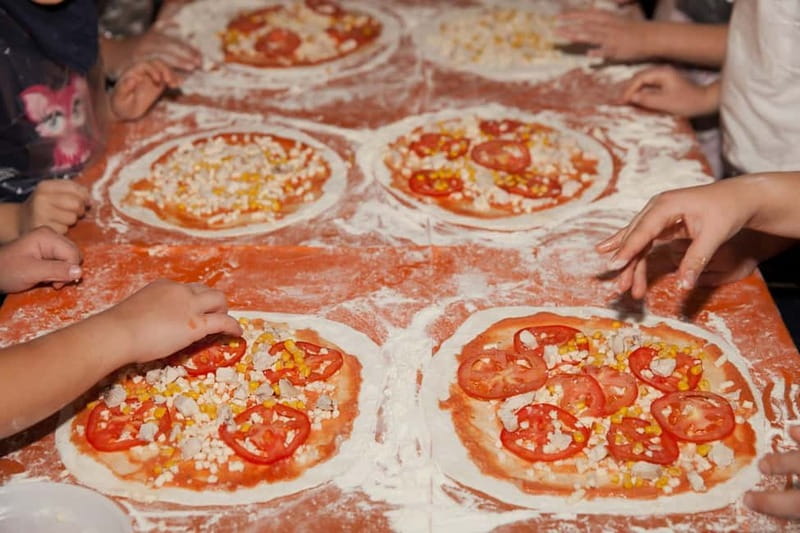
The individual workstations are especially helpful at this stage. You are not trying to share one lump of dough with a large group or waiting for your turn with the toppings. You build your own pizza and can watch the changes from raw dough to finished meal.
The wood-fired oven is part of the lesson
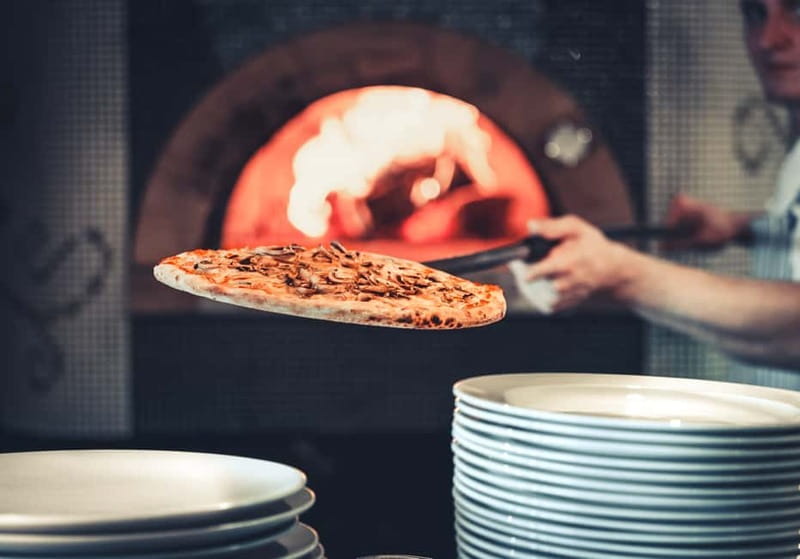
The oven is not just a dramatic backdrop. It is the final test of everything you have done.
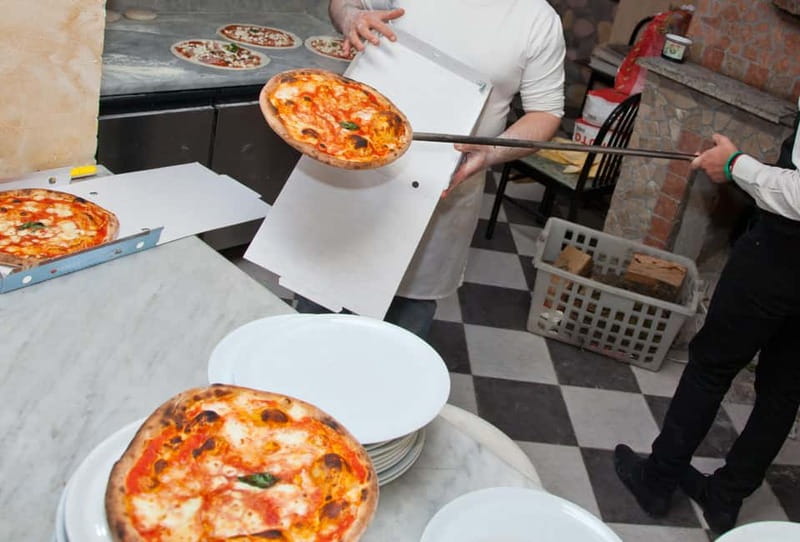
The pizzaiolo places the pizzas into a traditional wood-fired oven and manages the baking. You may also learn small tricks for working with the pizza once it is inside. One participant received extra advice about handling the pizza in the oven, which is the sort of practical tip that can make a home attempt more successful.
Of course, a home kitchen will rarely have the same oven. That is the main limit of any short pizza class. You can copy the dough, shaping, and topping methods, but the heat source will affect the final result. Still, learning how the dough reacts and how a pizzaiolo handles it gives you a much better starting point than buying a pre-made base.
Timing also matters. Some dough made during a short class may not have enough time to prove fully before baking. In that case, the kitchen may use it for pizza or turn it into bread. That is not a flaw in the experience so much as a reminder that serious dough making often needs more time than a two-hour activity allows.
You will eat the Margherita you make. This is a proper part of the experience, not a small sample at the end. The meal also includes one glass of wine, water, or beer, depending on your choice.
A few more wine tours around Italy worth a look
- Florence: Pasta Cooking Class with Unlimited Wine
★ 4.9 · 10,285 reviews - Florence: Pasta & Tiramisu Cooking Class with Unlimited Wine
★ 4.9 · 6,708 reviews - Florence: Pasta Cooking Class with Unlimited Wine
★ 5.0 · 6,413 reviews - Rome: Pasta & Tiramisu Class with Fine Wine by the Vatican
★ 4.9 · 4,852 reviews
Fried dough and the sweet finish
The class has an unusual second act. After the savory pizza, you taste crispy fried pizza dough bites filled with the world’s most famous chocolate spread.
This dessert shows another side of Neapolitan food. The same basic dough can become something crisp, light, and indulgent instead of soft and savory. It also keeps the class focused on the central idea that good pizza begins with dough, not with a long list of toppings.
The sweet course may be called little angels, and it has been a favorite part of the meal for many families and children. If you have just eaten a full pizza, it can feel like a generous ending. One participant thought a smaller dessert might have worked better after the meal, so keep that in mind if you prefer a light finish.
Limoncello follows the meal. It is a fitting Naples touch and gives the class a clear local-food ending. The combination of pizza, fried dough, a drink, and limoncello means you will not leave hungry.
Why the small-group format is worth the price
At $70 per person, this is not the cheapest pizza you can eat in Naples. You can find an excellent Margherita for far less. The value comes from the teaching, the hands-on work, the setting, the drinks, and the full meal.
Each person receives a workstation, which changes the feel of the class. You are not paying to watch someone else make pizza. You are paying to practice the dough, make your own pizza, eat it, and learn a technique you can use later.
Small groups have often included only four people, while private sessions are also available. A private class costs more in many activity settings, but it can make sense for a family or group that wants the instructor focused on them. It also removes some of the communication issues that can arise in a multilingual group.
The class offers instruction in Italian and English. Some pizzaioli speak mainly Italian, with a guide translating the steps. That arrangement can work well, especially when the guide is attentive and has strong English. Francesca, Lucia, Sabrina, and Dora have each been praised for keeping people included and explaining both the practical steps and the background of the dish.
Still, translation adds a little distance. If you want a fast, technical lesson with uninterrupted English instruction, ask about the language setup when booking. If you are happy with a social class and clear demonstrations, it should not be a major problem.
A welcoming class for families and first-time cooks
You do not need cooking experience. The class is built around demonstration, practice, correction, and eating. That makes it a good choice for couples, families, friends, and older children who want a break from sightseeing.
Children must be at least six years old. Younger children cannot take part, including in the work area and near the oven. This rule is sensible because the class involves flour, hot equipment, and active movement around a working pizzeria.
Families have found the class easy to enjoy because every person gets a clear task. Teenagers who already eat a lot of pizza can take the process seriously, while younger children can enjoy shaping dough and adding toppings. Adults should remember that the class is hands-on, so flour on your clothes is possible. Aprons are not listed as included.
The atmosphere appears to depend partly on the guide. A warm host can turn a basic cooking lesson into a relaxed evening. The best instruction combines food skills with stories about Naples, the origins of Margherita pizza, local ingredients, and the role of pizza in the city.
Timing, drinks, and practical details
Allow two to three hours, and do not schedule a tight appointment immediately afterward. The class includes several stages, and a warm group can easily take its time over the meal.
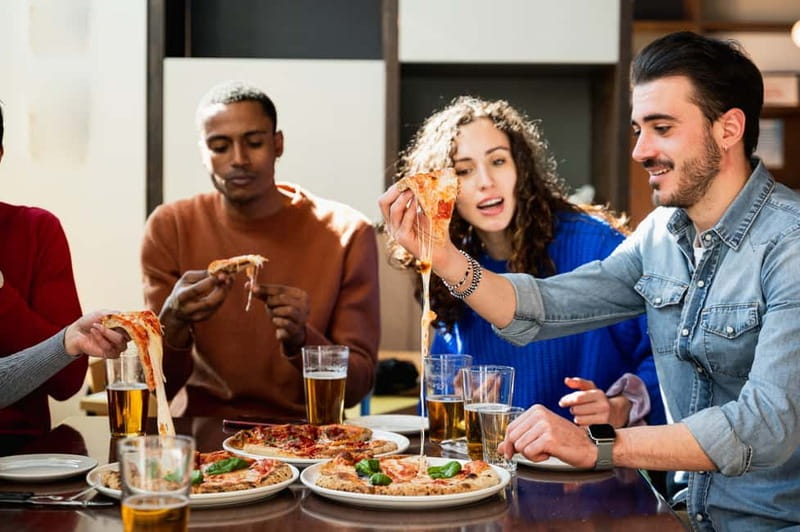
You receive water and one glass of wine, water, or beer, followed by limoncello. The exact drink arrangement is worth checking if you have dietary or personal restrictions. The meal itself includes your handmade savory pizza and the sweet fried dough.
If you have an intolerance, mention it in advance. One family received accommodation for an intolerance while still being included in the preparation. The provided details do not list every possible dietary option, so do not assume all requests can be handled without notice.
The cancellation policy allows a full refund when you cancel at least 24 hours ahead. You can also reserve now and pay later, which helps if your Naples schedule may change.
Who should book this Naples pizza class?
I would recommend it to you if you want an activity with a clear local connection and a useful skill at the end. It is especially good for:
- First-time visitors who want a friendly introduction to Neapolitan food
- Families with children aged six and over
- Couples looking for a shared evening activity
- People who enjoy learning by doing rather than watching
- Pizza fans who want to improve their dough technique
- Visitors who appreciate a full meal built into an activity
I would think twice if you want a quiet restaurant meal, a highly technical baking course, or a class conducted only in polished English. This is social, practical, and informal. The class gives you a strong introduction to pizza making, but it cannot replace the long fermentation and specialized oven conditions of a professional bakery course.
Should you book it?
Yes, if you want to turn one of Naples’ most famous foods into a personal experience. The strongest reasons are the small groups, individual workstations, clear demonstrations, and the fact that you eat what you make. The dessert, wine or beer, and limoncello add generous value to the $70 price.
Book it as a relaxed meal and cooking lesson, not as a promise that you will return home with a perfect professional pizza every time. Wear clothes that can get dusty, allow the full two to three hours, and check the meeting point and language arrangements before you go. For families and first-time cooks, this is one of the more enjoyable ways to understand why Neapolitan pizza depends so much on simple ingredients and careful hands.
FAQ
How much does the Naples pizza class cost?
The listed price is $70 per person.
How long does the pizza-making class last?
The activity lasts approximately two to three hours. Starting times depend on availability.
What food will I make?
You will make a traditional Neapolitan Margherita pizza and a sweet dessert using fried pizza dough filled with chocolate spread.
What drinks are included?
The experience includes one glass of wine, water, or beer, along with water and limoncello.
Is the class available in English?
Yes. Instruction is available in Italian and English. Some sessions may use a guide to translate between the pizzaiolo and English-speaking participants.
Can children join the class?
Children aged six and over can participate. Children under six are not allowed in the activity, work area, or oven zone.
Is cancellation allowed?
Yes. You can cancel up to 24 hours before the activity for a full refund. You can also reserve and pay later.
Newly added around Italy
- WINE TOUR with sommelier in a winery near Cagliari★ 5.0 · 27 reviews
- Cagliari 3 Hours Luxury Motorboat Tour – Wine and Snorkeling★ 5.0 · 118 reviews
- Cagliari Boat Tour by Maxi Rib – Wine and Snorkeling★ 5.0 · 128 reviews
- Small-Group Food and Wine Tour from Cagliari★ 5.0 · 237 reviews
- Wine Experience: vineyard, wines and food★ 5.0 · 155 reviews
- Dinner in the vineyard with wine tasting and walk★ 5.0 · 58 reviews
- Wine Tour and Tasting of Lugana Wines in Desenzano★ 5.0 · 58 reviews
- Wine Degustation Ebrezze★ 4.5 · 86 reviews
Naples Wine Tours, compared.
Authentic Naples Food Tour with 8+ Tastings of Pizza, Wine & More
Read our review →
Tour of Mt Vesuvius and Pompeii w/ Lunch & Wine tasting
Read our review →

Mount Vesuvius 4-Hour Volcano Tour with Wine Tasting
Read our review →
Naples by Night: Food and Wine Walking Tour with Local Guide
Read our review →
Browse the lists this tour appears in