
REVIEW · WINE & OLIVE OIL TASTINGS
Wine, food and olive oil by PhD student
Start with a feast, then meet Dubrovnik. This three-hour walking tour combines Old Town sights with Croatian wine, olive oil, seafood, meat, and dessert, making it a useful introduction to the city’s food culture. I like the thoughtful route through family-run places, and I especially like that the guide is a winemaker with advanced wine training and doctoral research in wine. The main drawback is the price: at $205.59 per person, this is a serious splurge for a three-hour outing.
I also like the small group of no more than 12 people, which should make the tastings more personal and keep the Old Town walk manageable. The tour gives you four wines, four dishes, olive oil, dessert, and local history without asking you to organize separate reservations. Just keep in mind that the experience follows the guide’s plan, so it may not suit you if you want to choose every dish or focus on an unusual niche in Croatian cuisine.
Key points at a glance
- Four family-run stops: Taste olive oil, wine, savory dishes, and dessert in several small local businesses rather than one large venue.
- A serious olive-oil lesson: Compare two award-winning Croatian extra virgin olive oils and learn how to spot their main qualities.
- Four wines with four dishes: The menu moves from fish and seafood to old-style meat dishes, with both white and red Croatian wines.
- Dubrovnik history between bites: Walk past the Old Town’s major sights while learning about the Dubrovnik Republic, its politics, engineering, and food traditions.
- A well-qualified guide: The tour is led by an enologist with a master’s degree and PhD research in wine, plus a licensed olive-oil sommelier.
- A good first-day activity: The food, orientation, and Old Town route can help you get your bearings early in your stay.
Why this Dubrovnik food tour is different
Many food walks in Dubrovnik focus on a single restaurant or a short list of snacks. This one links food with the city itself. You walk through the Old Town, stop at four family-run businesses, and hear how local ingredients and customs fit into Dubrovnik’s past.
That structure matters. You are not simply sitting down for a long meal. You are moving through the city, seeing its stone lanes and major landmarks, then pausing for a tasting that relates to the place around you. The food gives the history a practical anchor. The history gives the meal more meaning.
The tour begins at 4:00 p.m. at Large Onofrio’s Fountain and ends near Rector’s Palace. That late-afternoon timing works well in a city where the day can feel hot and crowded. You will still be walking, so comfortable shoes make sense, but the three-hour format is compact enough to fit into an evening plan.
The group limit is 12 people. That is large enough to provide energy but small enough for questions, especially during the olive-oil evaluation and wine pairings. The guide’s background is a major part of the experience. This is not just a person reading a list of tasting notes. The guide is an enologist, holds a master’s degree, is pursuing a PhD in wine, and is also a licensed olive-oil sommelier.
More Wine and Olive Oil Tastings in Croatia
- Split: Krka Waterfalls With Boat Cruise, Wine and Olive Oil
★ 4.3 · 1,507 reviews - Hvar: Island tour with Wine and Olive Oil Tasting
★ 4.9 · 77 reviews - Krka Waterfalls Tour with Wine and Olive Oil Tasting
★ 4.5 · 48 reviews
Starting at Large Onofrio’s Fountain
The meeting point at Large Onofrio’s Fountain is easy to identify in the Old Town. From there, the route passes Revelin Fortress, Ploče Gate, Lazareti, the Franciscan Monastery, Rupe Museum, the farmers market, the Jesuit Stairs, and Rector’s Palace.
You will not stop for a full formal visit at each sight, so do not book this as a substitute for a dedicated Dubrovnik sightseeing tour. Instead, the landmarks form a backdrop for the food and wine discussion. That can be useful if you are new to the city and want a quick sense of how its main streets and squares connect.
At the fountain, the guide discusses Dubrovnik’s peak period and the engineering projects that helped the old republic function. Water management may sound less exciting than palaces and sea views, but it shows how much planning was needed to support a powerful maritime city.
This is one of the tour’s better ideas. Food is not treated as a separate tourist product. It is placed within the practical story of how Dubrovnik worked, traded, governed itself, and fed its population.
Learning to taste Croatian olive oil
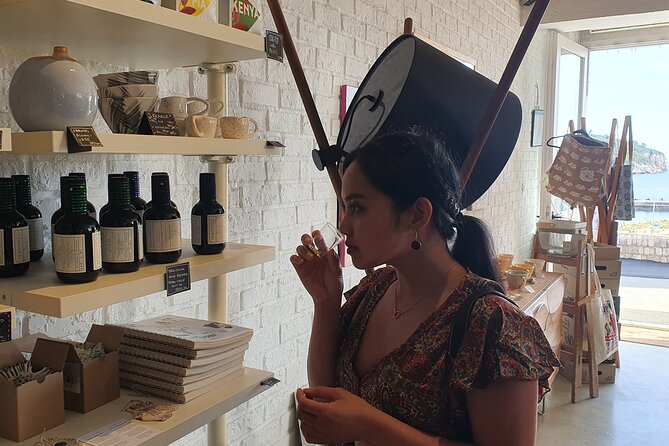
The first tasting focuses on extra virgin olive oil. You sample two Croatian oils that received awards at the New York International Olive Oil Competition, then learn how to recognize the main characteristics of a good extra virgin oil.
The guided evaluation lasts about 15 minutes. That is short enough to stay lively, but long enough to give you a basic method for tasting. You can expect attention to aroma, flavor, and overall quality rather than a simple pour-and-swallow stop.
This part is especially useful for anyone who cooks at home or buys olive oil regularly. A bottle labeled extra virgin can still vary greatly in freshness and character. The guide’s role is to help you notice those differences without turning the lesson into a technical lecture.
The award-winning oils give the tasting a clear focus, but the point is not only to praise expensive or decorated products. You are learning what to look for in Croatian olive oil and how it fits local food traditions.
Four wines, four dishes, and a proper meal

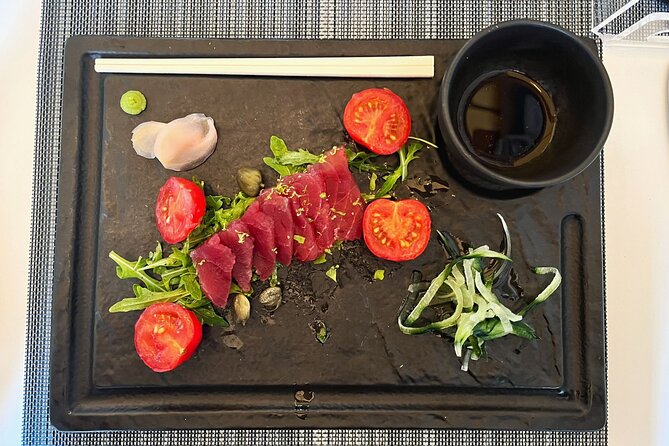
After the oil tasting, the tour continues to two restaurants for four wine and food pairings. The meal includes fish, seafood, and two meat dishes, followed by dessert. This variety is one of the strongest reasons to consider the tour.
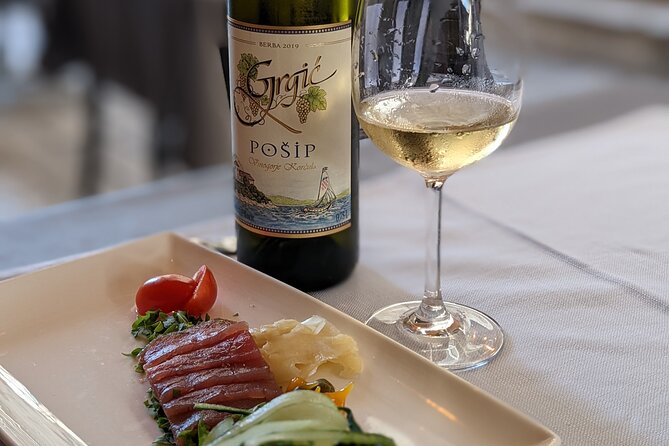
The first fish dish is paired with a Croatian white wine made from a grape variety recognized by Decanter in 2021. The next seafood dish comes with another Croatian white wine from a variety receiving the same recognition. The exact dishes and wines may depend on the businesses and current availability, so treat the menu as a guide rather than a fixed promise of particular plates.
The third course is a meat dish based on a recipe dating to the 16th century. It is paired with a locally produced white wine from a variety recognized by Decanter in 2017. That pairing should appeal to you if you want a taste of older regional cooking instead of only modern restaurant fare.
The fourth dish is meat served with Croatia’s most important red grape variety, from the country’s oldest protected wine-growing area near Dubrovnik. This gives the wine portion a clear regional finish and introduces a red style after several white wines.
The portions are not described as token samples, and one detailed account specifically praised the food as substantial. You should still think of this as a tasting lunch or early dinner rather than a standard three-course restaurant meal. Four savory dishes plus dessert, however, make it much more filling than a few bites at scattered stops.
More Wine and Olive Oil Tastings in Dubrovnik:
- Sorrento Farm and Food Experience including Olive Oil, Limoncello, Wine tasting
★ 5.0 · 2,524 reviews - From Mendoza: 3 Wineries, Olive Oil Factory Tour & Tasting
★ 4.6 · 901 reviews - From Chania: Olive Oil, Wine, Cheese & Honey Tasting Tour
★ 4.6 · 490 reviews - From Chania: Wine and Olive Oil Tasting Tour with Snacks
★ 4.8 · 354 reviews
Family-run places instead of one formal dining room
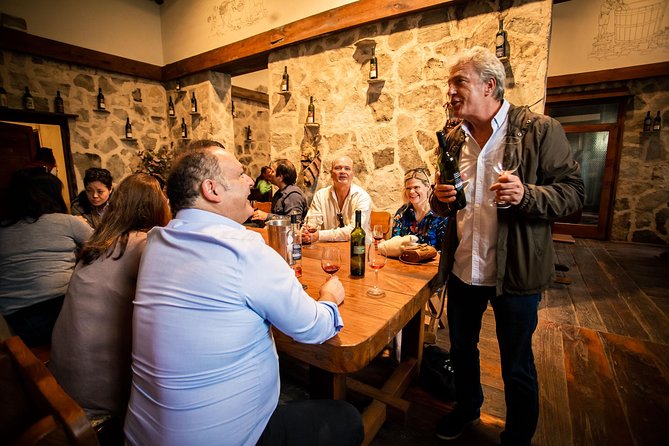
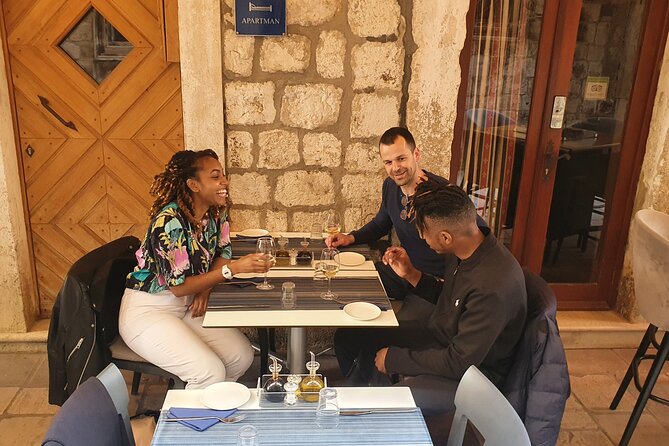
The four stops are family-run businesses in the Old Town. That gives the experience a more local shape than a single restaurant presentation, with each place contributing a different piece of the meal.
The tradeoff is that the tour depends on a set route and shared menu. If you have strong dietary restrictions, allergies, or a firm dislike of seafood or meat, the supplied information does not promise substitutions. Ask before booking if that matters to you.
The final stop is for dessert. It provides a sweet ending and keeps the evening moving through the Old Town rather than tying you to one table for the whole three hours.
One useful detail from the personal feedback is that Dom has received especially warm praise as a guide. His local connection to Dubrovnik, command of wine and olive oil, and willingness to answer follow-up wine questions were all singled out. If Dom is leading your group, you may get an especially personal experience, though guide availability can vary.
Dubrovnik’s political story between courses
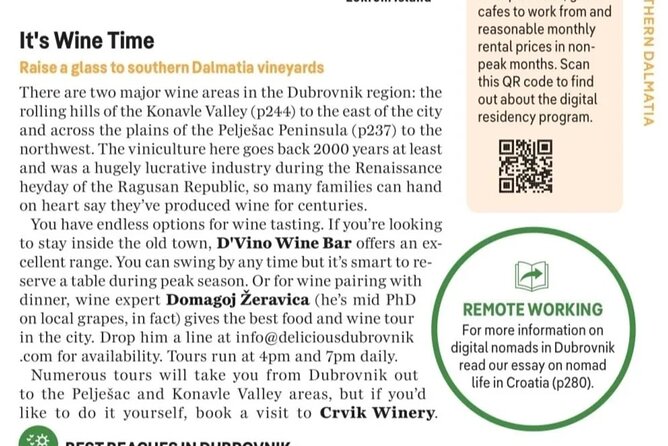
The walking sections cover more than famous buildings. In the less obvious parts of the Old City, you pass the 16th-century granary now associated with the Rupe Museum and get views over the rooftops.
That stop adds a practical layer to the tour. A granary tells you about storage, food supply, and the daily systems that kept the republic functioning. It is the kind of detail you might miss while rushing from the city walls to the main square.
Near the Jesuit Stairs and Rector’s Palace, the guide explains the political system of the Dubrovnik Republic. You hear how the aristocracy handled threats from stronger powers and what political methods helped the republic survive.
Do not expect a long academic seminar. The history is woven into the walk, with food and wine keeping the pace relaxed. For you, the value lies in connecting the city’s grand buildings with the decisions and systems behind them.
What the price includes, and what it does not
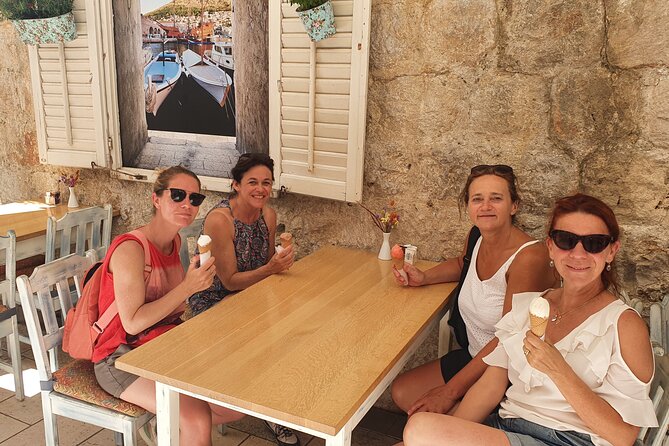
At $205.59 per person, this is expensive for a three-hour experience. The cost makes more sense if you would otherwise pay separately for a serious meal, several wine pours, an olive-oil tasting, and a private-style history lesson.
You receive a small-group walk, a professional guide, four dishes, four wines, two award-winning olive oils, dessert, and the guide’s interpretation of Dubrovnik. Alcoholic drinks are included, which removes the usual uncertainty over how much a tasting will add to the bill.
Still, the value depends on your priorities. If you want a budget-friendly way to sample Croatian food, this will feel costly. If you want an organized introduction with a strong wine focus and no restaurant planning, the package is easier to justify.
The tour also saves time. You do not need to compare menus, find several suitable places, or guess which local wine to order. The guide handles the sequence, pairings, and explanations.
Who should book this experience
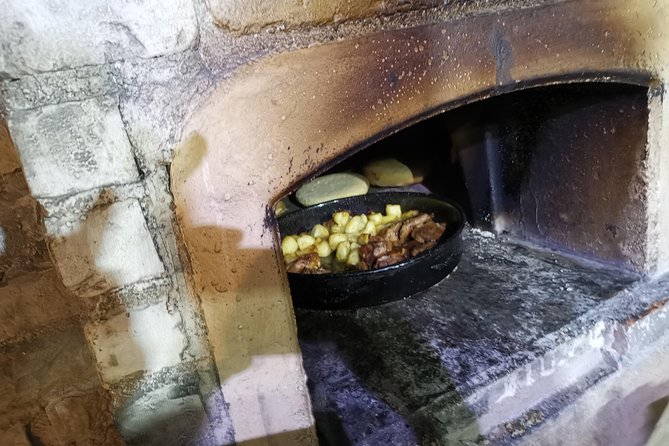
I would recommend it most strongly to you if you enjoy food but also want context. It suits first-time visitors who want an Old Town orientation, wine drinkers curious about Croatian varieties, and people who would rather taste several local specialties than sit through one long meal.
It also works well for couples, friends, and small groups who enjoy asking questions. The maximum of 12 participants gives the guide room to explain the wines and oils without making the session feel like a large bus excursion.
You may want to think twice if your main goal is a full sightseeing tour, a cheap meal, or complete control over the menu. The walk introduces many important places but does not replace a dedicated visit to the city walls, museums, or churches.
Wine tasting is limited to people aged 18 and above. Service animals are allowed, public transportation is nearby, and most people can participate, though the experience involves walking through the Old Town.
Timing, weather, and cancellation details
The tour starts at 4:00 p.m., lasts about three hours, and ends at Rector’s Palace. It requires good weather because part of the experience takes place outdoors. If poor weather forces a cancellation, you are offered another date or a full refund.
You can cancel for a full refund up to 24 hours before the start time. Changes or cancellations made inside that 24-hour window are not accepted for a refund.
Because the tour is booked well ahead on average, planning early is sensible, especially if you want a particular date or hope to have Dom as your guide. Confirmation is provided at booking, and the ticket is mobile.
Final verdict: Is this Dubrovnik food tour worth it?
I would book this tour if you want a polished introduction to Dubrovnik’s food and wine, and you are comfortable paying for expert guidance rather than only for the food itself. The best features are the four-course tasting, the award-winning olive oils, the range of Croatian wines, and the way the Old Town walk gives the meal a sense of place.
The strongest praise has gone to the personal guiding, especially when Dom leads. His wine and olive-oil expertise, local connection, and willingness to answer questions can turn a good tasting into the highlight of your Dubrovnik stay.
My practical advice is to schedule it early in your visit. You will get a helpful orientation, learn which local dishes and wines interest you, and still have time later in your trip to order more of your favorites. At nearly $206, it is not a casual purchase, but for a food-focused introduction with a small group and four substantial pairings, it can deliver solid value.
FAQ
Where does the Dubrovnik food and wine tour start?
It starts at Large Onofrio’s Fountain, at Poljana Paska Miličevića in Dubrovnik.
Where does the tour end?
The tour ends at Rector’s Palace on Ul. Pred Dvorom.
What time does the experience begin?
The start time is 4:00 p.m.
How long does the tour last?
The experience lasts approximately three hours.
How many people can join the tour?
The group has a maximum of 12 participants.
What food and drinks are included?
The tour includes four dishes made with locally produced ingredients, dessert, four wines from the Dubrovnik region, and a guided tasting of two Croatian extra virgin olive oils.
Is wine tasting available to children?
No. Wine tasting is available only to customers aged 18 and above.
More Food Experiences in Dubrovnik
- Dubrovnik Gastronomy: 3-Hour Food and Wine Tour
★ 4.9 · 249 reviews - Pelješac Full-Day Wine and Food Tour from Dubrovnik
★ 5.0 · 72 reviews - From Split: Krka Waterfalls, Food & Wine Tasting Tour
★ 5.0 · 9,326 reviews - From Split: Krka Waterfalls, Food & Wine Tasting Tour
★ 4.9 · 6,598 reviews
Newly added around Dubrovnik
- Dubrovnik: Sunset Wine Tasting At Panorama Point★ 4.9 · 72 reviews
- Konavle Valley: Tour with Wine Tasting from Dubrovnik★ 4.5 · 39 reviews
- Pelješac Full-Day Wine and Food Tour from Dubrovnik★ 5.0 · 72 reviews
- From Dubrovnik: Island of Korčula with wine tasting★ 4.4 · 30 reviews
- Dubrovnik Old Town: Night tour with History, Wine & Bites★ 4.7 · 59 reviews
- Dubrovnik Gastronomy: 3-Hour Food and Wine Tour★ 4.9 · 249 reviews
- Dubrovnik Sunset Tour with Scenic Views and Local Wine★ 5.0 · 49 reviews
- Dubrovnik: Oyster, Mussles, and Wine Tasting Tour in Ston★ 5.0 · 77 reviews
Wine & Olive Oil Tastings, compared.
Sorrento Farm and Food Experience including Olive Oil, Limoncello, Wine tasting
Read our review →
Krka Waterfalls With Boat Cruise, Wine and Olive Oil
Read our review →
Lemon, Olive Oil and Wine Tasting Tour with Lunch
Read our review →
Alghero: Wine and Olive Oil Tasting at a Local Farm
Read our review →
Browse the lists this tour appears in