
REVIEW · WINE TASTINGS
Wine Tasting Experience in Barcelona
Wine can make Barcelona’s food culture click. This 90-minute tasting introduces you to five Spanish wines, including cava, whites, and reds, while a sommelier explains what you are drinking and why it matters. I like the relaxed small-group setting and the chance to taste Catalan foods such as local cheese, olive oil, and fresh bread. My main caution is practical: the shop can be easy to miss, and the meeting details should be checked carefully before you set out.
I also like that this is not built only for wine experts. Hosts such as Omar, Vivian, Robert, Vincent, and Augustina are praised for being warm, clear, and willing to answer questions without making the session feel stiff. At $42.34 per person, it is a fair introduction, especially if your usual Barcelona evening does not include much time to learn about regional wine.
Key points at a glance
- Five wines in 90 minutes: Expect a broad tasting, commonly described as one cava, two white wines, and two reds.
- Cheese changes the tasting: Regional cheeses, fig jam, bread, and other local foods help show how the same wine can taste different with food.
- Friendly instruction: Omar, Vivian, Robert, Vincent, and Augustina are all praised for making the explanations clear and easy to follow.
- Small groups feel personal: The maximum is 20 people, though several sessions had around 8 to 10 participants.
- Useful location tip: The wine shop is in El Born, but the entrance may be hard to spot. Google Maps worked better than Apple Maps for at least one attendee.
- Good for mixed groups: Novices, experienced wine drinkers, solo visitors, and families with adult children can all take part.
Why this tasting helps you understand Barcelona
Barcelona is often approached through tapas, markets, and architecture. Wine gives you another way to read Catalonia. A tasting like this can help you recognize that Spanish wine is not one single style served under one national label. Different parts of Spain produce different grapes, methods, and flavors.
The session begins with an overview of Catalonia’s winemaking past before moving into the glasses. That short introduction matters because it gives each wine a place on the map and in the local food culture. You are not simply sampling five unrelated bottles. You are learning how region and production affect what reaches your table.
The tasting is also a useful first step before eating out. If you hear cava, white wine, red wine, or a regional grape mentioned on a menu, you will have a little more confidence choosing. The sommelier can also offer suggestions about pairing and help you describe what you like without reaching for vague words.
I would not treat this as a serious professional wine course. One attendee found the information introductory rather than highly detailed. That is fair. In 90 minutes, the goal is to give you a solid start, not turn you into a sommelier.
More Wine Tastings in Barcelona
- Montserrat & Cogwheel Train, Gourmet Wine Tasting & Tapas/Lunch
★ 5.0 · 6,290 reviews - Barcelona E-Bike Small Group Tour with Tapas & Wine Tasting
★ 5.0 · 638 reviews - Barcelona Wine Tasting: Catalan and Spanish Wines
★ 4.8 · 625 reviews
Arriving in El Born
The experience takes place in Barcelona’s historic El Born district, an excellent area for a food-and-drink appointment. You make your own way to the shop rather than receiving hotel pickup, so leave enough time to find the entrance.
There is an important address detail to check. The activity information gives the meeting point as Carrer de l’Arc de Sant Ramon del Call, 5, in Ciutat Vella, while the description places the wine shop on Carrer del Canvis Nous in El Born. Use the exact address shown on your booking confirmation and contact the provider if the two details do not match. Do not wait until the tasting time to sort it out.
The entrance can be easy to overlook. One person reported that Apple Maps did not bring up the location properly, while Google Maps worked well. I would use Google Maps, allow a few extra minutes, and look carefully for the wine shop rather than assuming the doorway will be obvious.
Once inside, you meet the sommelier and move into the tasting area. The session ends at the same meeting point, making it easy to continue with dinner or more sightseeing in Ciutat Vella.
Five wines, from cava to red
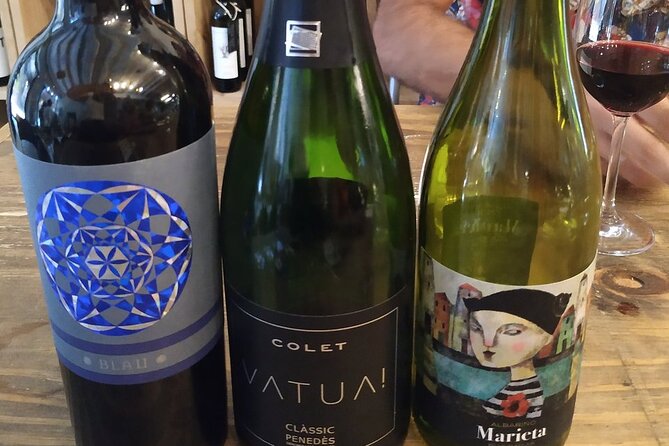
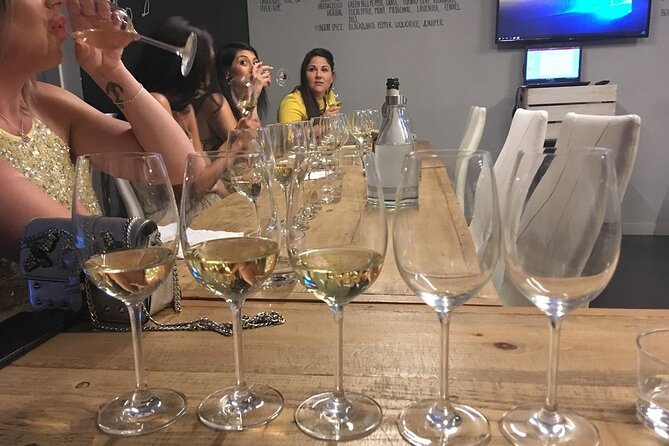
The tasting commonly follows a useful progression: one sparkling cava, two whites, and two reds. This gives you a wide sample of Spanish wine in a short period without turning the session into a long march through similar bottles.
Cava is a particularly fitting opening wine. It introduces the sparkling side of Spanish winemaking and gives the group an easy first glass while the sommelier sets out the tasting method. From there, the whites allow you to compare lighter styles before the reds bring more body and structure.
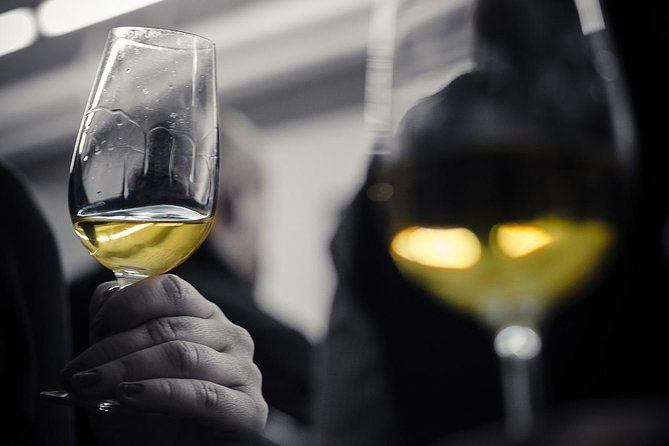
You are taught to look at the wine, smell it, and then taste it. These steps may sound basic, but they are useful when someone explains what to notice. Instead of quickly swallowing each pour, you get a reason to pause and compare.
The wording in the activity description refers to five wine varietals, while the actual experience is better understood as five selected wines. The exact bottles can vary, so do not book expecting a fixed vintage or a particular producer. What you can count on is variety across sparkling, white, and red styles.
Several people especially liked that the pours were generous. One account described receiving full glasses of all five wines, while another said the group could have a little more of favorites after the presentation. Since pour sizes may vary, I would view that as a pleasant possibility rather than a guaranteed feature.
How the sommelier teaches without making wine fussy
The strongest part of the experience is the host. The best wine lesson is one that gives you useful language without making you feel tested, and that is the tone repeatedly associated with this tasting.
Omar is praised for his humor, clear English, and ability to explain both the wines and the tasting process. Vivian is described as friendly and especially good at giving broad information in an interesting, digestible way. Robert is noted for working well with both wine beginners and experienced drinkers.
Other sessions featured Vincent and Augustina. Vincent handled a mixed-age group ranging from 21 to 80, while Augustina answered questions and explained the wines in detail. These names matter because the host can shape the whole evening. The provider uses more than one sommelier, so your experience may differ slightly by date.
You should feel comfortable asking simple questions. Which wine works with seafood? Why does one white seem sharper than another? What should you buy for a friend back home? The format encourages that kind of exchange.
The group atmosphere also helps. People arrive as separate parties, but the shared table and five pours give everyone something to discuss. Several sessions turned into easy conversation among people from different countries. Solo visitors can fit in without feeling stranded, and couples get a social activity beyond drinking alone at a bar.
More Wine Tastings in Spain
- Montserrat,Vineyard, Wine Tasting Small Group Tour & Hotel Pickup
★ 5.0 · 513 reviews - From Barcelona: E-Bike and Sailing Tour with Wine Tastings
★ 4.9 · 288 reviews - Barcelona: Montserrat Tour with Lunch & Wine Tasting Option
★ 4.6 · 286 reviews - Barcelona: Sailing Cruise & Vineyard Tour with Wine Tasting
★ 4.7 · 252 reviews
The local food pairing makes the wines better
Wine on its own tells only part of the story. The food is where the tasting becomes more practical.
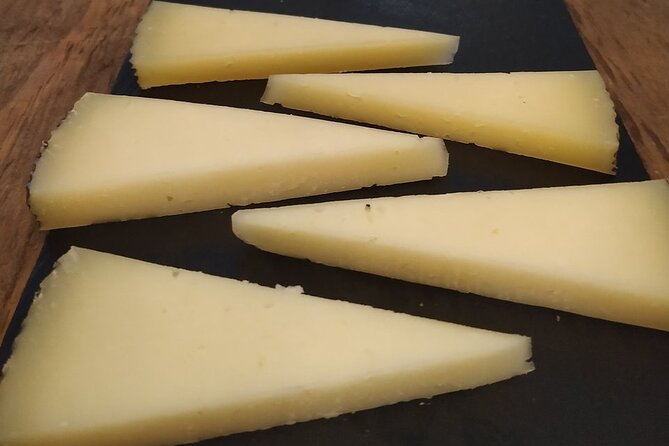
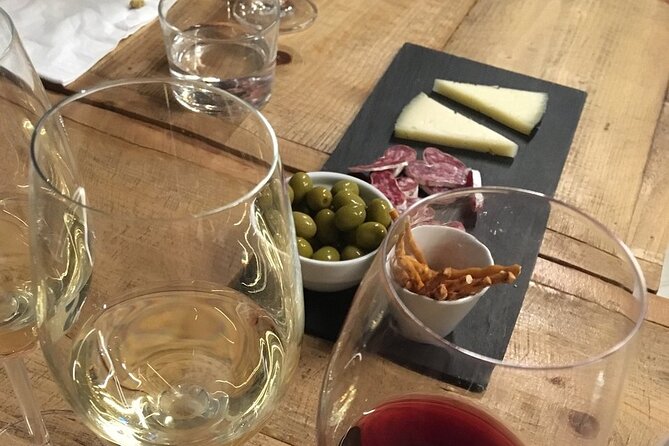
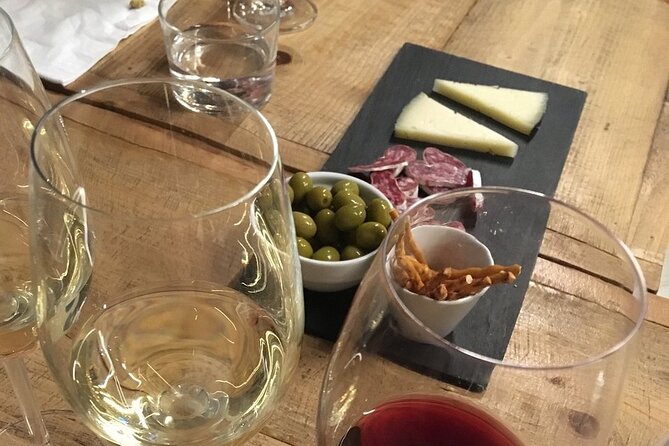
The spread includes local produce such as olive oil, fresh bread, and cheese. Depending on the food option selected, you may also have regional cheeses, olives, cured meat, Manchego, and other snacks. One popular pairing included five regional cheeses and fig jam. The snack option was described as including olives, cured meat, and Manchego.
The cheese is not just a small plate placed beside the glasses. It gives you a direct lesson in pairing. One wine may seem merely pleasant by itself, then become much more expressive with a salty or creamy cheese. This is a useful idea to carry into your next meal in Barcelona.
The fig jam pairing sounds especially worthwhile if you enjoy sweet and savory contrasts. It can change the balance of a wine and make the pairing feel more memorable. If you have a choice between the food options, look closely at the price difference and decide how much you care about a broader cheese selection.
Food is included in the tasting format, but do not expect a full meal. You will receive snacks and cheese, not a replacement for dinner. I would schedule this as an afternoon break or an early evening activity, then plan a proper meal afterward.
Tell the provider about dietary needs when booking. A vegetarian option is available, but it must be requested in advance. The supplied information does not give a full ingredient list for every snack, so anyone with a serious allergy should ask specific questions before attending.
Group size, timing, and the real value
The experience lasts about one hour and 30 minutes. That is long enough to slow down, ask questions, and compare the wines, but short enough to fit into a busy Barcelona day.
The maximum group size is 20. In practice, several sessions had about 8 to 10 people, which feels much more personal. A group of 20 would have a different rhythm, so I would not assume every date will feel like a private class.
At $42.34, the price is reasonable if you value instruction as well as the drinks. You are paying for five wine samples, food pairings, a guided presentation, and the chance to ask questions. The shop also sells the wines and foods afterward, so you can buy a bottle or edible souvenir if something catches your attention.
The value is weaker if you want a long, technical tasting focused on rare bottles. This is an introductory experience, and the information is designed for a general audience. It is also not the best choice if you are looking for a large meal or a full-day trip into the vineyards.
For most visitors, the price compares well with the cost of ordering several separate glasses in a bar, especially because you receive context and pairing advice. The key is to see it as a guided introduction to Spanish wine, not simply a cheap way to drink five glasses.
Who will enjoy it most
I would recommend this for:
- First-time visitors who want a better starting point for Catalan dining.
- Couples marking a birthday or special evening.
- Solo visitors who enjoy meeting people in a relaxed setting.
- Wine beginners who want clear instruction without formal jargon.
- Experienced drinkers who still enjoy comparing regional styles.
- Families with adult children, since the format has worked well across a wide age range.
The minimum drinking age is 18. Service animals are allowed, and the activity is near public transportation. Most people can participate, but the supplied details do not promise a fully accessible tasting room, so contact the provider if you have specific mobility needs.
It may not suit you if you dislike group activities, want to visit vineyards outside Barcelona, or need a substantial dinner. It is also not ideal for a strict schedule if you are uncomfortable finding an unfamiliar shop in El Born.
Small details that can improve your evening
Book ahead if this tasting is important to your plans. It is commonly reserved about 24 days before the experience, which suggests popular dates can fill early.
Arrive with enough time to find the door, particularly if you are navigating from another part of the city. A late arrival may disrupt the group, though one host was praised for being understanding when public transport caused a delay. I would still aim to arrive early rather than depend on that flexibility.
Do not rush the food pairing. Try each wine alone, then with the cheese or snack. Pay attention to which combination you prefer, even if it differs from everyone else at the table. That personal reaction is more useful than trying to identify the most sophisticated answer.
At the end, look through the shop for bottles or food products you enjoyed. Because the tasted items can be purchased there, the tasting can help you avoid buying a random souvenir wine based only on an attractive label.
Cancellation is free up to 24 hours before the start time. Cancellations or changes made less than 24 hours in advance are not refunded or accepted.
Should you book the Barcelona wine tasting?
Book it if you want a friendly, compact introduction to Spanish and Catalan wine, especially before several days of eating in Barcelona. The five-wine format, cheese pairings, and approachable hosts give you practical knowledge you can use immediately at restaurants and markets.
I would choose it over a standard bar visit if you enjoy asking questions and meeting other people. I would skip it if you want a vineyard tour, a formal advanced class, or a full meal.
For the best chance of a smooth experience, confirm the meeting address, use Google Maps, request vegetarian or dietary arrangements ahead of time, and reserve early. At $42.34, it offers good value for a social, educational tasting that takes only 90 minutes and gives you more than a glass in your hand.
FAQ
Where does the wine tasting take place?
The activity is held at a wine shop in Barcelona’s historic El Born district. The description gives Carrer del Canvis Nous as the shop location, while the meeting point is listed as Carrer de l’Arc de Sant Ramon del Call, 5, Ciutat Vella. Check your booking confirmation for the correct address before leaving.
How long does the tasting last?
The tasting lasts approximately one hour and 30 minutes.
How many wines will I taste?
You will sample five wines. The tasting is commonly described as one cava, two white wines, and two reds, although the exact bottles may vary.
Is food included?
Yes. Food tasting and snacks are included, with cheese listed among the included items. The food may include local produce such as olive oil, fresh bread, and cheese. Some options include regional cheeses, while another snack option may include olives, cured meat, and Manchego.
Is the tasting available in English?
Yes. The experience is offered in English.
What is the minimum drinking age?
The minimum drinking age is 18.
Can I cancel for a refund?
Yes. You can cancel at least 24 hours before the experience start time for a full refund. Cancellations or changes made less than 24 hours before the start time are not accepted for a refund.
Newly added around Barcelona
- 2 Wineries Small Group Tour with Free Hotel PickUp from Sitges★ 5.0 · 83 reviews
- Barcelona: Guided Rooftop Wine Tasting – Enjoy 6 Spanish Wines★ 4.5 · 61 reviews
- Barcelona: Wine Tasting and 5 Course Tapas Pairing Dinner★ 4.5 · 129 reviews
- Barcelona Wine and Gourmet Tapas Tour★ 5.0 · 188 reviews
- Bohemian Barcelona Neighborhood Evening Tapas & Wine Tour★ 5.0 · 419 reviews
- Viticulture and Wine-Tasting 3-Hour Trip from Barcelona★ 4.5 · 59 reviews
- Barcelona Tapas & Wine Experience as a Local at Hidden Wineries★ 5.0 · 71 reviews
- Barcelona Gothic Quarter VIP Tapas & Wine Tour★ 5.0 · 276 reviews
Wine Tastings, compared.
Douro Valley w/ Boat Tour, Wine Tasting & Lunch
Read our review →
Complete Douro Valley Wine Tour with Lunch, Wine Tastings and River Cruise
Read our review →

Small-Group Wine Tasting Experience in the Tuscan Countryside
Read our review →
Montserrat & Cogwheel Train, Gourmet Wine Tasting & Tapas/Lunch
Read our review →
Tuscany & Montepulciano Day Trip with Lunch & Wine Tasting
Read our review →Browse the lists this tour appears in