
REVIEW · CHAMPAGNE TOURS
From Reims/Epernay: Champagne half-day tour (small group)
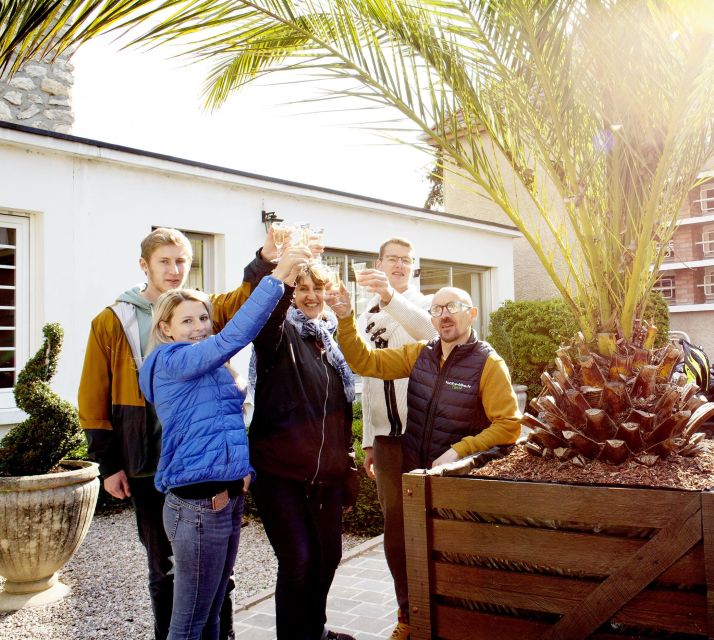
Champagne tastes better with a local connection. This four-hour tour pairs six tastings with two independent producers, vineyard views, and the villages that give the region its character. I especially like the small group limit of eight and Angélique’s personal link to the area. She grew up in Champagne and has worked among the vines and cellars, so the afternoon feels grounded in real wine country rather than a polished showroom.
I also like the focus on family-run growers, who own most of the region’s vineyard land and supply grapes to famous labels. You get a closer look at how Champagne is made and how different blends taste. The main consideration is timing: four hours is enough for a lively introduction, but not enough for a slow, detailed visit at every stop. Harvest periods and holiday closures can also require some flexibility.
Key points to know before you book
- Angélique leads the tour personally, bringing local experience from vineyard and cellar work.
- Six Champagne tastings are paired with advice on food and blending styles.
- Two independent producers replace the usual big-house-only approach.
- The route links Reims, Épernay, Hautvillers, and the Montagne de Reims, with plenty of vineyard scenery.
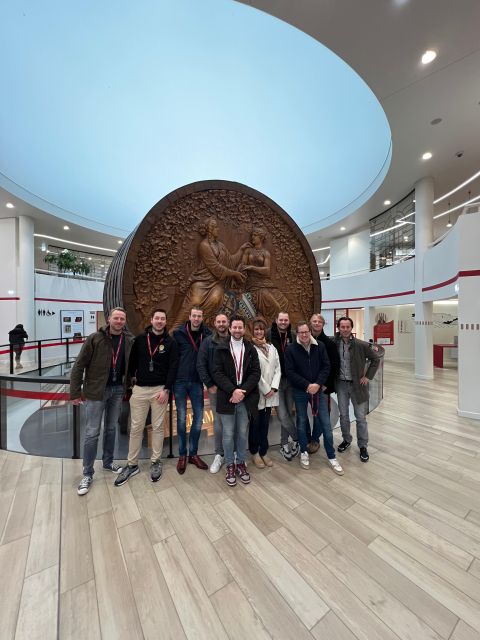
- A group of no more than eight keeps the van ride and tastings personal.
- The $188 price includes transport, cellar visits, tastings, and sightseeing, but the value depends on how much you want local access rather than a long formal cellar tour.
Why Angélique changes the feel of the afternoon
A Champagne tour can easily become a parade of grand facades, polished tasting rooms, and brand stories. This experience takes a different route. Angélique drives you through her home region and introduces you to independent winegrowers, the people who work the land and often sell grapes to the major Champagne houses.
That personal connection matters. Her background includes work in the vines and cellars, giving her a practical way to explain the region. You are not simply told that Champagne requires patience and labor. You hear about pruning, soil, harvesting, pressing, and the many decisions that shape the final blend.
The small group format helps, too. The van holds no more than eight participants, and several recent outings had only two people plus Angélique. That can mean more time for questions, a calmer tasting, and less of the shuffle that comes with a large coach group.
Angélique is also praised for her warmth and humor. She is described as making people feel at home, which is especially useful at small cellars where the welcome is personal rather than theatrical. Her relationships with local producers can also matter when the calendar gets difficult. On a New Year’s Eve outing, she found open houses when many other places had already closed.
The trade-off is that the experience depends partly on local conditions. A small producer may be busy during harvest or unavailable around public holidays. That is part of the charm, but it also means the schedule may need to adjust.
More Wine Country Day Trips in France
- Loire Valley Castles Day Trip from Paris with Complementary Wine
★ 4.5 · 3,907 reviews - From Paris: Loire Valley Castles Day Trip With Wine Tasting
★ 4.6 · 1,727 reviews - From Paris: Day Trip to Champagne with 8 Tastings & Lunch
★ 4.8 · 1,501 reviews
Six tastings that explain Champagne better than a single glass
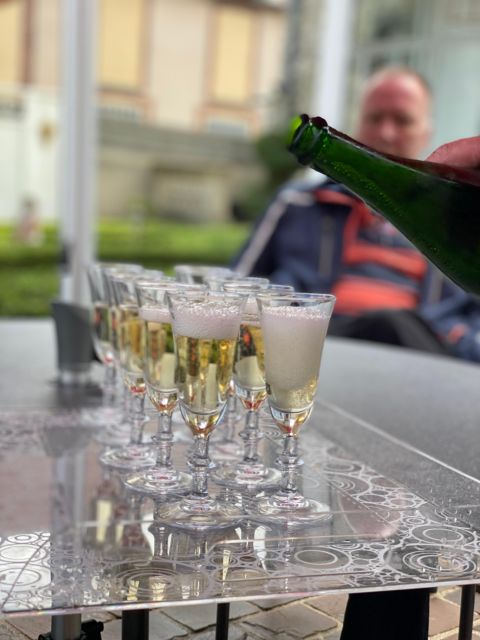
The tasting is not an afterthought. Six Champagnes are included, with different blends and styles presented across two producers. The goal is not simply to drink more wine. It is to help you notice how grape varieties, villages, aging, and blending alter the result.
Pinot grapes are especially important in the Montagne de Reims and Marne Valley, the two subregions included on the route. Chardonnay also appears, but Pinot Noir and Pinot Meunier are central to the area’s identity. As you taste, you can begin to understand why two wines from nearby villages may still have different weight, aroma, or texture.
Angélique also gives food pairing advice. That is practical information you can take home. Champagne is often treated as a welcome drink or a toast, but different styles can work with more than oysters and canapés. The tasting helps you think about Champagne as a wine for a meal, not only a celebration.
The generous pours have been a recurring feature of the experience. One outing included enough wine that the participants joked about frequent trips to the bathroom. You should plan accordingly, especially if you are not used to tasting several sparkling wines in one afternoon.
You may also want to leave room in your luggage. Several people bought a bottle from each producer because the wines and hospitality made a strong impression. Purchases are not included in the tour price, but small-producer Champagne can be one of the most satisfying souvenirs in the region.
Independent producers instead of only famous labels
The tour visits two different Champagne domains, with one in the Montagne de Reims and another in the Marne Valley area. This gives you a useful comparison rather than one producer’s single point of view.
Large houses such as Moët et Chandon, Perrier-Jouët, and Pol Roger helped make Épernay famous. Their names and enormous cellars are part of Champagne’s story, but this outing concentrates on the growers who own and work much of the vineyard land.
Local winegrowers own about 90 percent of Champagne’s 34,000 hectares of vineyards. Many supply grapes to the major brands, while also producing wines under their own names. Visiting them gives you a better sense of the farming behind the famous gold labels.
That distinction is important. A big house visit often offers a grand presentation of a global brand. A family producer can show you a more direct connection between a particular village, a harvest, and a bottle. The setting may be simpler, but the conversation can be more personal.
Do not expect identical visits every time. Producer schedules, harvest work, and holiday opening hours can shape the afternoon. During one August outing, the hosts were busy with harvest but allowed the group to see grapes being pressed. That kind of unscripted moment can be more revealing than a perfectly timed presentation.
Épernay and its grand Avenue
The route includes a van tour of Épernay, the town widely regarded as the birthplace of Champagne’s great houses. The key sight is Avenue de Champagne, where grand buildings line a famous route above miles of underground aging cellars.
This is where the region’s commercial power becomes visible. Elegant houses competed in architectural display, creating a sharp contrast with the smaller family cellars visited elsewhere. Beneath the town, around 220 million bottles are aging in the famous cellars, a figure that gives scale to Champagne’s global reach.
You may not get a full formal tour of one of the major brands on this outing. That is worth understanding before booking. The Épernay portion is a sightseeing drive and historical introduction, while the detailed cellar experiences come through the independent producers.
For a first afternoon in the region, this balance works well. You see the grand public face of Champagne, then spend time with the growers who make the system work. If your main goal is an extensive underground tour at Moët et Chandon, you should choose a dedicated big-house visit instead.
More Champagne Tours in France:
- Champagne Day Trip with 6 Tastings, Reims and Winery from Paris
★ 5.0 · 902 reviews - From Reims: Champagne and Family-Run Wineries Tour
★ 4.8 · 671 reviews - Paris Seine River Champagne Tasting Cruise
★ 4.5 · 652 reviews - French Wine and Champagne Tasting in Paris
★ 5.0 · 622 reviews
Hautvillers and the Dom Pérignon connection
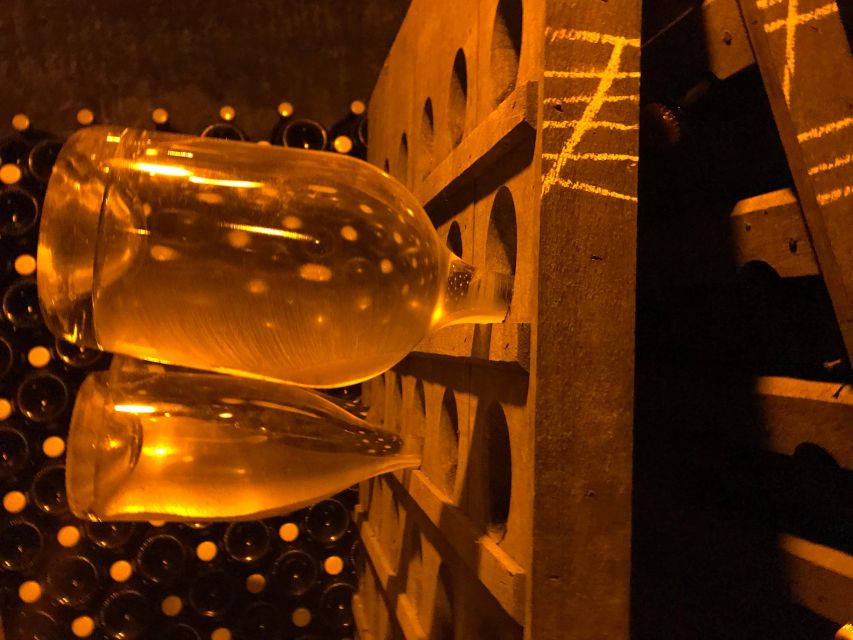
After Épernay, the route continues to Hautvillers, one of the region’s essential stops. The village is linked to Dom Pérignon, the Benedictine monk who served as a cellar master and helped improve Champagne through the blending of grapes and villages, known as crus.
The tour includes a visit connected with the abbey, where Dom Pérignon is buried. You also get time to appreciate the setting around the abbey garden and the hilltop views.
From the heights near Hautvillers, the Marne River and the Côte des Blancs can appear in the distance. This is one of the best moments for understanding Champagne as a place, not just a product. Vineyards spread across the slopes, villages sit among the rows, and the river valley explains some of the region’s geography.
The stop is not a long historical lecture. Instead, it adds context to the tastings and vineyard drive. You learn why Hautvillers matters, see the connection to Dom Pérignon, and gain a broad view of the territory that supplies the wine.
Seeing the vineyard work behind every bottle
One of the most useful parts of the afternoon is the explanation of terroir. In plain terms, this means how soil, slope, climate, grape variety, and human work combine to shape a wine.
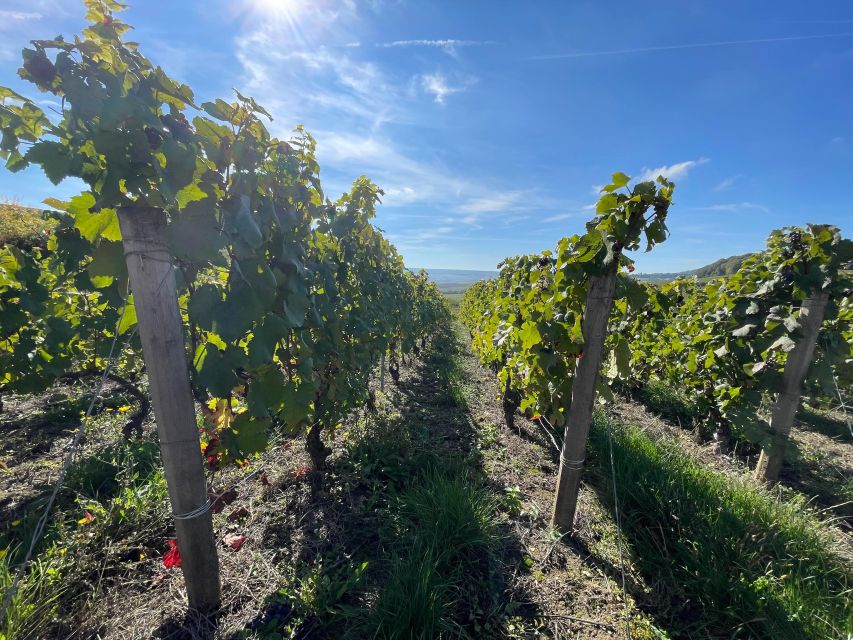
You stop to look at the vines and discuss pruning systems, soil conditions, and the harvest. The work is done by hand, and it continues through the year. Vineyard workers are described as gardeners, an accurate image for the constant care required before the grapes ever reach a cellar.
This is where Angélique’s practical background adds value. She can connect the work in the rows to what you taste in the glass. A bottle of Champagne is not just a blend of grapes and time. It begins with decisions made months or years earlier in a particular plot.
The timing of your visit will affect what you see. Harvest season can bring pressing and other active work, while another month may offer a quieter look at the vines. The tour still has value outside harvest, but you should not expect the same sights on every date.
The vineyard views are also a welcome break from indoor tasting rooms. You get an ocean of vines, rolling hills, and a clearer idea of why Champagne’s geography is part of its identity.
Transport, timing, and the four-hour limit
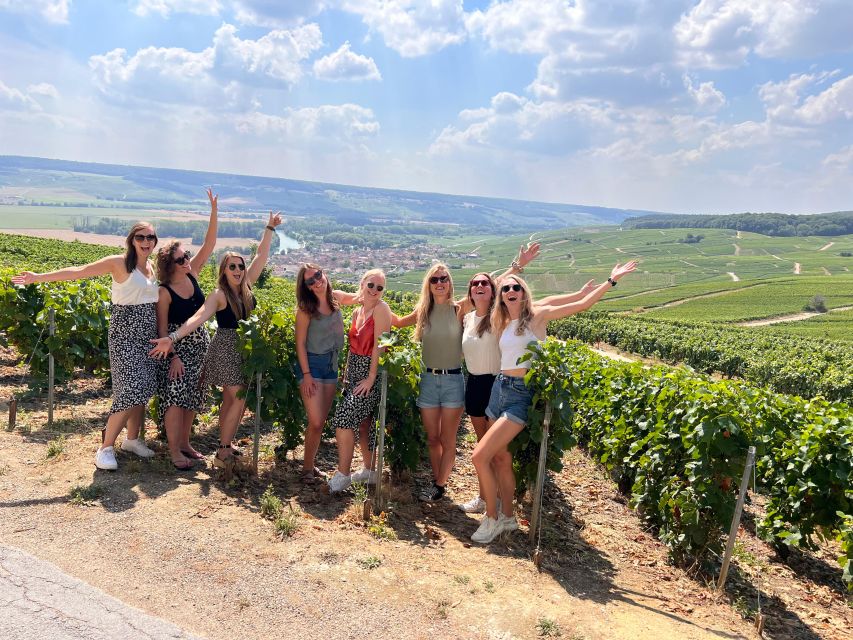
The tour meets at Reims Central Station at 1:30 PM or at the Épernay tourist office at 2:00 PM. Pickup and return are included, with an air-conditioned van and an expected finish between 5:30 and 6:00 PM.
The van makes the experience practical if you are staying in Reims or Épernay. You do not need to arrange a separate driver for visits outside town, and you can taste without worrying about driving afterward. The small group also makes it easier to get in and out of rural stops.
The timing is compact. In four hours, you cover producer visits, tastings, Épernay, Hautvillers, an abbey stop, and vineyard sightseeing. That gives you a broad introduction, but each element receives a limited share of the afternoon.
I would treat this as a sampler with substance, not a full day of wine study. You will see several sides of Champagne, but you will not have long stretches to wander independently or spend hours in one cellar.
The schedule may also shift. The two domains, town tour, and Hautvillers stop require a sensible driving route, and local openings can change. The guide’s local relationships are useful here, but you should remain comfortable with a little flexibility.
Is $188 a fair price?
At $188 per person, this is not a budget outing. The price includes an air-conditioned vehicle, pickup and return, a live guide in English or French, two producer visits, cellar experiences, six tastings, the abbey stop, and vineyard sightseeing.
The value comes from access and convenience. You are paying for a small group, a local guide with vineyard and cellar experience, and a route that would be awkward to organize independently in half a day. You also avoid the cost and risk of driving after several tastings.
The price makes less sense if you only want to see Avenue de Champagne or visit one famous brand. A cheaper town-based tasting may cover those needs. This outing is better suited to you if you want the countryside, independent producers, and regional context in one organized afternoon.
The 4.8 rating from 37 published ratings suggests a strong record, and transport received a 96 percent perfect score. The most consistent praise focuses on Angélique’s attention, the relaxed small-group setting, and the quality of the family-run producers.
Who will enjoy this Champagne tour most?
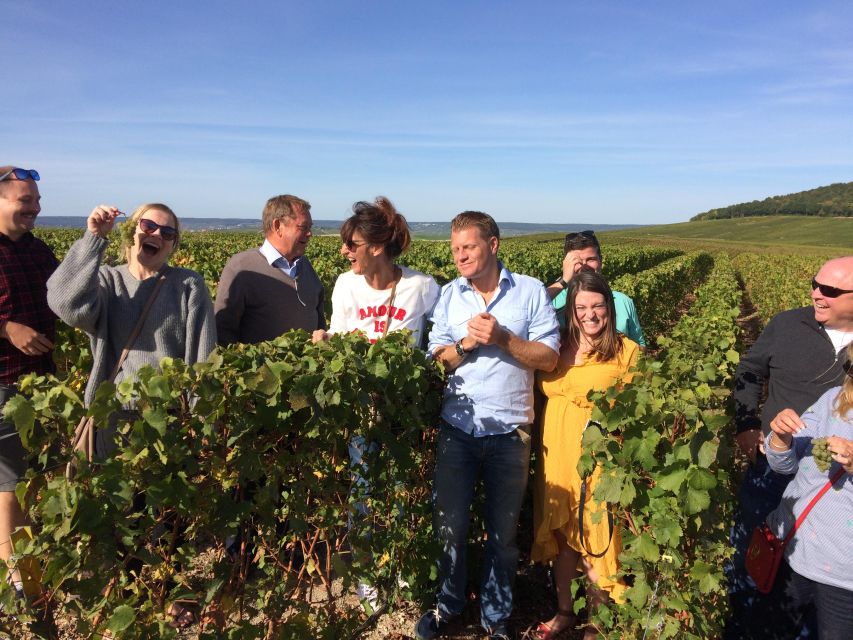
I would recommend it to first-time visitors who want a clear introduction to the region without spending a full day on a single house. It also suits wine drinkers who prefer producer stories and vineyard work to polished brand marketing.
It is a good choice for couples and friends who value conversation. If you end up as one of only two participants, Angélique can give the outing a very personal feel. The format also works for people who want to ask detailed questions without holding up a large group.
You should think twice if you need a rigid schedule or a long formal cellar tour. Holiday closures and harvest activity can affect the route, and the four-hour format moves at a steady pace.
I would also avoid booking it as your only Champagne activity if you want an advanced study of production. It covers a lot, but the information is designed to make the region understandable and enjoyable, not to turn you into a winemaker in one afternoon.
Should you book it?
Book this tour if you want local access, six tastings, and a broad look at Champagne in a small group. Angélique’s personal ties, the two independent producers, and the stops in Épernay and Hautvillers give the afternoon more character than a standard brand visit.
Skip it if your priority is a long underground cellar tour at one major house, or if you want several hours at a single estate. For most visitors staying in Reims or Épernay, though, $188 is a reasonable price for a compact introduction that connects the bottle with the people, soil, villages, and work behind it.
FAQ
Where does the tour meet?
You can meet at Reims Central Station at 1:30 PM or at the tourist office in Épernay at 2:00 PM.
How long does the Champagne tour last?
The experience lasts four hours. Return is expected between 5:30 PM and 6:00 PM, depending on the pickup location and route.
How many people are in the group?
The tour is limited to eight participants.
How many Champagne tastings are included?
Six Champagne tastings are included, with food pairing advice and tastings from two independent Champagne domains.
Which languages does Angélique speak?
The live tour is offered in English and French.
Is transportation included?
Yes. Pickup and return, an air-conditioned van, and transportation between the Champagne producers, Épernay, Hautvillers, and the vineyard stops are included.
More Half-Day Trips in France
- Saint Emilion Half-Day Trip with Wine Tasting & Winery Visit from Bordeaux
★ 4.5 · 1,034 reviews - From Bordeaux: St. Emilion Village Half-Day Wine Tour
★ 4.7 · 728 reviews - From Bordeaux: Half-Day Saint-Émilion Tour and Wine Tasting
★ 4.7 · 699 reviews - Bordeaux: Vineyards Wine Tasting Half-Day Trip
★ 4.2 · 470 reviews
Newly added around France
- Saint Emilion Full Day Wine and Bike Tour★ 5.0 · 167 reviews
- Private – Best of Bordeaux Walking Tour + Glass of Bordeaux Wine★ 5.0 · 240 reviews
- Luxurious full day Bordeaux wine tour in a Tesla★ 4.5 · 31 reviews
- Private Bordeaux History Tour with a glass of Bordeaux wine.★ 5.0 · 28 reviews
- Wine Masterclass & Cheese Tasting Workshop in Bordeaux★ 5.0 · 29 reviews
- Bordeaux wines tasting workshop including Food & Wine pairings★ 5.0 · 31 reviews
- Bordeaux Wine Masterclass: Blending workshop with appetizer★ 5.0 · 113 reviews
- Medoc Afternoon Wine Tour – 2 Wineries, tastings & delicacies★ 4.5 · 74 reviews
Champagne Tours, compared.
Day Trip to Champagne with 8 Tastings & Lunch
Read our review →
Private Boat Ride in Miami with Experienced Captain and Champagne
Read our review →
From Las Vegas: Grand Canyon Helicopter Tour with Champagne
Read our review →
2 Hour Champagne Sunset Cruise from Grace Bay, Providenciales (Adult Only)
Read our review →
Grand Canyon West Rim Helicopter Tour with Champagne Toast
Read our review →Browse the lists this tour appears in