
REVIEW · WINE & FOOD PAIRINGS
Barcelona: Markets Tour With Food and Wine Tasting Upgrade
Barcelona feeds you clues. This 2 to 3 hour walk links La Boquería, Santa Caterina Market, and El Born with churches, old streets, and Catalan food traditions. I like the mix of market browsing and neighborhood history, and I like that guides such as Alberto, Valentina, Cal, Eoghan, and Carlos add restaurant tips and local context. The main drawback is that La Boquería can feel rushed if you want time to shop or eat on your own.
The $33 price is fair for a small-group walking tour with at least one market tasting, especially if you are new to Barcelona. The optional upgrade adds a private tasting of cured meats, premium cheeses, pa amb tomàquet, and wine, but it is not wheelchair or stroller accessible, unlike the walking portion.
What makes this Barcelona market walk useful
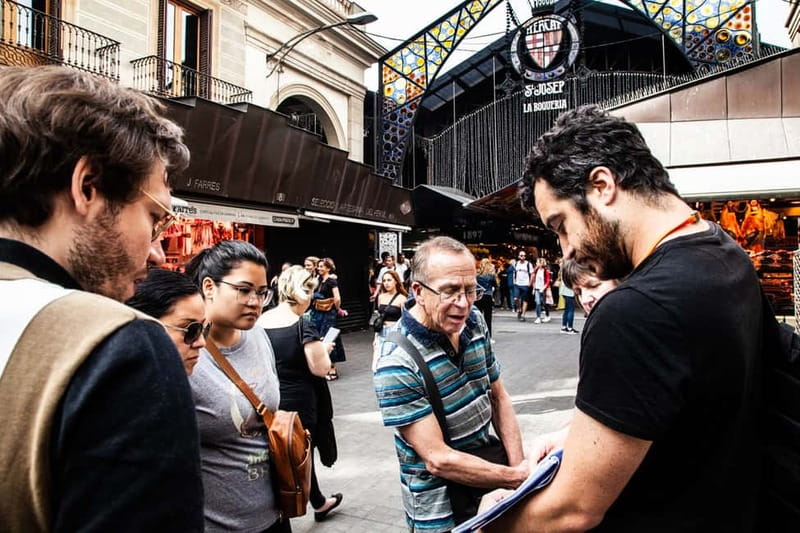
- Olives at La Boquería: You get at least one Catalan food tasting while learning how the famous market works.
- Three different market experiences: La Boquería is highly visited, Santa Caterina serves a neighborhood purpose, and El Born preserves an older market site below its modern cultural setting.
- A walk through three central areas: The route connects La Rambla, the Gothic Quarter, and El Born without using public transport.
- Catalan oddities included: A stop at a caganer shop explains one of Catalonia’s most unusual holiday traditions.
- Optional sommelier-led tasting: The upgrade adds wine, cured meats, premium cheeses, and tomato bread in a private room.
- Useful local advice: Guides can point you toward restaurant choices, pastry shops, market stalls, and good-value local foods.
Start with La Boquería and Catalan market customs
You meet outside the Dunkin’ Donuts on the assigned corner, where your guide holds an ExperienceFirst sign. It is a plain meeting place, but easy enough to find on La Rambla. Wear shoes suited to several hours on pavement, and bring water. Barcelona markets are more fun when you have enough energy to look up from the food counters.
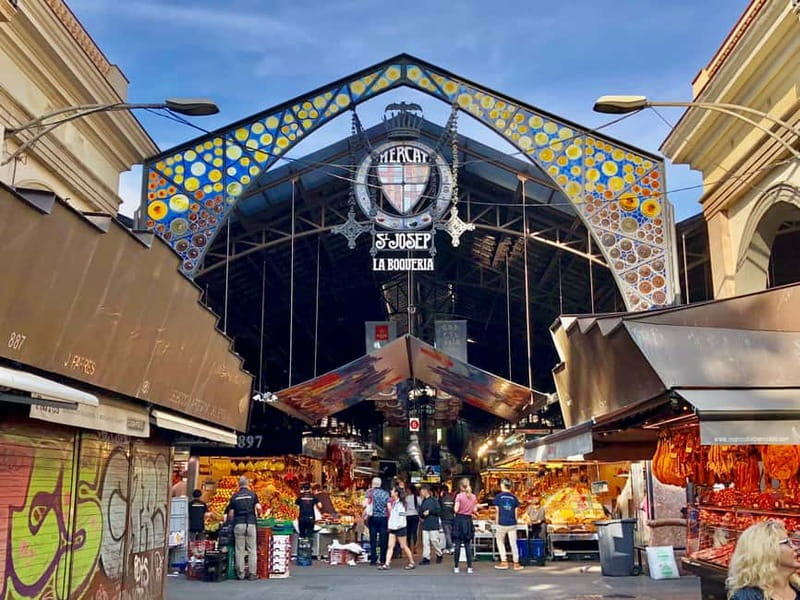
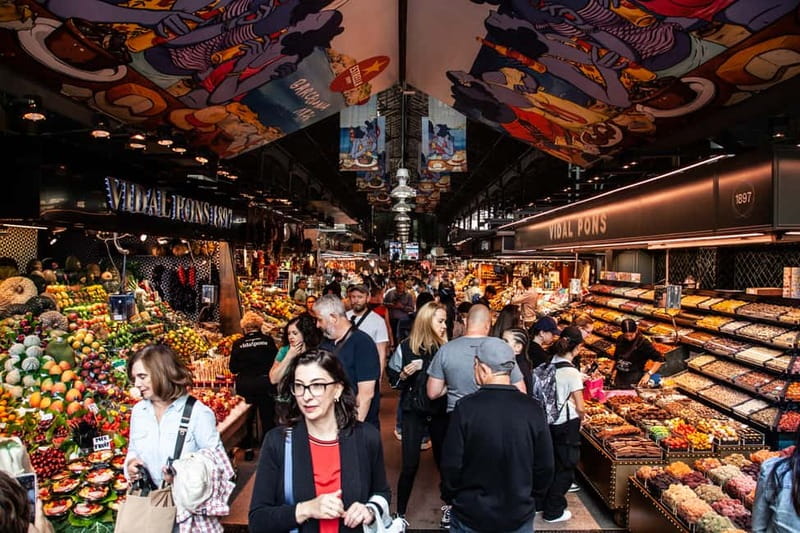
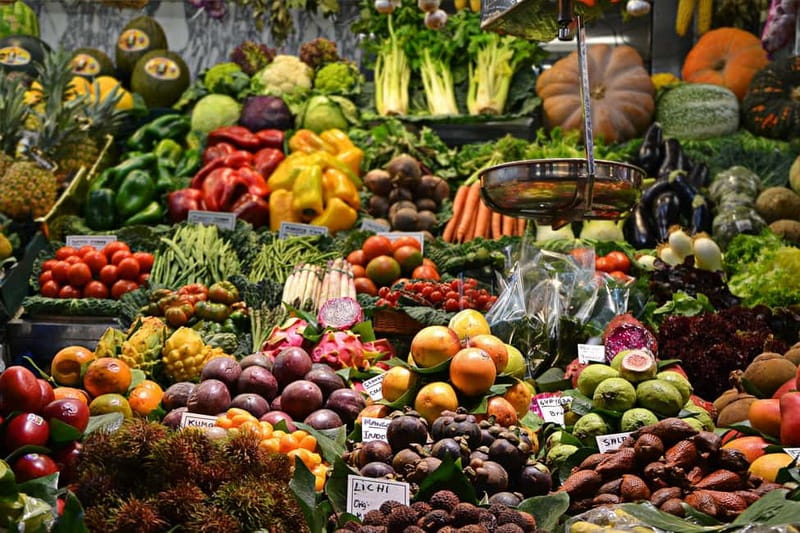
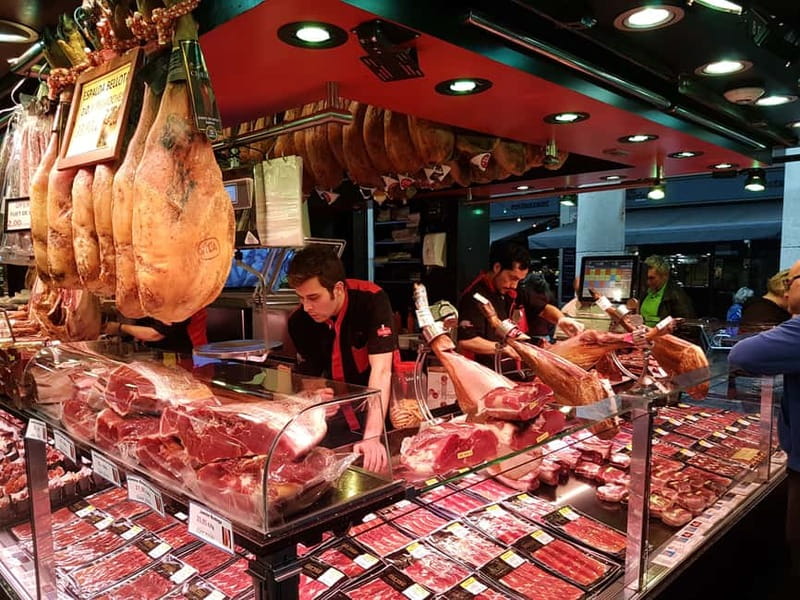
La Boquería is the first major stop. Its patterned aisles hold seafood, meats, fruit, vegetables, sweets, mushrooms, bread, and prepared foods. The guide helps you read the market rather than simply march through it. You hear about Catalan food customs, how different products are used, and which stalls are worth a closer look.
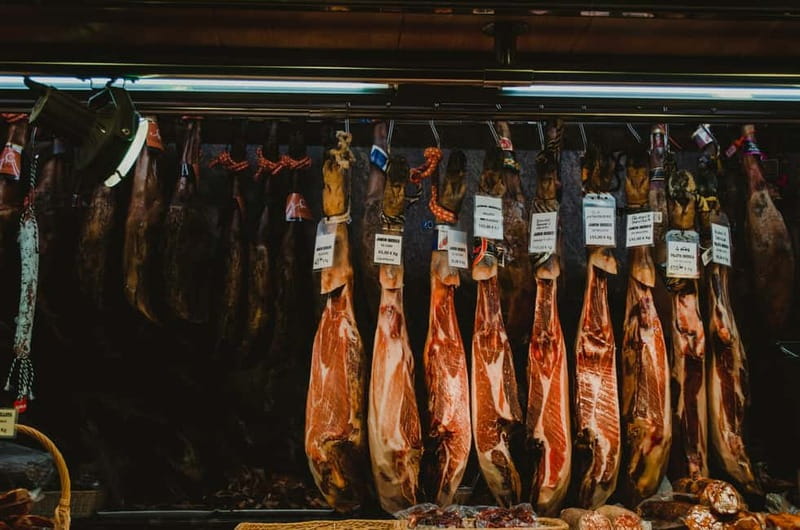
At least one tasting is included. Catalan olives are specifically part of the experience, and the food sampling can also include items such as turrón, the local nougat, depending on the guide and market conditions. Eoghan, one especially praised guide, explained the differences among Iberian ham, salami, mushrooms, breads, and pastries while giving the group time to browse.
That combination is more useful than a string of random samples. You learn what you are looking at, then you can decide if you want to buy something. Food purchases are not included, so bring extra money if you want fruit, sweets, meat, cheese, or a snack for later.
The tradeoff is time. La Boquería is both a working market and a major sightseeing stop, so the group keeps moving. If your main goal is to eat your way through the market, this tour may not provide enough free time. One good solution is to return later on your own, using the guide’s suggestions to choose what deserves your money.
More Wine and Food Pairings in Spain
- Barcelona: Wine Tasting and 5 Course Tapas Pairing Dinner
★ 4.5 · 129 reviews - Food and Wine Small Group Tour from Barcelona – Maximum 8 people
★ 5.0 · 111 reviews - Paella Cooking Class in Madrid with Bottomless Wine Pairing
★ 5.0 · 985 reviews
La Rambla reveals an older market route
From La Boquería, the walk continues along La Rambla. Today it is known for open-air cafés, flower stalls, street activity, and heavy foot traffic. The tour gives you a better sense of how this promenade once functioned as a market route rather than treating it as just a path between attractions.
Look down for the colorful Miró mosaic, one of the route’s easy-to-miss details. The guide also adds stories about La Rambla and the surrounding streets. Cal received special praise for his affection for the area, presenting favorite places and small historical details with real energy.
This section helps you get your bearings. La Rambla can feel like a corridor built for passing through, but the guide slows the pace enough to show why it matters. You also get a chance to take photographs of the cafés, flowers, and public art.
There is a practical warning here. La Rambla is crowded, and your attention will be split between the guide, the pavement, and your belongings. Keep bags closed and stay close to the group. The tour is not a shopping stop, but your guide can suggest places to return to later.
Santa Caterina Market brings a local contrast
Santa Caterina Market offers a sharp change from La Boquería. It is Barcelona’s first covered market, and its wavy roof is covered in bright colors. The building is easy to recognize, but the real value comes from understanding its place in the Gothic Quarter and its connection to an earlier monastery site.
This is one of the best parts of the route for people who want more than food photos. You see how Barcelona has built a modern market over older layers of the city. The guide connects the market’s design and purpose to neighborhood life, giving you a useful comparison with the more famous La Boquería.
The two markets serve different roles. La Boquería is a major attraction where many visitors come specifically to see the food stalls. Santa Caterina feels more like a place you might use as part of a normal day in Barcelona. You can ask the guide what to try and which items offer good value.
The walking route is accessible for wheelchairs and strollers, though market crowds and narrow passages can still affect the pace. The activity is advertised as wheelchair accessible, and the walking portion is suitable for strollers. The upgraded tasting afterward has different accessibility limits.
A caganer shop explains Catalan humor
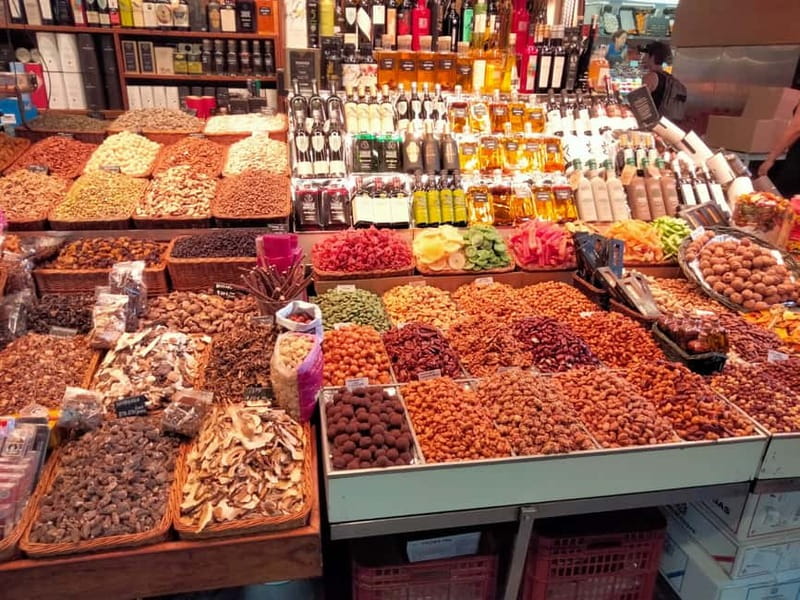
The caganer stop is brief but memorable. A caganer is a small figure associated with Catalan Christmas traditions, often shown in a humorous squatting pose. The shop gives the guide a chance to explain why this unusual character appears in local nativity scenes.
This is exactly the sort of stop that gives a walking tour personality. You are not only moving from one landmark to the next. You are learning about a local custom that would be easy to miss if you explored the Gothic Quarter with a standard map.
The shop is not a major food stop, and you do not need to buy anything. Think of it as a cultural pause that breaks up the market visits. It also gives children and teenagers something amusing to remember from the walk.
More Wine Tastings in Barcelona
- Montserrat & Cogwheel Train, Gourmet Wine Tasting & Tapas/Lunch
★ 5.0 · 6,290 reviews - Barcelona E-Bike Small Group Tour with Tapas & Wine Tasting
★ 5.0 · 638 reviews - Barcelona Wine Tasting: Catalan and Spanish Wines
★ 4.8 · 625 reviews - Montserrat,Vineyard, Wine Tasting Small Group Tour & Hotel Pickup
★ 5.0 · 513 reviews
Gothic Quarter churches add weight to the food story
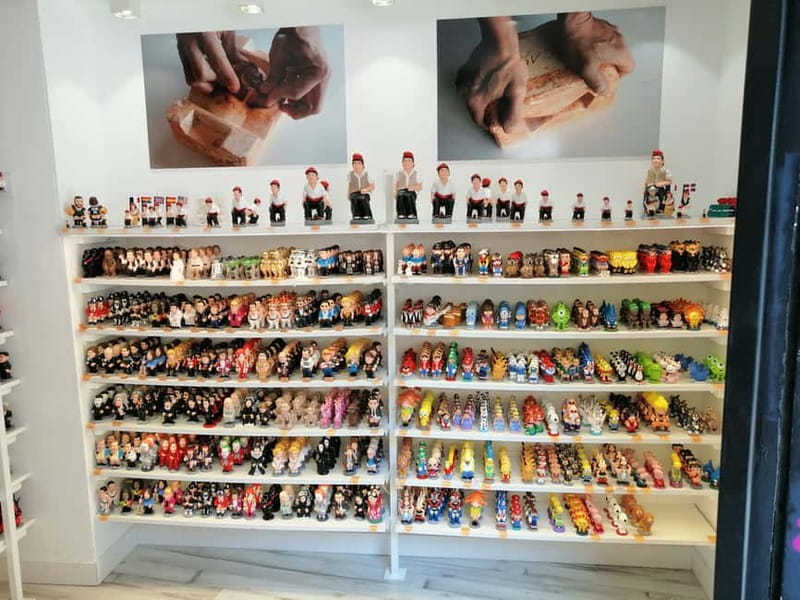
The tour includes Barcelona Cathedral and the Basilica of Santa Maria del Mar in its route of historic sights. The stated stops specifically include St. Mary of the Sea Cathedral, or Santa Maria del Mar, in the El Born area.
You should not expect a full interior visit or an extended church tour unless the guide says otherwise. The focus remains on the streets, markets, and history around these buildings. Still, the churches give the walk a sense of scale. Food markets make more sense when you see them as part of an old urban center shaped by trade, religion, and neighborhood life.
Santa Maria del Mar is particularly important to the route because it links the Gothic Quarter to El Born. It is a striking landmark in an area once closely tied to merchants and market activity. Your guide can explain the setting while keeping the pace moving toward the final market stop.
This part may appeal most to you if you enjoy short historical explanations rather than long lectures. Guides such as Alberto made the stories fun and easy to follow, while Eoghan used the streets of the Gothic Quarter and El Born to bring the past into the present.
El Born Market preserves a buried neighborhood
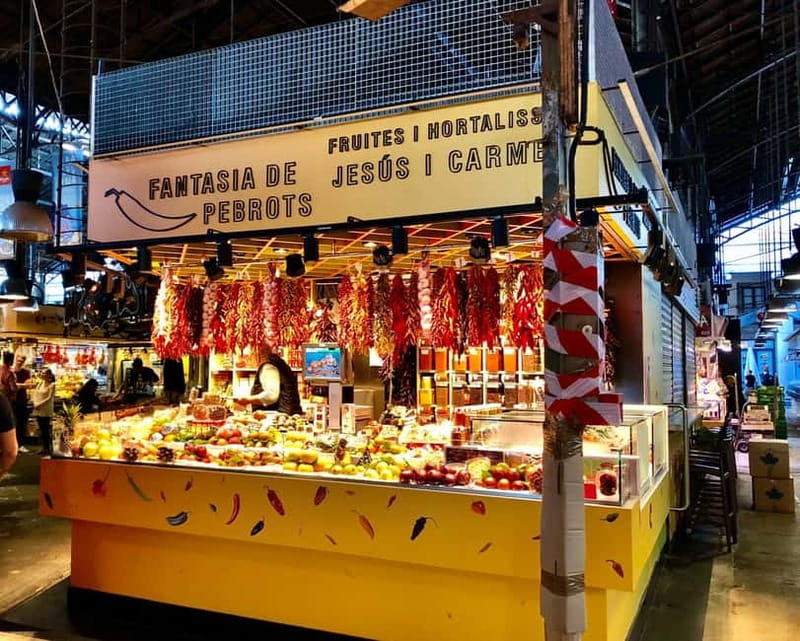
The final major sight is El Born Market, a remarkable structure now used to present the remains of the old Born neighborhood. Beneath the market building, you can see traces of streets and buildings from an earlier Barcelona.
This is a strong finish to the walking portion because it brings together the tour’s main ideas. You have seen a working market, a covered neighborhood market, old streets, churches, and now the remains of a former urban area. The market building is not simply a place to buy food anymore. It also preserves part of the city’s past.
One guide described the decision to protect the ruins as an important part of Barcelona’s story. That makes El Born more than a quick photo stop. You begin to understand how the city has changed while keeping selected pieces of its older structure visible.
The route is useful for planning the rest of your visit. Several people who took the walk used it to decide which parts of the central city deserved more of their own time. That is one of the tour’s best practical benefits. You get an overview first, then you can return to the market, church, pastry shop, or restaurant that caught your attention.
What the food and wine upgrade adds
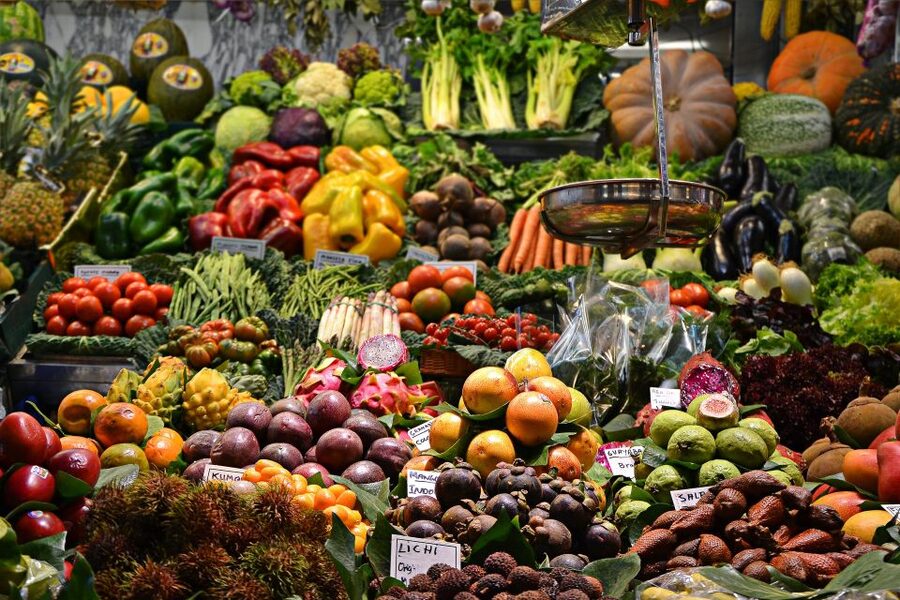
The optional upgrade ends the tour with a seated tasting in a private room reserved for the group. A professional sommelier and your guide lead the tasting, which includes cured meats, premium cheeses, Catalan tomato bread, and wines.
Pa amb tomàquet is simple but central to Catalan eating: bread rubbed with tomato and usually finished with olive oil and seasoning. It is a useful addition because it shows how a few basic ingredients can form part of a meal rather than just a garnish.
The upgrade changes the tour from a market walk with small samples into a more structured food experience. You have already seen the ingredients in the markets, and then you sit down to taste a selected group of products. That makes the upgrade worthwhile for you if you want a proper food break and enjoy guided wine pairing.
It is less useful if you mainly want free time to buy your own food. The upgrade is also not accessible, even though the walking portion is. For anyone under 18, soft drinks replace wine.
The exact upgrade cost is not provided here, so check the total before booking. At the base price of $33, the walking tour offers solid value. The upgrade should be judged on your appetite for a formal tasting, not simply on the promise of more food.
Guide quality shapes the whole experience
The guide matters a great deal on this tour. Alberto was praised for combining food knowledge with the history of the Gothic Quarter and El Born, and for making the time pass quickly. Valentina offered restaurant suggestions, including a recommendation for Orvay. Cal brought personal enthusiasm to La Rambla and its side streets.
Eoghan was especially strong at explaining individual ingredients and giving people time to shop. He also recommended Hoffman pastry shop, which may help you plan a later stop for croissants and pastries. Carlos brought a well-traveled perspective and a good selection of local snacks.
Small groups make these exchanges easier. The activity offers private or small-group options, and one group of only three people found the experience more like walking with friends than following a large crowd. A larger group can still work well, but ask questions early if you want specific food or restaurant advice.
The guides also seem to adapt the balance between history and eating. If you prefer more market time, say so at the start. If you want stories about architecture and local customs, tell the guide that too.
Timing, price, and practical details
The tour lasts about 2 to 3 hours, with starting times depending on availability. That is a good length for your first full day in Barcelona because it gives you an introduction without taking the entire day. It also works well as a morning plan before lunch or an early afternoon activity.
The base price is $33 per person. For a guided walk through three central areas, market explanations, at least one tasting, and local food advice, I consider that a reasonable price. You are not paying for a full meal, and you should not expect unlimited samples.
Bring comfortable clothes, water, and shoes with good support. The walk uses city streets and market floors, so sandals or formal shoes may become tiring. You can buy food along the way, but those purchases are separate.
The meeting instructions place the start outside Dunkin’ Donuts, with the guide holding an ExperienceFirst sign. The stated end points include Plaça Comercial, 12, and Vila Viniteca, while the meeting information also describes the activity as ending back at the meeting point. Confirm the final meeting and finish details when you book, especially if you have a dinner reservation or need to reach a train.
English is the stated tour language. Free cancellation is available up to 24 hours before the activity for a full refund, and you can reserve now and pay later. Those policies are useful if your Barcelona plans are still shifting.
Who should book this Barcelona market tour?
I would choose this walk if you want a broad introduction to Barcelona food and central neighborhoods in one outing. It suits first-time visitors who want help reading the markets, families who appreciate short cultural stops, and food-minded people who also want churches and old streets.
It is also a good choice if you are unsure where to eat. The guides provide restaurant and pastry suggestions, and the route shows you which areas deserve a return visit.
I would be more cautious if you want a long, leisurely food crawl. The itinerary covers several areas, so time at each market is limited. You should also skip the upgrade if you need wheelchair or stroller access for the tasting, or if you would rather spend the money buying your own food.
Should you book it?
Book this tour if you want market guidance plus history, not just a plate of samples. The strongest parts are the contrast between La Boquería and Santa Caterina, the unusual caganer stop, the preserved remains at El Born, and the practical advice from guides such as Alberto, Cal, Eoghan, and Valentina.
Choose the food and wine upgrade if a private tasting of cheese, cured meat, tomato bread, and wine sounds better than extra market free time. Otherwise, the $33 walking tour gives you a useful first look at Barcelona’s food culture and central neighborhoods, with enough ideas to fill the rest of your stay.
FAQ
How long does the Barcelona markets tour last?
The tour lasts about 2 to 3 hours. Starting times vary, so check availability when booking.
Where does the tour start?
Meet outside Dunkin’ Donuts. Your guide will be holding an ExperienceFirst sign.
What food is included in the basic tour?
The basic tour includes at least one tasting at La Boquería Market, including Catalan olives. Any food you choose to buy in the markets is extra.
What does the food and wine upgrade include?
The upgrade includes cured meats, premium cheeses, Catalan tomato bread called pa amb tomàquet, and wines. A professional sommelier and your guide lead the tasting in a private room.
Can children under 18 join the wine tasting?
Yes, but guests under 18 receive soft drinks instead of wine.
Is the tour wheelchair and stroller accessible?
The walking tour is accessible for wheelchairs and strollers. The upgraded tasting is not accessible.
Can I cancel the booking?
You can cancel up to 24 hours in advance for a full refund. You can also reserve now and pay later.
More Wine and Food Pairings in Barcelona
- Pisa, Siena and San Gimignano Day Trip with Lunch & Wine Pairing
★ 4.5 · 6,006 reviews - Lisbon: Food and Wine Small Group Walking Tour
★ 4.9 · 4,082 reviews - Lisbon Small-Group Portuguese Food and Wine Tour
★ 5.0 · 3,972 reviews - Montmartre Hill French Gourmet Food and Wine Tasting Walking Tour
★ 5.0 · 2,588 reviews
More Wine Tastings in Spain
- From Barcelona: E-Bike and Sailing Tour with Wine Tastings
★ 4.9 · 288 reviews - Barcelona: Montserrat Tour with Lunch & Wine Tasting Option
★ 4.6 · 286 reviews - Barcelona: Sailing Cruise & Vineyard Tour with Wine Tasting
★ 4.7 · 252 reviews - Wine Tasting Experience in Barcelona
★ 5.0 · 172 reviews
Newly added around Barcelona
- Wine Tasting Experience in Barcelona★ 5.0 · 172 reviews
- 2 Wineries Small Group Tour with Free Hotel PickUp from Sitges★ 5.0 · 83 reviews
- Barcelona: Guided Rooftop Wine Tasting – Enjoy 6 Spanish Wines★ 4.5 · 61 reviews
- Barcelona: Wine Tasting and 5 Course Tapas Pairing Dinner★ 4.5 · 129 reviews
- Barcelona Wine and Gourmet Tapas Tour★ 5.0 · 188 reviews
- Bohemian Barcelona Neighborhood Evening Tapas & Wine Tour★ 5.0 · 419 reviews
- Viticulture and Wine-Tasting 3-Hour Trip from Barcelona★ 4.5 · 59 reviews
- Barcelona Tapas & Wine Experience as a Local at Hidden Wineries★ 5.0 · 71 reviews
Wine & Food Pairings, compared.
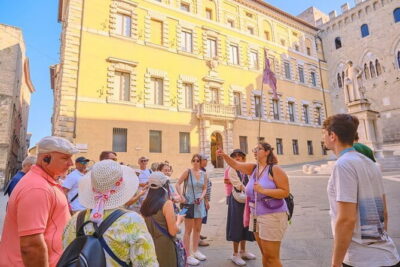
Pisa, Siena and San Gimignano Day Trip with Lunch & Wine Pairing
Read our review →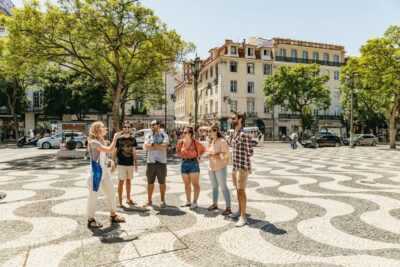
Lisbon Small-Group Portuguese Food and Wine Tour
Read our review →
Montmartre Hill French Gourmet Food and Wine Tasting Walking Tour
Read our review →
Rome by Night – Ebike Small Group Tour – Food and Wine (Option)
Read our review →
Vila Nova de Gaia: Port Wine Tasting with Cheese Pairing
Read our review →
Eat, Drink and Repeat: Wine and Food Tasting Tour in Venice
Read our review →Browse the lists this tour appears in