
REVIEW · WINERY TOURS
Saint-Émilion: Grand Cru Classé Winery Visit and Tasting
Wine country does not need to be complicated. This one-hour visit pairs a traditional Saint-Émilion estate with a sleek modern winery, giving you a clear look at two very different ways to make Bordeaux wine. I like the old-and-new contrast, and I also like the broad view from the grounds across the vines.
The three-wine tasting adds real value to the $23 price, especially if you are new to Bordeaux. The main drawback is getting there: the wineries are about 3 kilometers from Saint-Émilion, and several visitors found the final turn difficult to spot.
Key points at a glance
- Two estates, two winemaking styles: Tour Château Tour Baladoz for a traditional setting, then visit the modern facilities of La Croizille.
- A useful first lesson in Bordeaux wine: You learn about grapes, cellar work, aging, viticulture, and basic tasting technique in a short, manageable visit.
- Three Bordeaux wines included: The tasting includes a Saint-Émilion Grand Cru and wines from the wider Bordeaux region.
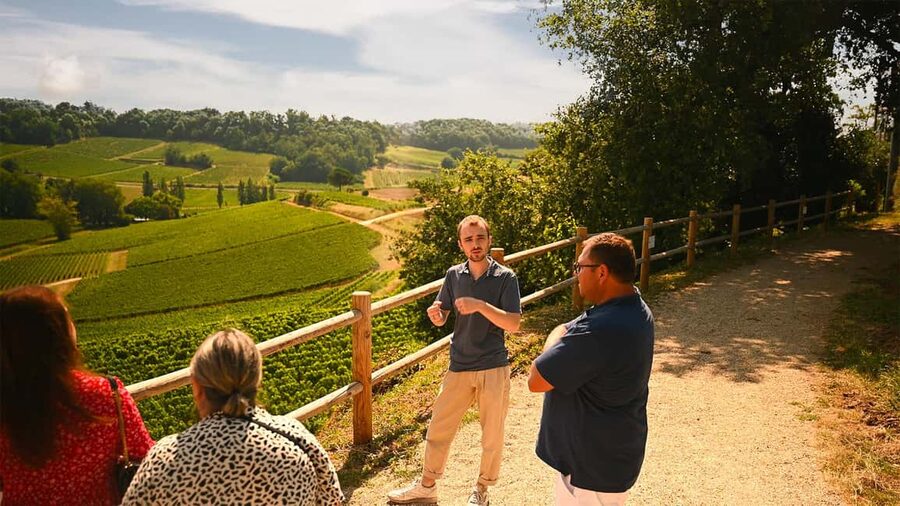
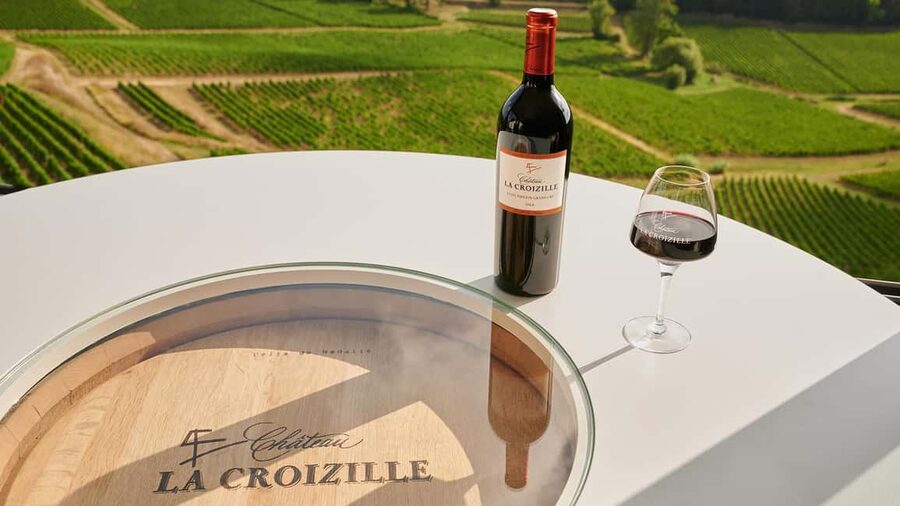
- Excellent views beyond the cellar: The elevated setting gives you broad views over the Saint-Émilion vineyards, especially enjoyable from the terrace after the tour.
- Strong guide-led experience: Guides such as Sarah, Thomas, Isabella, Quentin, and Martin have been praised for clear explanations, warm manners, and good English.
- Good value, but plan your arrival: At $23 per person, this is an entry-level winery visit, not a long food-and-wine afternoon.
Why the old-and-new format works so well
Many winery visits show you one property and one production style. This experience gives you a useful comparison instead. You begin at Château Tour Baladoz, where the setting feels rooted in classic Saint-Émilion wine country, then move to La Croizille, whose orange, black, and white exterior signals a much more modern approach.
That contrast gives the tour a simple storyline. You can see how an older cellar and traditional architecture relate to established Bordeaux methods, then compare them with newer equipment and a more contemporary production space. You are not just hearing about winemaking in the abstract. You are seeing how the spaces, tools, and working methods differ.
The two estates are connected, so the visit does not feel like a long transfer between unrelated attractions. The guide explains the process as you move through the buildings and cellars, from vine care to fermentation and aging. The tour is short, but its comparison makes the hour feel well used.
This format is especially useful if you are visiting Saint-Émilion for the first time. You may not yet know why one cellar looks the way it does, or what modern technology changes in the production process. The guide provides that context without turning the visit into a lecture.
More Winery Tours in France
- Saint Emilion Half-Day Trip with Wine Tasting & Winery Visit from Bordeaux
★ 4.5 · 1,034 reviews - Champagne Day Trip with 6 Tastings, Reims and Winery from Paris
★ 5.0 · 902 reviews - From Reims: Champagne and Family-Run Wineries Tour
★ 4.8 · 671 reviews
Château Tour Baladoz: a traditional start
Your check-in is at the reception of Château Tour Baladoz, a charming limestone building. The traditional architecture immediately gives the first part of the visit a sense of place. This is the side of Bordeaux wine that most people picture before arriving: stone buildings, older cellar spaces, and a close relationship with the surrounding vines.
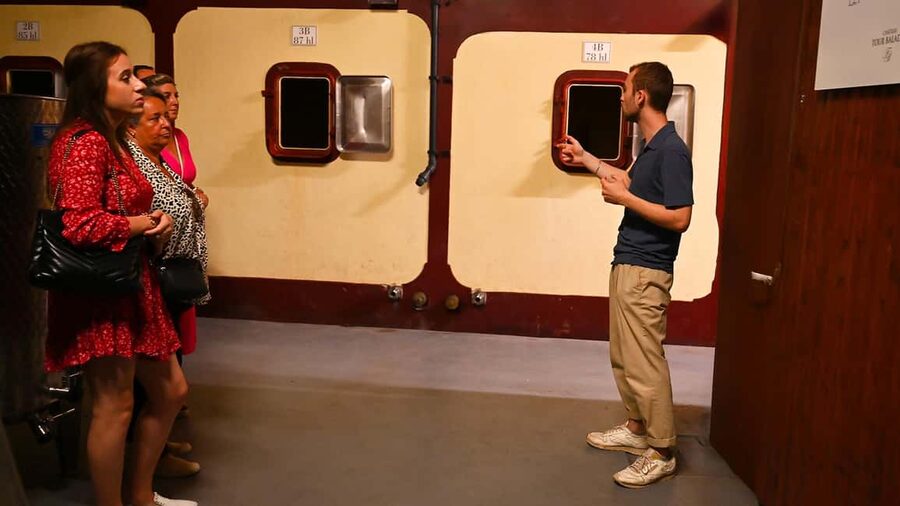
The guide explains the estate’s history and the classic Saint-Émilion approach to production. You learn about the stages that take grapes from the vineyard into the cellar, then on to aging. The exact details can vary with the season and the work taking place, but the central lesson is consistent: wine quality begins in the vineyard and continues through many careful decisions indoors.
The cellar visit is one of the strongest parts for first-time wine visitors. You can ask basic questions without needing specialist knowledge, and guides have been praised for explaining the process in plain English. Sarah, Thomas, Isabella, and other members of the team have each been singled out for friendly, clear tours.
The traditional stop also helps you understand Saint-Émilion as a wine region rather than simply a picturesque village. The wine is tied to its soil, grape growing, cellar practices, and long-established local identity. You get a short introduction to all of those pieces before moving to the modern property.
La Croizille: a modern view of Bordeaux
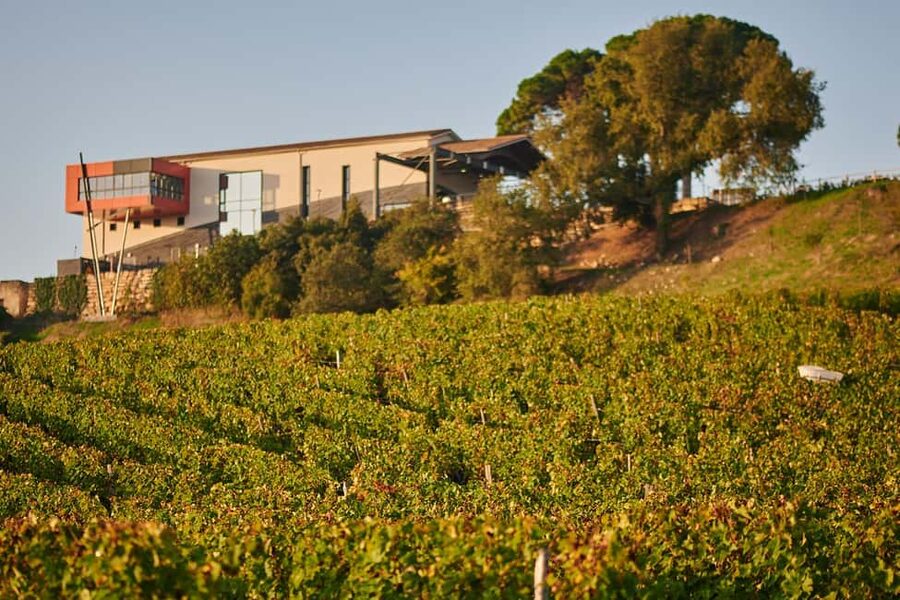
After Tour Baladoz, the tour continues at Château La Croizille. Look for the building with the orange, black, and white exterior. It is a useful landmark, although the approach can be confusing if you rely only on a phone map.
La Croizille offers a sharp visual change from the limestone buildings. Here, the focus is on modern facilities and technology used to refine winemaking. The guide explains how equipment and updated methods can shape the work, while still respecting the character of the grapes and the region.
This is not a competition between old and new. That is an important point. The traditional cellar is not presented as outdated, and the modern winery is not treated as automatically better. Instead, you get to see how different tools and buildings support different decisions in production.
I find this comparison more useful than a tour that simply lists machinery. You can connect the technology to the finished wine. The guide discusses how wine is made, how it is aged, and how the estates create styles that reflect both their methods and the Bordeaux setting.
The modern building is also part of the appeal. Several guides have made good use of the architecture, grounds, and views rather than rushing visitors from one technical point to the next. If you enjoy design as much as wine, this part adds another layer to the visit.
What you learn about grapes, cellars, and aging
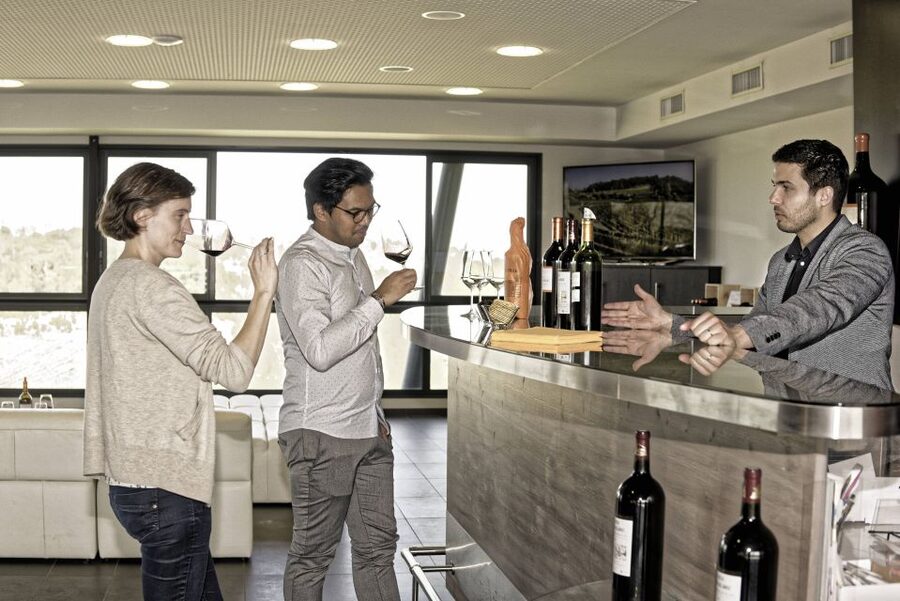
The tour covers the basic chain of Bordeaux production:
- Vineyard care and viticulture
- The role of different grape varieties
- Harvest and cellar work
- Fermentation and other production stages
- Aging before release
- The difference between traditional and modern methods
- How to taste and compare wine
That is a lot to fit into one hour, so you should expect an introduction rather than a specialist course. The guides are there to make Bordeaux easier to understand, not to turn you into a winemaker before lunch.
Several guides have been praised for answering questions patiently. That matters because wine terminology can quickly become a fog of French words and technical phrases. A good guide translates the subject into practical ideas: what you are smelling, what you are tasting, and why two wines from the same broad region can feel different.
The tasting lesson also helps. You learn how to look at the wine, notice aromas, taste it, and compare the wines in front of you. Even if you are not used to formal tastings, the approach is friendly rather than stiff.
Same region, a very different glass:
- Authentic Parisian Gourmet Food Tour with 10 Local Dishes & Wines
★ 5.0 · 4,754 reviews - Loire Valley Castles Day Trip from Paris with Complementary Wine
★ 4.5 · 3,907 reviews - Bordeaux: Cité du Vin Entry Ticket and Wine Tasting
★ 4.6 · 3,885 reviews - Bordeaux: River Garonne Cruise with Glass of Wine and Canelé
★ 4.5 · 3,630 reviews
The three-wine tasting: where the visit comes together
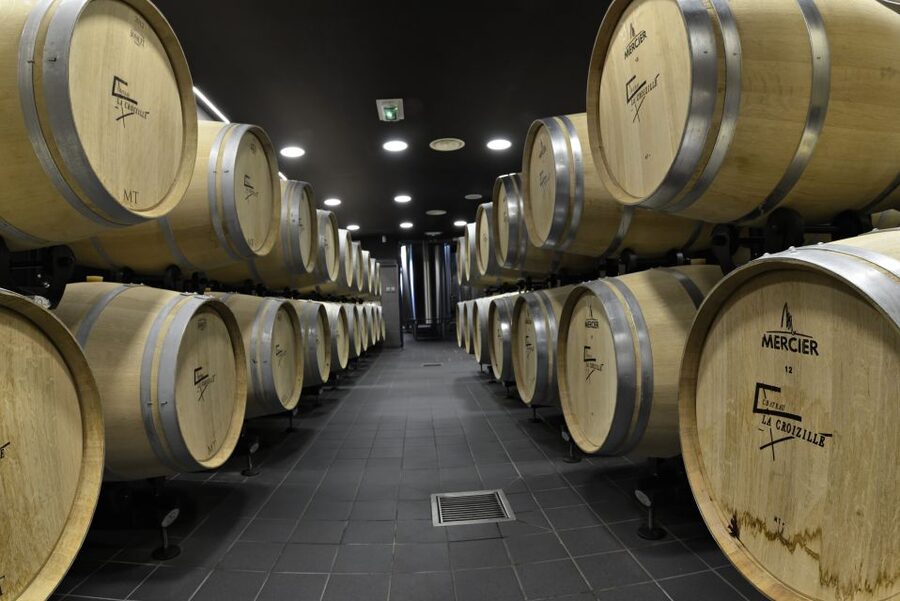
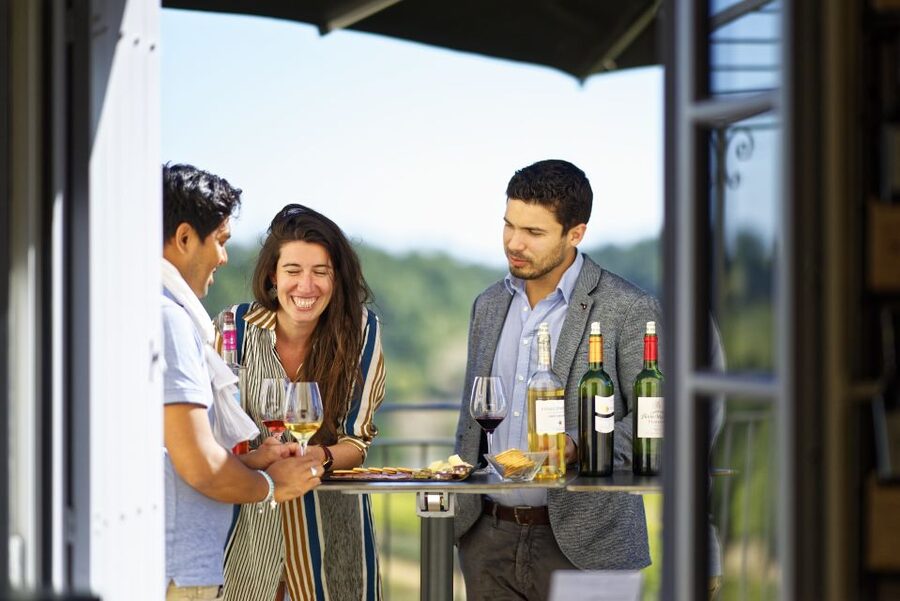
The tour ends with three Bordeaux wines, including a Saint-Émilion Grand Cru. The tasting also introduces wine from the wider Bordeaux region, so you get more than one narrow example of local production.
The exact selection can vary, but past tastings have included red wines and rosé. One visitor particularly enjoyed the light, fruity Merlot from Tour Baladoz, while another described tasting two reds and a rosé. These details give you a sense of the range, but you should not book expecting a fixed bottle list.
The pours have generally been described as generous, and the setting is comfortable and attractive. Rather than standing awkwardly in a working cellar, you may finish in a lounge or tasting area where the guide can explain each wine at a relaxed pace.
This is also your chance to put the lesson into practice. Try to notice how the wines differ in fruit, weight, acidity, and finish. You do not need to identify every grape or aroma. The useful goal is to leave with a better sense of what you like.
If a wine catches your attention, the estate shop offers bottles and wine accessories. Some visitors bought bottles to take home, and one group arranged to have wine shipped to the United Kingdom. Shipping arrangements can vary, so ask the staff directly if you are considering a larger purchase.
You can also buy a glass after the tour and enjoy it on the terrace. That option is worth considering if the weather is good. The views over the valley of vines are often described as one of the best parts of the entire visit.
The views are part of the experience
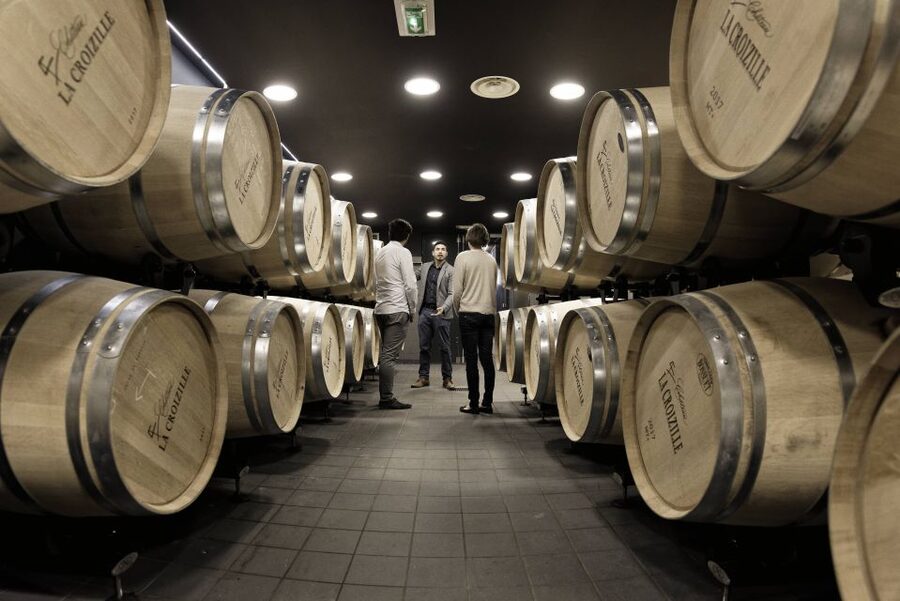
The wineries sit outside Saint-Émilion, in a setting with wide views over the surrounding vineyards. The tour is not only about tanks, barrels, and tasting notes. You also get a visual sense of the land that gives the wines their identity.
The terrace is a particularly pleasant place to linger. In good weather, you can enjoy a glass while looking across the vines. December visits have even benefited from clear skies and strong views, although weather is never guaranteed.
This is also why walking from Saint-Émilion can be rewarding if you have enough time and suitable weather. The stated distance is about 30 minutes on foot, and one visitor described walking back through the vineyards after taking a taxi to the winery. The route gives you a closer look at the countryside, but you should not treat it as a casual stroll if you are carrying purchases or dealing with heat, rain, or limited daylight.
Cycling takes about 11 minutes according to the provided distance information. By car, the ride from Saint-Émilion is about four minutes. A taxi is the simplest choice if you have a fixed tour time.
Getting there without losing the first glass
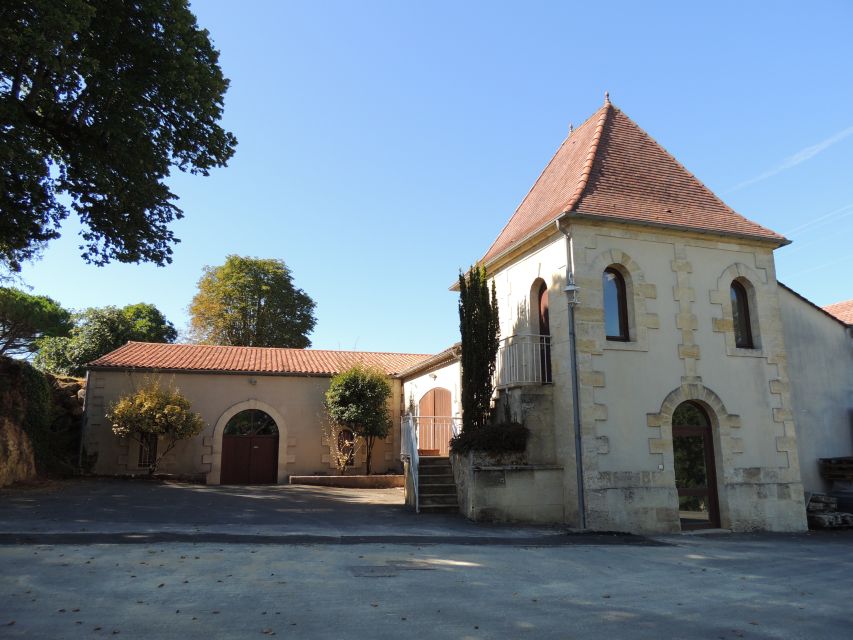
The meeting point deserves careful attention. The property is about 3 kilometers from Saint-Émilion. At the site, look for modern La Croizille, with its orange, black, and white exterior, but complete check-in at the reception of Château Tour Baladoz, the limestone building.
That combination of names and buildings can cause confusion. Some people have gone past the correct turn or spent extra time searching with a phone map. I would allow extra time, especially if you are coming by taxi, walking, or driving for the first time.
From Bordeaux, the distance is about 45 kilometers, with an estimated drive of 45 minutes. Train travel is listed at about 35 minutes, but you still need to reach the wineries from the station and allow time for the local connection.
From Bergerac, it is about 55 kilometers, or roughly one hour by car. Train travel is listed at about 45 minutes. Again, the final stretch to the estates needs planning.
There is parking outside the meeting point, which is useful if you are driving. If you are coming from Saint-Émilion without a car, taxis may be limited, so do not leave the transfer until the last minute. Walking is possible, but the listed 30-minute time should be treated as a planning estimate rather than a promise.
Is one hour enough?
For a first look, yes. You see two properties, learn the basic production process, and taste three wines within about an hour. Families and people with limited time have found the length manageable, and the experience does not demand half a day.
The short duration also makes it easy to add to a larger Saint-Émilion plan. You can visit the village, eat lunch, and fit in the winery without sacrificing an entire afternoon. One hour is enough to give you structure and context before you explore the region on your own.
The trade-off is depth. You will not tour every corner of both estates, study a full range of vintages, or enjoy an elaborate food pairing. Other experiences at the property may include more involved options with charcuterie, while this is the basic winery visit and tasting.
That is not a flaw if you know what you are booking. At $23 per person, the tour is priced as an accessible introduction. I see it as a strong value for the side-by-side comparison and three tastings, but serious wine fans may want a longer, more focused estate visit.
Guides and group size make a difference
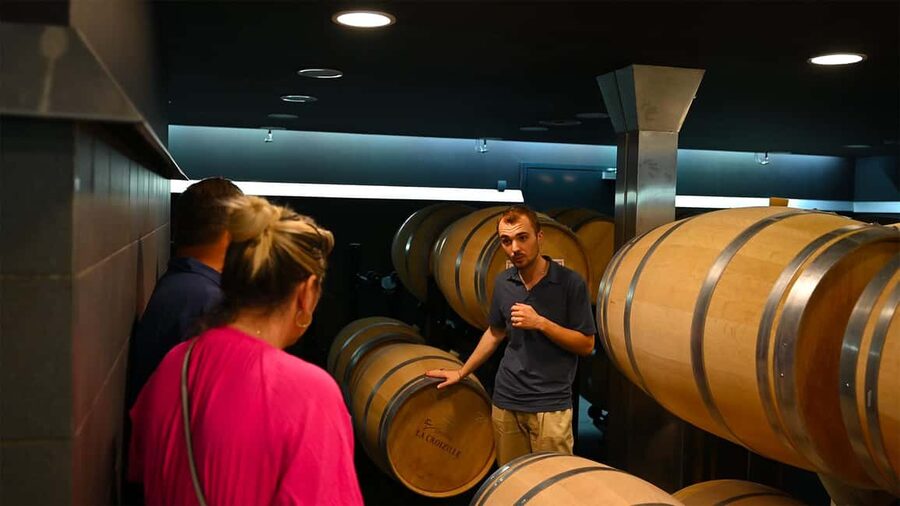
The guide is central to the experience. Sarah has been praised for her clear English and patient answers. Thomas has been described as friendly and informative, while Isabella has made small groups feel welcome and relaxed. Quentin brought humor to the explanations, and Martin was praised for his command of the subject.
The tour is offered in English, French, and Spanish. A small group option is available, and when attendance is low, the visit may feel almost private. The tour has still gone ahead for very small numbers, including groups of only two people.
That flexibility is valuable. A small group gives you more room to ask questions and more time to look around. It also means the visit can feel less formal than a large coach excursion.
The experience is wheelchair accessible, but the provided information does not describe every surface or section of the route. If you need specific access details, contact the provider before booking. Pets are not allowed.
Who should book this winery visit?
I would recommend it most strongly to:
- First-time visitors to Bordeaux wine country
- People staying in or near Saint-Émilion
- Couples who want a short activity with scenery and wine
- Families looking for a manageable one-hour visit
- Anyone curious about the difference between traditional and modern production
- Wine drinkers who want to taste before buying bottles
- Visitors who prefer a small, guide-led experience
You may want something longer if you already know Bordeaux wine well or want a full food pairing, a more technical cellar visit, or a deep look at several vintages. The tour gives you a solid foundation, but it is not designed as an advanced wine seminar.
Final verdict: good value with one practical warning
I would book this tour if I wanted a clear, affordable introduction to Saint-Émilion wine. The two wineries give the hour a useful shape, the guides add warmth and detail, and the views make the visit feel like more than a tasting room stop.
The key is to plan the arrival carefully. Use the La Croizille building as your visual marker, confirm the Château Tour Baladoz reception for check-in, and allow extra time for the final approach. If you do that, $23 buys a well-balanced introduction to Bordeaux, three wines, attractive grounds, and a helpful lesson in how traditional and modern winemaking can exist side by side.
FAQ
How long does the Saint-Émilion winery tour last?
The tour lasts one hour. The visit includes two wineries, explanations of wine production and viticulture, and a tasting of three Bordeaux wines.
How much does the experience cost?
The listed price is $23 per person.
Which wineries do you visit?
You visit Château Tour Baladoz and Château La Croizille. Tour Baladoz presents a more traditional setting, while La Croizille uses a modern winery design and technology.
Where is the meeting point?
Look for the modern La Croizille winery with its orange, black, and white exterior. Check-in takes place at the reception of Château Tour Baladoz, a limestone building.
How far is the winery from Saint-Émilion?
The wineries are about 3 kilometers from Saint-Émilion. The stated travel times are about four minutes by car, 11 minutes by bicycle, or 30 minutes on foot.
Which languages are available?
The tour is available in English, French, and Spanish.
Are three wine tastings included?
Yes. The tasting includes three Bordeaux wines, including Saint-Émilion Grand Cru.
Is the tour wheelchair accessible?
Yes, the experience is listed as wheelchair accessible. Pets are not allowed.
Newly added around France
- Saint Emilion Full Day Wine and Bike Tour★ 5.0 · 167 reviews
- Private Bordeaux History Tour with a glass of Bordeaux wine.★ 5.0 · 28 reviews
- Private – Best of Bordeaux Walking Tour + Glass of Bordeaux Wine★ 5.0 · 240 reviews
- Luxurious full day Bordeaux wine tour in a Tesla★ 4.5 · 31 reviews
- Wine Masterclass & Cheese Tasting Workshop in Bordeaux★ 5.0 · 29 reviews
- Bordeaux wines tasting workshop including Food & Wine pairings★ 5.0 · 31 reviews
- Bordeaux Wine Masterclass: Blending workshop with appetizer★ 5.0 · 113 reviews
- Medoc Afternoon Wine Tour – 2 Wineries, tastings & delicacies★ 4.5 · 74 reviews
Winery Tours, compared.
Tuscany Day Trip from Florence: Siena, San Gimignano, Pisa and Lunch at a Winery
Read our review →
Douro Valley with Winery Lunch, Tastings & Cruise
Read our review →
Montserrat, Cogwheel, Black Madonna & Winery Tour
Read our review →
Montserrat with Black Madonna & Medieval Winery with Tapas/Lunch
Read our review →
Siena, San Gimignano, Pisa & Lunch at Winery
Read our review →
Wine Tour: Paarl, Franschhoek & Stellenbosch incl 3 wineries
Read our review →
Douro Valley Tour: 2 Vineyard Visits, River Cruise, Winery Lunch
Read our review →Browse the lists this tour appears in