
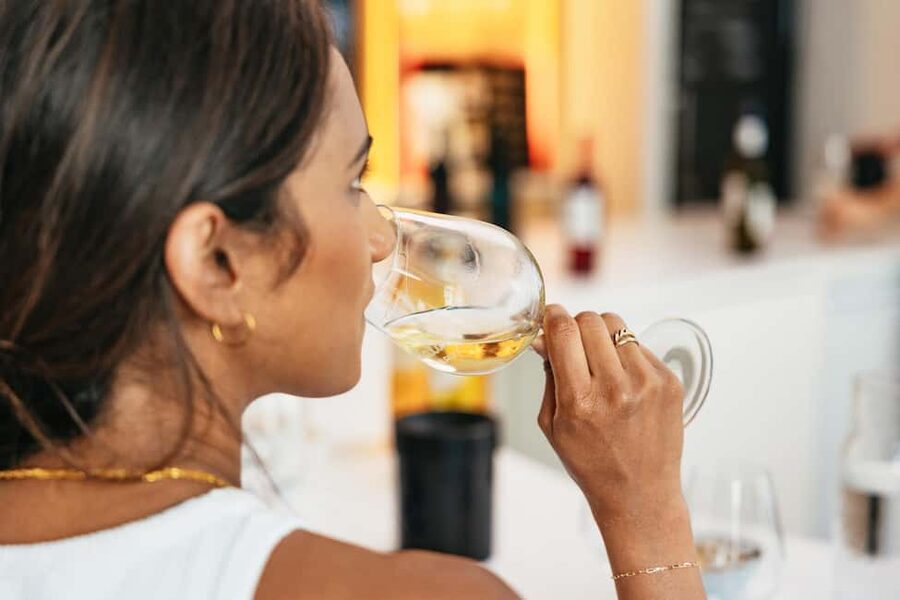
REVIEW · WINE & CHEESE TASTINGS
Bordeaux: Wine Masterclass with Cheese and Charcuterie Board
Wine gets easier once someone explains it plainly. This 90-minute class places you in a Bordeaux wine bar near the Grand Théâtre, where an expert guide walks you through six regional wines, tasting technique, winemaking, and the Left Bank versus Right Bank divide. I like the clear step-by-step tasting method and the generous spread of local cheese, charcuterie, baguette, and water. I also like that the class finishes with a Grand Cru, giving you a taste of what makes Bordeaux so famous.
The main consideration is that this is a lesson as much as a tasting. If you want a long meal or a relaxed afternoon of drinking, the structured format may feel a little academic. You will be tasting six wines in 90 minutes, so this suits curious adults who want useful skills, not simply a glass in hand.
Key points to know before booking
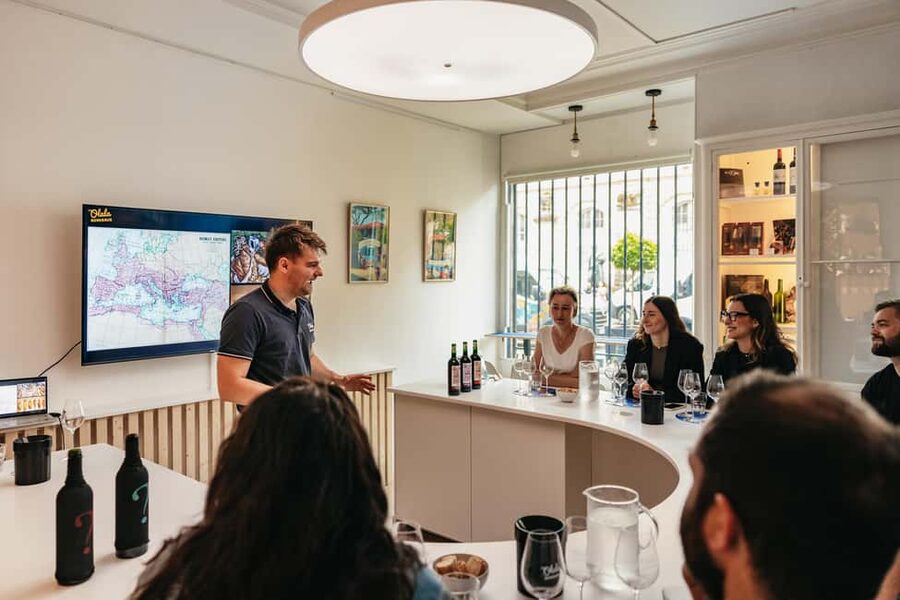
- Six Bordeaux wines in 90 minutes: Start with one white, then taste five red wines, including single-grape examples and a Grand Cru.
- A lesson in Bordeaux geography: The final wines compare the Left Bank and Right Bank, two ideas you will hear often in local wine shops and restaurants.
- Food makes the tasting easier: Regional cheese, charcuterie, baguette, and water help you compare wine with food rather than tasting in isolation.
- A central Bordeaux setting: Olala Bordeaux is about a five-minute walk from the Quinconces tram stop and close to the Grand Théâtre.
- Strong teaching is the main attraction: Guides including Antoine, Hugo, Anna, Enzo, Vincent, and Noé have been praised for humor, patience, and easy explanations.
- Adults only: Children under 16, unaccompanied minors, and pets are not permitted.
Starting near the Grand Théâtre
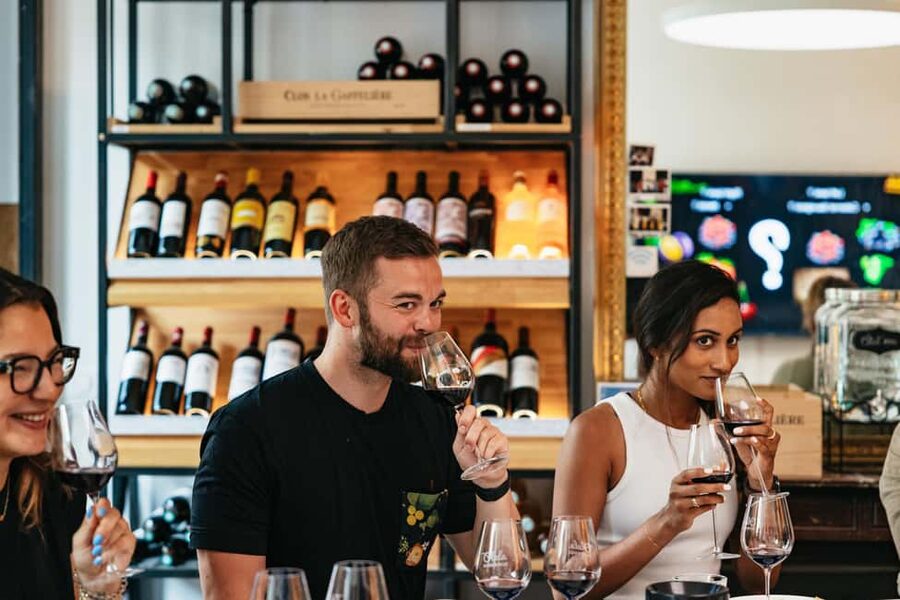
The class meets at Olala Bordeaux, a short walk from the Quinconces tram stop. Tram lines B, C, and D serve the stop, making this one of the easier wine activities to fit into a day of sightseeing.
The location matters. You are not heading out to a distant vineyard for this experience. Instead, you get a city-based introduction to Bordeaux wine, close to the Grand Théâtre and the historic center. That makes it a useful first-day activity, especially if you want some background before choosing a vineyard excursion or ordering wine at dinner.
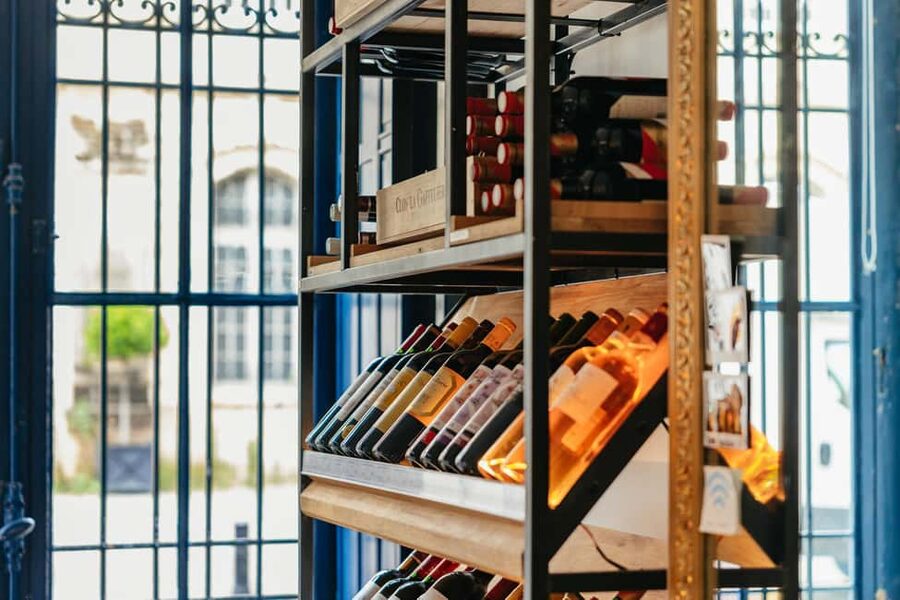
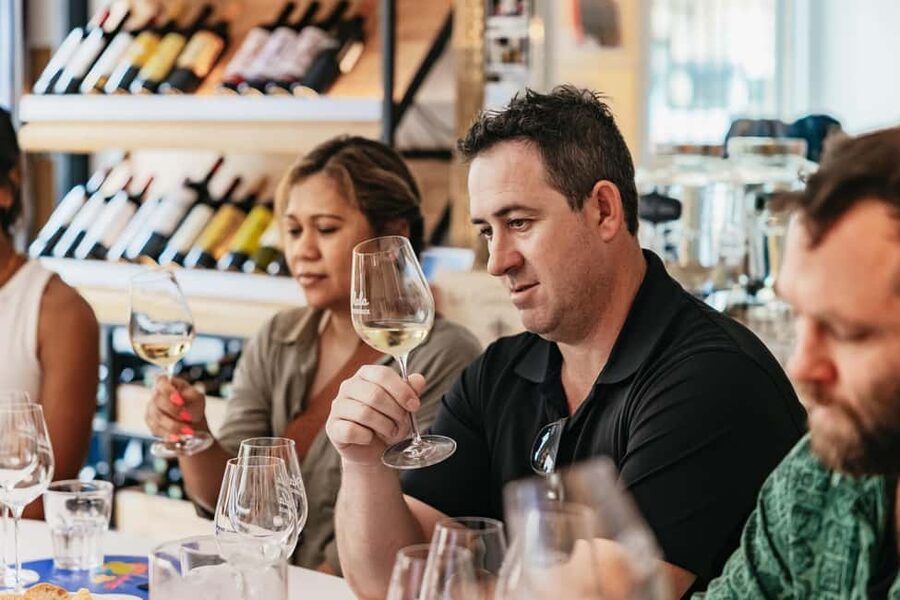
Inside, the setting is described as a small, comfortable shop with a tasting area. It is designed for instruction rather than ceremony. You can expect a seated class with a guide, tasting glasses, food on the table, and printed information to take away.
The small-group feel is one of the strongest parts of the experience. Past sessions have included only a handful of people, which gives you a better chance to ask questions. It also creates an easy social mood. One participant even made friends during the class and continued on to a nearby restaurant afterward.
More Wine and Cheese Tastings in Bordeaux
- Professional – Bordeaux Wine and Cheese Tasting with a walking tour
★ 5.0 · 218 reviews - Tasting of 6 Bordeaux wines and pairing charcuterie & cheese
★ 5.0 · 199 reviews - Introduction to Bordeaux wines paired with cheeses & charcuterie
★ 5.0 · 175 reviews
Learning the language of Bordeaux wine
The class begins with the ideas you need before tasting. Your guide explains terroir, grape varieties, appellation, classification, vinification, aging, storage, and wine service.
That list may sound formal, but it answers practical questions. Why can two wines from the same broad region taste so different? What does an appellation tell you? Why do some bottles cost far more than others? How does aging alter a wine? These are the pieces that help Bordeaux labels make more sense.
The Bordeaux system can feel confusing when you first meet it. A bottle may be identified by its estate, appellation, vintage, classification, or bank of the Gironde River. The class gives you a basic map of those terms before asking you to taste through the region.
I especially like the focus on how wine is made. You learn about vinification, the process that turns grape juice into wine, as well as aging and storage. That keeps the class from becoming a simple list of tasting notes. You are given some understanding of what happens before the bottle reaches the shop shelf.
The guide also covers the art of wine service. This is useful for beginners who feel unsure in restaurants. You do not need to arrive with a trained palate. The class is built to show you what to look for and how to describe it without using fancy language.
Guides have varied over time. Antoine has been praised for mixing humor with strong instruction, while Hugo has been described as friendly and passionate. Anna, Enzo, Vincent, Noé, Olivier, and others have each led sessions. The common thread is a relaxed teaching style, with explanations aimed at beginners and enough detail to keep more experienced wine drinkers interested.
The first glass: using all five senses
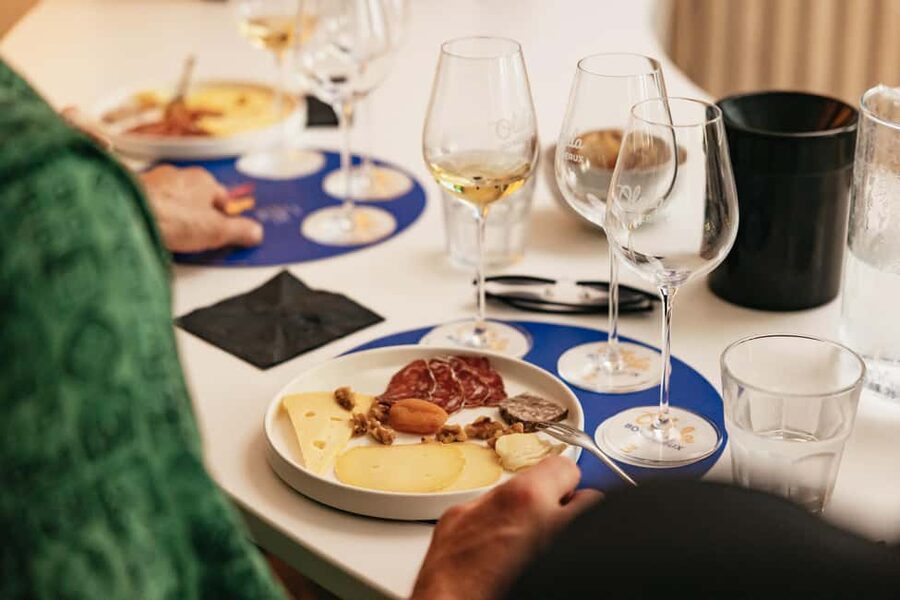
Your first pour is a white wine. It acts as a warm-up for the tasting method and gives you a chance to practice before the red wines arrive.
The guide teaches a universal method that moves through appearance, smell, and taste. You look at the wine, bring it to your nose, and then taste it with attention to texture, balance, and finish. The purpose is not to guess a perfect answer. It is to slow down and notice what is actually in the glass.
This sensory work is one of the most useful parts of the class. Several sessions have included aroma exercises, and one guide used an aroma sample kit to help participants connect smells with wine. That can be particularly helpful if you often notice that wine smells pleasant but struggle to explain why.
You may also take part in a blind tasting exercise. That adds a little fun and tests what you have just learned. It is not a high-pressure exam. The point is to sharpen your senses and make the lesson stick.
The white wine also helps break up the red-wine focus. Bordeaux is famous for red wine, but starting with white gives you a gentler introduction to aroma and acidity. It reminds you that Bordeaux is not a single taste or style.
Three red wines and the region’s grape varieties
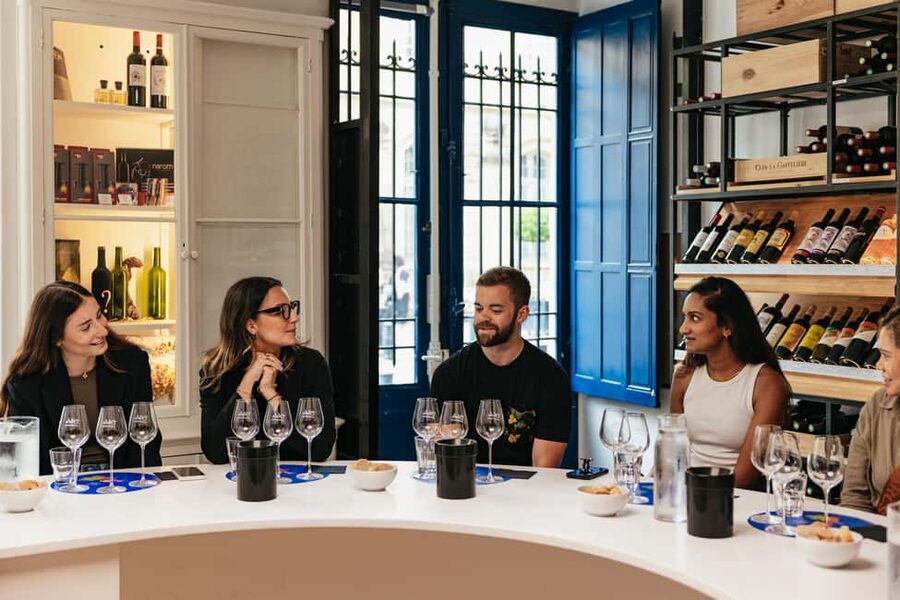
Next come three red wines made to show the character of individual regional grape varieties. The wines are tasted side by side, so you can compare their differences rather than trying to remember one glass from ten minutes earlier.
The guide explains the traits of each wine and how grapes are blended in Bordeaux. Blending is central to the region’s wine culture. Instead of treating one grape as the whole story, Bordeaux producers often combine varieties to create a balanced final wine.
This section is especially helpful if you are new to French wine. A single bottle may not tell you clearly which grape is responsible for a particular aroma or texture. Tasting several wines in sequence gives you a better sense of how grape choice affects the result.
You will also hear about the way winemakers use technique. Fermentation, aging, and storage all shape the finished wine. The class does not turn you into a winemaker in an hour and a half, but it gives you enough background to understand why two Bordeaux bottles can have different styles and prices.
The exact wines can change, so you should not book this expecting particular labels or vintages. The selection and schedule may vary, while the structure and standard of the class remain the same. That is a sensible arrangement for a wine activity, since availability changes with the season and stock.
More Wine and Cheese Tastings in France
- Bordeaux Gourmet Experience: Cheese & Wine Tasting
★ 4.6 · 169 reviews - Bordeaux Wines Masterclass paired with cheeses & charcuterie
★ 5.0 · 110 reviews - Bordeaux Gourmet Experience : tasting of French cheeses & wines
★ 4.5 · 71 reviews - Bordeaux Afternoon Food Tour : Sweets, Wine and Cheese
★ 5.0 · 38 reviews
Left Bank, Right Bank, and a Grand Cru
The final part brings the pieces together with two fine wines. One comes from Bordeaux’s Left Bank and the other from the Right Bank. One of these is a Bordeaux Grand Cru.
This comparison gives the class its clearest regional focus. The Left Bank and Right Bank are not just directions on a map. They are terms you will encounter in Bordeaux wine shops, restaurant lists, and vineyard tours. Learning to compare them in the same sitting makes the distinction easier to remember.
The Grand Cru is often the group favorite, but it is not the only reason this section works. The value comes from tasting two wines with different regional identities and using the method you practiced earlier. You are not simply being told that one bottle is prestigious. You are encouraged to look, smell, taste, and think about what you notice.
That makes the Grand Cru feel like part of the lesson rather than a flashy extra. You can consider how quality, classification, style, and price connect, without needing prior wine knowledge.
If you are planning a visit to Saint-Émilion or another nearby wine area, this final comparison gives you useful preparation. You will recognize the basic language and have a better idea of what questions to ask on a vineyard visit.
Cheese, charcuterie, and a better way to taste
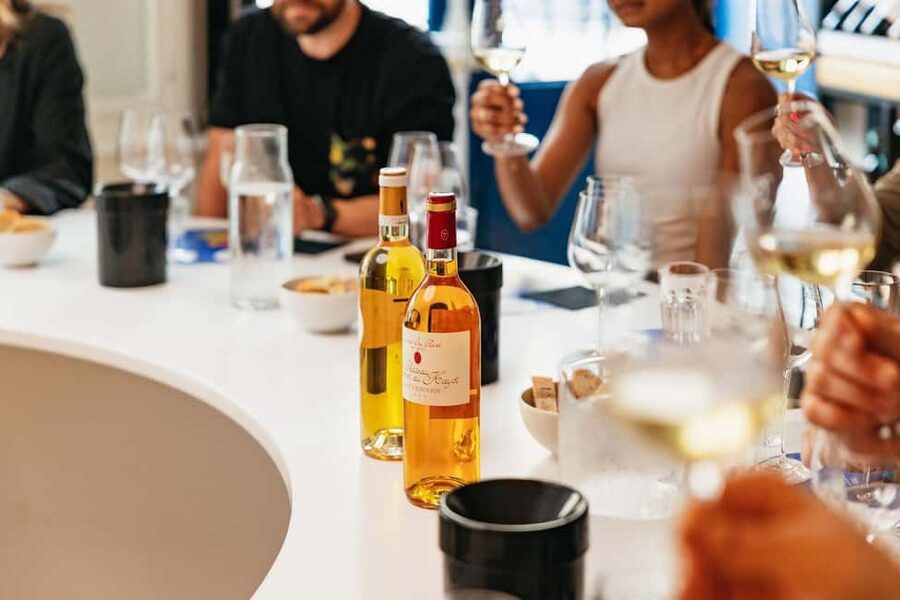
The food board includes local cheese, charcuterie, baguette, and water. It is not just decoration for the table. Food changes how wine tastes, and this gives you a simple way to test that for yourself.
A salty cured meat can make a wine feel different from the way it tasted alone. Cheese can soften a wine or bring out new flavors. Bread cleans up the palate between samples. Water keeps the tasting comfortable and helps you reset before the next glass.
The portions are described as generous enough to make the experience feel like more than a token pairing. You should not treat it as a full lunch or dinner, but it is a welcome accompaniment and adds a local touch to the lesson.
The pairing also makes the class more social. You are tasting at a shared table, not sitting through a lecture with nothing to do between explanations. The food gives the group something to discuss and makes the technical parts feel less stiff.
For many people, this is where the class becomes most memorable. You are not just learning wine terms. You are seeing how wine fits into everyday French food culture.
What $53 buys you
At $53 per person, the price is strong for the amount included. You receive six wines, a guide, a cheese and charcuterie board, baguette, water, and informational brochures. The class also gives you a structured introduction that could save you from buying random bottles while trying to understand Bordeaux on your own.
The value is best for beginners. If you have little experience with wine, you get a clear method, regional context, food pairing, and a chance to ask questions. You also leave with enough vocabulary to approach a wine list with more confidence.
Experienced wine drinkers may find the basic sections familiar. Still, the regional comparison and Grand Cru tasting provide a reason to attend, especially if you want a compact Bordeaux refresher before visiting vineyards.
The 90-minute length is another advantage. It is long enough for real instruction but short enough to fit before lunch, after sightseeing, or between other city plans. You do not lose half a day to transport.
The drawback is simple: you are paying for a class, not a large meal and not a vineyard tour. If you want cellar views, vines, or a long tasting outdoors, choose a countryside excursion instead. This activity trades rural scenery for central location and focused teaching.
Who will enjoy this class most
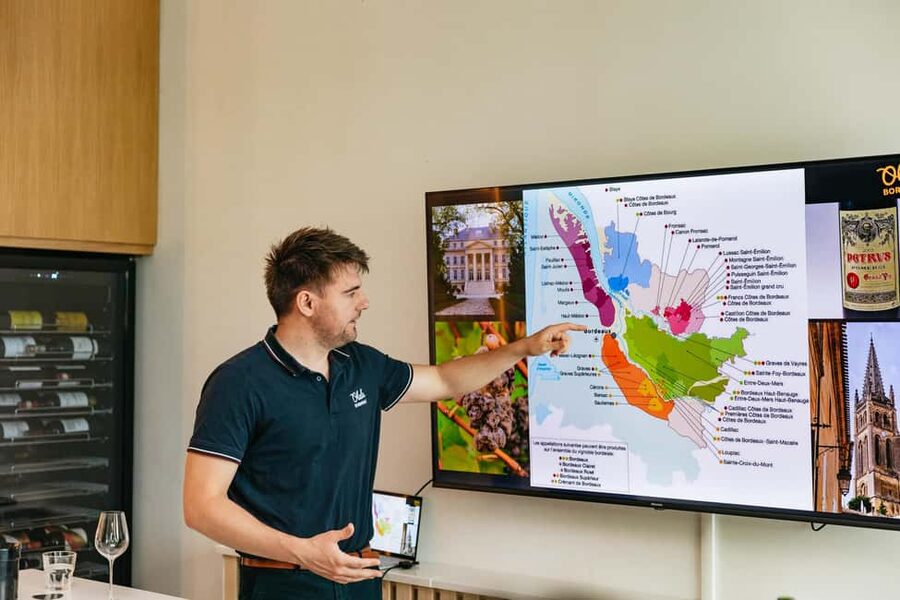
I would recommend it most strongly to first-time Bordeaux visitors who want to understand what they are drinking. It is also a good choice for couples, small groups, and solo adults who enjoy a social setting without committing to a full-day tour.
You do not need a trained palate. The guides are used to mixed levels, from complete beginners to people who already know the basics. The teaching is described as patient, funny, and easy to follow, which matters when French wine terms start piling up.
It is also useful for anyone planning another wine activity. Take the class early in your stay, then use what you learn at a vineyard, wine shop, or restaurant. You will have a better sense of what to ask for and what you are tasting.
This is not suitable for families with younger children. Children under 16 are not allowed, and pets are not permitted. The class also excludes unaccompanied minors.
The instruction is offered in English or French. When booking, choose the language that will let you ask questions comfortably. The benefit of this experience comes from understanding the guide, not just from sampling the wine.
Small details that make the experience work
A few practical points can shape your decision:
- Wines and timing may change, so do not count on a specific bottle or exact sequence.
- The class begins with white wine but focuses mainly on Bordeaux reds.
- You taste five reds in total, including three single-grape examples and two final comparison wines.
- One of the final wines is a Bordeaux Grand Cru.
- Food includes cheese, charcuterie, baguette, and water.
- The meeting point is close to public transport and the Grand Théâtre.
- Free cancellation is available up to 24 hours before the activity, and you can reserve now and pay later.
- The activity lasts 90 minutes.
The strongest reason to book is the teaching. Names and personalities change, but the guides have repeatedly been praised for making technical material entertaining. Enzo, Anna, Hugo, Antoine, Vincent, Noé, and Olivier have each been associated with friendly, engaging sessions.
That consistency matters more than having one famous instructor. A wine class can become dull when the guide lectures at the group. Here, the best sessions use questions, aroma practice, blind tasting, and food to keep you involved.
Should you book the Bordeaux wine masterclass?
Book it if you want a compact, central, adult-only introduction to Bordeaux wine with real tasting practice. The combination of six wines, local food, regional comparison, and expert instruction offers good value at $53.
I would choose this as an early Bordeaux activity, especially before a vineyard day. You will understand more at the estate and feel less lost when a restaurant presents a long local wine list.
Skip it if your main goal is countryside scenery, a full meal, or a leisurely bottle-by-bottle tasting with no lesson. But if you want to learn how to taste, understand Left Bank and Right Bank wines, and enjoy a Grand Cru without spending a fortune, this is a smart city experience.
FAQ
Where does the wine masterclass meet?
It meets at Olala Bordeaux, about a five-minute walk from the Quinconces tram stop and close to the Grand Théâtre.
How long does the experience last?
The wine masterclass lasts 90 minutes.
How many wines are included?
You taste six wines in total: one white wine and five red wines.
What types of red wines are served?
The class includes three regional single-grape red wines, followed by two fine wines comparing Bordeaux’s Left Bank and Right Bank. One of the final wines is a Bordeaux Grand Cru.
Is food included?
Yes. The experience includes a cheese and charcuterie board, baguette, and water.
Is the class offered in English?
Yes. The instructor can teach in English or French.
Can children attend?
Children under 16 are not allowed, and unaccompanied minors cannot attend.
Can I cancel or pay later?
You can cancel up to 24 hours in advance for a full refund. The activity also offers a reserve-now, pay-later option.
Newly added around Bordeaux
- Saint Emilion Full Day Wine and Bike Tour★ 5.0 · 167 reviews
- Luxurious full day Bordeaux wine tour in a Tesla★ 4.5 · 31 reviews
- Private Bordeaux History Tour with a glass of Bordeaux wine.★ 5.0 · 28 reviews
- Private – Best of Bordeaux Walking Tour + Glass of Bordeaux Wine★ 5.0 · 240 reviews
- Wine Masterclass & Cheese Tasting Workshop in Bordeaux★ 5.0 · 29 reviews
- Bordeaux wines tasting workshop including Food & Wine pairings★ 5.0 · 31 reviews
- Bordeaux Wine Masterclass: Blending workshop with appetizer★ 5.0 · 113 reviews
- Medoc Afternoon Wine Tour – 2 Wineries, tastings & delicacies★ 4.5 · 74 reviews
Wine & Cheese Tastings, compared.
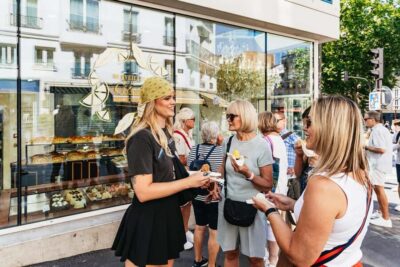
Montmartre Cheese, Wine & Pastry Guided Walking Tour
Read our review →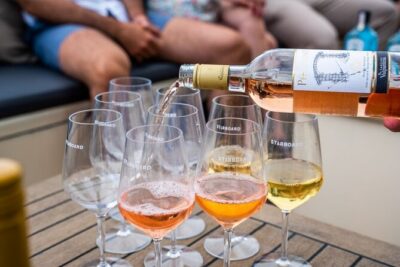
Evening Candle Light Cruise With Wine & Cheese
Read our review →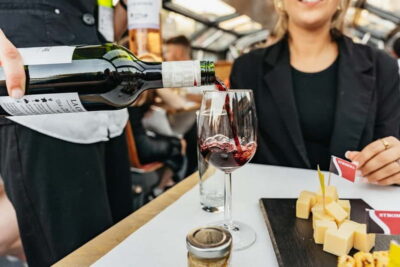
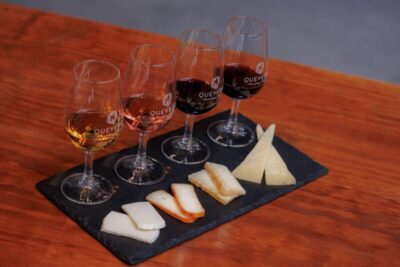
Vila Nova de Gaia: Port Wine Tasting with Cheese Pairing
Read our review →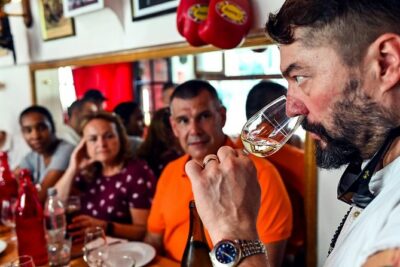
Private Montmartre Food Tour with Wine, Cheese & Pastries
Read our review →
Paris Le Marais Food Tour With 10+ Tastings, Cheese, Wine & More
Read our review →
Small Group Key West Adult Sunset & Moët Sail & Amazing Cheeses
Read our review →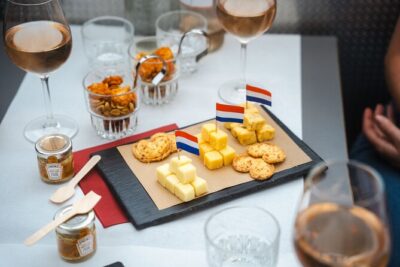
Browse the lists this tour appears in