
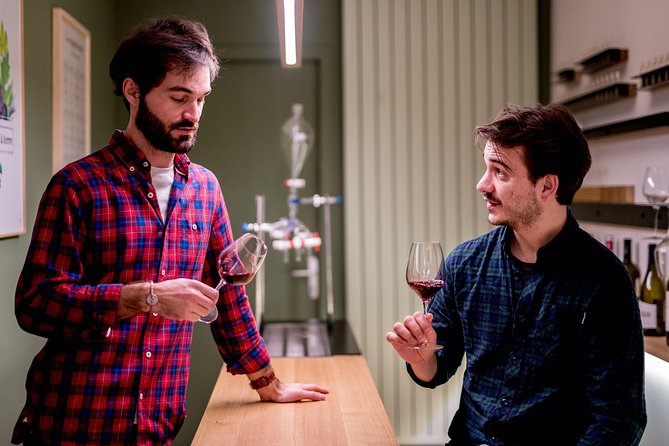
REVIEW · BORDEAUX WINE TOURS
Make your own cuvée of Bordeaux wine
Bordeaux is more than a bottle label. This hands-on workshop lets you test that idea by blending Merlot, Cabernet Sauvignon, and Cabernet Franc in a small cellar near central Bordeaux. I especially like the practical tasting format and the chance to leave with a bottle made to your own taste. The main point to check is that the experience can vary in length and delivery, and a small number of bookings have not included the blending promised.
You meet at Le Pied à Terre, a wine shop and tasting cellar at 22 Rue Judaïque. James, Pierre, Geoffroy, and the two brothers associated with the venue are praised for making the lesson friendly rather than formal. I also like that the group is capped at 12 people, though this is still a wine class, not a vineyard visit, and the focus is almost entirely on red Bordeaux.
Key points at a glance
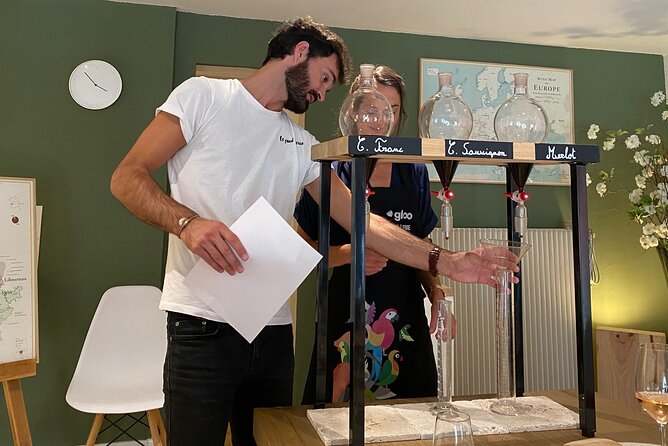
- You create a personal Bordeaux blend: Use single-varietal wines, tubes, and pipettes to decide how much Merlot, Cabernet Sauvignon, and Cabernet Franc belong in your bottle.
- The lesson goes beyond a quick tasting: Expect an introduction to Bordeaux’s wine areas, aromas, tannins, acidity, and the role of soil.
- The bottle is the souvenir: Your finished cuvée can be bottled and labeled with your name, giving you something more personal than a standard shop purchase.
- Basque cheese and charcuterie are served: The food helps you judge the wines with something more substantial than a few crackers.
- The group stays small: A maximum of 12 people makes it easier to ask questions and compare your blend with other participants.
- It is a red-wine activity: If you mainly drink white wine, this may not be the right Bordeaux experience for you.
What happens at 22 Rue Judaïque
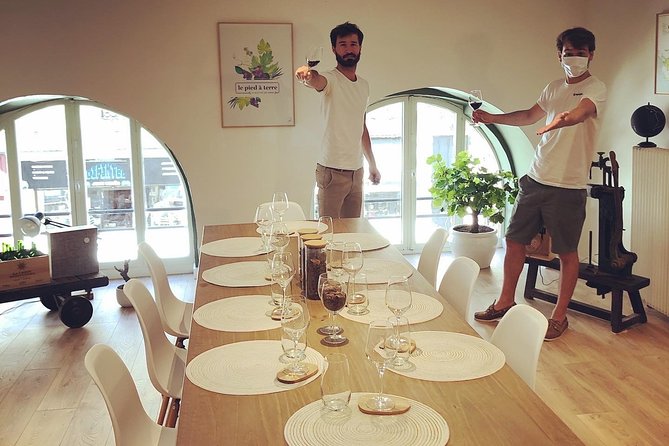
The workshop begins at Le Pied à Terre, a wine shop and cellar at 22 Rue Judaïque in Bordeaux. You return to the same address at the end, so the arrangement is simple. The venue is near public transportation, and you receive confirmation when booking.
The published duration is about two and a half hours. That gives enough time for a proper tasting, a short lesson, and the blending exercise without turning the event into a full-day class. Some sessions have run closer to three hours, while a few have finished in less than two. I would allow a full afternoon around it rather than schedule a tight museum visit immediately afterward.
The group limit of 12 matters here. Blending requires small pours, conversation, and some individual attention. In a large class, the pipette work could feel like a factory line. With this size, you have a better chance to ask why one wine tastes more tannic or why another adds fruit and perfume.
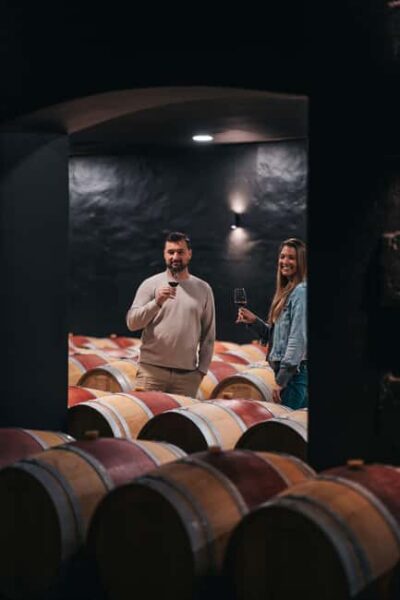
The atmosphere is casual. This is not a formal chateau tour with a polished lecture hall. It is a cellar workshop built around tasting, discussion, and making something yourself. That makes it a good choice if you want contact with Bordeaux wine culture but do not want to spend half a day driving between estates.
A few more wine tours around Bordeaux worth a look
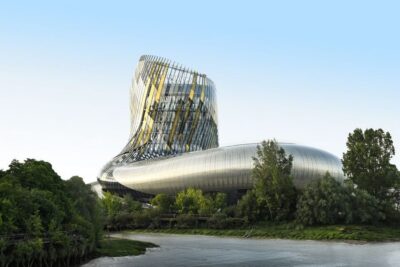
- Bordeaux: Cité du Vin Entry Ticket and Wine Tasting
★ 4.6 · 3,885 reviews - Bordeaux: River Garonne Cruise with Glass of Wine and Canelé
★ 4.5 · 3,630 reviews - From Bordeaux: Afternoon Saint-Emilion Wine Tasting & snack
★ 4.8 · 1,581 reviews
Learning the three grapes in your glass
The heart of the session is a guided tasting of several single-varietal wines. You learn how the main Bordeaux grapes behave before mixing them together.
Merlot is presented as a softer, rounder component that can bring fruit and an easy texture. Cabernet Sauvignon gives structure and tannin, the drying sensation that can make a young red feel firm. Cabernet Franc contributes aroma, freshness, and another layer of character.
The point is not to memorize a list of tasting terms. You taste the wines and notice what each one does. That is useful because Bordeaux is famous for blends, while many American wine drinkers are more used to bottles labeled with one grape. The workshop makes the Bordeaux system easier to understand by putting the ingredients in front of you.
You may also discuss left-bank and right-bank Bordeaux, along with the Entre-Deux-Mers area. The lesson connects those places with grape choices and wine style instead of treating the region as a confusing collection of French names. Soil samples are used as a visual aid, which gives the explanation a physical element rather than leaving it all to words.
Expect talk about aromas, taste, acidity, tannins, and balance. The best part is that the concepts are tied to the wines in your glass. You are not simply told that Cabernet Sauvignon supplies structure. You taste that structure and compare it with the softer feel of Merlot.
A tasting that builds toward the blend
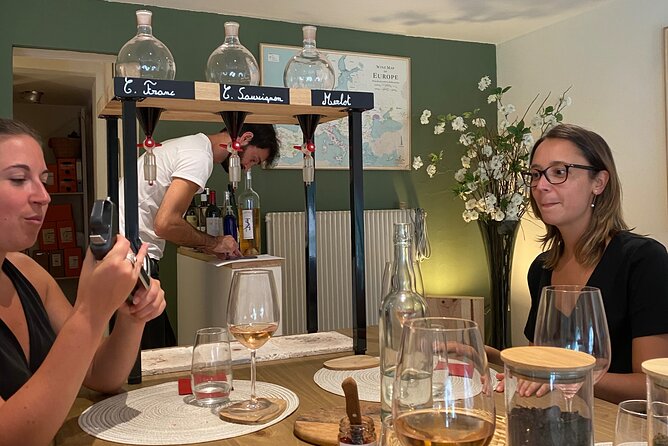
The tasting appears to follow several stages. First comes a general introduction to Bordeaux and the basics of tasting. Then you sample the different wines with food. A blind tasting may follow, giving you a chance to identify or compare wines without relying on the label.
That blind step is a useful idea. Labels can steer your expectations before you taste. Removing them for a moment asks you to pay attention to smell, fruit, tannin, acidity, and finish. It also turns the lesson into a small game, which helps keep the two to three hours from feeling like a lecture.
The sample food is Basque cheese and charcuterie. It is a fitting match for red wine and gives you a way to see how food changes the feel of tannins and fruit. Portions and food service can vary, so I would not treat this as a meal replacement. Have lunch or dinner plans separate if you need a full meal.
The wines are generally described as good choices with a useful range of styles. The tasting is also reported as more generous than the tiny pours found at some quick city tastings. Still, the experience is designed for comparison, not heavy drinking. You are there to learn how the wines work together.
Making your own Bordeaux cuvée
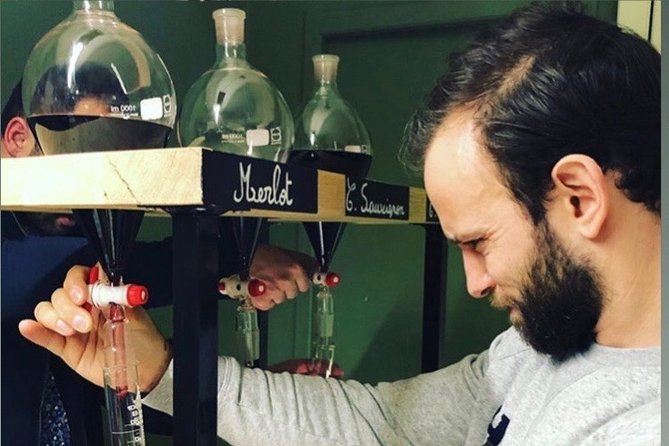
After tasting the components, you create your blend. Tubes, measuring tools, and pipettes let you test different percentages before settling on your final recipe. This is where the workshop becomes more than a standard tasting.
You might begin with a blend dominated by Merlot, then add Cabernet Sauvignon for firmness. A little Cabernet Franc can shift the aroma and freshness. The exercise shows why winemakers do not simply choose the best single wine and stop there. Each grape can change the balance of the others.
The process is accessible even if you know little about wine. You do not need to identify every aroma correctly or use technical language. You only need to taste, compare, and decide what you like. The instructors guide you through the choices, while the final recipe remains personal.
One useful approach is to taste all three components side by side before settling on a formula. This makes the differences easier to spot, especially the way Cabernet Sauvignon gives tannic structure while Merlot and Cabernet Franc can bring fruit, freshness, and aroma. You can also compare your blend with the choices made by other people in the group, which adds a social element without making the session competitive.
At the end, your wine can be bottled and labeled with your name. That is a better souvenir than another generic bottle from a shop because the percentage choices belong to you. The bottle also gives you a reason to remember the lesson later, when you open it and see if your preferred blend still works outside the cellar.
Same region, a very different glass:
- Medoc or Saint Emilion Wine Tasting and Chateau from Bordeaux
★ 5.0 · 1,415 reviews - Saint Emilion Day Trip with Sightseeing Tour & Wine Tastings from Bordeaux
★ 5.0 · 1,120 reviews - Saint Emilion Half-Day Trip with Wine Tasting & Winery Visit from Bordeaux
★ 4.5 · 1,034 reviews - From Bordeaux: St. Emilion Village Half-Day Wine Tour
★ 4.7 · 728 reviews
What the instructors do well
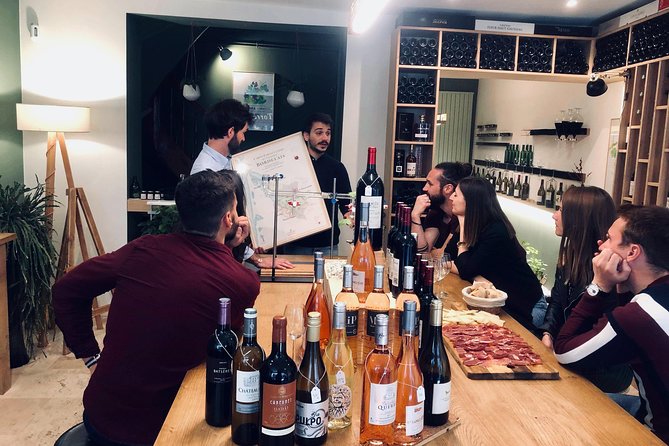
The teaching style is one of the strongest reasons to book. James is described as an English-speaking host, and Pierre and Geoffroy are also associated with the sessions. The brothers at Le Pied à Terre are praised for their energy, warmth, and ability to make wine terms understandable.
You get a mixture of regional background, tasting technique, and practical blending. The lesson can suit beginners, but it is not only for people who have never attended a wine tasting. People who already know the basics may still appreciate the blind tasting and the chance to examine Bordeaux through blending rather than simply drinking finished wines.
The tone is informal and social. You meet people from other countries, taste together, and compare the bottles you create. I would choose this over a stiff classroom if you want to ask basic questions without feeling out of place.
There is one important caution. Two low-rated experiences describe a session that became a tasting and lecture, with no personal cuvée made. The provider apologized and said the wrong agenda had been followed. Those incidents appear to be exceptions among the supplied feedback, but they matter because the blending exercise is the central reason to pay for this activity. If making your own bottle is essential, confirm the day’s program with Le Pied à Terre before arrival.
Is $71.20 good value?
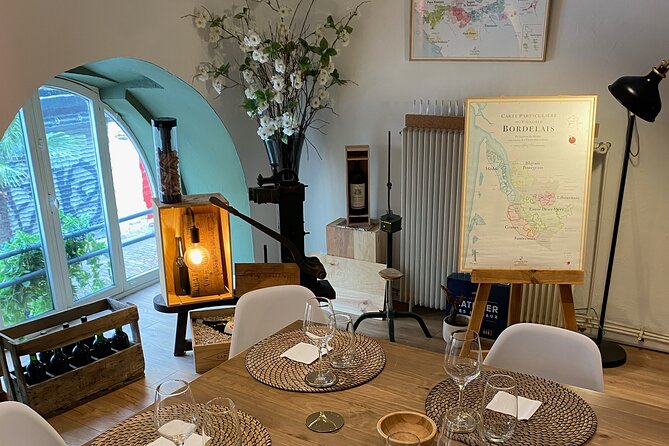
At $71.20 per person, this is not the cheapest way to taste Bordeaux. You can buy a bottle for much less, and a basic shop tasting may cost less still. The price makes more sense when you count the instruction, food, several wines, the equipment, and the bottle labeled with your name.
I see the best value in the combination of learning and participation. A normal tasting lets you sample finished wines. This workshop explains how a Bordeaux blend is built and then gives you a chance to make one. For someone new to Bordeaux, that can make the region’s complicated labels and grape percentages far easier to understand.
The small group also helps justify the price. You are not paying only for a pour at a crowded counter. You are paying for a guided activity where you handle the blend and receive help with your choices. If the class runs close to three hours, the cost feels fair for a substantial wine-focused afternoon.
Value depends on what you want. If your goal is to visit vineyards, walk through cellars, or see production equipment, this is the wrong purchase. If you want a central Bordeaux activity that explains the wines and gives you a personal souvenir, the price is reasonable.
Who should book this workshop?
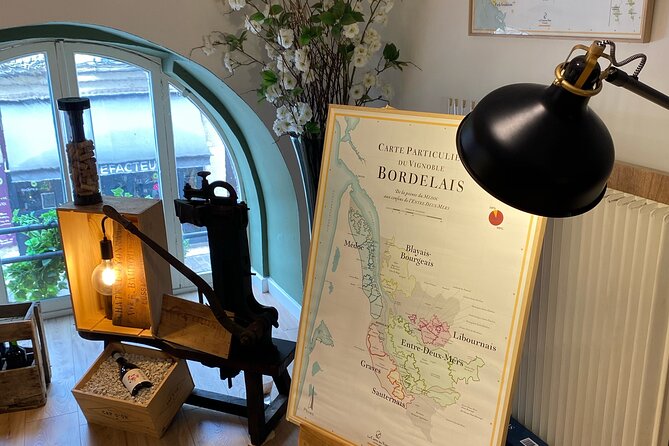
I would recommend it to first-time Bordeaux visitors who want a clear introduction to the region’s red wines. It is also a good fit for couples, friends, and families with adult children who enjoy tasting together. The make-your-own bottle gives each person a slightly different goal, so you can compare the results later.
It suits wine drinkers who want to understand the left bank, right bank, and grape varieties without committing to a full winery excursion. It also works well late in a France trip, when you have tasted enough wine to recognize some of the terms but want a final lesson that pulls the pieces together.
I would be more cautious if you prefer white wine. This is a red Bordeaux experience centered on Merlot, Cabernet Sauvignon, and Cabernet Franc. It is also not ideal if you dislike group activities, guided instruction, or the idea of tasting several wines in a cellar setting.
People with service animals can bring them, and the venue is near public transportation. Free cancellation is available up to 24 hours before the start time. Late cancellations and late changes are not refunded or accepted, and a minimum group size applies. Poor weather can also lead to a new date or a full refund, although the activity takes place indoors at the cellar.
Should you book it?
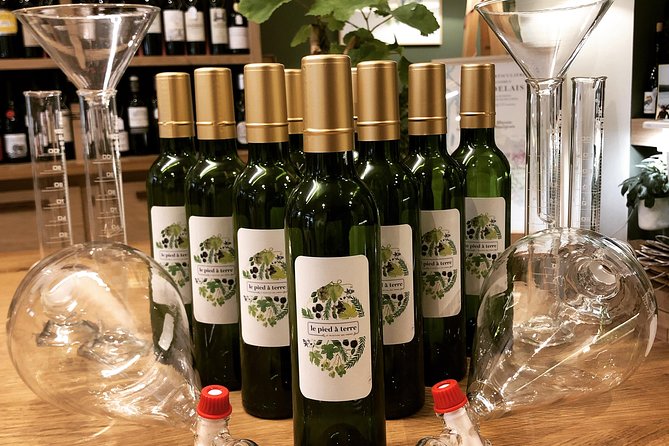
Book this if you want to understand Bordeaux by mixing it yourself. The strongest parts are the warm teaching, the clear comparison of grape varieties, the blind tasting, and the named bottle you take home. The session offers more substance than a short sip-and-move-on tasting.
Before paying, make one practical check: confirm that the blending and bottling portion is scheduled for your date. That protects you from the rare mix-up described above. If the activity is running as planned, $71.20 buys an engaging lesson and a souvenir with a story behind it.
FAQ
Where does the Bordeaux wine blending workshop begin?
It begins at Le Pied à Terre, Cave à vin & atelier dégustation, at 22 Rue Judaïque, 33000 Bordeaux, France.
Where does the experience end?
The activity ends back at the same meeting point, Le Pied à Terre.
How long does the experience last?
The stated duration is approximately 2 hours and 30 minutes. Some sessions have lasted closer to three hours, while others have ended sooner.
What grape varieties are used?
The workshop focuses on Merlot, Cabernet Sauvignon, and Cabernet Franc.
Do I make a bottle of wine to take home?
The planned activity includes creating your own cuvée and the possibility of taking home a bottle labeled with your name. Because a small number of sessions have followed the wrong agenda, confirm this part before attending if it is essential to you.
Is the experience offered in English?
Yes. The experience is offered in English, and James is described as an English-speaking host.
Is food included?
The sample menu includes cheese and charcuterie from the Basque Country.
How many people can join?
The activity has a maximum of 12 people.
Is this suitable for someone who mainly likes white wine?
The workshop focuses on red Bordeaux and the three red grape varieties listed above, so it may not suit someone looking mainly for white wine.
Can I cancel for a full refund?
Yes, if you cancel at least 24 hours before the experience start time. Cancellations or changes made less than 24 hours before the start are not refunded or accepted.
Newly added around Bordeaux
- Saint Emilion Full Day Wine and Bike Tour★ 5.0 · 167 reviews
- Luxurious full day Bordeaux wine tour in a Tesla★ 4.5 · 31 reviews
- Private Bordeaux History Tour with a glass of Bordeaux wine.★ 5.0 · 28 reviews
- Private – Best of Bordeaux Walking Tour + Glass of Bordeaux Wine★ 5.0 · 240 reviews
- Wine Masterclass & Cheese Tasting Workshop in Bordeaux★ 5.0 · 29 reviews
- Bordeaux wines tasting workshop including Food & Wine pairings★ 5.0 · 31 reviews
- Bordeaux Wine Masterclass: Blending workshop with appetizer★ 5.0 · 113 reviews
- Medoc Afternoon Wine Tour – 2 Wineries, tastings & delicacies★ 4.5 · 74 reviews
Bordeaux Wine Tours, compared.
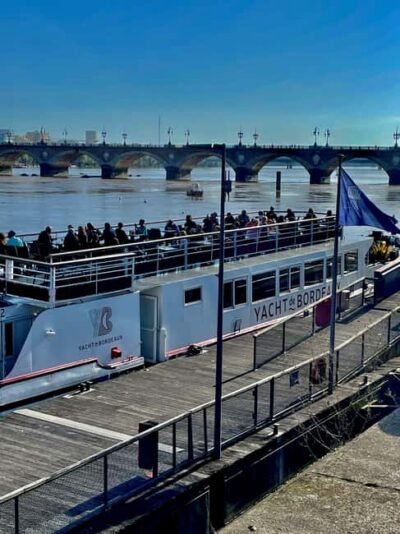
River Garonne Cruise with Glass of Wine and Canelé
Read our review →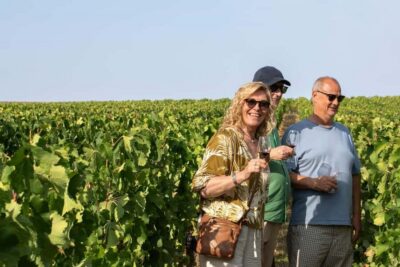
Afternoon Saint-Emilion Wine Tasting & snack
Read our review →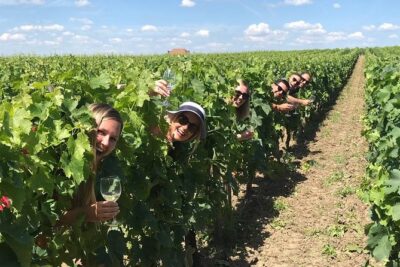
Medoc or Saint Emilion Wine Tasting and Chateau from Bordeaux
Read our review →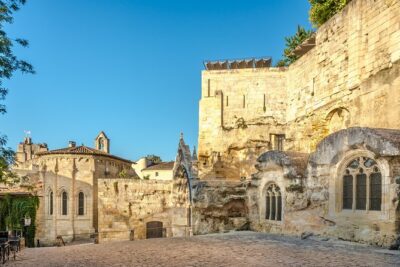
Saint Emilion Day Trip with Sightseeing Tour & Wine Tastings from Bordeaux
Read our review →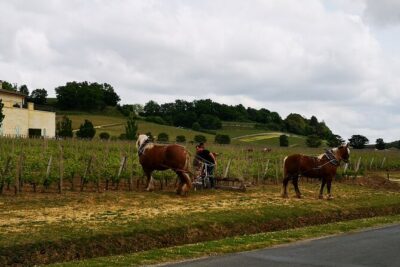
Saint Emilion Half-Day Trip with Wine Tasting & Winery Visit from Bordeaux
Read our review →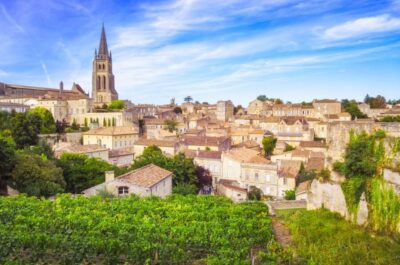
Browse the lists this tour appears in