
REVIEW · CHAMPAGNE TOURS
Champagne: Canard-Duchêne Champagne House Tour
Champagne gets serious underground. At Canard-Duchêne, you walk through historic cellars, see how bottles mature, and follow the story from vineyard to glass. I especially like the hand-carved 19th-century cellars and the chance to see the house’s restored chapel windows by Simon-Marq. The main caution is simple: 130 steps each way and no elevator make this a poor fit for anyone with limited mobility.
The tour also gives you a useful look at the vineyards, rather than keeping you indoors from start to finish. At $25 per person, it offers a good introduction to Champagne production, though the one-hour schedule leaves little time for a relaxed tasting or a long stop in the shop.
Key points to know before you go
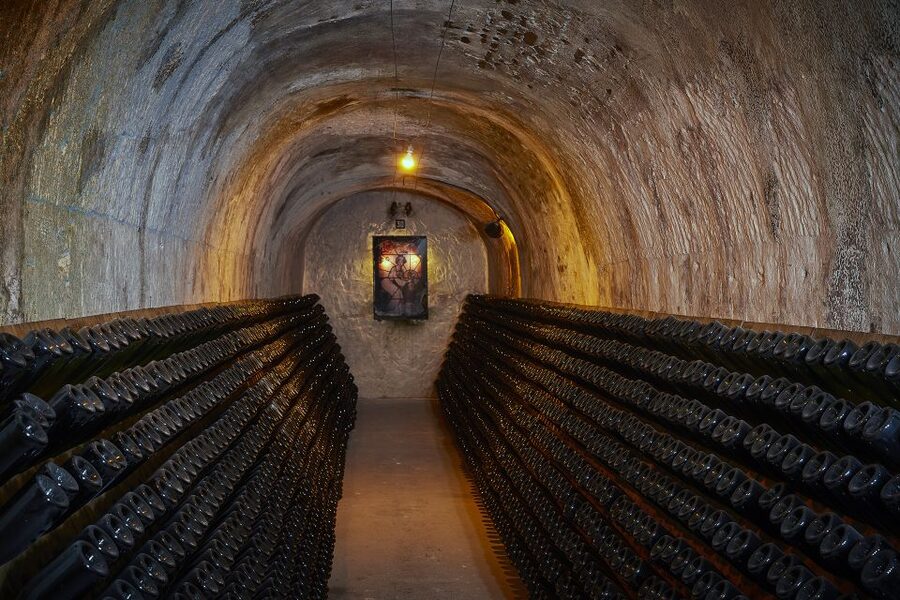
- Four levels of underground cellars: Descend 40 to 60 feet into nearly four miles of passages kept at a cool maximum of 50°F.
- A clear production story: Your guide explains the main stages of champagne making and why cellar conditions affect flavor and maturity.
- A vineyard walk is included: You see where the grapes grow, adding useful context before the tasting.
- The chapel has restored stained glass: The Simon-Marq workshop renovated the old chapel windows, giving the visit an artistic pause.
- Several tasting choices are available: Options range from one glass of brut or demi-sec to two glasses or a tasting of Cuvée Charles VII.
- Short, friendly, and well rated: The experience has a 4.7 rating from 66 ratings, with particular praise for its complete presentation, pleasant guide, and beautiful setting.
Entering the Canard-Duchêne Champagne House
Canard-Duchêne offers a compact introduction to Champagne, the historic wine region in Grand Est, France. The experience lasts one hour and combines three elements: the house itself, the underground cellars, and the nearby vineyard area.
That mix matters. Some champagne visits focus almost entirely on old tunnels and bottle storage. Others center on tasting. Here, you get enough of both the production story and the physical setting to understand how the final drink develops.
Your guide leads the visit in English or French. The tone is designed to be informative without turning the hour into a technical lecture. One especially strong feature is the way the tour connects visible things, such as vines, chapel windows, and cellar walls, with less visible parts of production, such as temperature, humidity, and bottle maturation.
Arrive 15 minutes before the scheduled start. That small buffer is useful because the visit moves on a fixed timetable, and the cellar section requires a proper descent before the explanation begins.
More Champagne Tours in France:
- From Paris: Day Trip to Champagne with 8 Tastings & Lunch
★ 4.8 · 1,501 reviews - Champagne Day Trip with 6 Tastings, Reims and Winery from Paris
★ 5.0 · 902 reviews - From Reims: Champagne and Family-Run Wineries Tour
★ 4.8 · 671 reviews
Walking through the vineyards
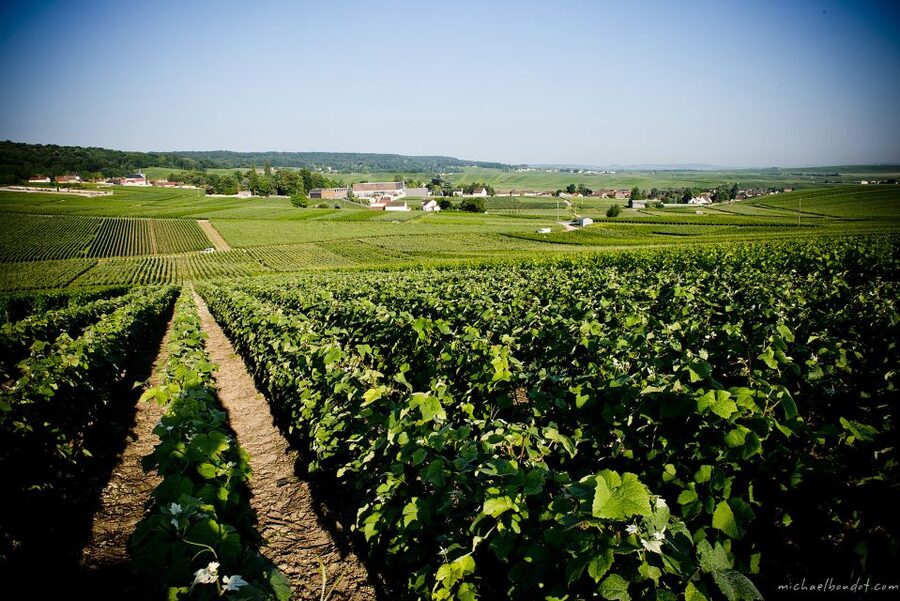
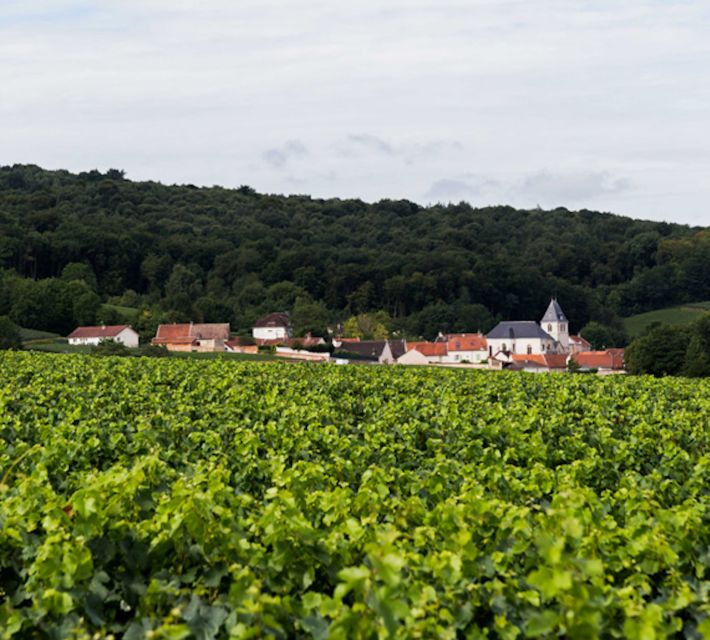
The vineyard portion gives you a look at the source of the wine before you hear about the work underground. You stroll among the vines where Champagne grapes are grown and learn how the house’s raw material begins its journey.
I like this part because it keeps the tour tied to the countryside. Champagne can sometimes feel like a world of grand cellars, polished bottles, and tasting rooms. Seeing the vineyards brings the process back to soil, rows of plants, and seasonal grape growing.
The vineyard walk is guided, so you are not simply left to look around without context. Your guide explains the connection between the grapes and the finished champagne, helping you understand why the house treats the vineyard and cellar as parts of one process.
Do not expect a long rural hike. The entire experience lasts only an hour, so the vineyard section is a concise introduction rather than an extended countryside walk. If you want a full day among vineyards, several estates, and multiple tastings, you will need a longer excursion from Reims or Epernay.
Descending 130 steps into the cellars
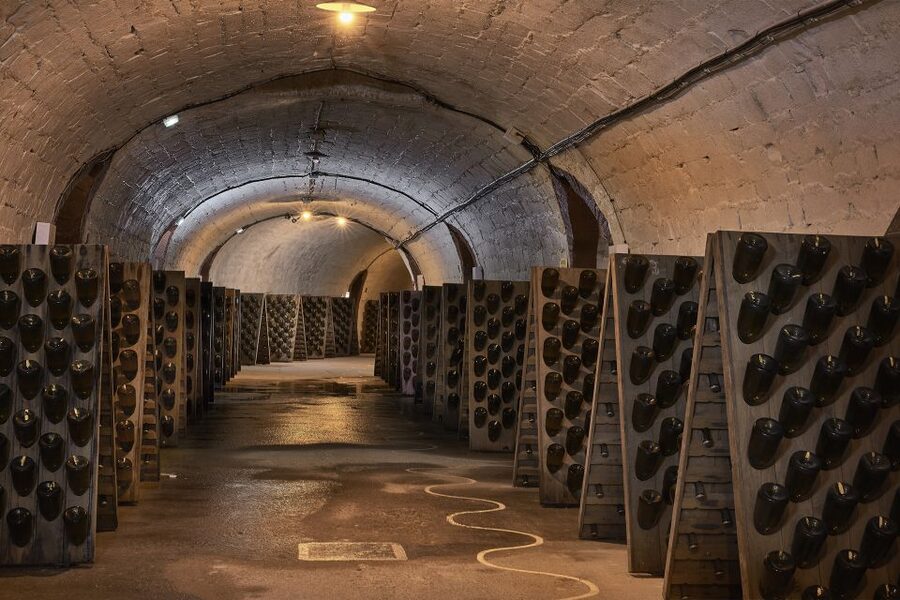
The cellar visit is the physical center of the experience. You go 40 to 60 feet underground, passing through 130 steps each way. There is no elevator, so you should treat the stairs as a firm requirement, not a minor detail.
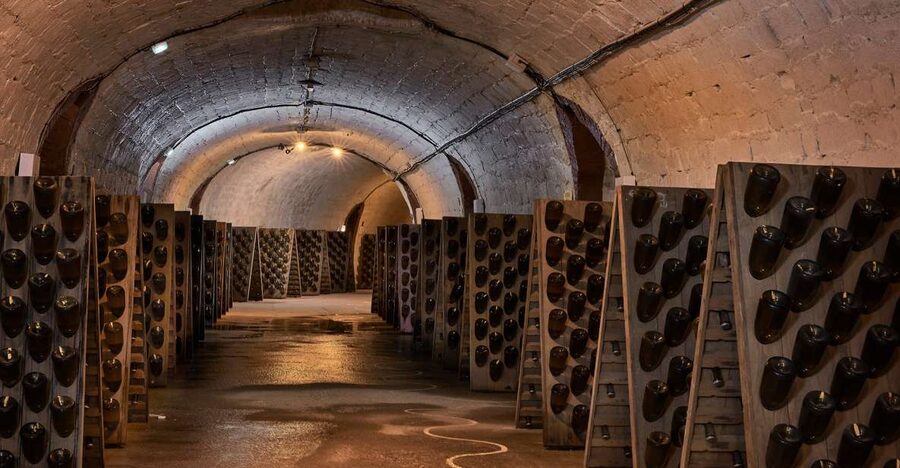
Once below ground, the scale becomes impressive. The cellar network stretches for nearly four miles across four levels. You will not cover all of that distance during a one-hour tour, but the size helps explain why Champagne houses need extensive underground storage.
The maximum temperature in the cellars is 50°F. Bring a warm layer, even if the weather above ground is mild. Comfortable clothing and shoes are also wise, since the visit involves stairs and walking on underground surfaces.
The cool, humid conditions are not simply part of the atmosphere. Your guide explains how they help the champagnes mature slowly. That is one of the most useful lessons on the tour: the cellar is not just a dramatic backdrop. Its stable conditions support the development of the wine’s taste and complexity.
Seeing hand-carved 19th-century architecture
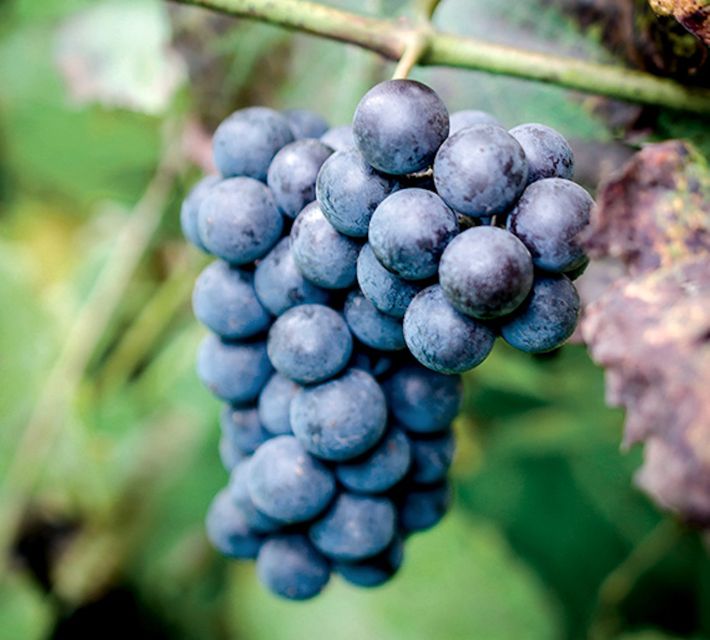
The cellars have a distinctive human touch. Their walls and passages include hand-carved 19th-century work, giving the underground visit a sense of age and craft.
You are not looking at a modern warehouse filled with bottles. The carved architecture helps show how much labor went into creating these spaces before today’s equipment and construction methods. It also gives the guide something concrete to point out while explaining the house’s past.
The atmosphere is one reason the visit is more memorable than a basic tasting. You can taste champagne in many places, but walking through a cool network of historic passages gives the drink a physical setting. The bottle in your glass has passed through a process that depends on time, storage, and careful handling.
Still, the underground setting will not suit everyone. The low temperature may feel uncomfortable, and the stair count is substantial. If you have mobility limitations, the experience is not suitable. The stated guidance also excludes people over 70, so check the operator’s conditions carefully before booking.
A few more wine tours around France worth a look
- Authentic Parisian Gourmet Food Tour with 10 Local Dishes & Wines
★ 5.0 · 4,754 reviews - Loire Valley Castles Day Trip from Paris with Complementary Wine
★ 4.5 · 3,907 reviews - Bordeaux: Cité du Vin Entry Ticket and Wine Tasting
★ 4.6 · 3,885 reviews - Bordeaux: River Garonne Cruise with Glass of Wine and Canelé
★ 4.5 · 3,630 reviews
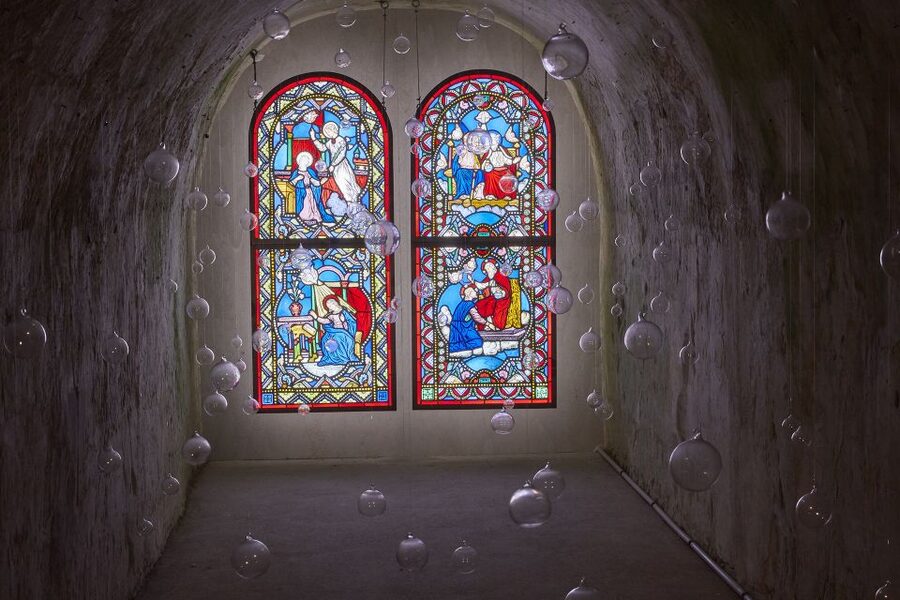
Pausing at the restored chapel windows
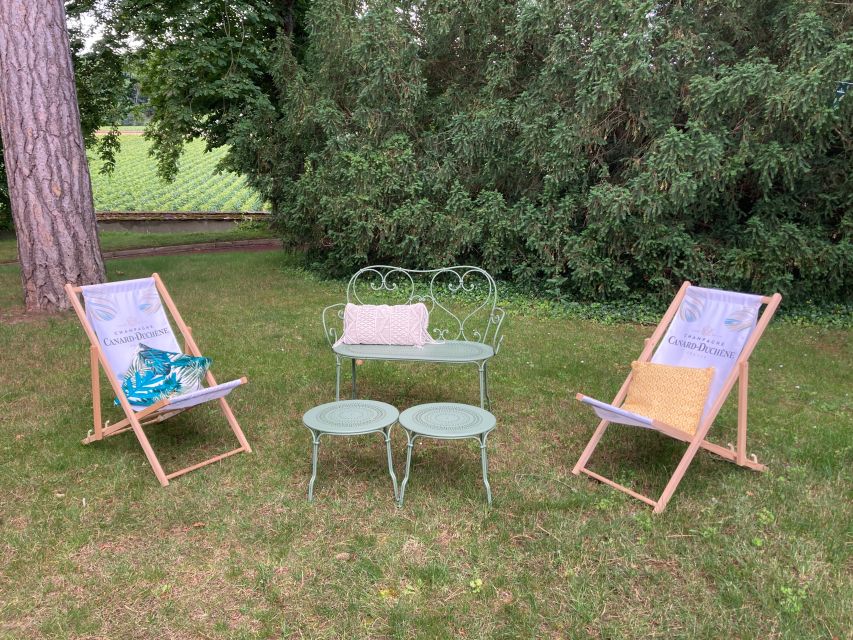
Canard-Duchêne’s old chapel adds an unexpected art stop to the visit. Its stained glass windows were renovated by the Simon-Marq workshop, a master glassmaking studio.
This detail gives the house more character than a standard cellar tour. The chapel is not only a piece of architecture to pass on the way to the tasting. It offers a quiet moment to look at the relationship between local wine production, craftsmanship, and religious or historic buildings.
The windows are especially useful for visitors who want more than technical information about fermentation and storage. The tour gives you a sense of the house as a place with its own visual identity, not just a brand attached to bottles.
Time is limited, so this is a viewing stop rather than a full art visit. You should expect a short explanation and a chance to admire the restored glass, not an extended architectural tour.
Understanding how champagne reaches maturity
The cellar explanation covers the major stages of champagne production. Your guide connects the process to what you see around you, from grapes in the vineyard to bottles aging below ground.
The most valuable part is the explanation of the underground conditions. Stable temperatures and humidity help the wine mature, while the long cellar passages provide room for large stocks of bottles. The guide also discusses how the cellar atmosphere contributes to the taste and complexity associated with the champagnes.
For someone new to Champagne, this is enough information to make a tasting more meaningful. You begin to understand that champagne is not simply a sparkling white wine poured into a flute. It is the result of grape growing, careful production, time, and storage.
If you already know the production method in detail, you may find the technical portion familiar. The strength of this tour is its balance, not specialist depth. It gives you a solid foundation in one hour rather than a masterclass lasting half a day.
Choosing the right champagne tasting
The tasting depends on the option you select. The Decouverte choice includes one glass of brut or demi-sec. This is the most straightforward selection if you want a short introduction at the lowest stated price.
The Liberté option offers two glasses, with a choice involving Cuvée Léonie Brut and Cuvée Léonie Rosé or Cuvée Bio P181. Having two wines gives you more room to compare styles and makes the tasting feel less like a quick sample.
The Charles VII option includes a tasting of Cuvée Charles VII. This may suit you if you want the tasting centered on that particular cuvée rather than a broader comparison.
The supplied information lists champagne as one or two glasses depending on the option selected. Check the exact choice and inclusions when booking, since the tasting is the part most likely to affect the value you receive.
One small improvement would be a simple biscuit or other food pairing. A French-language rating specifically suggested that a small accompaniment would make the tasting better. That is useful advice, especially if you arrive hungry. Lunch is not included, so plan to eat before or after the tour.
Is $25 good value for one hour?
At $25 per person, the experience is reasonably priced for a guided cellar visit with a vineyard walk and champagne tasting. You are paying for more than a pour at a shop counter. The price includes a guide, access to the cellars, the vineyard portion, and one or two glasses depending on your chosen option.
The value is strongest if you are already in the Champagne region and want a focused visit without committing to a half-day tour. You can see the production setting, learn how the cellars work, and taste the result in one hour.
The value is weaker if you want a long tasting, a meal, transport from Reims or Epernay, or a broad comparison of several producers. None of those are included. Lunch is extra, and the short duration means the tour cannot offer the same range as a half-day Champagne route.
The shop also appears to have a limited selection. If buying several bottles or browsing a wide range of house products is important to you, keep expectations modest. The main value here is the guided visit, not extensive retail choice.
Who will enjoy this Champagne visit?
I would recommend it to first-time visitors who want a clear introduction to champagne production. It is also a good fit for anyone interested in old underground architecture, stained glass, and the practical side of bottle maturation.
The tour suits you best if you can manage 130 steps each way and tolerate cellar temperatures of up to 50°F. Wear warm clothing and comfortable clothes. Shoes suited to stairs and walking are a sensible choice.
It is less suitable for people with mobility impairments, anyone who dislikes enclosed underground spaces, or anyone looking for a leisurely afternoon. The stated guidance says it is not suitable for people over 70, so older visitors should take that restriction seriously rather than assuming the stairs will be easy.
Families and small groups should also consider the pace. The experience moves from house history to cellar, vineyard, and tasting within one hour. That makes it efficient, but there is not much spare time for slow exploration.
Practical booking advice
You can cancel up to 24 hours before the activity for a full refund. A reserve-now, pay-later option is also available, which helps if your Champagne plans are still shifting.
Book the tasting option that matches your goals. Choose Decouverte for a basic single-glass introduction, Liberté for a broader tasting with two glasses, or Charles VII if that cuvée is your priority.
Arrive 15 minutes early. Bring a warm layer for the cellars, and do not treat the vineyard walk as a substitute for lunch. Since there is no meal included, eat beforehand if you do not want to finish the tour hungry.
The experience is offered in English and French. If you need English, select or confirm that language when arranging your visit.
Should you book Canard-Duchêne?
Book this tour if you want a compact, well-rounded look at Champagne production for $25. The friendly guide, beautiful house, historic cellars, and restored chapel glass give it more substance than a simple tasting.
Skip it if stairs are difficult, cold underground spaces are uncomfortable, or you want a long tasting with food. For everyone else, this is a practical first stop: short enough to fit into a busy Champagne day, but detailed enough to explain why the vineyards, cellar, and final glass all matter.
FAQ
How long does the Canard-Duchêne Champagne House tour last?
The tour lasts one hour.
How much does the experience cost?
The stated price is $25 per person.
What does the tour include?
It includes a guided wine cellar tour, a guided vineyard tour, and one or two glasses of champagne depending on the option selected.
How many stairs are there in the cellars?
You must manage 130 steps each way. There is no elevator access.
How cold are the cellars?
The maximum temperature in the cellars is 50°F.
Which tasting options are available?
Decouverte includes a brut or demi-sec. Liberté includes Cuvée Léonie Brut and Cuvée Léonie Rosé or Cuvée Bio P181. Charles VII includes a tasting of Cuvée Charles VII.
Is lunch included?
No. Lunch is not included.
What languages are available for the guided tour?
The tour is offered in English and French.
Newly added around France
- Saint Emilion Full Day Wine and Bike Tour★ 5.0 · 167 reviews
- Luxurious full day Bordeaux wine tour in a Tesla★ 4.5 · 31 reviews
- Private Bordeaux History Tour with a glass of Bordeaux wine.★ 5.0 · 28 reviews
- Private – Best of Bordeaux Walking Tour + Glass of Bordeaux Wine★ 5.0 · 240 reviews
- Bordeaux wines tasting workshop including Food & Wine pairings★ 5.0 · 31 reviews
- Wine Masterclass & Cheese Tasting Workshop in Bordeaux★ 5.0 · 29 reviews
- Bordeaux Wine Masterclass: Blending workshop with appetizer★ 5.0 · 113 reviews
- Medoc Afternoon Wine Tour – 2 Wineries, tastings & delicacies★ 4.5 · 74 reviews
Champagne Tours, compared.
Day Trip to Champagne with 8 Tastings & Lunch
Read our review →
Private Boat Ride in Miami with Experienced Captain and Champagne
Read our review →
From Las Vegas: Grand Canyon Helicopter Tour with Champagne
Read our review →
2 Hour Champagne Sunset Cruise from Grace Bay, Providenciales (Adult Only)
Read our review →
Grand Canyon West Rim Helicopter Tour with Champagne Toast
Read our review →Browse the lists this tour appears in