
REVIEW · COOKING CLASSES
Lecce: Pasta Making Class in 1400s-Era Courtyard with Wine
Fresh pasta tastes better when you make it. This Lecce class pairs hands-on Apulian cooking with the unusual setting of the Faggiano Archaeological Museum, where a 1400s-era courtyard gives the evening real character. I like the friendly local cooks and the chance to eat the pasta you shape yourself. I also like that the class becomes a shared meal, not just a demonstration.
The main caution is group size. Classes can reach about 20 people, so the courtyard may feel busy and personal attention can vary. Still, the patient instructors, clear multilingual guidance, and low price make this a strong choice for an evening in Lecce.
Key points to know before booking
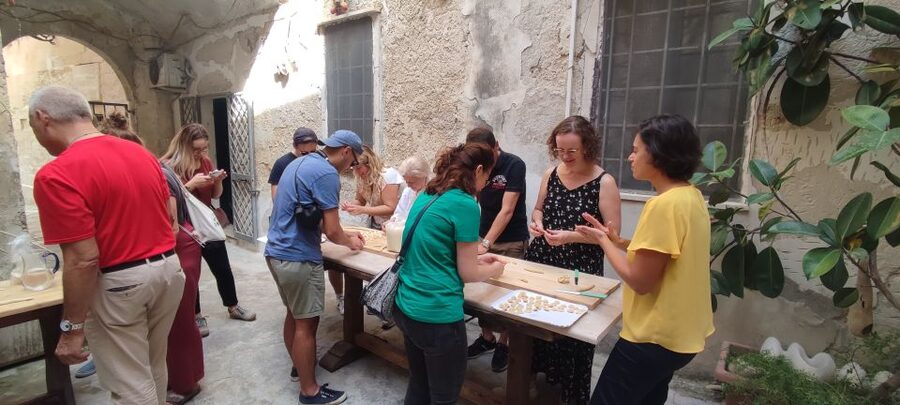
- Historic setting: You make pasta inside the Faggiano Archaeological Museum on Via Ascanio Grandi, in a courtyard dating to the 1400s.
- Two Apulian shapes: The class teaches orecchiette and sagne, also described in some sessions as maccheroni.
- Hands-on work: You mix flour and water, handle the dough, and learn the shaping methods directly from local cooks.
- Dinner is included: You eat the pasta you helped prepare, with wine and, in some sessions, snacks or dessert.
- Social atmosphere: The class brings together people from several countries and works especially well for couples, families, and solo visitors who enjoy meeting others.
- Good value: At $68 per person for 2.5 hours, the class combines instruction, a meal, wine, and a memorable venue.
Why this pasta class fits Lecce so well
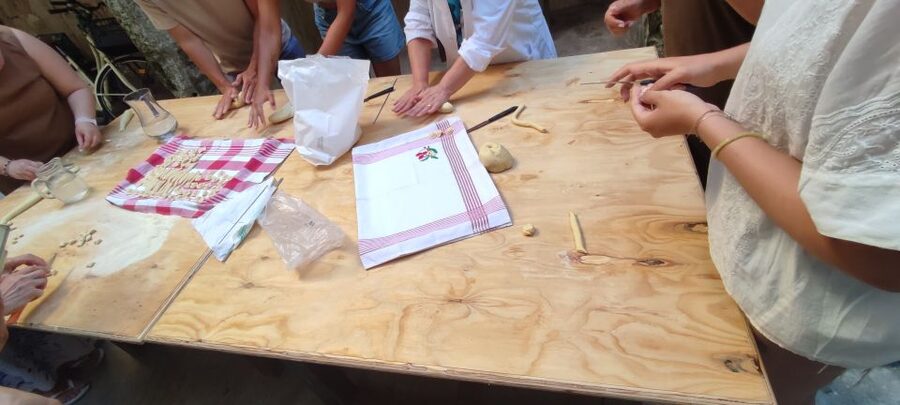
Lecce is known for its pale stone churches, baroque details, and easygoing old-town streets. This class gives you a different way to understand the city: through flour, water, local technique, and a meal shared around a table.
Pasta making is not just a cooking trick here. Orecchiette is closely tied to Puglia, and its name refers to the small ear-like shape formed by the thumb or a knife. Sagne is another traditional pasta associated with the region. The class gives you a practical look at food that is made in homes and kitchens across southern Italy, rather than presenting Italian cooking as a polished restaurant performance.
I like that the activity is active from the start. You are not simply watching a cook prepare dough while standing at a distance. You mix ingredients, work the dough, and try to copy the shaping movements. That makes the experience more memorable, though it also means you should expect a little trial and error.
The cooks make the work look easy. Your first pieces may be uneven, thick, or shaped more like tiny pasta stones than neat orecchiette. That is part of the fun. Several people found the technique harder than expected, so do not judge your cooking ability by how quickly the local instructors form perfect pieces.
More Cooking Classes in Italy:
- Florence: Pasta Cooking Class with Unlimited Wine
★ 4.9 · 10,285 reviews - Florence: Pasta & Tiramisu Cooking Class with Unlimited Wine
★ 4.9 · 6,708 reviews - Florence: Pasta Cooking Class with Unlimited Wine
★ 5.0 · 6,413 reviews
Arriving at the Faggiano Archaeological Museum
The meeting point is Via Ascanio Grandi 58, at the Faggiano Archaeological Museum in central Lecce. Transport is not included, so you need to make your own way there.
The venue adds much more than a convenient address. The cooking takes place in a courtyard connected with a building dating back to the 1400s. The old setting gives the evening a sense of place that a modern cooking studio could not provide. You are making local food in a setting that feels tied to Lecce’s past.
The museum itself is part of the appeal. The Faggiano family discovered archaeological remains beneath their home during plumbing work, and the site became a museum. The class information does not promise a museum tour as part of the evening, so you should not book this expecting a full archaeology visit. Still, the location gives the cooking session an unusual backdrop.
The class runs rain or shine. Since the courtyard is central to the experience, check the forecast and dress sensibly, but do not assume bad weather automatically cancels the event. If too few people book, the course can be canceled and you will be notified and refunded.
The first lesson: flour, water, and local technique
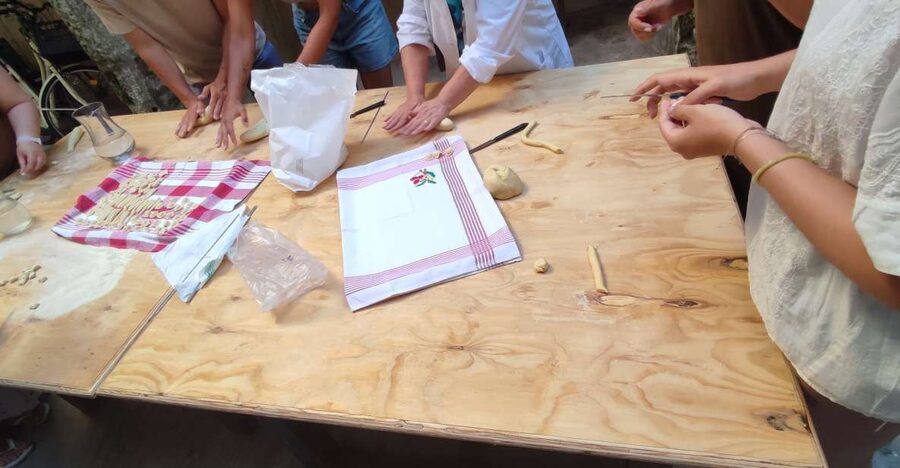
The class begins with instruction from a professional local cook, often working with a second cook and a multilingual guide. Names can vary by session, but Luciana and Therese have been especially praised for their clear English, warm manner, and close attention to the work. Other sessions have featured Nonna Teresa and her cooking partners.
You learn the basic process of mixing flour and water, then work the dough by hand. The instructors show you how to use the available tools and how to prepare the dough for the two pasta styles.
This part is simple in theory and surprisingly physical in practice. You need to notice the dough’s texture, apply the right amount of pressure, and avoid rushing the shaping. The cooks may correct you firmly when needed. One person found the instructors a little stern when the technique went wrong, but the general tone is playful and encouraging rather than severe.
That direct teaching style is useful. You do not leave with only a vague memory of watching someone else cook. You get a real sense of how much hand control is involved. The course may not turn you into a professional pasta maker in one evening, but it gives you enough understanding to try again at home.
Making orecchiette, Puglia’s famous little ears
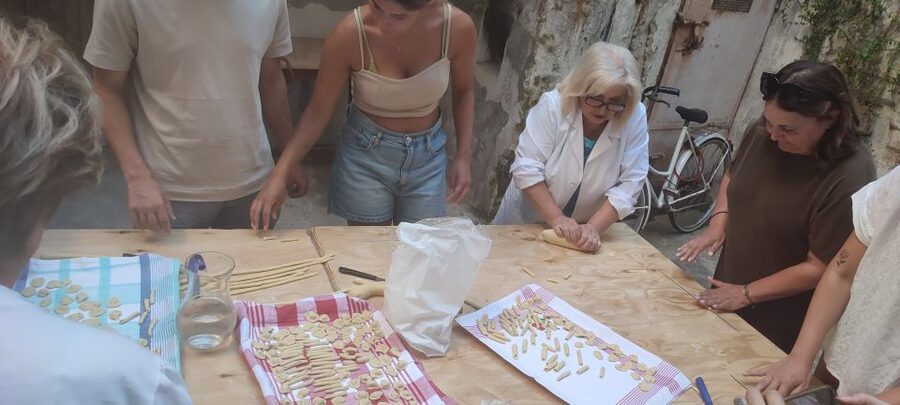
Orecchiette is the star of the class. The name means little ears, and the pasta gets its shape from the shallow, rounded form made by pressing and turning the dough.
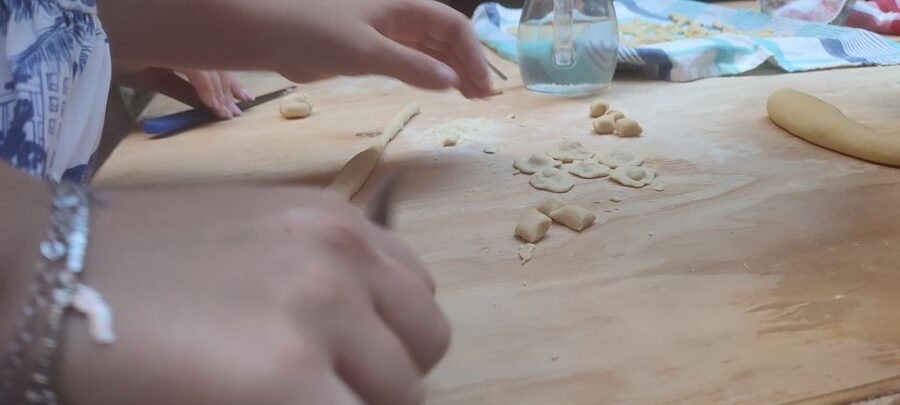
The instructors demonstrate the movement, then you repeat it. You may use a knife or your fingers depending on the technique being taught. The small size makes the process feel almost like craftwork. Each piece needs enough thickness to hold its shape but not so much that it becomes heavy after cooking.
This is one of the strongest parts of the experience because you can see your progress immediately. At first, your orecchiette may look inconsistent. After several attempts, your hand starts to understand the motion.
The class is suitable for beginners, but it is not a passive activity. You need to concentrate, and children may need help from an adult. A family with children aged 10 and 14 had a good time with the format, and the hands-on nature can work well for families who want something more active than sightseeing.
More Pasta Making in Italy:
- Rome: Pasta & Tiramisu Class with Fine Wine by the Vatican
★ 4.9 · 4,852 reviews - Rome: Pasta Making Class with Wine, Limoncello, and Dessert
★ 4.9 · 3,177 reviews - Learn to Make Pasta & Tiramisu with Wine and Limoncello Included
★ 5.0 · 2,345 reviews - Florence: Cooking Class Pasta & Tiramisu Making Unlimited Wine
★ 5.0 · 2,234 reviews
Learning the second pasta shape
The class also covers sagne, with many sessions describing the second shape as maccheroni. The exact wording may vary, but the main point is that you learn two different Apulian pasta techniques rather than repeating one shape for the whole class.
That second method helps you understand how much variety can come from the same basic ingredients. Flour and water seem plain, but different cuts, folds, and shaping movements produce different textures and cooking results.
I like this part because it keeps the class moving. If you struggled with orecchiette, the second shape gives you another chance to improve. If one technique comes naturally, the other may still challenge you.
The class is not presented as an advanced culinary course. You should expect practical demonstrations and guided practice, not a long lesson on pasta science or a detailed history of every regional variety. For most people, that is the right balance for a 2.5-hour evening.
From worktable to shared dinner
After the pasta has been made, it is cooked and served to the group. You then eat the food you helped prepare, usually with wine and sometimes with snacks or dessert.
This is where the experience changes from class to social meal. The work gives everyone a common subject, and the meal gives you time to talk with the other participants. Groups have included people from six or seven different countries, which can make the dinner feel like a small international gathering rather than a standard restaurant outing.
The food is generally served simply. One session included pasta with tomato and basil sauce, while another included wine, snacks, and dessert. The exact meal may differ, so you should think of this as a traditional pasta workshop followed by a communal dinner, not a full multi-course restaurant tasting.
The result is still satisfying. You eat fresh pasta soon after making it, and that connection between the work and the meal is the point. I would not choose this class if you want a formal, quiet dinner with a fixed menu. I would choose it if you like food with a story and enjoy sitting down with the people who made it beside you.
How crowded is the courtyard?
Group size is the main issue to consider. Several sessions have had about 20 participants. That is large enough to create energy and conversation, but it can also make the worktable feel crowded.
The good news is that the class appears to be organized around the group rather than left to run itself. Instructors and guides move around, explain the steps, and help with the shaping. Some participants felt the large group added to the atmosphere, while others would have preferred more room and more individual attention.
Your best strategy is to arrive ready to participate and ask for help when you need it. Do not hang back expecting the instructor to notice every mistake immediately. If you want a quiet, highly personal lesson, a smaller private class would likely suit you better. If you enjoy noise, laughter, and meeting people, the larger format may work in your favor.
The courtyard itself helps. An ordinary indoor classroom might feel cramped with 20 people, but the historic setting gives the group a more relaxed feel. The atmosphere has been described as warm, social, and sometimes almost like joining an Italian family gathering.
The guides and language support
Instruction is available in Italian, English, and French. That matters because pasta shaping depends on seeing the movement and hearing small corrections clearly.
English-speaking visitors have especially appreciated the guides’ explanations. Luciana has been praised for speaking several languages and keeping the evening welcoming and organized. In other sessions, a guide has translated or re-explained the cook’s instructions while the local cooks concentrated on demonstrating the food.
You should still expect some variation from one date to another. The cooks and guides may not be the same every time, but the listed language support gives you a reasonable basis for choosing the class if you do not speak Italian.
The local cooks are the heart of the activity. Their style can be direct, funny, patient, or mildly stern depending on the moment. That feels more authentic than a scripted demonstration, but it may not suit someone who wants a polished, formal presentation.
What $68 buys you
At $68 per person, the price is fair for Lecce if you value both the activity and the meal. You receive 2.5 hours of instruction, use of the cooking equipment, help from a professional cook, the museum setting, your prepared pasta, and wine.
It is not just a plate of pasta with a short demonstration attached. You spend much of the evening making the food yourself, then sit down to eat it. The historic venue also gives the experience something that a lower-priced cooking lesson in a plain room might not provide.
The value is strongest for people who would otherwise spend an evening walking around the old town and paying separately for dinner. Here, you get a structured activity and a meal in one booking.
The price may feel less attractive if you do not enjoy group activities or if you want a serious culinary qualification. This is an entertaining introduction to Apulian pasta, not a professional training course. You are paying for the combination of food, setting, instruction, and social atmosphere.
Who should book this Lecce experience?
I would recommend it to couples looking for a relaxed evening activity, families with children old enough to follow instructions, and solo visitors who enjoy meeting people over food.
It also suits anyone who wants to take home a useful memory rather than another photograph. Once you return home, you can try the dough and shaping methods again. Your first attempt may not look like the instructors’ pasta, but you will understand the basic process.
The class is less suitable if you dislike communal dining, need a very quiet setting, or want a small private lesson. The group can be large, and the teaching has a lively, social rhythm.
You should also bring a passport or ID card, as requested for the activity. The class is wheelchair accessible, and cancellation is available up to 24 hours before the start for a full refund. You can also reserve and pay later, which helps if your Lecce plans are still shifting.
Final verdict: a good-value night in Lecce
I would book this class if I had a free evening in Lecce and wanted to connect with local food in a practical way. The 1400s courtyard, the friendly cooking team, and the chance to eat your own orecchiette make it more memorable than a standard restaurant meal.
Go in expecting a busy group and a little flour-fingered frustration. If you accept that the pasta may not be perfect and focus on the shared meal, the class offers strong value at $68. It is especially good for people who believe the best souvenirs are skills, stories, and a recipe you can try again at home.
FAQ
Where does the pasta-making class meet?
The meeting point is Via Ascanio Grandi 58, at the Faggiano Archaeological Museum in central Lecce.
How long does the experience last?
The class lasts 2.5 hours.
How much does the experience cost?
The listed price is $68 per person.
Which types of pasta do you learn to make?
You learn to make orecchiette and sagne. Some descriptions and sessions refer to the second pasta as maccheroni.
Is the pasta-making class hands-on?
Yes. You mix flour and water, work the dough, and practice shaping the pasta with guidance from the local cooks.
Do you eat the pasta after making it?
Yes. The pasta is cooked after the class and served for you to eat, along with wine.
Is wine included?
Wine is included with the meal. Some sessions also include snacks or dessert.
Which languages are available?
The instructors and guides can provide the experience in Italian, English, and French.
Is the activity wheelchair accessible?
Yes, the activity is listed as wheelchair accessible.
What happens if there are not enough bookings?
If the minimum number of participants is not reached, the course may be canceled. You will be notified and refunded.
More Workshops in Italy
- Fettuccine & Tiramisù: Cooking Class with Wine & Limoncello
★ 4.9 · 2,103 reviews - Sorrento: Pizza Lesson, Wine, and Limoncello at a Local Farm
★ 5.0 · 1,513 reviews - Rome Pasta and Tiramisu Class: Ravioli, Fettuccine & Fine Wine 5*
★ 5.0 · 1,319 reviews - Florence: Premium Pizza & Gelato Preparation Class with Wine
★ 4.9 · 1,306 reviews
Newly added around Italy
- Etna trekking and wine tasting★ 5.0 · 28 reviews
- Etna Tour and Lunch in a Winery with Wine Tasting★ 5.0 · 97 reviews
- Cooking Class and Wine Pairing in Capri★ 5.0 · 57 reviews
- WINE TOUR with sommelier in a winery near Cagliari★ 5.0 · 27 reviews
- Cagliari 3 Hours Luxury Motorboat Tour – Wine and Snorkeling★ 5.0 · 118 reviews
- Cagliari Boat Tour by Maxi Rib – Wine and Snorkeling★ 5.0 · 128 reviews
- Small-Group Food and Wine Tour from Cagliari★ 5.0 · 237 reviews
- Wine Experience: vineyard, wines and food★ 5.0 · 155 reviews
Cooking Classes, compared.
Pasta & Tiramisu Cooking Class with Unlimited Wine
Read our review →
Pasta Making Class with Wine, Limoncello, and Dessert
Read our review →
Cooking Class Pasta & Tiramisu Making Unlimited Wine
Read our review →
Fettuccine & Tiramisù: Cooking Class with Wine & Limoncello
Read our review →
Pasta Making & Wine Tasting with Dinner in Frascati from Rome
Read our review →
Rome Cooking Class: Make Pasta, Dine & Drink Wine With Local Chef
Read our review →Browse the lists this tour appears in