
REVIEW · COOKING CLASSES
Athens: Food Market Visit and Cooking Class with Wine
Greek food is best learned at the table. This four-hour Athens experience combines a walk through Varvakios Agora with a hands-on cooking class, so you see the ingredients, prepare the dishes, and eat the results. I especially like the friendly teaching style and the chance to meet people from several countries while working together. The main drawback is that the market visit is brief and includes meat and fish stalls, which may not suit every vegetarian.
At $81 per person, the class is a solid value if you want more than a meal. You get the market walk, ingredients, instruction, a full-course lunch or dinner, wine, soft drinks, water, a Greek digestif, and the recipes to take home. Just plan for about 30 minutes of walking and bring comfortable shoes.
What makes this Athens cooking class worth your time
- The market comes first: Walk with your cook through Athens Central Market and see where the class ingredients begin.
- Five classic Greek dishes: Prepare dolmades, spanakopita, imam baildi, portokalopita, and tzatziki.
- A social table: Classes usually bring together people from different countries, with shared tasks and a relaxed group mood.
- Strong teaching personalities: Instructors such as Vasia, Despina, Thanasis, and others are praised for humor, patience, and warmth.
- A generous finish: Sit down to eat everything you made with organic local wine, soft drinks, water, and a small Greek liquor.
- Useful take-home skills: The recipes are approachable enough to repeat in your own kitchen.
Starting at The Greek Kitchen on Athinas 36
Your meeting point is The Greek Kitchen, at Athinas 36 on the first floor. This is more than a check-in spot. You can leave behind anything you do not want to carry through the market, then return here for the cooking portion.
The choice of starting time matters. The morning class begins at 9:30 AM, while the afternoon class starts at 3:00 PM. A morning booking gives you a full food-centered start to the day. The afternoon option can be a smart choice in hot weather, since you spend part of the class indoors and away from the strongest midday sun.
The experience lasts four hours, so do not squeeze it between two tightly timed museum visits. You need time for the market walk, food preparation, conversation, and the shared meal. Wear comfortable clothing and shoes, and bring a refillable water bottle. You can fill it at the cooking school.
The setting is designed for participation rather than a formal demonstration. You will work with other people at your table, ask questions as you go, and take part in the preparation. That makes the class useful for beginners. You do not need to arrive with serious cooking skills.
More Cooking Classes in Athens:
- Athens: Classic Cooking Class with Market Visit and Wine
★ 5.0 · 1,101 reviews - Florence: Pasta Cooking Class with Unlimited Wine
★ 4.9 · 10,285 reviews - Florence: Pasta & Tiramisu Cooking Class with Unlimited Wine
★ 4.9 · 6,708 reviews
A short walk through Varvakios Agora
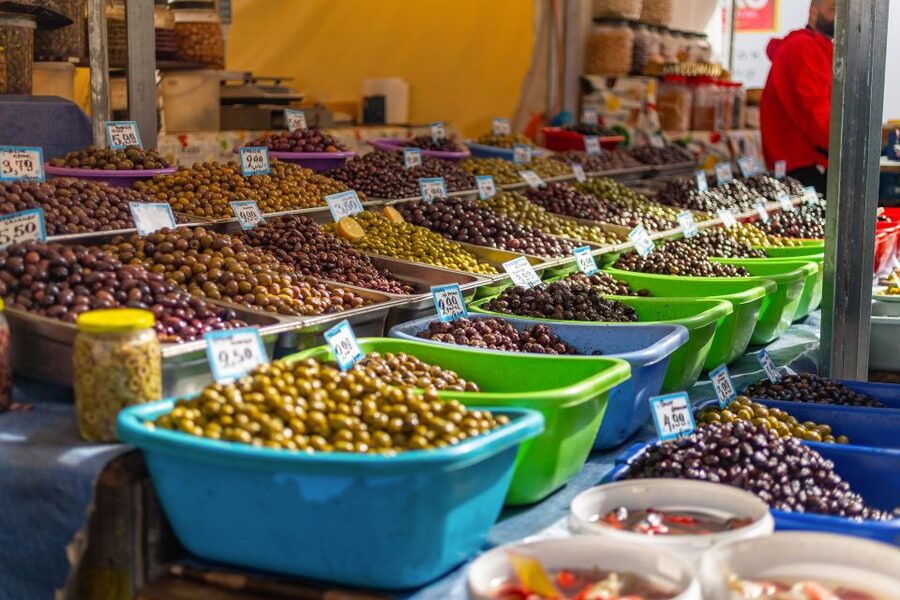
The market visit takes you to Varvakios Agora, Athens Central Market. The cook leads the group through the market to select ingredients, meet local traders, and point out corners you might otherwise pass.
It is important to set your expectations correctly. This is not a long market tour with a detailed lecture at every stall. It is a shopping walk tied to the meal you are about to prepare. That is part of its appeal. You see the food in its working setting, then return to use it.
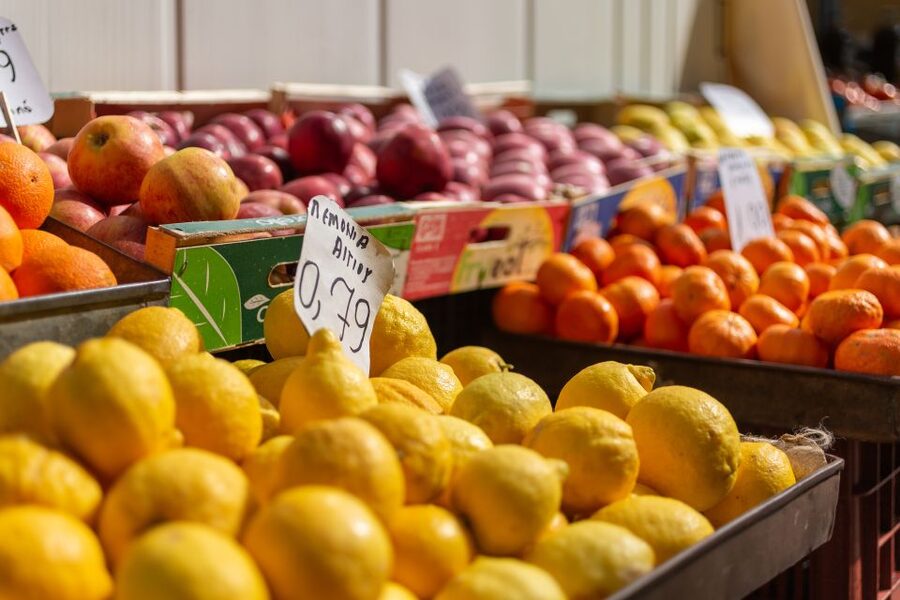
The visit includes produce, olives, fruit and vegetables, fish, and meat areas. For many people, this is a useful introduction to everyday food shopping in Athens. You get a sense of the range of ingredients behind Greek home cooking rather than seeing only polished restaurant dishes.
If you are vegetarian, the produce sections should be the most rewarding part. Still, the meat and fish market is part of the route, and one vegetarian participant found that section uncomfortable. If you are sensitive to those sights or smells, contact the cooking school ahead of time and ask what can be adjusted.
The walking portion lasts about 30 minutes. Athens sidewalks and market floors can be uneven, so sensible footwear matters. This is a small detail, but it can shape your enjoyment of the rest of the afternoon.
Preparing five Greek dishes together
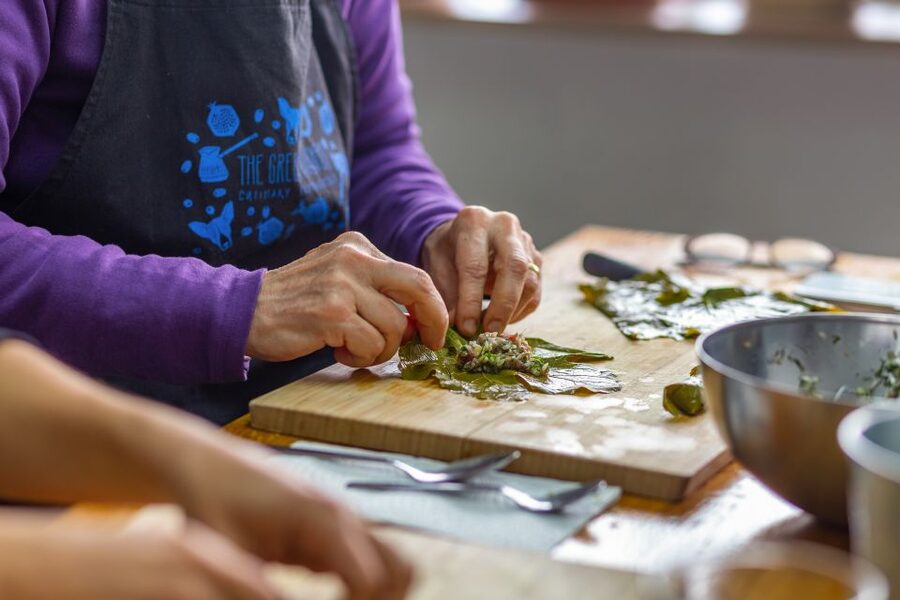
Back at The Greek Kitchen, the hands-on cooking begins. The menu gives you a good cross-section of Greek flavors: stuffed vine leaves, pastry, eggplant, citrus, yogurt, cucumber, garlic, herbs, and feta.
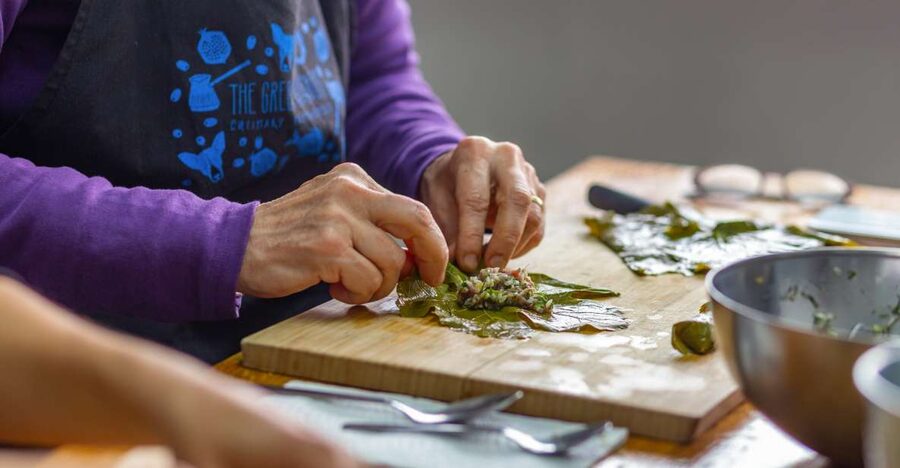
Dolmades
You prepare vine leaves wrapped around herb-seasoned rice. Beef can be added if you want it, so this dish can work for mixed groups with different diets.
Dolmades are a useful class dish because they teach a technique you can repeat at home. You learn how the filling is portioned and wrapped, rather than simply eating a finished version brought from the kitchen. They can look complicated at first, but the group format makes the process less intimidating.
More Food Experiences in Athens:
- PREMIUM Semi-Private Athens Afternoon Food Tour & Wine Tasting
★ 5.0 · 363 reviews - Athens: Premium Food and Wine Tasting Tour in the evening
★ 4.9 · 212 reviews - Private Athens By Night Food Tour & Wine Tasting of 5 Varieties
★ 5.0 · 90 reviews - From Split: Krka Waterfalls, Food & Wine Tasting Tour
★ 5.0 · 9,326 reviews
Spanakopita
The spinach pie combines spinach, salty feta, and pastry. This is one of the dishes that many people particularly want to repeat at home, though working with pastry requires some care.
The class makes the process manageable by dividing tasks among the table. You may not leave ready to run a bakery, but you will understand the basic assembly and flavors. For many first-time cooks, that is exactly the right level of instruction.
Imam baildi
This roasted eggplant dish carries a useful piece of Greek food history. It came to Greece with refugees from Asia Minor and is topped with a rich sauce and feta.
It is also a good reminder that Greek cooking is not limited to grilled meat and salad. Eggplant takes center stage here, and one participant who usually disliked eggplant found this preparation surprisingly appealing. If you are unsure about the vegetable, this is a fair chance to change your mind.
Portokalopita
Dessert is portokalopita, a soft, sticky orange pie made with phyllo pastry, oranges, and cinnamon. It has the sweet, fragrant finish you want after a meal built around olive oil, herbs, and vegetables.
This is also the dish most likely to win over the person at home who claims not to care about Greek food. The orange and cinnamon make it familiar, while the phyllo gives it a distinctly Greek character.
Tzatziki
Tzatziki is the simplest dish on the menu, but it is one of the most useful. Greek yogurt, cucumber, and garlic come together in the sauce served with countless meals.
You will probably recognize it immediately, but making it yourself helps you notice the balance between cool yogurt, fresh cucumber, and sharp garlic. It is an easy recipe to recreate after your trip.
Why the instructors make such a difference
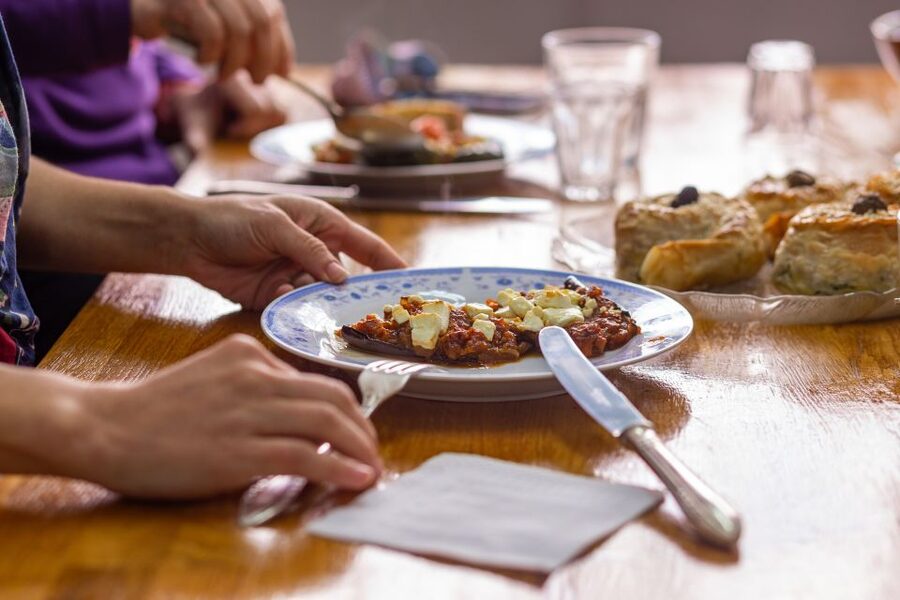
The strongest part of the experience is the teaching. Several instructors are singled out for being funny, patient, and good at making strangers work as a team. Vasia is often praised for keeping everyone involved, while Despina and Thanasis are also noted for making the class warm and memorable.
The style is personal rather than stiff. One instructor used a large wall map to explain where ingredients came from and showed a photo of his grandmother holding the stick she used to roll phyllo dough. Details like that connect the recipes to family kitchens and regional traditions.
You can expect plenty of questions and conversation during the cooking. The pace is described as comfortable, with enough time to follow each step without feeling rushed. The food is simple enough for a beginner, but the cultural background gives the class more weight than a basic recipe lesson.
Group size can vary. One group of five was part of a class of roughly 13 to 15 people, divided between two tables. That is large enough for a social atmosphere but still small enough for shared work. The table setup also means you should expect cooperation rather than a private lesson.
One practical note: the stools can become uncomfortable after more than an hour. If you prefer to sit for long stretches, this may bother you. The class is active enough that standing and moving around are part of the normal rhythm.
Sitting down to eat what you made
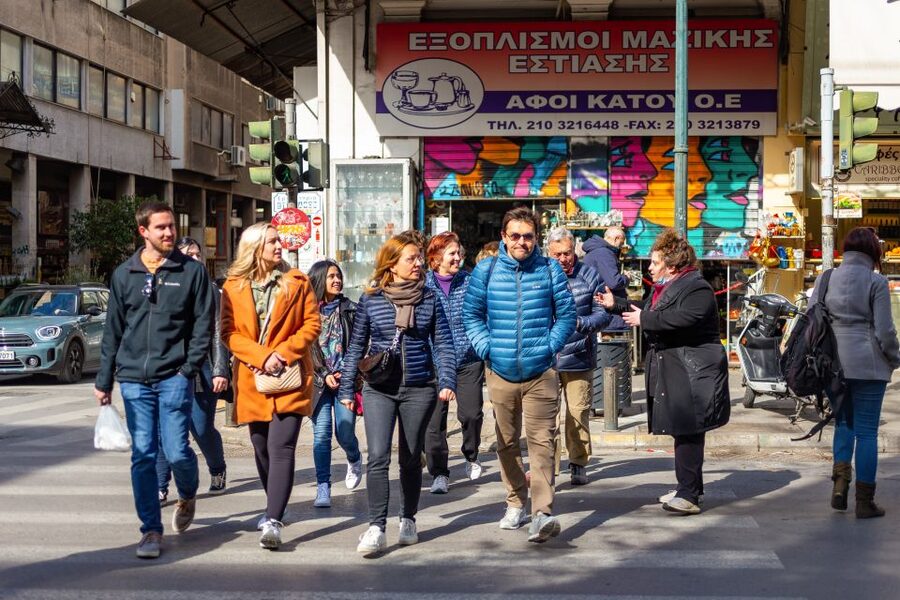
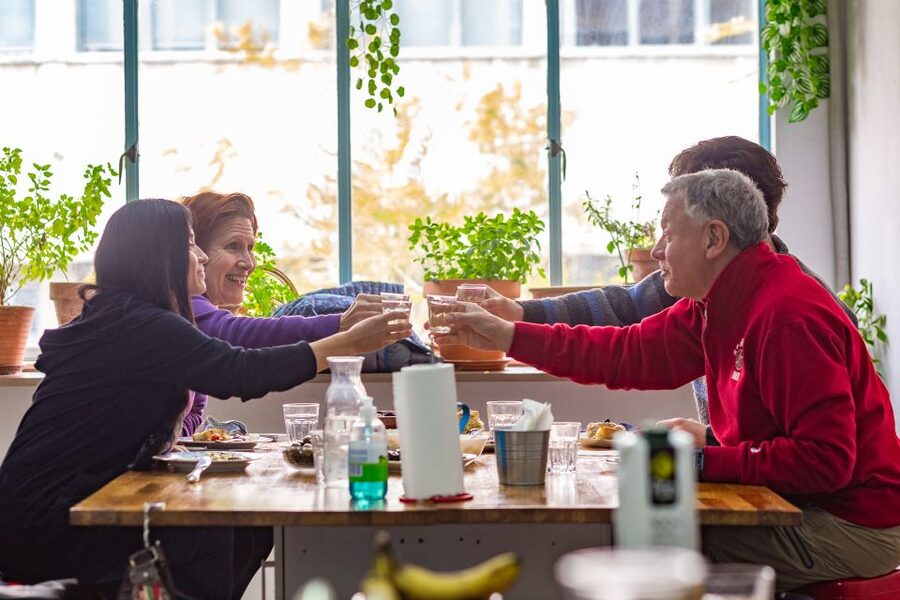
The meal is the reward for the work. Instead of receiving a small tasting plate, you sit down to share the dishes prepared by the group. The food is served with water, soft drinks, and a serving of local organic wine, followed by a complimentary shot of Greek digestive liquor.
The portions are generous. One participant found there was too much food to finish, which is a better problem than leaving hungry. The meal also gives the group time to talk without cutting vegetables or handling pastry. People who arrived as strangers often use this part of the class to exchange Athens tips and stories about the rest of their trips.
A shared meal is especially useful if you are traveling alone or want an easy social activity. You do not need to force conversation, but the table arrangement makes it natural to compare results, ask about recipes, and laugh over the more crooked dolmades.
The class also handles celebrations nicely. An instructor once added a candle to the dessert for a birthday. That is not a guaranteed feature, but it shows the friendly tone you can expect from the team.
Dietary needs and who should contact the school
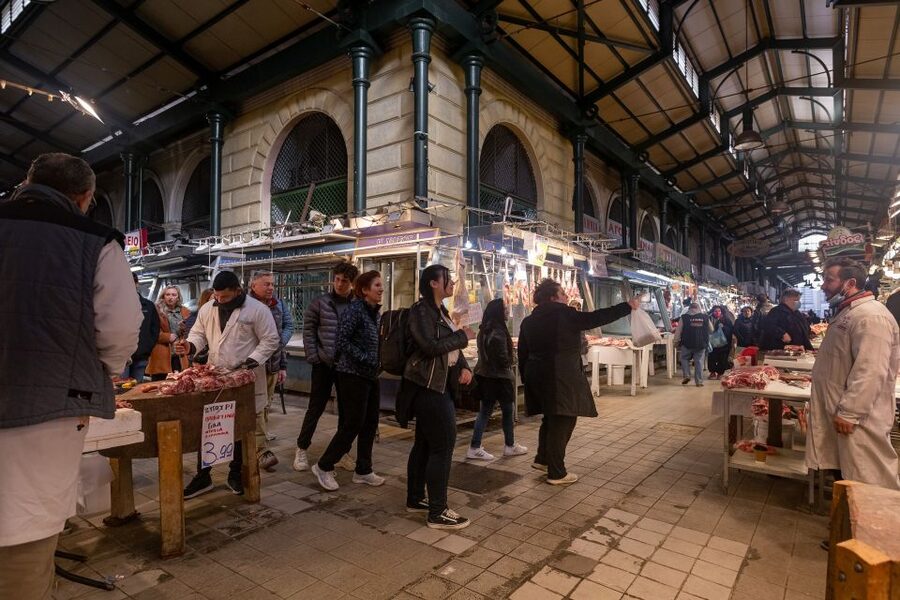
The cooking school asks you to send dietary information in advance. This is important because the menu includes dairy, gluten, and optional meat. Vegetarian guests have been accommodated, and the dishes already offer several meat-free options.
Gluten-free preparation has also been handled with care. A celiac participant received separate dishes and attention to cross-contamination. Still, you should not wait until arrival. Send your requirements as soon as you book, since last-minute changes may not be possible.
The menu is naturally friendly to vegetarians, though the market walk still passes through meat and fish sections. Vegans should ask specifically about substitutions because the listed dishes include feta, yogurt, and other ingredients that may need changes.
The class is not suitable for wheelchair users. The 30-minute walk and the cooking-school setting may also be challenging if you have limited mobility, so ask the provider for current details before booking.
Is $81 a fair price?
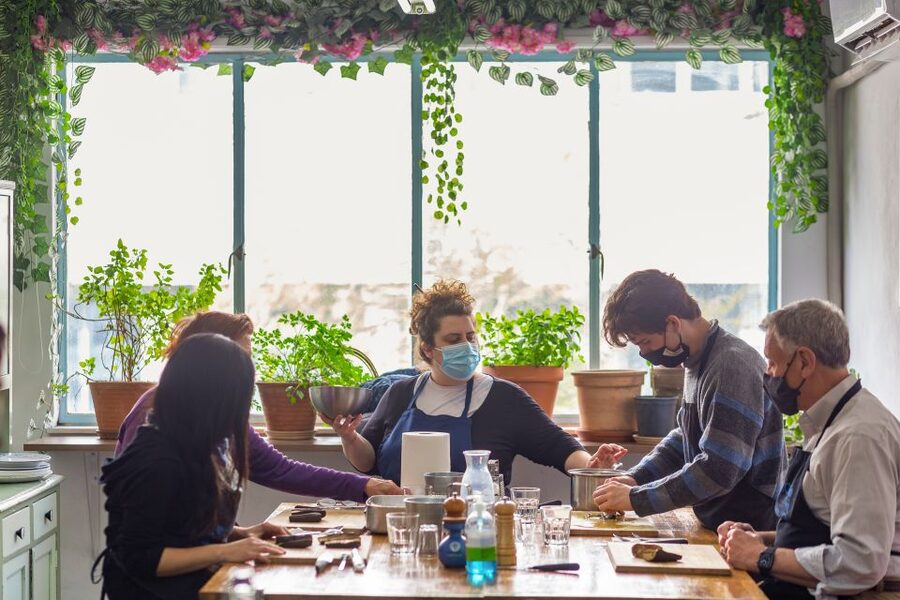
At $81, this is not the cheapest way to eat Greek food in Athens. You could buy a good meal for less. But that comparison misses the point.
The price covers four hours, a market visit, all ingredients, instruction, a full meal, wine, soft drinks, water, a Greek liquor, and the recipes. You are paying for an activity, not just a plate of food. If you enjoy cooking or want a cultural experience that does not feel like a lecture, the package offers good value.
The recipes also extend the value beyond your time in Athens. Dolmades, tzatziki, spanakopita, and portokalopita are practical dishes to attempt at home, especially because the class keeps the methods approachable. You leave with more than photos and a full stomach.
I would skip it if you want a detailed professional cooking course, a private class, or a long guided tour of the market. The market segment is short, and the class is built around fun, teamwork, and home-style food rather than advanced culinary training.
The best time to book it
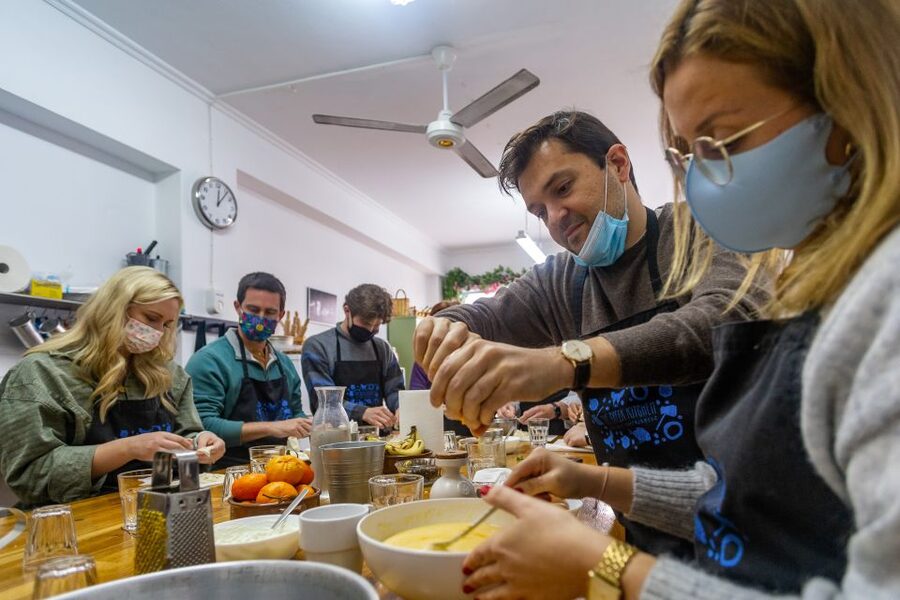
Book this near the beginning of your Athens stay if you can. After cooking the dishes yourself, you may recognize them on restaurant menus and pay more attention to how Greek food is prepared.
The afternoon class is useful during hot months and can fill a relaxed part of your schedule. The morning session is better if you want to spend the rest of the day sightseeing with a substantial meal already behind you.
Allow the full four hours, plus a little extra time before and after. The class includes walking, shopping, cooking, eating, and conversation. Rushing away halfway through would undercut the best part.
Should you book The Greek Kitchen?
I would recommend this class to first-time visitors who want a friendly introduction to Greek food, couples looking for a shared activity, solo visitors who enjoy meeting people, and families with older children who can take part in the cooking.
The best reasons to book are the warm instructors, the generous meal, the practical recipes, and the mix of market life with home cooking. You should think twice if you dislike group activities, have serious mobility limits, or feel uncomfortable around meat and fish markets.
For most people, $81 buys a useful slice of Athens: food shopping, family-style cooking, local drinks, and a table shared with people from around the world. That is a fair trade for four hours, especially when you can recreate parts of it after returning home.
FAQ
Where does the cooking class meet?
It meets at The Greek Kitchen, Athinas 36, Athens, on the first floor.
How long does the experience last?
The activity lasts four hours, including the market visit, cooking class, and shared meal.
What time can I attend?
You can choose a morning class beginning at 9:30 AM or an afternoon class beginning at 3:00 PM. Availability should be checked when booking.
What dishes will I prepare?
The menu includes dolmades, spanakopita, imam baildi, portokalopita, and tzatziki.
Is wine included?
Yes. The meal includes local organic wine, water, soft drinks, and a complimentary shot of Greek digestive liquor.
Can dietary requirements be accommodated?
The cooking school asks you to provide dietary information in advance. Vegetarian and gluten-free needs have been accommodated, but last-minute changes may not be possible.
What should I bring?
Bring comfortable shoes, weather-appropriate clothing, and a refillable water bottle. You can fill the bottle at the cooking studio. Pets and smoking are not allowed.
More Shopping Tours in Athens
- Acropolis Private Wine Tasting @ Finewine store
★ 5.0 · 46 reviews - San Sebastian Pintxo Food, Wine & Market Foodie Tour(Small Group)
★ 5.0 · 621 reviews - Budapest Cooking Class & Market Tour with Local Guide & Wines
★ 5.0 · 553 reviews - Budapest Food Tour: Market to Tavern with 14+ Tasters & Wines
★ 5.0 · 434 reviews
More Market Visits in Athens
- Bologna Food & Market Tour with 6 Tastings, Pasta, Wines & More
★ 5.0 · 1,328 reviews - Paella Cooking Class, Wine Tasting & Central Market in Valencia
★ 5.0 · 1,150 reviews - Tbilisi: Mtskheta Jvari Bazaar, Chronicles of Georgia & Wine
★ 5.0 · 1,088 reviews - Tbilisi:Mtskheta,Jvari,Bazaar,wine tasting,Chronicles of Georgia
★ 5.0 · 730 reviews
Newly added around Athens
- Athens: Wine Workshop Create your Own Wine under the Acropolis★ 5.0 · 77 reviews
- Wine Trails Private Tour/ Nemea visit 3 wineries from Athens or Nafplion (10 h)★ 5.0 · 44 reviews
- Athens: Greek Wines Tasting with Sommelier and Acropolis Views★ 5.0 · 88 reviews
- Mercedes Private Tour Nafplio, Corinth Canal, Nemea Wine Tasting★ 5.0 · 142 reviews
- Acropolis Private Wine Tasting @ Finewine store★ 5.0 · 46 reviews
- Small-Group Wine Tour in Athens with Tasting★ 5.0 · 33 reviews
- Biblical Corinth Taste Faith & History with wine & Oil Tasting★ 5.0 · 28 reviews
- Sail the Athenian Coastline on a Catamaran with Meal & Wine★ 5.0 · 165 reviews
Cooking Classes, compared.
Pasta & Tiramisu Cooking Class with Unlimited Wine
Read our review →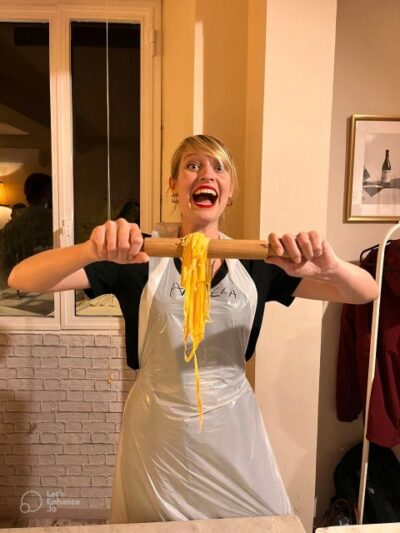
Pasta Making Class with Wine, Limoncello, and Dessert
Read our review →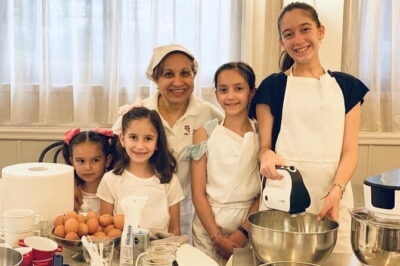
Cooking Class Pasta & Tiramisu Making Unlimited Wine
Read our review →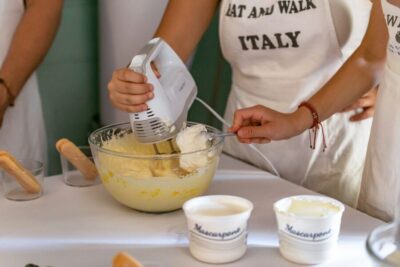
Fettuccine & Tiramisù: Cooking Class with Wine & Limoncello
Read our review →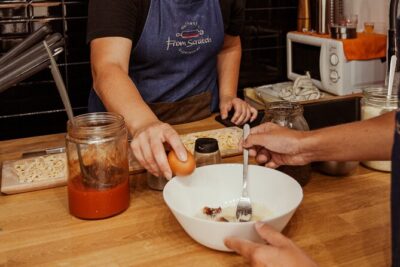
Pasta Making & Wine Tasting with Dinner in Frascati from Rome
Read our review →
Rome Cooking Class: Make Pasta, Dine & Drink Wine With Local Chef
Read our review →Browse the lists this tour appears in