
REVIEW · COOKING CLASSES
Bologna Local Pasta Cooking Class, Ragu, Spritz, Wine & Gelato
Flour, eggs, wine, and a rolling pin make a fine afternoon. This three-hour Bologna cooking class gives you a hands-on way to eat like a local, starting with Mortadella, piadina, and Pignoletto before moving into fresh tagliatelle with homemade ragù. I like the small-group setting and the fact that you do the pasta by hand, without a machine. I also like the generous food and drink, from the Casoni spritz to San Giovese, coffee, amaro, and gelato.
The main thing to understand is that the ragù is prepared before you arrive. You learn about the sauce and eat it with your pasta, but you do not make it during the class because the three-hour schedule is too tight. Also, the experience is designed mainly for adults, and people with severe allergies or strict dietary requirements should check suitability before booking.
What makes this Bologna class worth your time
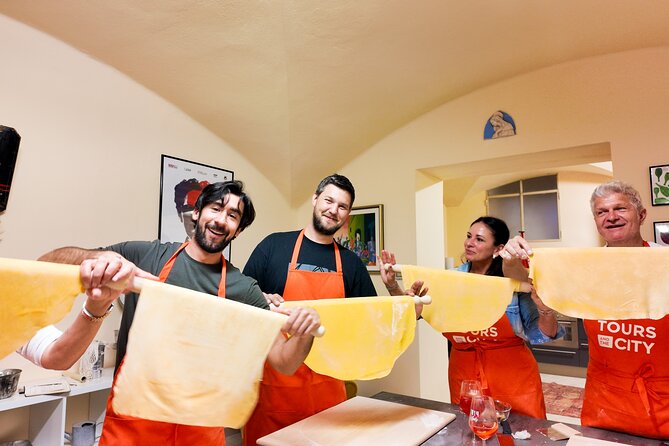
- You roll and cut real tagliatelle by hand, using only flour, eggs, a rolling pin, and your own effort.
- You taste Bologna from the start, with Mortadella, Crescenta or piadina, Pignoletto, and local aperitivo fare.
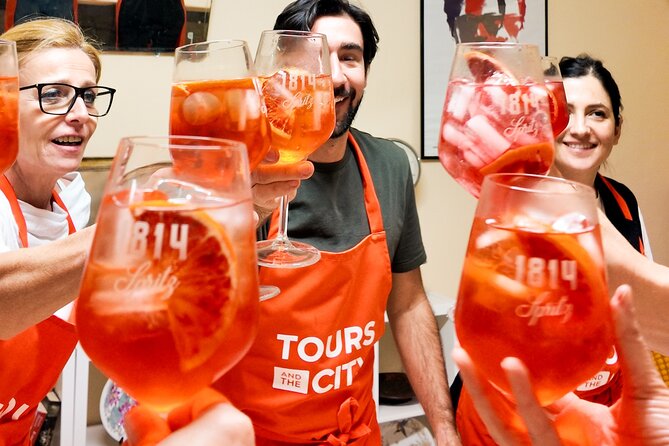
- You learn a regional Casoni spritz, made with local herbs and recipes rather than a standard international brand.
- You sit down to eat what you made, pairing fresh pasta and ragù with 24-month Parmigiano Reggiano and San Giovese.
- You leave with practical skills, plus recipes sent by email as PDF files upon request.
- The mood is social and relaxed, with a stated maximum of 13 people and a smaller format often described as limited to 10.
Starting in Bologna’s old center with an aperitivo
The meeting point is Piazza Galileo Galilei, in Bologna’s historic center. The location is near public transportation, and the class finishes back at the same meeting point, which keeps the logistics simple.
Your first taste of the class is not a lecture. It is a welcome spread of Pignoletto, Mortadella, Crescenta or piadina, and other local aperitivo items. That opening matters because Bologna’s food culture is not just about a large plate of pasta. It is about eating slowly, sharing small bites, and letting conversation do some of the work.
This is also when the group begins to get acquainted. The class works best if you enjoy cooking beside other people rather than keeping to yourself. Solo visitors, couples, and families have all found the social setup easy to join, and the instructors make a point of helping people through the awkward first stages.
The exact instructor changes. Names connected with the class include Sonia, Stella, Stefania, Claudia, Valentina, Roberta, Lucrezia, Beatrice, and others. The teaching style repeatedly comes through as friendly, encouraging, and informal, with room for questions and local recommendations.
More Cooking Classes in Bologna:
- Bologna: Pasta Cooking Class, Ragu, Spritz, Wine & Gelato
★ 4.9 · 775 reviews - Bologna: Pasta and Tiramisu Cooking Class with Wine
★ 4.7 · 507 reviews - Bologna: Pasta and Tiramisu Small Group Cooking Class with Wine
★ 5.0 · 409 reviews
Mixing a Casoni spritz, not just an Aperol copy
The spritz portion gives the class a local twist. You learn to make a Casoni spritz, a drink associated with Emilia-Romagna and made with local herbs and recipes. It is not simply a standard bar order with a different label.
You may also taste the difference between familiar spritz styles. One class included a comparison of Campari and Aperol, which is useful if you want to understand why one drink tastes sweeter, more bitter, or more herbal than another.
This part is short but adds character. You are not only waiting for the dough to come together. You are sipping, learning, and talking while the instructors explain a local drinking tradition. The class includes several alcoholic drinks, so pace yourself. Pignoletto, spritz, red wine, amaro, and coffee all appear across the meal.
For anyone avoiding alcohol, the supplied details do not promise a complete nonalcoholic alternative. Ask ahead if that matters to you.
Making tagliatelle with two basic ingredients
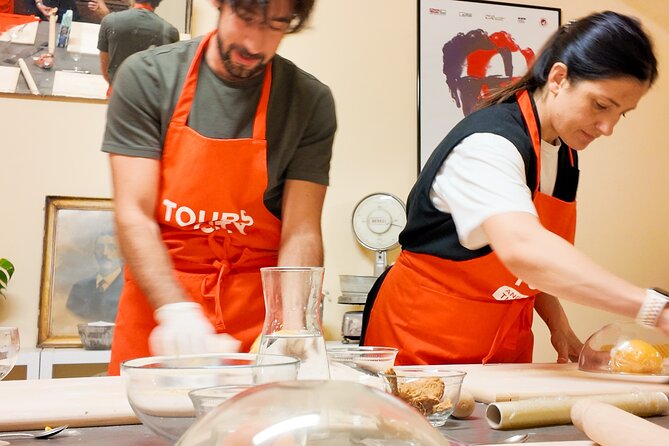
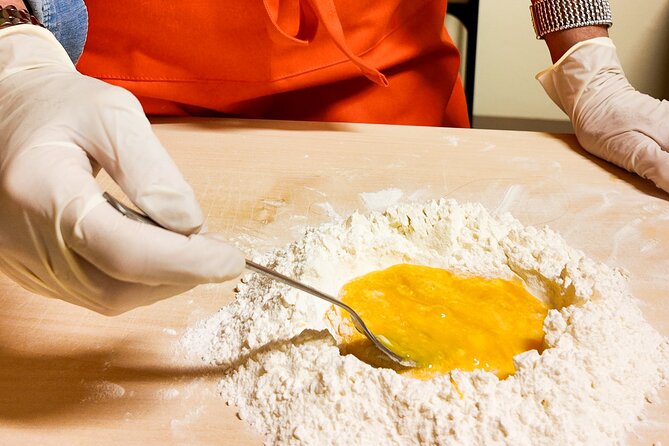
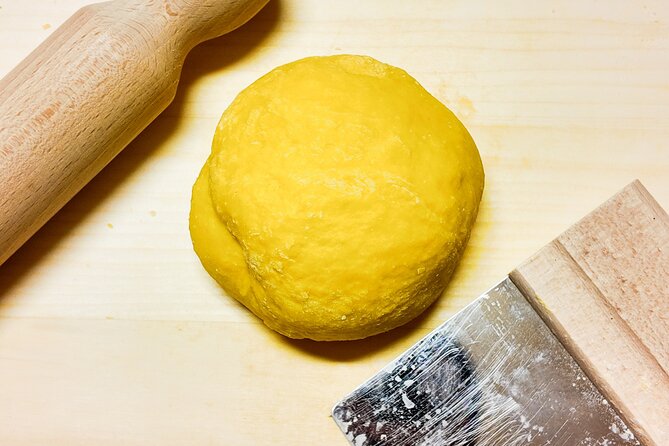
The central lesson is fresh egg pasta. You work with eggs and flour, mixing the dough by hand before rolling it out with a pin. There are no pasta machines here. You are the motor, which is a polite way of saying that your arms get the job.
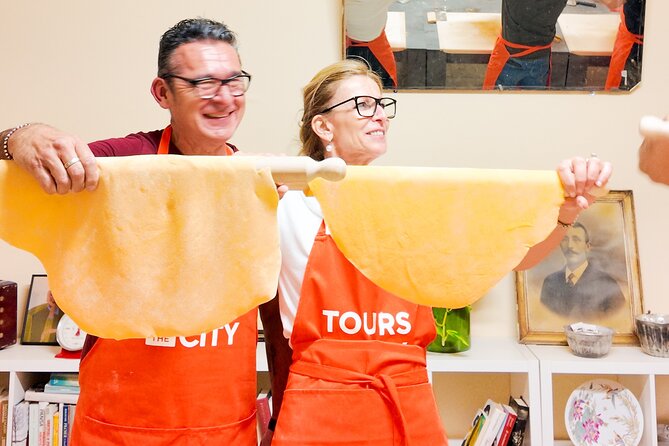
That handwork is the best reason to take this class. A restaurant plate of tagliatelle can be delicious, but it does not teach you why the dough feels sticky, when it needs more flour, or how thin the sheet should become. Here, the instructors guide you through those stages step by step.
Beginners should not worry about arriving with cooking experience. Several people who had never made pasta before found the process manageable, and the class is designed so that the instructors can correct problems as they appear. If your dough needs more work, you are not left alone with it.
The experience also suits people who already cook. One participant who considered themselves an experienced amateur pasta maker still found useful cultural and cooking information. You may already know how to mix dough, but Bologna has its own traditions, proportions, and habits worth adding to your kitchen routine.
Once the dough is rolled, you cut it into tagliatelle. The result may not look perfectly uniform, and that is fine. Handmade pasta should show a little evidence of the hand that made it.
The ragù is ready, but the lesson still has value
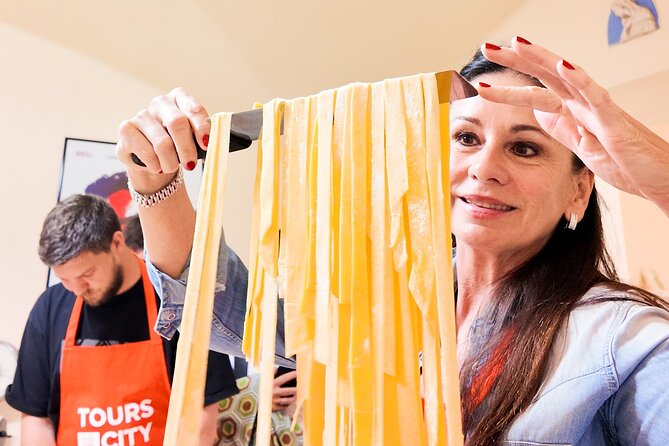
The class serves its tagliatelle with house-made ragù. The sauce is described as fully homemade, but the preparation itself is not part of the class because there is not enough time.
That limitation deserves a clear explanation. If you want to learn a complete ragù recipe from raw ingredients, this is not the right format. You will not spend the afternoon chopping, browning, and waiting for the sauce to simmer.
You do, however, get the chance to hear about traditional Bolognese sauce and taste it with the pasta you prepared. Some sessions have had the ragù already simmering when participants arrived. That lets the class focus on fresh pasta, the part most people find hardest to reproduce correctly at home.
The meal includes 24-month Parmigiano Reggiano. The cheese gives the pasta a salty, nutty finish and helps explain why a few good local ingredients can do more than a crowded recipe. You also receive San Giovese, a local red wine, with the main course.
More Pasta Making in Bologna:
- Bologna Food & Market Tour with 6 Tastings, Pasta, Wines & More
★ 5.0 · 1,328 reviews - Bologna: Pasta Tagliatelle al Ragu Cooking Class with Wine
★ 4.7 · 225 reviews - Bologna: Pasta Cooking Class, Ragu & Wine with Local Host
★ 4.9 · 113 reviews - Bologna: Pasta & Wine Lesson Private Chef & Sommelier
★ 4.4 · 40 reviews
Sitting down to eat your own pasta
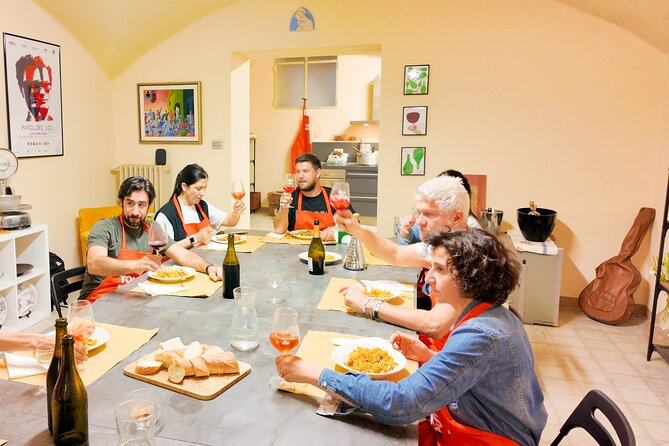
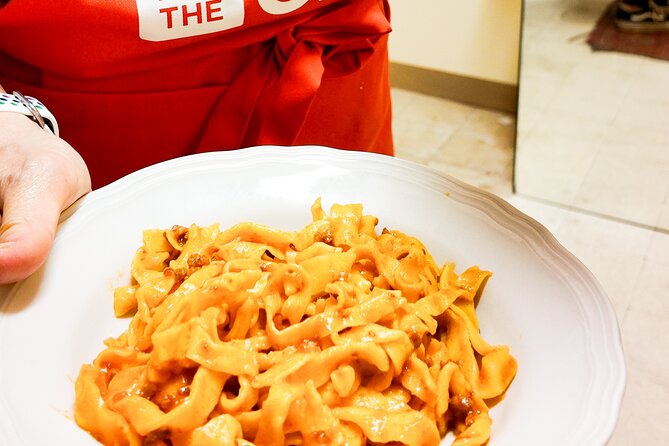
The meal is the payoff, but it is not an afterthought. Once the tagliatelle has dried enough, you cook it together and combine it with the ragù and Parmigiano Reggiano.
Fresh pasta has a different texture from dried supermarket pasta. It cooks quickly and feels softer, more tender, and more delicate. Because you made it yourself, you also notice the effect of thickness and cutting. A few uneven strips can make the finished dish feel especially personal.
The shared table is an important part of the experience. You eat with the people who worked beside you, compare results, and continue the conversation from the aperitivo. This makes the class a good choice for couples and friends, but it also works for solo visitors who want an easy social activity.
The food portions are generally described as generous, with wine and other drinks included. The full menu can include:
- Pignoletto as a welcome wine
- Mortadella and piadina or Crescenta
- A Casoni spritz
- Handmade tagliatelle with ragù
- Parmigiano Reggiano aged 24 months
- San Giovese red wine
- Coffee and amaro
- Mystery gelato
The exact flow and small extras can vary, but you should expect more than a single bowl of pasta.
Coffee, amaro, gelato, and a few surprises
The final course follows the Italian habit of ending a meal with coffee and something stronger or sweeter. Here that means local coffee, amaro, and mystery gelato.
One session included gelato with a drizzle of very aged balsamic vinegar from Modena. That is the sort of small regional detail that makes the ending memorable, though the listing only promises mystery gelato rather than a fixed flavor or topping.
The class has also included surprise treats and leftover pasta to cook at home. Those extras help the experience feel like a meal shared in a home rather than a tightly scripted demonstration.
Do not expect a formal dessert lesson. The value here is the complete meal and the way the final course rounds out the food traditions of Emilia-Romagna.
What you really get for $59.26
At $59.26 per person, the price is strong for a three-hour activity that includes instruction, a full meal, several drinks, dessert, and recipes by email upon request.
You are not paying only for a pasta demonstration. You are paying for the ingredients, the instructors’ time, the food and wine, the kitchen space, and the chance to sit down and eat at the end. If you booked a meal with several drinks separately in Bologna, the total could quickly approach the class price without giving you anything to take home.
The value is best if you want participation. If you only want to eat tagliatelle, a restaurant will be simpler. If you want to learn a skill, meet people, and enjoy a long food-centered afternoon, the price makes sense.
The most valuable takeaway is the method. Recipes can be sent as PDFs, and the pasta is simple enough to attempt at home. The class does not turn you into a sfoglina in one afternoon, but it gives you enough confidence to start.
Group size, pace, and who will enjoy it most
The experience is promoted as a small-group class limited to 10 people, while the additional information gives a maximum of 13 participants. That is still far more personal than a large demonstration, but the exact number may affect how much individual attention you receive.
The class suits:
- First-time pasta makers
- Couples looking for a shared activity
- Solo visitors who enjoy meeting people over food
- Families with children who can take part in an adult-focused menu
- Experienced home cooks who want Bologna-specific techniques
- Anyone who likes wine, aperitivo, and a relaxed group meal
Children are welcome, but the menu and teaching style are designed for adults. Parents should consider the amount of alcohol included and the fact that the class lasts about three hours.
People with gluten-free needs can be accommodated, and vegetarian sauces are possible. You must explain dietary restrictions in advance. The class may not work for severe allergies or strict dietary requirements, so do not rely on a last-minute request.
A few practical limits to keep in mind
The class takes place in a traditional Bolognese kitchen and uses hands-on preparation. You will be working with flour, eggs, a rolling pin, and shared food, so anyone seeking a polished, restaurant-style demonstration may find it more informal than expected.
The ragù is not made during the session. This is the most important practical limitation, especially if ragù is the dish you hoped to study. The sauce is homemade and paired with your pasta, but the lesson focuses on dough, rolling, cutting, cooking, and local food customs.
The schedule is about three hours. That sounds generous, but it passes quickly once the aperitivo, spritz, dough, cutting, cooking, meal, and dessert are included. You should not expect a long history lecture or a separate lesson on every dish.
Booking ahead is wise. The experience is booked an average of 27 days in advance, which suggests that popular dates can fill well before your visit. Free cancellation is available if you cancel at least 24 hours before the start time. Changes or cancellations inside that window are not accepted for a refund.
Should you book this Bologna pasta class?
I would book this class if you want to do something with your hands and eat the result. The strongest parts are the friendly instruction, the social table, the handmade tagliatelle, and the generous combination of local food and drink.
I would skip it if your main goal is to learn ragù from start to finish, avoid alcohol, or follow a highly controlled allergy-safe menu. For everyone else, $59.26 buys a useful cooking lesson and a complete Bolognese meal, not just a quick tourist photo with a handful of flour.
Book ahead, tell the provider about dietary needs, and arrive ready to roll dough, share a table, and accept that your first tagliatelle may look a little rustic. That is part of the fun.
FAQ
Where does the Bologna pasta class meet?
The class begins at Piazza Galileo Galilei, P.za Galileo Galilei, 40123 Bologna BO, Italy. The activity ends back at the same meeting point.
How long does the experience last?
The cooking class lasts approximately three hours.
What pasta do you make?
You make tagliatelle by hand with eggs and flour. The dough is rolled and cut without a pasta machine.
Do you make the ragù during the class?
No. The ragù is homemade and used with the pasta, but its preparation is not included because of the limited class time.
What food and drinks are included?
The menu includes Pignoletto, Mortadella, piadina or Crescenta, a Casoni spritz, handmade tagliatelle with ragù and Parmigiano Reggiano, San Giovese, coffee, amaro, and mystery gelato.
Can the class accommodate dietary restrictions?
Gluten-free pasta and vegetarian sauces can be accommodated. You should provide details in advance, since the experience may not suit severe allergies or strict dietary requirements.
What is the cancellation policy?
You can cancel at least 24 hours before the start time for a full refund. Cancellations and changes made less than 24 hours before the experience are not accepted for a refund.
More Workshops in Bologna
- Bologna: Tagliatelle & Ragù Home Cooking Class with wine
★ 4.5 · 55 reviews - Florence: Pasta Cooking Class with Unlimited Wine
★ 4.9 · 10,285 reviews - Florence: Pasta & Tiramisu Cooking Class with Unlimited Wine
★ 4.9 · 6,708 reviews - Florence: Pasta Cooking Class with Unlimited Wine
★ 5.0 · 6,413 reviews
Newly added around Bologna
- Wine Degustation Ebrezze★ 4.5 · 86 reviews
- Bologna Food & Wine tour with a local Chef★ 3.0 · 30 reviews
- The downtown wine experience★ 5.0 · 35 reviews
- Bologna: Tagliatelle & Ragù Home Cooking Class with wine★ 4.5 · 55 reviews
- Parmigiano Wine and Balsamic Vinegar Experience from Bologna★ 5.0 · 30 reviews
- Private Bologna Food & Market Tour with 6 Tastings & Wine★ 5.0 · 102 reviews
- Private Day Tour & Lunch: Parmesan, Wine, and Vinegar Tasting★ 4.5 · 32 reviews
- Eating Bologna Food and Wine Tour★ 5.0 · 96 reviews
Cooking Classes, compared.
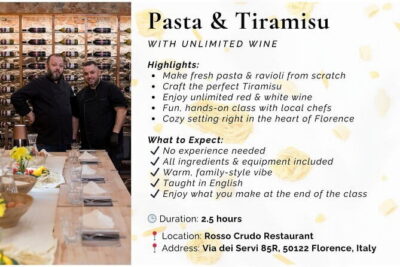
Pasta & Tiramisu Cooking Class with Unlimited Wine
Read our review →
Pasta Making Class with Wine, Limoncello, and Dessert
Read our review →
Cooking Class Pasta & Tiramisu Making Unlimited Wine
Read our review →
Fettuccine & Tiramisù: Cooking Class with Wine & Limoncello
Read our review →
Pasta Making & Wine Tasting with Dinner in Frascati from Rome
Read our review →
Rome Cooking Class: Make Pasta, Dine & Drink Wine With Local Chef
Read our review →Browse the lists this tour appears in