
REVIEW · LYON WINE TOURS
Taste Wine in Lyon: Burgundy, Beaujolais, Rhône, and more
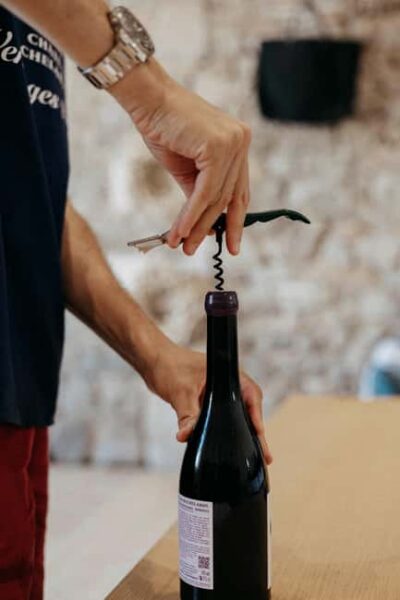
French wine can seem like a code. This tasting helps crack it. In Lyon’s Croix-Rousse district, you sample five wines from nearby regions while an English-speaking wine educator explains the grapes, labels, and places behind each glass. I like the small group of no more than 10 and the warm, restored silk-loft setting. I also like that the tasting includes proper local food, not a token bowl of crackers.
The main thing to consider is the setting. You are tasting in the city, not visiting working vineyards or châteaux. The walk to the address can be steep, and the entrance is easy to miss, so allow extra time. For $120.98 per person, this is best for someone who wants clear wine instruction, generous snacks, and a relaxed two-hour experience rather than a countryside excursion.
Key Points at a Glance
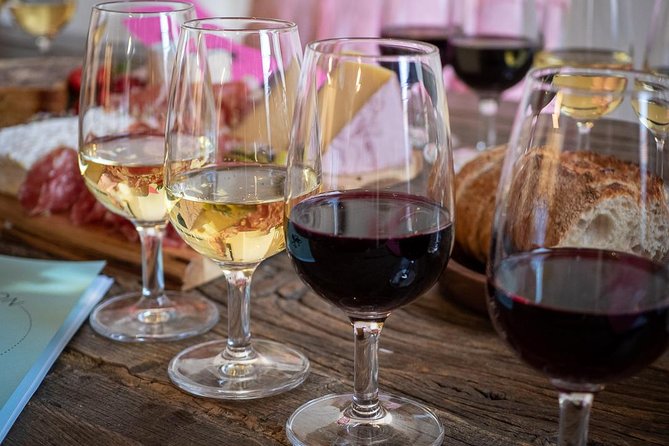
- Five regional wines in one sitting: The lineup begins with Crémant de Bourgogne, then moves through Beaujolais, Burgundy, the Northern Rhône, and a changing wild-card bottle.
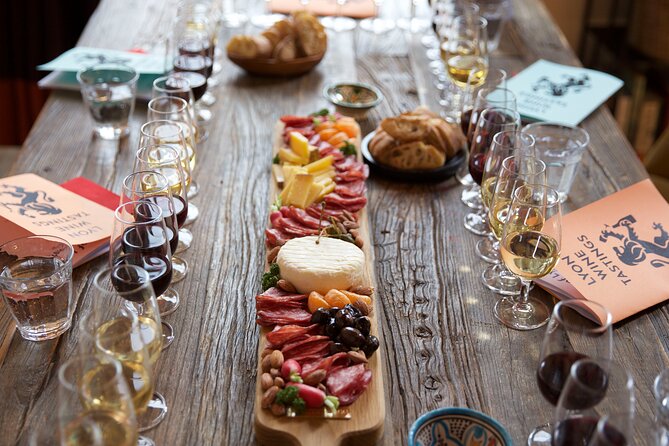
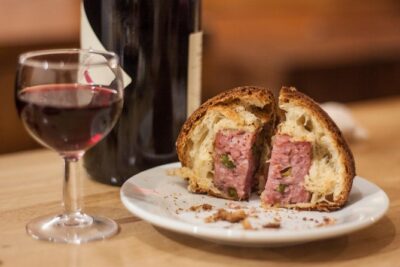
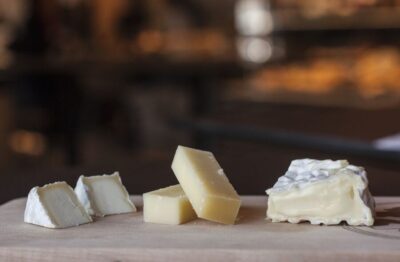
- A real Lyon food pairing: Local cheese, charcuterie, and artisan bread make the tasting feel like a light meal, especially at the noon session.
- English-speaking wine educators: Guides such as Julia, Madeleine, Margaret Rose, Nicholas, and Ghjulia have been praised for making French wine approachable.
- A restored Croix-Rousse silk loft: The historic apartment setting adds local character, with modern comfort and air conditioning.
- Blind tasting and practical lessons: You may learn how to assess a wine, read French labels, compare regions, and choose bottles with more confidence.
- Useful planning detail: Meet at 12 Gd Rue de la Croix-Rousse, look for the ornate dark wooden door, and expect to climb to the second floor.
Why Lyon Is a Smart Place for a French Wine Tasting
Lyon sits in a useful position for wine lovers. Beaujolais lies nearby to the north, Burgundy is within reach, and the Northern Rhône runs south from the city. That makes Lyon a practical place to compare several French wine traditions without spending a day on the road.
The value here is geographic as much as culinary. A visit to one vineyard usually teaches you about one producer and one area. This tasting places several regional styles side by side. You can compare a sparkling Crémant de Bourgogne with still wines from different appellations, then ask why the wines taste and feel so different.
That comparison matters because French bottles often emphasize place more than grape variety. A beginner may recognize Chardonnay or Syrah, but the label may lead with a village, appellation, or producer instead. The session is designed to help connect those names with taste, region, and winemaking tradition.
The experience also works well early in a Lyon visit. At the end, you should have a few names to look for in wine shops or restaurants. The practical payoff is not just knowing which glass you liked. It is knowing how to order with a little less guesswork.
A few more wine tours around France worth a look
- Authentic Parisian Gourmet Food Tour with 10 Local Dishes & Wines
★ 5.0 · 4,754 reviews - Loire Valley Castles Day Trip from Paris with Complementary Wine
★ 4.5 · 3,907 reviews - Bordeaux: Cité du Vin Entry Ticket and Wine Tasting
★ 4.6 · 3,885 reviews
Arriving at the Croix-Rousse Silk Loft
The meeting point is 12 Gd Rue de la Croix-Rousse, in Lyon’s Croix-Rousse neighborhood. The area is known for its old silk-working heritage, and the tasting takes place inside a beautifully restored 1800s silk loft. The apartment setting gives the session a personal feel that a formal tasting room might lack.
Do not treat the address as a quick walk-up. The entrance can be confusing. Look for a large, ornate, dark wooden door marked with a number 19, since the 12 may be faded and look like a 19. Once inside, you go up a dark staircase to the second floor and knock at the door marked C. Connor.
That may sound fussy, but it is useful information. Arrive early enough to find the door without rushing. One especially practical tip is to allow time for the uphill walk through Croix-Rousse. The neighborhood itself is worth seeing, but the slope can make a short distance feel longer.
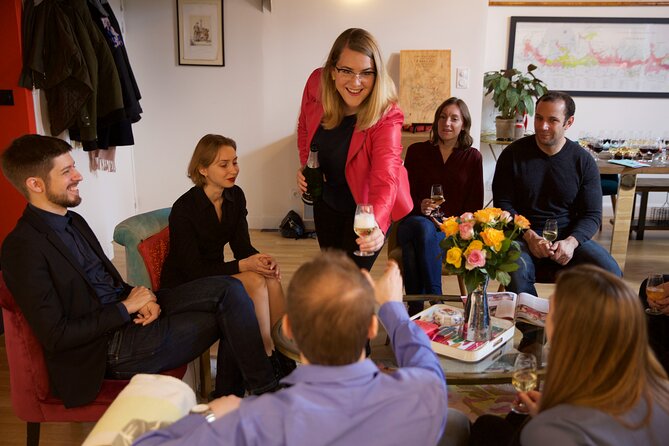
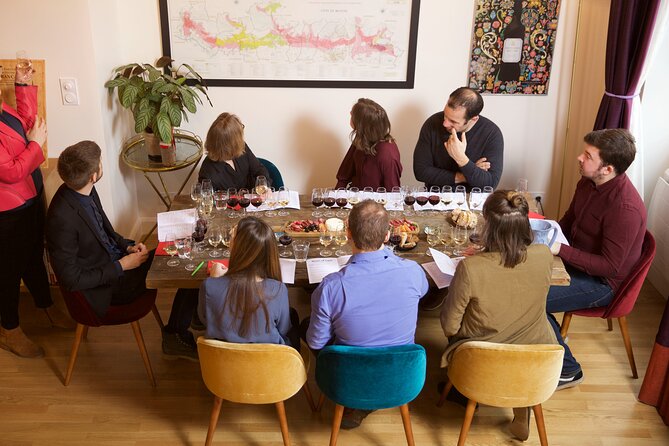
Once inside, the atmosphere is more like a comfortable home than a commercial wine bar. Comfortable seating, a coffee-table start, and the old silk-loft structure help set an easy tone. Air conditioning is available, which matters during Lyon’s warmer months.
The First Glass: Crémant de Bourgogne
The tasting begins with Crémant de Bourgogne, a sparkling wine from Burgundy. This is a smart opening because sparkling wine resets the palate and gives the instructor an easy way to introduce French regional naming.
You can expect the first part to focus on tasting basics and conversation. Rather than rushing through five pours, the educator guides you through how to look at the wine, smell it, taste it, and think about its balance. The teaching is aimed at mixed experience levels, so you do not need to arrive knowing the difference between an appellation and a grape.
Crémant also became a favorite for several participants, some of whom later bought bottles. That makes it more than a ceremonial first pour. If you like Champagne but want to explore another French sparkling style, pay close attention to this glass and ask how it differs in production, place, and price.
The tasting may include a blind exercise. This is one of the most useful parts for beginners because it removes the pressure of getting the answer right. You focus on what is in the glass first, then use clues from aroma, structure, and finish to make a guess.
Beaujolais, Burgundy, and the Northern Rhône
After the sparkling wine, the lineup moves through the regional styles most closely tied to Lyon. The selection normally includes wines from Beaujolais, Burgundy, and the Northern Rhône, with a wild-card bottle added to keep the session open-ended.
The exact bottles can change, but the purpose remains clear: compare different parts of eastern France through a small number of carefully chosen examples. You may taste two whites and two reds among the still wines, as one recent format did, though the specific balance is not guaranteed.
Beaujolais is especially useful in Lyon because it is close to the city and often misunderstood. Many people know the name only from Beaujolais Nouveau. A guided tasting can show you that the region offers more than a young, fruity seasonal release.
Burgundy gives you a chance to think about how village names, vineyard sites, and producer choices affect a wine. The Northern Rhône brings another set of regional markers and styles. The goal is not to memorize every French appellation. It is to notice patterns and leave with a few strong reference points.
Some sessions have also included wines connected with the Jura or Loire Valley. The wild-card portion means the tasting can extend beyond the three headline regions. If a certain area matters to you, ask the educator about the day’s selection and how it fits into the wider French wine map.
Same region, a very different glass:
- Bordeaux: River Garonne Cruise with Glass of Wine and Canelé
★ 4.5 · 3,630 reviews - Montmartre Hill French Gourmet Food and Wine Tasting Walking Tour
★ 5.0 · 2,588 reviews - Paris: Montmartre Cheese, Wine & Pastry Guided Walking Tour
★ 4.8 · 2,255 reviews - From Paris: Loire Valley Castles Day Trip With Wine Tasting
★ 4.6 · 1,727 reviews
Cheese, Charcuterie, and a Light Lyon Lunch
The food is a meaningful part of the experience. You receive a board of local cheese and cold cuts with artisan bread. Rosette sausage has been part of the spread, along with a useful mix of cheeses, including goat cheese for a participant with that preference.
This is not a full restaurant meal, but it is more substantial than a few palate cleansers. The noon session includes enough food to make the tasting work as a light lunch. If you book the 4 p.m. session, the board gives the event an afternoon or early-evening feel.
Pairing food with wine also makes the instruction easier to remember. A wine can seem sharp or heavy on its own and feel different with cheese or charcuterie. The educator explains how salt, fat, acidity, sweetness, and texture affect the match.
If you have dietary restrictions, contact the provider at least 24 hours ahead. That request matters because the standard board includes dairy, meat, and bread. The available information confirms that adjustments can be discussed, but it does not promise every possible substitution, so early notice is the sensible approach.
The Teaching Style: Clear, Social, and Not Snobby
The strongest part of this experience is the teaching. Julia has been praised for explaining both the wines and the regions in an engaging way. Madeleine is known for answering questions at the right level, while Margaret Rose has been especially effective at turning complex ideas into simple, memorable tips.
Nicholas and Ghjulia have also led sessions praised for patience, warmth, and strong preparation. The guide matters here because the same five pours could feel dry and technical with the wrong presenter. In this setting, the educators encourage questions and keep the tone friendly.
You are not expected to perform as a wine expert. The best approach is to say what you smell and taste, even if your description sounds ordinary. A good guide can use that answer to explain acidity, tannin, body, fruit character, or finish without making you feel foolish.
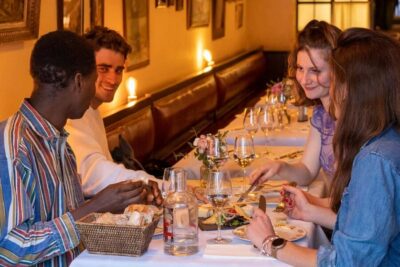
The social side is another plus. With a maximum of 10 participants, the group is small enough for questions and conversation. You may sit around a coffee table at first, then move to a longer table for the wine and food. The format encourages strangers to compare preferences, which can make the class feel more like a shared evening than a lecture.
Still, a small group does not guarantee perfect chemistry. Much depends on the mix of people and the guide on your date. The tasting works best if you enjoy asking questions and talking about what is in your glass.
Is Two Hours Enough?
The advertised duration is about two hours, with sessions at noon and 4 p.m. One account describes a tasting lasting closer to two and a half hours, so leave some flexibility if you are connecting it to a museum booking, train, or restaurant reservation.
Two hours is enough for five glasses, food, regional context, and a little conversation. It is not enough for a full course in French wine, and that is probably a good thing. The session gives you usable knowledge without turning your holiday into a classroom.
The noon time is useful if you want a late breakfast followed by a wine-focused lunch. The 4 p.m. start fits neatly between sightseeing and dinner. Since the tasting ends back at the meeting point, you can continue exploring Croix-Rousse or head elsewhere in Lyon afterward.
Remember that the tasting involves five glasses, even if the pours are measured. Eat sensibly beforehand, especially if you are not used to tasting several wines in one sitting. The included cheese, meat, and bread help, but this is still an alcohol-focused activity.
What You Get for $120.98
At $120.98 per person, this is not a cheap drop-in tasting. The price makes more sense when you count what is included: five wines, a substantial regional food board, a small group, a wine educator, an English-language presentation, and a distinctive historic setting.
You are also paying for comparison. Buying five different wines on your own could cost less or more, but you would not get the explanation that links them to Beaujolais, Burgundy, the Rhône, and other French areas. Nor would you have an expert helping you understand labels and pairings.
The price is easiest to justify if you are curious about French wine and want a focused introduction during a short stay. It is less convincing if your main goal is to visit vineyards, meet growers, or walk through vines. This experience replaces countryside scenery with convenience and instruction.
The strongest value comes from the practical knowledge. If you leave knowing how to ask for a bottle, identify a style you like, or recognize a regional name on a menu, the tasting can improve the rest of your trip. That is more useful than simply drinking five unrelated wines.
Who Should Book This Experience?
I would recommend it to beginners who want a friendly introduction without wine-school jargon. It also suits people who already enjoy wine but want a clearer understanding of French regions and labels.
Couples, solo visitors, and small groups can all fit comfortably into the format. The intimate room and limited group size are especially helpful if you prefer conversation over a large, noisy tasting bar.
It is also a good choice for a short Lyon visit. You do not need to spend a full day reaching a vineyard, and you can still taste wines associated with several nearby regions. The experience gives you a useful local anchor in Croix-Rousse, a district with its own connection to silk production and working-class Lyon.
You should think twice if you dislike indoor activities, do not drink alcohol, or want a vineyard visit above all else. This is a guided city tasting, not a winery tour. The setting is special, but the focus stays on the bottles, food, and instruction.
Practical Details Before You Go
Confirmation is sent when you book, and the activity is offered in English. It is near public transportation, though you should still plan around the uphill approach to Croix-Rousse.
Free cancellation is available up to 24 hours before the start time for a full refund. Changes or cancellations inside that window are not accepted for a refund. The activity also requires a minimum number of participants, so if the provider cancels for that reason, you are offered another date or experience, or a full refund.
The current rating is 5 out of 5 from 211 reviews, with 99 percent recommending the experience. The praise is notably consistent around the guides, food, intimate setting, and useful instruction. One review was clearly attached to the wrong activity and described an e-bike ride, so do not use that odd comment to judge this wine tasting.
Should You Book It?
Book it if you want a compact, friendly lesson in French wine with enough cheese and charcuterie to make the afternoon feel generous. The five-wine structure, English-speaking educators, blind tasting, and Croix-Rousse silk loft give it more substance than a simple pour-and-smile session.
Skip it if your dream is to visit vineyards and meet winemakers in the countryside. For everyone else, especially first-time visitors to Lyon or anyone puzzled by French labels, this is a smart use of two hours. Arrive early, find the dark wooden door, ask questions, and keep an eye out for that Crémant de Bourgogne.
FAQ
Where does the wine tasting begin?
It begins at 12 Gd Rue de la Croix-Rousse, 69004 Lyon, France.
Where does the experience end?
The tasting ends back at the meeting point.
How long does the tasting last?
The advertised duration is approximately two hours. One account describes a session lasting about two and a half hours, so allow some extra time.
What time can I book the tasting?
Sessions are offered at 12 p.m. and 4 p.m.
How many wines are included?
Five glasses of wine are included. The tasting starts with Crémant de Bourgogne, followed by wines connected with Beaujolais, Burgundy, the Northern Rhône, and a changing wild-card selection.
What food is served?
You receive local cheese, charcuterie, and artisan bread. Rosette sausage and goat cheese may be included among the selections.
Is the tasting offered in English?
Yes. The experience is offered in English and led by English-speaking wine educators.
How large is the group?
The activity has a maximum of 10 participants.
Can I cancel for a full refund?
Yes, if you cancel at least 24 hours before the experience start time. Cancellations or changes made less than 24 hours in advance are not refunded.
Newly added around France
- Saint Emilion Full Day Wine and Bike Tour★ 5.0 · 167 reviews
- Luxurious full day Bordeaux wine tour in a Tesla★ 4.5 · 31 reviews
- Private Bordeaux History Tour with a glass of Bordeaux wine.★ 5.0 · 28 reviews
- Private – Best of Bordeaux Walking Tour + Glass of Bordeaux Wine★ 5.0 · 240 reviews
- Wine Masterclass & Cheese Tasting Workshop in Bordeaux★ 5.0 · 29 reviews
- Bordeaux wines tasting workshop including Food & Wine pairings★ 5.0 · 31 reviews
- Bordeaux Wine Masterclass: Blending workshop with appetizer★ 5.0 · 113 reviews
- Medoc Afternoon Wine Tour – 2 Wineries, tastings & delicacies★ 4.5 · 74 reviews
Lyon Wine Tours, compared.
Lyon Old Town Food Tour with 6 French Delicacies & Fine Wine
Read our review →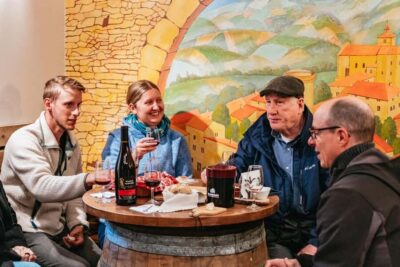
Old Town Food Tour with 6 French Food Tastings & Wine
Read our review →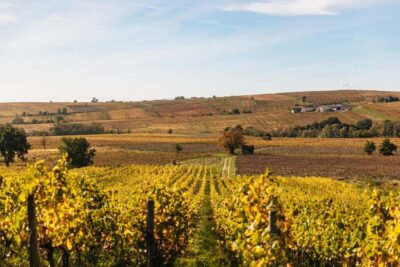
Lyon Old Town Food Tour: Full French Meal with Wine
Read our review →
Browse the lists this tour appears in