
REVIEW · COOKING CLASSES
Bologna: Pasta and Tiramisu Cooking Class with Wine
Fresh pasta makes Bologna even better. This three-hour class combines hands-on cooking with a welcome glass of Prosecco, a shared meal, and the easygoing company of an English-speaking instructor. I like the clear, practical teaching and the chance to make both pasta and tiramisu in one sitting. I also like the $57 price, which covers the class, food, Prosecco, and wine. The main catch is that the lesson follows traditional recipes built around gluten, eggs, and dairy, so this is not a good fit for vegans or people with serious food restrictions.
You begin in a central Bologna restaurant, wash your hands, put on an apron, and start with tiramisu before moving to fresh pasta. The class can be a relaxed lunch or evening meal, and the social side is a real part of its appeal. Just do not expect a private chef lesson or a fully allergy-free kitchen, and do not plan another dinner afterward.
Key points to know before booking
- Two classic recipes in three hours: You make tiramisu first, then prepare fresh pasta, with guidance from start to finish.
- A restaurant setting in central Bologna: You cook inside a popular local restaurant rather than in a purpose-built cooking school.
- Friendly English-speaking instructors: Al, Luca, Peter, Steven, and Aladdin are praised for humor, patience, and clear explanations.
- Lunch or dinner is included: The restaurant cooks the pasta you prepare, then serves it with sauces alongside wine.
- Good value at $57: The fee includes the class, a Prosecco welcome, your meal, and a glass of wine.
- Traditional recipes come first: Substitutions may be available, but gluten, eggs, and dairy remain central to the instruction.
Why this Bologna cooking class works so well
Bologna is one of Italy’s best places to learn about handmade pasta. Emilia-Romagna is closely tied to foods such as fresh egg pasta, stuffed pasta, tagliatelle, and layered sauces. You do not need to be a serious cook to get something from this class. The lesson is built for beginners, and the instructors repeat steps when needed.
I especially like the balance between doing and eating. You are not simply watching a chef prepare a plate. You mix, roll, cut, and shape the dough yourself. Then you sit down and taste the result without having to manage the final cooking and service.
That last part matters. One useful detail from the experience is that the class makes the pasta, but the restaurant kitchen cooks it. This means you focus on technique without worrying about timing several pots, controlling sauces, or trying to cook fresh pasta in an unfamiliar kitchen. For some people, that feels less hands-on. For most first-time pasta makers, it keeps the class smooth.
The social setup also shapes the afternoon or evening. You work alongside other people, share a table, and drink wine with the group. The class suits couples, solo visitors, families with older children, and anyone who likes meeting people while eating. Small groups can feel more personal, while larger groups bring more energy and conversation.
More Cooking Classes in Bologna:
- Bologna: Pasta Cooking Class, Ragu, Spritz, Wine & Gelato
★ 4.9 · 775 reviews - Bologna Local Pasta Cooking Class, Ragu, Spritz, Wine & Gelato
★ 5.0 · 527 reviews - Bologna: Pasta and Tiramisu Small Group Cooking Class with Wine
★ 5.0 · 409 reviews
Arriving at the central Bologna restaurant
The class takes place in a restaurant in central Bologna, so it fits neatly into a day of sightseeing. You avoid a long ride outside the city and can reach the cooking session without giving up much of your limited time.
The meeting point can require a little attention. One person found that the booking information gave the address but did not clearly identify the restaurant by name. On arrival, the front-of-house staff were not immediately helpful, although the instructor soon took over and made the situation clear. I would check the full address before setting out and ask staff directly about the pasta class if you are unsure.
Once the class begins, the setting becomes part of the experience. You are working in a functioning restaurant, not just a demonstration room. That gives the lesson a useful connection to how Italian food reaches the table, although it also means the room and workflow may feel less polished than a dedicated culinary studio.
You receive a welcome glass of Prosecco at the start. It is a small touch, but it changes the mood quickly. People introduce themselves, settle into the group, and begin chatting before the first recipe gets underway.
Starting with tiramisu and its familiar flavors
The first recipe is tiramisu. Beginning with dessert is a smart choice because the dish needs time to rest before you eat it. You prepare it early, then turn your attention to pasta while the finished dessert waits.
The instructor explains the traditional recipe and shares background about the dessert’s origins. You learn not only what to mix, but why the method matters. The class keeps the work accessible, so you can follow along even if your kitchen experience is limited.
Tiramisu also offers a gentle opening to the lesson. Compared with pasta dough, it does not demand the same physical effort or shaping skill. You get comfortable with the instructor and the group before moving to the more tactile part of the class.
The finished dessert is served later as part of the meal. Several participants found both the flavor and the process satisfying, and many planned to make it at home. You should expect the class to teach the traditional version, with dairy and eggs at its center.
People with dietary restrictions need to read the conditions carefully. Substitutions may be available for some preferences, but the instructions remain focused on the standard recipe. The kitchen cannot promise a completely separate, cross-contamination-free preparation area.
Making pasta dough from flour to shape
After tiramisu, you move to the pasta workstation. This is the heart of the class, and it is where the instructor’s teaching style matters most.
You learn how to prepare the dough and hear about different types of flour. The lesson also explains the difference between pasta fresca, or fresh pasta, and pasta secca, or dried pasta. That context helps you understand why fresh pasta feels and cooks differently, rather than treating the process as a set of random kitchen steps.
The process includes rolling, cutting, and shaping. Depending on the session, you may prepare two kinds of pasta. One reported combination included tagliatelle and pasta stuffed with spinach and ricotta. Other sessions focused on forms such as tagliatelle and fettuccine.
Do not expect to leave with a professional pasta maker’s precision. The goal is to give you confidence with the basics: how the dough should feel, how to roll it, and how to turn it into a recognizable shape. Instructors circulate, answer questions, and help when someone falls behind.
The named instructors receive especially warm praise for their style. Luca is described as relaxed, humorous, and patient. Al is praised for keeping the class moving while offering city tips. Peter brings a friendly, personable approach, and Steven combines clear instructions with plenty of Bologna food facts. Aladdin is also praised for making beginners feel at ease.
These details matter because a pasta class can quickly become frustrating if instructions are rushed. Here, the teaching is repeatedly described as clear and encouraging. If you have never made pasta, you should feel comfortable asking for a step to be shown again.
More Pasta Making in Bologna:
- Bologna Food & Market Tour with 6 Tastings, Pasta, Wines & More
★ 5.0 · 1,328 reviews - Bologna: Pasta Tagliatelle al Ragu Cooking Class with Wine
★ 4.7 · 225 reviews - Bologna: Pasta Cooking Class, Ragu & Wine with Local Host
★ 4.9 · 113 reviews - Bologna: Pasta & Wine Lesson Private Chef & Sommelier
★ 4.4 · 40 reviews
When the restaurant cooks your pasta
The class does not end when your dough is shaped. The restaurant kitchen takes over the cooking, then serves the pasta as part of the shared lunch or dinner.
That arrangement has both a benefit and a limitation. The benefit is that your meal arrives properly cooked, with sauces prepared by the restaurant team. You get to concentrate on the group and enjoy the food rather than racing from worktable to stove.
The limitation is that you do not cook the pasta yourself. If your main goal is to learn exactly how fresh pasta behaves in boiling water or how to finish it with sauce, this session may feel slightly less complete. You still learn the dough and shaping stages, but the kitchen handles the final cooking.
The meal has included sauces such as tomato and burnt butter with sage. These simple preparations are useful because they let the pasta remain the focus. The dishes are not buried under elaborate toppings.
Portions are described as generous, and the class is clearly intended to replace a normal meal. You can add the included glass of wine while everyone sits together. Some sessions have also included plenty of wine throughout the evening, though the formal inclusion is a glass with the meal.
Plan to arrive hungry. One participant specifically warned against making dinner plans afterward, and that is practical advice. Tiramisu, multiple pasta preparations, and wine can make this a substantial three-hour commitment.
The social side: wine, conversation, and shared tables
This is not a quiet lesson where you work alone at your station. You cook with a group, then eat together. That gives the experience a friendly, communal feel that many people value as much as the recipes.
Solo visitors can fit in easily. A smaller session with three solo bookings was described as comfortable and welcoming, while larger groups brought more conversation. Couples can treat it as a relaxed food date, and families can use it as an activity that keeps everyone involved.
Children can take part, too, although the minimum age rules exclude children under three and babies under one. One family said two children joined in and were well looked after. The class is still built around adult recipes and a shared meal, so parents should decide how well that suits their children.
The wine and Prosecco help loosen the room, but they are not the whole point. The instructors keep the group engaged with humor and local food information. Several people also received suggestions for coffee shops, restaurants, and places to eat around Bologna. Those tips can be useful early in a visit, especially if you book the class near the start of your stay.
There is one practical point to keep in mind: a social class depends partly on the group you happen to join. That is not a flaw, but it means the atmosphere can vary. Most sessions appear lively and friendly, while a very small class may feel quieter and more personal.
What the $57 price really includes
At $57 per person, the cost is fair for Bologna. You receive a three-hour cooking lesson, a welcome Prosecco, the food you prepare, a shared lunch or dinner, and a glass of wine.
You are also paying for the restaurant setting and the instructor’s time. If you compare the price with a standard meal, the value becomes clearer. You get several dishes, drinks, and an activity rather than only a seat at a restaurant table.
The class also saves you from paying for a separate meal afterward. In fact, the portions may be enough that you will not want one. That makes the experience particularly useful on a busy sightseeing day when you want one planned activity that also covers lunch or dinner.
The value is lower if you want an advanced cooking course. You will learn useful fundamentals, but this is a friendly introduction rather than a technical master class. You will make the food, yet the restaurant handles the final cooking.
Flexible booking terms add some practical value. You can cancel up to 24 hours before the activity for a full refund, and you can reserve while paying later. Starting times depend on availability, so check the schedule before building the rest of your day around it.
Dietary restrictions and who should skip it
The food rules require careful reading. The class offers substitutions for some allergies and food preferences, and you should report your needs when booking. However, the teaching remains based on traditional recipes containing gluten, dairy, and eggs.
The experience is specifically not suitable for vegans, people with food allergies, people with gluten intolerance, or people with lactose intolerance. The supplied information also warns that cross contamination cannot be ruled out.
That apparent tension is worth explaining. A substitution may help someone with a preference or a mild restriction, but the class is not presented as a controlled allergy-safe or vegan cooking environment. If avoiding an ingredient is medically important, I would not rely on this activity without direct confirmation from the provider.
For everyone else, comfortable clothing is the only stated item to bring. You will sample the dishes you prepare, so this is not a demonstration where you simply watch other people cook.
Is this the right Bologna food experience for you?
Book this class if you want an easy introduction to handmade pasta, like eating with other people, and value a meal included in the activity. It is especially good for first-time pasta makers, couples, solo visitors, families with suitable-age children, and people who want a relaxed break from museums and churches.
The class is also a strong pick early in your Bologna stay. The instructors may share food suggestions for the city, and the cooking session gives you useful context for the pasta you will see on restaurant menus.
Skip it if you want a private lesson, advanced technique, or complete control over the cooking process. You should also skip it if you are vegan, gluten intolerant, lactose intolerant, or managing a serious food allergy.
For most people who can eat the traditional ingredients, the combination of clear instruction, a full meal, wine, and a central location makes this a good-value Bologna activity. Just arrive ready to work, eat well, and make room for a cheerful group table.
FAQ
How long does the Bologna pasta and tiramisu class last?
The class lasts three hours. It includes the cooking instruction and the shared lunch or dinner.
What do I make during the class?
You prepare tiramisu and fresh pasta. The pasta lesson covers dough preparation, flour types, and rolling, cutting, and shaping. Some sessions include two pasta styles.
Is lunch or dinner included?
Yes. The meal is included, along with the pasta and tiramisu prepared during the class.
Are drinks included?
Yes. You receive a welcome glass of Prosecco and a glass of wine with the meal.
Is the class taught in English?
Yes. The stated language is English, and the instructors named for different sessions are described as speaking English clearly.
Do I cook the pasta all the way through?
You prepare and shape the pasta, but the restaurant kitchen cooks it before serving it with sauces.
Can I join if I have dietary restrictions?
You must tell the provider about allergies or food restrictions when booking. Substitutions may be available, but the traditional instructions contain gluten, dairy, and eggs, and cross contamination cannot be guaranteed.
Is the class suitable for vegans or people with gluten intolerance?
No. The activity is listed as unsuitable for vegans, people with food allergies, people with gluten intolerance, and people with lactose intolerance.
What should I bring?
Wear comfortable clothes. You will wash your hands and put on an apron before cooking.
More Workshops in Bologna
- Bologna: Tagliatelle & Ragù Home Cooking Class with wine
★ 4.5 · 55 reviews - Florence: Pasta Cooking Class with Unlimited Wine
★ 4.9 · 10,285 reviews - Florence: Pasta & Tiramisu Cooking Class with Unlimited Wine
★ 4.9 · 6,708 reviews - Florence: Pasta Cooking Class with Unlimited Wine
★ 5.0 · 6,413 reviews
Newly added around Bologna
- Wine Degustation Ebrezze★ 4.5 · 86 reviews
- Bologna Food & Wine tour with a local Chef★ 3.0 · 30 reviews
- The downtown wine experience★ 5.0 · 35 reviews
- Bologna: Tagliatelle & Ragù Home Cooking Class with wine★ 4.5 · 55 reviews
- Private Bologna Food & Market Tour with 6 Tastings & Wine★ 5.0 · 102 reviews
- Parmigiano Wine and Balsamic Vinegar Experience from Bologna★ 5.0 · 30 reviews
- Private Day Tour & Lunch: Parmesan, Wine, and Vinegar Tasting★ 4.5 · 32 reviews
- Eating Bologna Food and Wine Tour★ 5.0 · 96 reviews
Cooking Classes, compared.
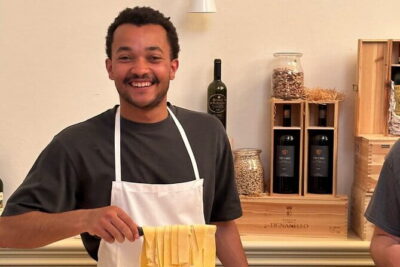
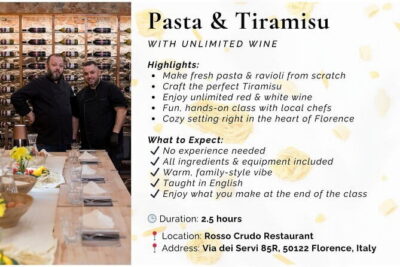
Pasta & Tiramisu Cooking Class with Unlimited Wine
Read our review →
Pasta Making Class with Wine, Limoncello, and Dessert
Read our review →
Cooking Class Pasta & Tiramisu Making Unlimited Wine
Read our review →
Fettuccine & Tiramisù: Cooking Class with Wine & Limoncello
Read our review →
Pasta Making & Wine Tasting with Dinner in Frascati from Rome
Read our review →
Rome Cooking Class: Make Pasta, Dine & Drink Wine With Local Chef
Read our review →Browse the lists this tour appears in