
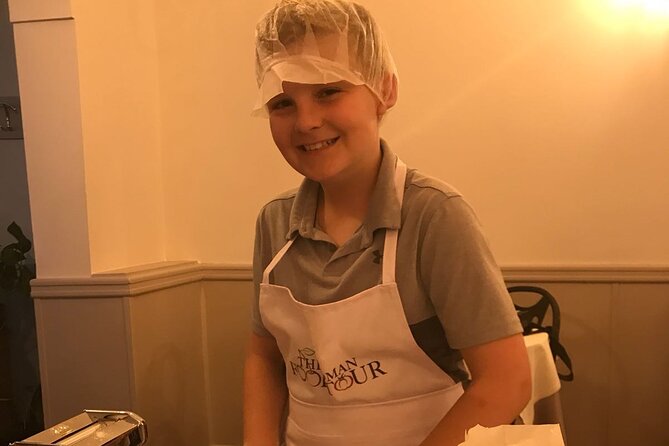
REVIEW · COOKING CLASSES
Bologna: Pasta and Tiramisu Small Group Cooking Class with Wine
Roll up your sleeves in Bologna. This three-hour class pairs fresh pasta and tiramisu with a welcome glass of Prosecco and a shared meal at the end. I like the small-group format, capped at 12 people, and the chance to make classic dishes rather than simply watch a chef work. The main caution is that the wine service and timing have not always been consistent.
You meet at Casa Altabella in central Bologna, enter a working restaurant setting, and take a place at the kitchen table. I also like that the class explains practical basics, such as flour choices, pasta fresca versus pasta secca, and how to shape the dough. Just keep in mind that the traditional recipes use wheat, eggs, dairy, and gluten, with no guarantee against cross-contamination.
Key points to know before booking
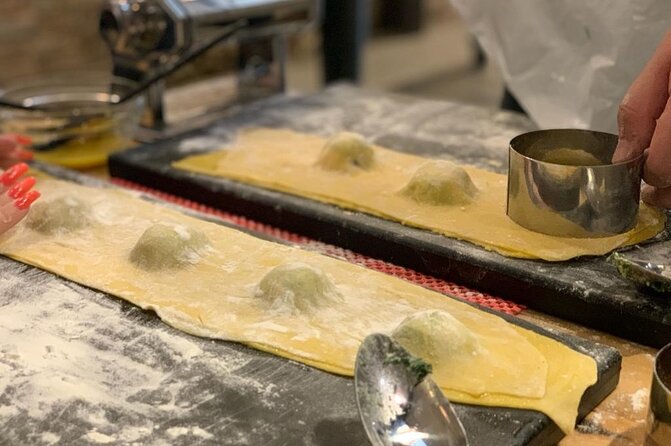
- You make three Italian staples: Fresh fettuccine with tomato sauce, ricotta and spinach ravioli with butter and sage, and tiramisu.
- The class lasts about three hours: You cook first, then sit down together for the meal you helped prepare.
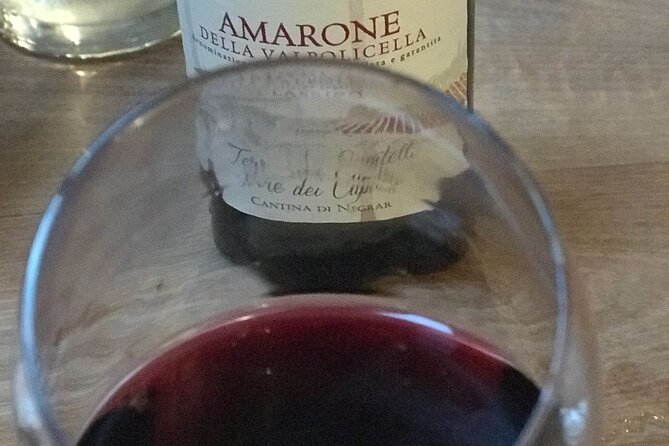
- Wine is part of the plan: Prosecco accompanies the cooking, followed by red and white wine with lunch or dinner, though service has occasionally been uneven.
- Groups stay small: A maximum of 12 people makes it easier to follow the demonstrations and get hands-on help.
- Several instructors lead the sessions: Luca, Aladdin, Pete, Peter, Steven, Neha, and Maria have all been praised for friendly teaching and good humor.
- Food restrictions matter: Substitutions may be possible, but the teaching remains based on recipes containing eggs, dairy, gluten, and other traditional ingredients.
Why pasta is the right lesson in Bologna
Bologna is a fine place to learn pasta because the city’s food culture is built around handmade dough. Here, pasta is not just a side dish or a quick restaurant order. It is a daily craft, with dough rolled, filled, folded, and served in forms that change from one region to the next.
This class gives you a useful introduction without asking you to commit an entire day. You learn how to make pasta dough, which flour to use, and how fresh pasta differs from dried pasta. Those details are more helpful than a single recipe because they give you a framework for making pasta at home.
The class focuses on two different preparations. Fettuccine gives you long, flat strands that work well with tomato sauce. Ravioli brings a different skill: filling pasta, sealing the edges, and handling the dough without tearing it. The ricotta and spinach filling is served with butter and sage, a simple pairing that lets the pasta do most of the work.
You should not expect a professional cooking school with a formal exam at the end. This is a social, practical class. You work alongside other people, listen to the instructor, and learn by doing. That makes it a good fit if you want a relaxed activity with food at its center.
More Cooking Classes in Bologna:
- Bologna: Pasta Cooking Class, Ragu, Spritz, Wine & Gelato
★ 4.9 · 775 reviews - Bologna Local Pasta Cooking Class, Ragu, Spritz, Wine & Gelato
★ 5.0 · 527 reviews - Bologna: Pasta and Tiramisu Cooking Class with Wine
★ 4.7 · 507 reviews
Arriving at Casa Altabella
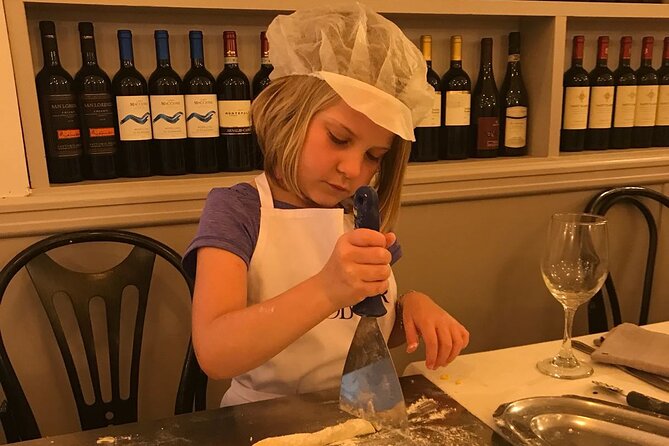
The meeting point is Casa Altabella, at Via Altabella 12a. The activity begins and ends at this same location, and the site is near public transportation. Since the class is held in a restaurant setting, you get more than a generic cooking studio. You see something of how an Italian restaurant functions while preparing your own meal.
On arrival, you step inside and receive a glass of Prosecco. You are then shown to the cooking area and introduced to your workstation. The group size can make a big difference here. With no more than 12 people, the room should feel social without turning into a large demonstration where you can barely see the counter.
The tone depends partly on the instructor. Luca is praised for clear teaching, warmth, and good work with children. Steven is described as funny and well informed about Bologna-style cooking. Aladdin has been praised for hands-on help, while Maria is noted for creating an easy, relaxed pace. Pete and Peter have also led sessions, so you should expect the instructor to vary by date.
That variety is worth noting. The strongest sessions seem to benefit from an instructor who stays involved, tells stories, answers questions, and keeps the group moving without making anyone feel rushed. One less positive account described a host who focused too much on the departure time and not enough on engaging with the group. The experience may therefore feel slightly different from one session to another.
Making pasta dough from scratch
The pasta lesson begins with the foundation: dough. You learn which flour to use and how the ingredients come together. The class also explains the difference between pasta fresca, or fresh pasta, and pasta secca, or dried pasta.
That distinction is useful for home cooks. Fresh pasta has a soft, tender texture and cooks quickly. Dried pasta is more suited to pantry storage and often has a firmer bite. Understanding the difference helps you choose the right type for a sauce, rather than treating every noodle as interchangeable.
The hands-on part is the best reason to take this class. You are not only watching a chef make perfect dough. You have a workstation and take part in the process. Expect some uneven edges and imperfect shapes. That is part of the fun, and it gives you a better sense of the pressure and texture needed to handle pasta properly.
The class is suitable for beginners. Several families found the work easy enough for children and adults to share, and no special cooking background is required. You will still need to pay attention to the demonstrations, especially when rolling and shaping dough. A little care at this stage makes the final meal much better.
One practical point: the physical setup may not suit everyone equally. A less favorable account noted that the worktable felt too low and that the place to wash and dry hands could have been better arranged. If comfortable working space matters to you, keep this in mind.
Fettuccine with tomato sauce
Once the dough is ready, you prepare fresh fettuccine and serve it with tomato sauce. This is a straightforward dish, but that is exactly why it works well in a beginner class. You can taste the texture of freshly made pasta without a complicated sauce masking it.
The meal is cooked after the preparation, then served for the group to eat together. The transition from kitchen table to dining table gives the class a clear reward. You spend the first part working with flour and filling, then sit down to eat what you made.
The class menu also includes prosecco, red wine, white wine, and non-alcoholic drinks. In the best sessions, wine becomes part of the social rhythm. People cook, compare shapes, laugh at their early attempts, and continue talking over lunch or dinner.
Still, wine service deserves a qualification. Some sessions have included plenty of wine, with Prosecco during the class and bottles of red and white at the meal. Other accounts describe wine arriving late or not arriving at all. If the drinks are important to your decision, confirm the current arrangement when booking and speak up during the class if service is delayed.
More Pasta Making in Bologna:
- Bologna Food & Market Tour with 6 Tastings, Pasta, Wines & More
★ 5.0 · 1,328 reviews - Bologna: Pasta Tagliatelle al Ragu Cooking Class with Wine
★ 4.7 · 225 reviews - Bologna: Pasta Cooking Class, Ragu & Wine with Local Host
★ 4.9 · 113 reviews - Bologna: Pasta & Wine Lesson Private Chef & Sommelier
★ 4.4 · 40 reviews
Folding ricotta and spinach ravioli
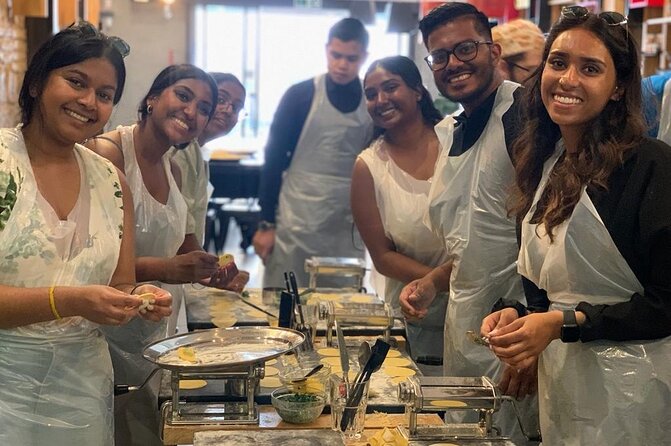
Ravioli adds the most hands-on challenge. You work with a ricotta and spinach filling, place it inside the pasta, and seal each piece. The result is served with butter and sage, a classic combination that keeps the dish simple.
This part can be especially enjoyable for families. Children have a clear task, and adults can help with filling and sealing. The work is creative without being too difficult, though the finished ravioli may not all look identical. That is perfectly fine. Handmade pasta should show a little human involvement.
A few people would prefer more attention to the butter and sage sauce itself. The focus is mainly on preparing the pasta and filling, so you should not expect to make every component from start to finish in equal detail. If sauce technique is your main goal, this class may feel broader than a specialist lesson.
The finished ravioli is one of the reasons the meal feels worthwhile. You taste the difference between something made minutes earlier and pasta that has spent months in a packet. It also gives you a dish you can repeat at home without needing elaborate equipment.
Tiramisu is the sweet finish
The dessert lesson covers tiramisu, another Italian staple that suits a group class. You learn the preparation step by step, then chill or finish it as directed before eating it with the meal.
Tiramisu is less physically demanding than pasta, so it offers a change of pace after the dough work. It is also a practical recipe to take home. Once you understand the structure, you can make it for a dinner party or prepare it ahead for family meals.
Several accounts praised the finished dessert, along with the pasta. One session ended badly when a participant who had to leave early asked for separate takeaway portions and received poorly handled dessert instead. That appears to be an exception rather than the normal format, but it points to a useful rule: this experience is designed around eating together at the venue, not taking the meal away.
The class includes lunch or dinner, depending on the session time. Evening groups may finish later than expected if the class starts late or the cooking runs behind. If you have a fixed theater booking, train, or restaurant reservation afterward, leave plenty of room.
The shared meal and the social side
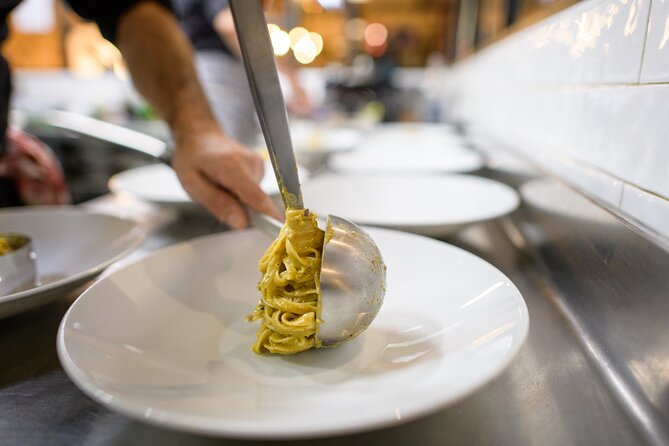
The final meal is a central part of the experience. You sit together and eat the fettuccine, ravioli, and tiramisu while drinking the included wine or a non-alcoholic beverage. This is where the class shifts from instruction to conversation.
The group can include couples, families, and solo participants from different countries. That mix is part of the appeal. You are not just learning how to fold pasta. You are also sharing a table with people who chose the same activity, which can make the evening feel more personal than a standard sightseeing stop.
The class has also been used as a break from museums and churches. That is a smart use of time in Bologna. After hours of looking at historic buildings, a practical meal gives you a different connection with the city. You leave with something you have made, not just another set of photographs.
The social element may not suit everyone. If you prefer a quiet, tightly structured lesson, a group meal can feel noisy or slow. If you like meeting people and sharing food, the format is likely to be one of the strongest parts.
Is $71.38 a fair price?
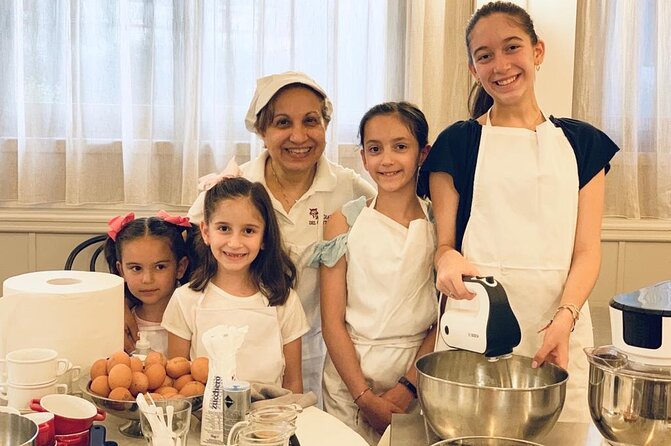
At $71.38 per person, the value depends on what you want from the activity. You are paying for about three hours of instruction, the ingredients, three prepared dishes, a sit-down meal, Prosecco, wine, and a small group setting.
That is reasonable for Bologna if you would otherwise pay separately for lunch or dinner and a cooking activity. The meal is not an extra charge after the lesson. Fresh pasta, ravioli, tiramisu, and drinks are built into the experience.
The price is less compelling if you are mainly looking for a formal lesson with detailed technical training. The class is social and accessible rather than intensive. You learn useful skills, but you should not expect advanced pasta making or a private chef.
The included wine improves the value when it is served as planned. Because drink service has not always been reliable, I would judge the price mainly on the food and teaching, with the wine as an added benefit rather than the only reason to book.
The experience is often reserved about a month ahead, with an average booking lead time of 32 days. That suggests you should not leave it until the final day of your Bologna stay, especially if you need a particular morning or evening time.
Who should take this class?
This is a good choice for first-time pasta makers, families, couples, and solo people who enjoy a shared table. Children can take part, and the class does not require advanced cooking skills.
It also suits anyone who wants a break from sightseeing. The activity gives you a slower afternoon or evening, with a concrete result at the end. You will likely enjoy it most if you are happy to work with other people and accept that the class may have a casual rhythm.
You should think twice if you have a serious food allergy. The traditional dishes contain gluten, eggs, and dairy. Substitutions may be offered for food preferences or allergies, but the instruction remains focused on the traditional recipes, and cross-contamination cannot be ruled out.
The class is not recommended for vegans, people with egg allergies, those who are lactose intolerant, or those with gluten intolerance or a gluten allergy. Non-alcoholic beverages are available, but the food remains the main focus.
Timing, cancellation, and useful planning advice
The experience lasts approximately three hours and ends at the meeting point. It is offered in English and uses a mobile ticket. Confirmation is provided when you book.
Allow extra time after the scheduled end. One evening session did not begin on time and another group did not eat until much later than expected. Most sessions appear to follow the intended schedule, but you should avoid booking a tight connection or fixed evening appointment afterward.
You can cancel for a full refund up to 24 hours before the local start time. Cancellations or changes inside that 24-hour window are not refunded or accepted.
My practical advice is simple: arrive ready to cook, wear clothes you do not mind working in, and ask early about the workstation, drinks, and any food substitutions. Aprons may not always be provided, so a washable top is a sensible choice.
Should you book this Bologna pasta class?
I would book it if you want a friendly, hands-on introduction to Bologna’s food culture, especially if you are traveling with family or enjoy meeting people over a meal. The combination of fettuccine, ravioli, tiramisu, and wine gives you plenty to do, and the instructors are often the heart of the experience.
I would skip it if you need strict allergy control, a formal culinary curriculum, or a guaranteed tightly timed evening. I would also treat the wine as a pleasant extra, not the core value, because service has occasionally fallen short.
For most visitors, the class offers a fair three-hour break from sightseeing and a useful set of recipes to take home. Book ahead if the schedule matters, arrive with a relaxed attitude, and expect a social lesson rather than a polished television-style cooking show.
FAQ
Where does the cooking class meet?
It meets at Casa Altabella, Via Altabella 12a, 40126 Bologna BO, Italy.
Where does the activity end?
The activity ends back at the meeting point at Casa Altabella.
How long does the class last?
The class lasts approximately three hours.
What food do you prepare?
You prepare fresh fettuccine with tomato sauce, ricotta and spinach ravioli with butter and sage, and tiramisu.
Is wine included?
The planned menu includes Prosecco, red wine, white wine, and non-alcoholic beverages. Wine service has not always been consistent, so ask the staff if drinks are delayed.
Is the class offered in English?
Yes, the experience is offered in English.
How many people can join?
The class has a maximum of 12 participants.
Can people with allergies or dietary preferences take part?
Substitutions may be available, but the instruction focuses on traditional recipes containing gluten, dairy, and eggs. Cross-contamination cannot be guaranteed.
What is the cancellation policy?
You can cancel at least 24 hours before the local start time for a full refund. Cancellations or changes made within 24 hours are not accepted and are not refunded.
More Workshops in Bologna
- Bologna: Tagliatelle & Ragù Home Cooking Class with wine
★ 4.5 · 55 reviews - Florence: Pasta Cooking Class with Unlimited Wine
★ 4.9 · 10,285 reviews - Florence: Pasta & Tiramisu Cooking Class with Unlimited Wine
★ 4.9 · 6,708 reviews - Florence: Pasta Cooking Class with Unlimited Wine
★ 5.0 · 6,413 reviews
Newly added around Bologna
- Wine Degustation Ebrezze★ 4.5 · 86 reviews
- Bologna Food & Wine tour with a local Chef★ 3.0 · 30 reviews
- The downtown wine experience★ 5.0 · 35 reviews
- Bologna: Tagliatelle & Ragù Home Cooking Class with wine★ 4.5 · 55 reviews
- Parmigiano Wine and Balsamic Vinegar Experience from Bologna★ 5.0 · 30 reviews
- Private Bologna Food & Market Tour with 6 Tastings & Wine★ 5.0 · 102 reviews
- Private Day Tour & Lunch: Parmesan, Wine, and Vinegar Tasting★ 4.5 · 32 reviews
- Eating Bologna Food and Wine Tour★ 5.0 · 96 reviews
Cooking Classes, compared.
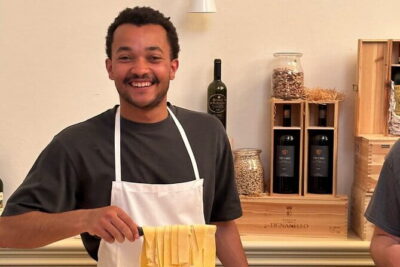
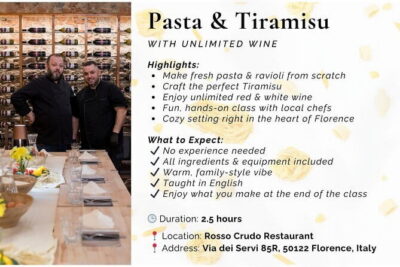
Pasta & Tiramisu Cooking Class with Unlimited Wine
Read our review →
Pasta Making Class with Wine, Limoncello, and Dessert
Read our review →
Cooking Class Pasta & Tiramisu Making Unlimited Wine
Read our review →
Fettuccine & Tiramisù: Cooking Class with Wine & Limoncello
Read our review →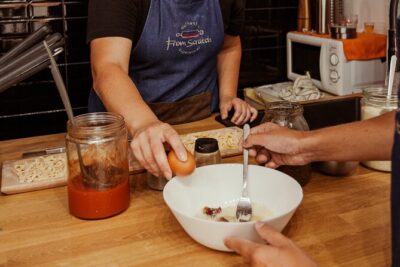
Pasta Making & Wine Tasting with Dinner in Frascati from Rome
Read our review →
Rome Cooking Class: Make Pasta, Dine & Drink Wine With Local Chef
Read our review →Browse the lists this tour appears in