
REVIEW · WINE CELLAR VISITS
Cellar visit and Alsace wine tasting with a feminine touch
A small cellar can hold plenty of character. Domaine Gueth offers a one-hour visit in Alsace with a cellar tour, a guided tasting of seven organic wines, and a close look at a family winery shaped by seven generations. I especially like the chance to choose wines from more than 20 vintages, and the direct connection with the producer. The $20 price is also fair for a guided tasting with snacks. The main question is how much of the promised feminine approach you will actually hear about during your visit.
This is a compact, personal experience rather than a grand winery show. You may taste fruity, elegant Alsace wines made with organic farming and spontaneous fermentation, then buy the bottles you prefer directly from Domaine Gueth. One point to keep in mind: the cellar is small, and the feminine theme may not be explained in as much detail as the title suggests.
Key points before you book
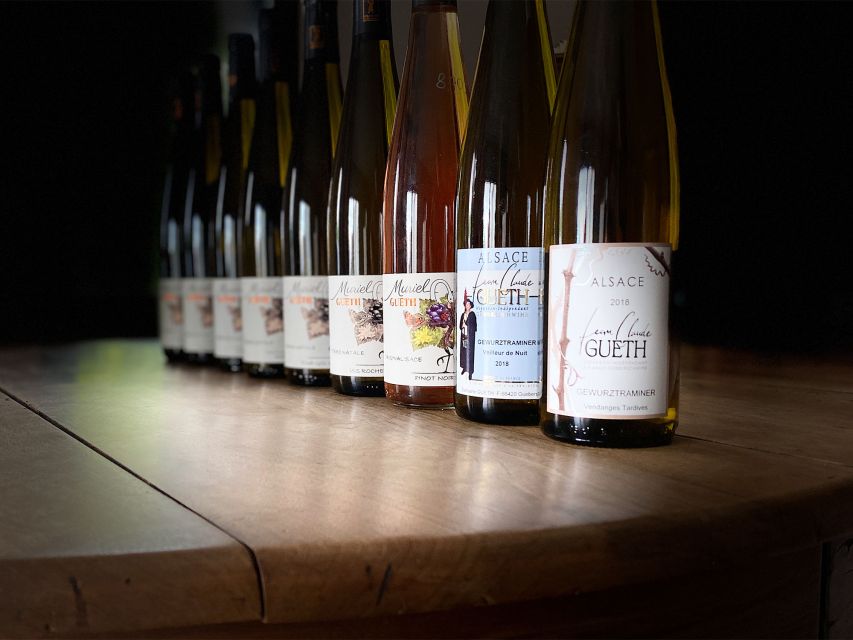
- Seven organic wines: Choose seven wines from a selection of more than 20 Domaine Gueth vintages.
- A working winery visit: See the cellar and winery installations while learning how the estate handles grapes and wine.
- Alsace flavors in one hour: The tasting introduces the region’s distinctive wines without taking up half your day.
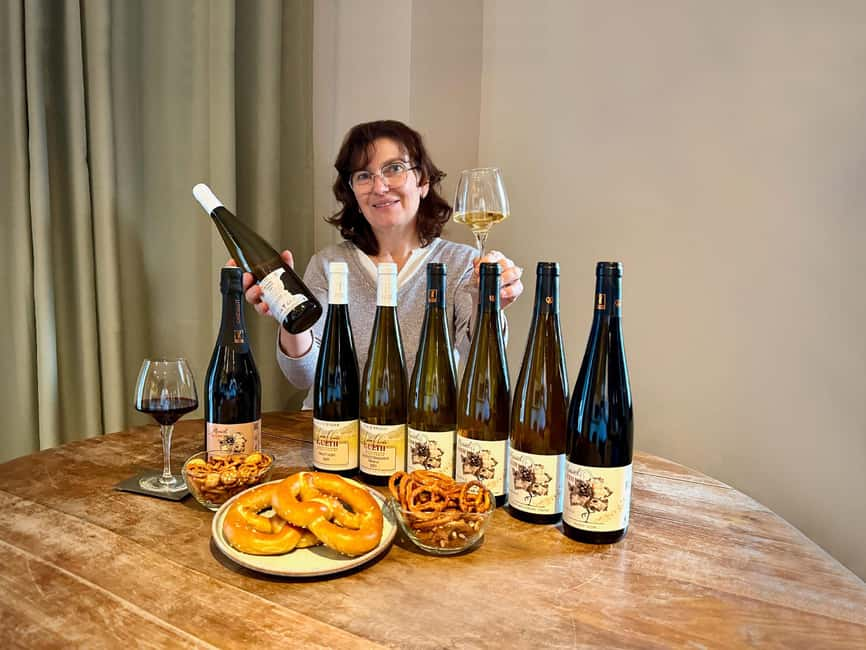
- Local bites included: Your tasting comes with an Alsatian pretzel or a slice of kougelhopf, plus crackers.
- A family estate with a modern outlook: Muriel represents the next generation of a seven-generation winemaking family and presents a nature-focused approach.
- Easy, flexible planning: The estate has free parking, accepts French, English, and German, and allows cancellation up to 24 hours before the visit.
What the Domaine Gueth visit is really about
Domaine Gueth presents wine through two ideas: family continuity and a modern, nature-conscious approach. The estate has seven generations of winemakers behind it, but the experience is not framed as a formal history lesson. Instead, the focus is on how the current generation works with the vines, the cellar, and the wines.
The winery carries both the High Environmental Value label and the Organic Farming label. That matters if you want to understand more than just the taste in your glass. You can ask how environmental care affects vineyard work, how spontaneous fermentation shapes the wine, and why the estate lets its wines follow their own path rather than forcing a fixed style.
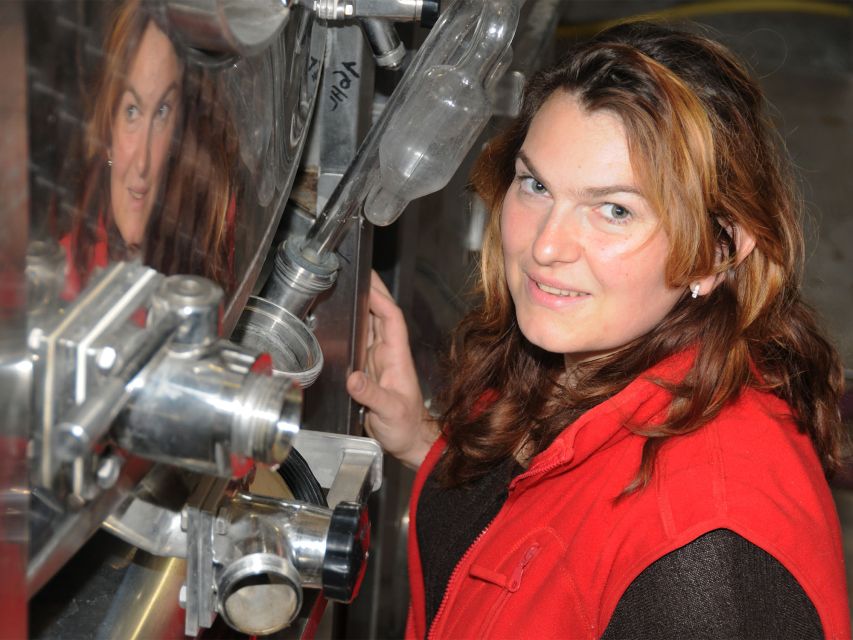
Muriel brings what the estate calls a feminine and modern touch. The aim is to make fruity, elegant wines that stay close to nature. I like that this is presented as a working philosophy rather than a separate show built for visitors.
Still, you should set your expectations correctly. The tasting is likely to explain the estate’s approach to farming and winemaking more clearly than it explains the feminine theme itself. A visit can be enjoyable even if that particular idea remains a little vague. If it matters to you, ask directly how Muriel’s approach changes vineyard work, cellar decisions, or the way the wines are presented.
More Wine Tastings in France
- Bordeaux: Cité du Vin Entry Ticket and Wine Tasting
★ 4.6 · 3,885 reviews - Montmartre Hill French Gourmet Food and Wine Tasting Walking Tour
★ 5.0 · 2,588 reviews - From Paris: Loire Valley Castles Day Trip With Wine Tasting
★ 4.6 · 1,727 reviews
Entering the cellar and seeing the winery at work
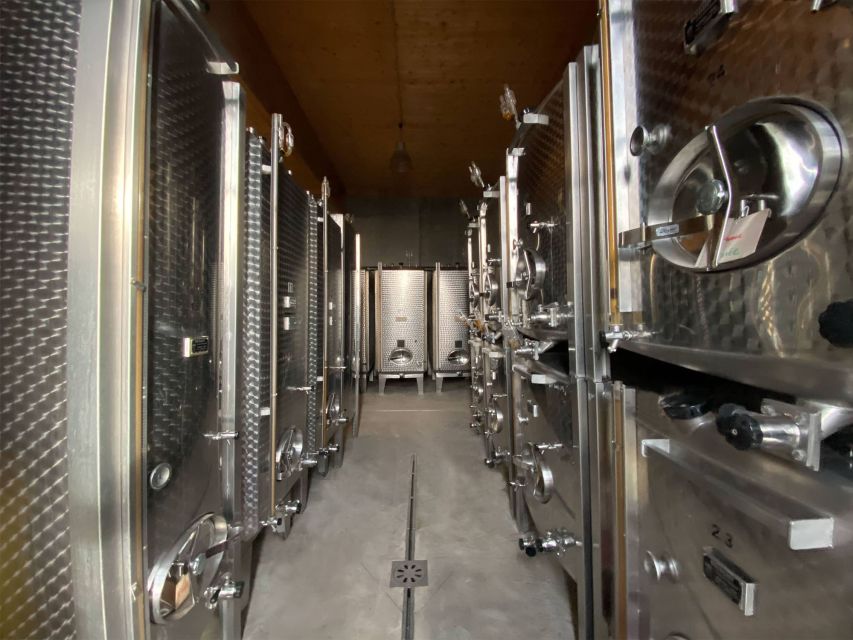
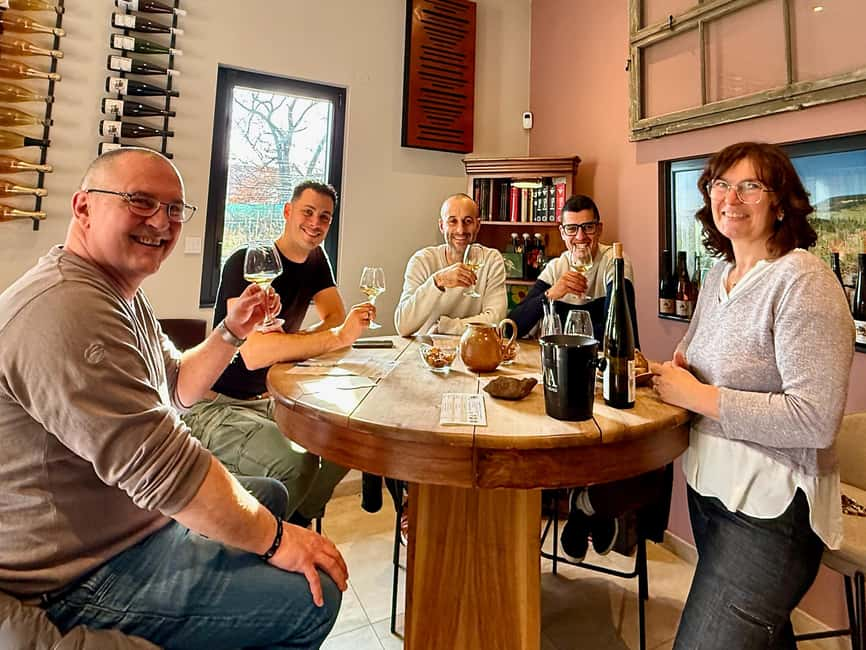
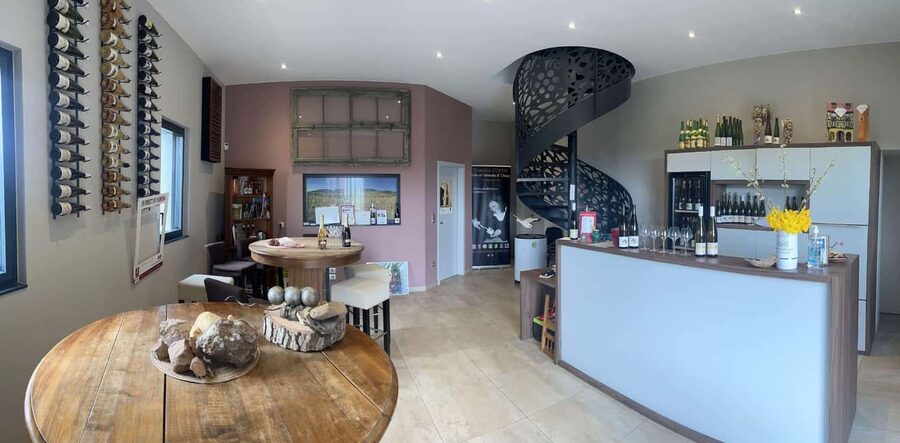
The visit begins at Domaine Gueth, where you can park free inside the estate. With only 10 places available, the group should remain small enough for questions and conversation. That limited size is useful in a cellar setting, where a large crowd can make explanations hard to hear and personal questions difficult to ask.
You will see the cellar and the estate’s installations. The information provided does not promise a long walk through vineyards or a large production complex, so think of this as a focused look at the winery rather than a full estate tour.
That is not a weakness for every visitor. If you have only an hour in Alsace, a compact cellar visit keeps the pace brisk. You can spend less time walking between buildings and more time tasting and discussing the wines.
The cellar itself may feel modest. One detailed account described it as small, with an initially formal atmosphere that warmed as interest grew. My advice is simple: come ready with questions. Ask about organic certification, spontaneous fermentation, old vines, and how the estate decides when a wine is ready. The more curious you are, the more useful the visit is likely to become.
A tasting built around your own preferences
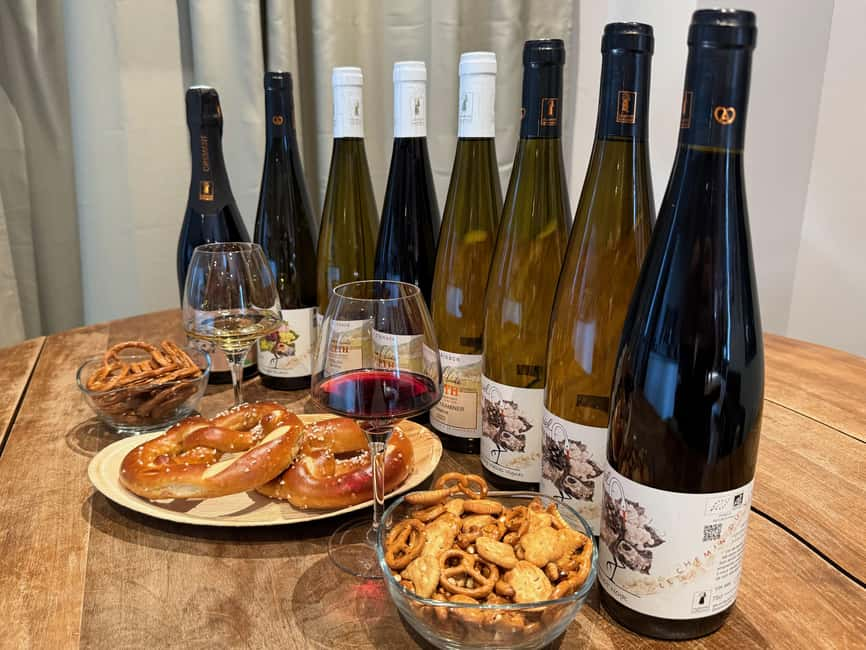
The heart of the experience is a tasting of seven organic wines. You are not limited to a rigid flight selected in advance. Domaine Gueth offers more than 20 wines, including traditional cuvées, old-vine selections, local wines, and more unusual bottles.
That choice is one of the best features of the visit. You can steer the tasting toward the flavors you already enjoy, or use it to try styles that are new to you. If you prefer fresh and fruity wines, say so. If you want something more unusual, ask about the atypical wines. If older vines interest you, request those selections.
The estate’s wines are described as fruity and elegant, with a strong connection to nature. The tasting is also meant to show the special character of Alsace wine. This region is known for aromatic wines, and one account described the Domaine Gueth selection as particularly aromatic. You should expect the aromas to be an important part of the discussion, not just a minor detail before the first sip.
The word organic tells you how the grapes are farmed, but it does not tell you whether every wine will taste the same. The range of more than 20 wines gives you room to compare different vineyard selections and winemaking choices. Seven samples are enough to notice contrasts without turning the hour into a rushed drinking contest.
The tasting is richly commented, with explanations about the relationship between terroir and vinification. In plain terms, you should learn how the place where the grapes grow and the way the wine is made affect what you taste. This is useful for beginners because it gives you a simple way to compare the glasses in front of you.
It is also useful for experienced wine drinkers who want to focus on Alsace. You can ask more detailed questions and use the tasting to narrow down the styles you want to take home.
Alsatian snacks that keep the tasting grounded
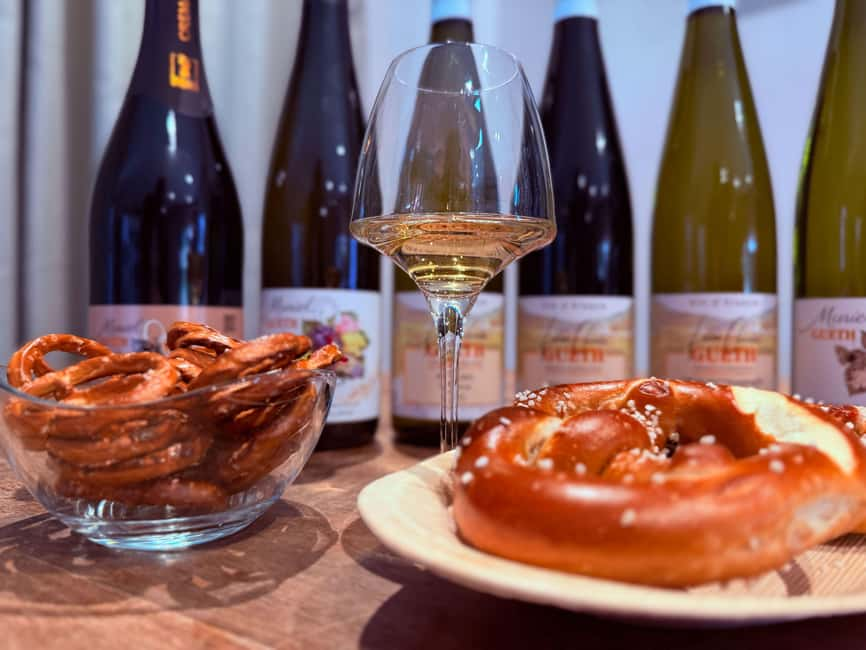
Your seven wines come with an Alsatian pretzel or a slice of kougelhopf, along with crackers. The food is modest, but it adds a local note and gives you something to eat as you taste.
A pretzel brings salt and a chewy texture. Kougelhopf, the ring-shaped Alsatian cake, gives you a softer and slightly sweeter option. Neither turns the tasting into a meal, so you should not arrive expecting lunch. These snacks are there to accompany the wine and make the hour more comfortable.
I like this kind of small food pairing because it connects the tasting to the region without adding another formal course. It also helps if you are tasting several wines in a short period. If you have dietary concerns, ask the estate what can be offered, since only the pretzel, kougelhopf, and crackers are specifically listed.
More Wine Cellar Visits in France:
- Epernay: Guided Tour of Champagne Cellar with Tastings
★ 4.7 · 507 reviews - Paris Art of Pairing Cheese and Wine Tasting in a Cheese Cellar
★ 5.0 · 386 reviews - Paris – Guided Visit & Tasting in a Royal Wine Cellar
★ 4.5 · 221 reviews - Beaune: Maison Champy Guided Cellar Tour with Wine Tasting
★ 4.7 · 213 reviews
The feminine approach: an appealing idea with one open question
The title promises a feminine approach to wine, and that can make this experience more distinctive than a standard cellar tasting. Muriel is presented as the person bringing a modern touch to a family estate after seven generations of winemaking.
That theme may interest you if you enjoy meeting the person behind the label and hearing how a family business changes over time. The estate links this approach to fruity, elegant wines, environmental respect, and a less controlling style of wine raising. In other words, the wine is allowed to develop without unnecessary constraint.
But the phrase needs explanation. One detailed account found the tasting pleasant but felt that the feminine element was not clearly shown in the farming methods, cellar work, or bottle presentation. That is a fair concern. If the theme is the feature that draws you to the booking, do not assume the meaning will be obvious without asking.
The best way to get more from this part is to raise the subject early. Ask what feminine means in practical terms at Domaine Gueth. Does it refer to vineyard choices, fermentation, aging, the family story, or the way the wines are selected? A direct question may turn a broad marketing phrase into a useful conversation.
Buying directly from the producer
You can buy the wines you taste directly from Domaine Gueth. This is a real advantage if a particular bottle catches your attention, because you do not have to rely on remembering the name or hunting for it elsewhere.
Direct purchase also gives the tasting a clear purpose. You can compare several wines, identify the ones that fit your palate, and then choose with more confidence. Since the estate offers traditional wines, old-vine selections, local wines, and atypical styles, you may find bottles that are not easy to compare in a general shop.
The practical limit is that the information does not specify shipping arrangements or how much wine you can purchase. If you are flying or moving between hotels, ask about packaging and transport before buying a large quantity. The simplest plan is to choose a few bottles you can carry safely.
Is one hour enough?
One hour is enough for an introduction, but not enough for every possible question. You will see the cellar, hear about the estate’s approach, taste seven wines, and have time for local snacks. That is a good amount for a short stop along the Alsace Wine Route.
It is not enough for an extended vineyard walk, a long family history, or a slow tasting of every style in the estate’s range. You will need to choose your priorities. If you want a quick, focused introduction, the timing works well. If you want an entire afternoon of wine education, this is too short.
The one-hour format also makes the $20 price easier to judge. You are paying about $20 for a guided estate visit, seven organic wines, snacks, and the chance to buy directly from the producer. That is solid value, especially if you are already visiting the area and do not need separate transport.
The value depends partly on how involved the guide becomes. One account described clear explanations and plenty of time given to the group. Another found the beginning a little stiff before the conversation became warmer. Again, asking questions is the best way to make the hour feel personal.
Who will enjoy Domaine Gueth most?
I would recommend this visit to several kinds of wine lovers:
- First-time Alsace wine visitors who want a clear introduction to local styles.
- Organic wine shoppers who want to connect farming methods with the finished wine.
- Couples and small groups who prefer a quiet cellar setting over a large commercial tour.
- Curious beginners who like choosing wines based on personal taste rather than following a fixed flight.
- Experienced drinkers interested in spontaneous fermentation, old vines, and less conventional bottles.
- Visitors with limited time who need a useful wine stop that lasts only one hour.
It may be less satisfying if you want a large, polished winery complex, a long walk through vineyards, or a detailed presentation focused entirely on women in winemaking. The tasting can still work for you, but the feminine theme should not be your only reason to book.
The activity is for adults only when wine is being tasted. Anyone who prefers not to drink alcohol can replace the wines with 100 percent organic grape juice made from the estate’s vineyards. That makes the visit more flexible for non-drinkers, though children are not specifically covered in the available details.
Language, access, and booking flexibility
The live guide can conduct the experience in French, English, or German. That is particularly helpful in Alsace, where visitors often move between French and German cultural areas. Choose the language that lets you ask the most precise questions about the wines.
The winery is wheelchair accessible, and free parking is available inside the Domaine Gueth property. There are 10 places available, so advance booking is sensible if your schedule is fixed.
You can cancel up to 24 hours before the visit for a full refund. You can also reserve now and pay later, which helps if your route through the Grand Est is still changing. Check the available start times because the visit lasts one hour, but the exact schedule is not fixed in the information provided.
Should you book this Alsace wine tasting?
Book Domaine Gueth if you want a short, affordable, personal wine visit with seven organic wines, local snacks, and the chance to buy directly from the producer. I especially like the freedom to choose wines from a selection of more than 20 bottles. That makes the tasting more useful than a fixed flight when you already know what you like.
Go in with realistic expectations. The cellar is small, and the feminine approach may need a few questions before it becomes clear. For $20, though, the combination of a winery visit, commented tasting, Alsatian bites, and organic wines offers good value. If you are passing through the Alsace Wine Route and want an approachable introduction rather than a long formal tour, Domaine Gueth is a sensible stop.
FAQ
Where does the wine tasting take place?
The experience takes place at Domaine Gueth in the Grand Est region of France.
How long does the Domaine Gueth experience last?
The visit and tasting last one hour.
How much does the experience cost?
The listed price is $20 per person.
How many wines are included?
You can taste seven organic wines selected from the estate’s range.
Can I choose which wines I taste?
Yes. You can select seven wines from more than 20 Domaine Gueth vintages, including traditional, old-vine, local, and atypical wines.
Are snacks included?
Yes. The tasting includes an Alsatian pretzel or a slice of kougelhopf, plus crackers.
Is the wine estate organic?
Domaine Gueth has the Organic Farming label and the High Environmental Value label.
Which languages are available?
The live tour guide can speak French, English, or German.
Can someone choose grape juice instead of wine?
Yes. People who prefer not to drink wine can replace the tasting with 100 percent organic grape juice from the estate’s vineyards.
Is the experience wheelchair accessible?
Yes. The activity is listed as wheelchair accessible, and free parking is available inside the Domaine Gueth property.
Newly added around France
- Saint Emilion Full Day Wine and Bike Tour★ 5.0 · 167 reviews
- Luxurious full day Bordeaux wine tour in a Tesla★ 4.5 · 31 reviews
- Private Bordeaux History Tour with a glass of Bordeaux wine.★ 5.0 · 28 reviews
- Private – Best of Bordeaux Walking Tour + Glass of Bordeaux Wine★ 5.0 · 240 reviews
- Wine Masterclass & Cheese Tasting Workshop in Bordeaux★ 5.0 · 29 reviews
- Bordeaux wines tasting workshop including Food & Wine pairings★ 5.0 · 31 reviews
- Medoc Afternoon Wine Tour – 2 Wineries, tastings & delicacies★ 4.5 · 74 reviews
- Discovery of the Bordeaux vineyard in 3 wines★ 5.0 · 133 reviews
Wine Cellar Visits, compared.
Bridges Cruise & Sunset & Port Wine Cellar Option
Read our review →
Cálem Cellar Tour, Interactive Museum & Wine Tasting
Read our review →
Hop-on Hop-off Bus with Optional Cruise & Wine Cellar
Read our review →
Magic Train Tour and Port Wine Cellar with Tastings
Read our review →
Milan Urban Winery: Taste & Tour at Cantina Urbana
Read our review →
Browse the lists this tour appears in