
REVIEW · BORDEAUX WINE TOURS
Bordeaux:Wine Masterclass & Blending workshop with appetizer
Bordeaux tastes better when you mix it yourself. This casual class combines six French wines with a hands-on blending workshop, so you learn by tasting rather than sitting through a long lecture. I like the small maximum group of 12 and the French apéritif of bread, sausage, cheese, and dark chocolate. The main drawback is that the class may feel very personal in a tiny group, especially if you prefer to listen quietly.
I also like the practical focus. You learn how to compare Merlot and Cabernet Sauvignon, taste blended wines, and approach a restaurant wine list with less worry. At $53 per person, the value is strongest for curious beginners and visitors who want a useful introduction before visiting Bordeaux’s vineyards.
Key points to know
- Six wines in 90 minutes: You taste white and red wines, single-varietal examples, blends, and a famous Bordeaux wine in a blind tasting.
- You make your own cuvée: The blending session turns Bordeaux’s famous mix of grape varieties into something you can understand with your own palate.
- French apéritif included: Fresh bread, sausage, cheese, and dark chocolate give you simple pairings during the tasting.
- Small group setting: The class is limited to 12 people, giving you room to ask questions and take part in the exercises.
- Central Bordeaux meeting point: You meet at À la Française’s apartment at 3 Rue d’Enghien at 10:25 a.m. for the 10:30 start.
- A useful beginner class: The teacher explains tasting without assuming you already know wine jargon, though the format may not suit people with mobility impairments.
What This Bordeaux Wine Class Actually Gives You
This is not a winery visit in the countryside. It is a compact teaching session in central Bordeaux, built around tasting, comparison, and food. That makes it a smart choice if you have limited time in the city or want a clearer base before booking a vineyard excursion.
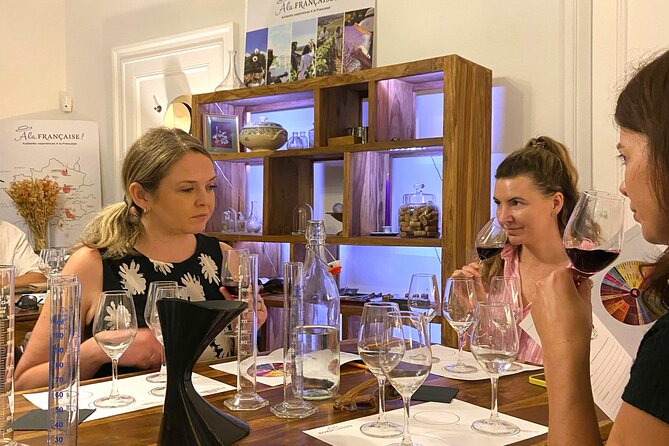
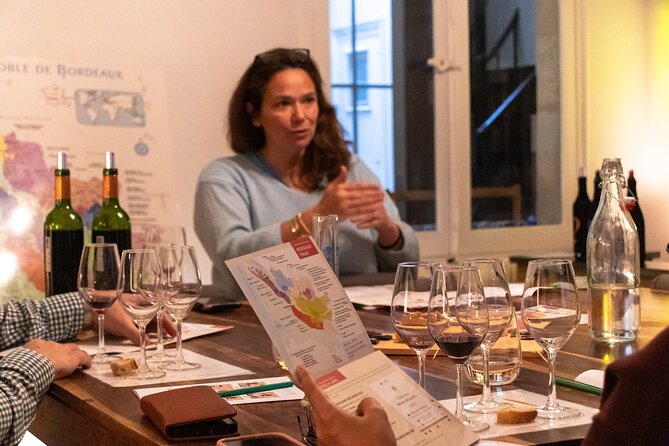
The session lasts 90 minutes, from 10:30 a.m. until noon. You taste six wines in total, with a professional English-speaking wine educator guiding the class. The emphasis is not simply on drinking good wine. You are asked to notice aromas, structure, grape character, and the effect of blending.
I like that balance. A wine tasting can become either a lecture full of French terms or a pleasant hour of sipping without much learning. This class aims for the middle ground. You receive enough background to understand Bordeaux, then put that information to work in your glass.
The class also includes a French apéritif. The food is not a full lunch, but fresh bread, sausage, cheese, and dark chocolate give you something to eat while softening the effect of six tastings. If you expect a meal, plan to have lunch afterward.
A few more wine tours around Bordeaux worth a look
- Bordeaux: Introduction to Bordeaux Wines Tasting Workshop
★ 4.8 · 196 reviews - Bordeaux Super Saver Wine Tasting class and St Emilion region
★ 5.0 · 184 reviews - Guided Bordeaux Wine Tasting Class with 6 Wines and pairings
★ 4.9 · 181 reviews
Starting With White Wine and Basic Tasting Skills
You meet at À la Française’s apartment at 3 Rue d’Enghien, 33000 Bordeaux. The requested arrival time is 10:25 a.m., five minutes before the 10:30 start. I would treat that arrival time seriously because a compact class has little spare time for late arrivals.
The workshop begins with a welcome glass of white wine. This first pour introduces the basic steps of wine tasting and helps remove some of the ceremony around it. You learn how to look at the wine, smell it, taste it, and compare what you notice.
That beginner-friendly approach is one of the class’s best features. You do not need to identify every aroma correctly or know the names of Bordeaux estates. The point is to build confidence. After this opening exercise, you should feel more comfortable ordering wine in a French restaurant or discussing what you like.
Still, tasting exercises can feel exposing when the group is very small. One recent participant felt discouraged after sensing that some personal answers were treated less warmly than another person’s answers. That experience may not reflect every class, but it is useful to know: in a two-person session, every answer receives attention. If you are shy about guessing aromas, remind yourself that the exercise is about observation, not passing a wine exam.
Merlot and Cabernet Sauvignon in the Glass
The next part introduces the main grape varieties used in Bordeaux, including Merlot and Cabernet Sauvignon. You taste two single-varietal wines, which means each glass gives you a clearer look at one grape rather than a finished Bordeaux blend.
This is an especially useful step for first-time wine visitors. Bordeaux bottles do not always make the grape variety easy to identify at a glance. Instead, the wine’s identity often comes from its appellation and blend. Tasting the grapes separately gives you a reference point before the more complex wines arrive.
The educator also explains the history of Bordeaux wine and the role of its major grapes. The lesson is brief enough to keep the tasting moving. You are not expected to memorize every region or producer. The value lies in understanding why two Bordeaux wines can taste different even when they come from the same broad area.
I appreciate the comparison format here. Rather than telling you that Merlot and Cabernet Sauvignon taste different, the class lets you taste the difference. That can help you recognize your own preferences. You may prefer the rounder character of one wine, the firmer structure of another, or simply find that your favorite changes when food is added.
The Blending Workshop and Your Personal Cuvée
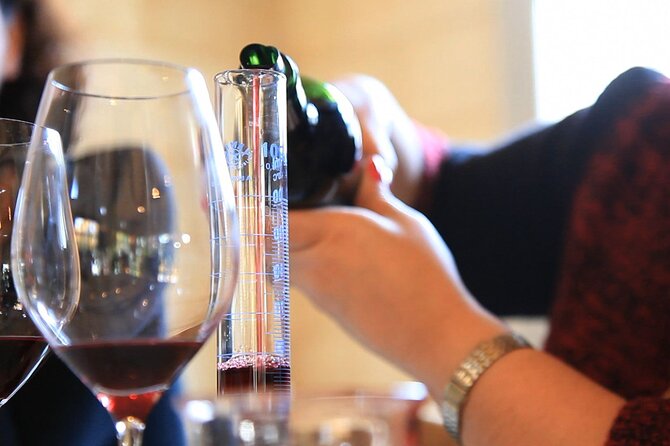
The hands-on blending session is the heart of the experience. Bordeaux is famous for combining grape varieties, and you get to see how that decision changes a wine’s character.
You taste two blended wines prepared in front of you. The comparison shows how a blend can differ from a single-varietal wine and how the proportions affect the final result. The guide then helps you create your own cuvée.
This is more useful than it may sound. The word cuvée can feel technical when you see it on a wine label, but here it becomes a practical idea. You are not just hearing that blending is an art. You are considering how different wines work together and what you would choose for your own bottle.
I like this part because it gives the class a clear purpose. You begin by learning how to taste, then compare individual grapes, and finally make a decision using what you have noticed. The process makes Bordeaux’s blend-based identity easier to understand.
Do not expect to produce a commercial wine or take home a bottle from your recipe. The supplied details describe the session as a blending workshop, not a bottling activity. Its value is educational and sensory.
Same region, a very different glass:
- Bordeaux: Cité du Vin Entry Ticket and Wine Tasting
★ 4.6 · 3,885 reviews - Bordeaux: River Garonne Cruise with Glass of Wine and Canelé
★ 4.5 · 3,630 reviews - From Bordeaux: Afternoon Saint-Emilion Wine Tasting & snack
★ 4.8 · 1,581 reviews - Medoc or Saint Emilion Wine Tasting and Chateau from Bordeaux
★ 5.0 · 1,415 reviews
Blind Tasting a Famous Bordeaux Wine
The final major tasting exercise is blind. You sample a famous Bordeaux wine and try to guess where it comes from.
Blind tasting adds a little playfulness without requiring expert knowledge. Since you do not begin with the label, price, or producer name, you focus on the wine itself. You may consider its color, aromas, balance, and finish before making your guess.
For a beginner, this can be a useful lesson in how much labels influence expectations. It also gives the session a good finish. You have already tasted white wine, red wine, individual grape varieties, and blends. Now you apply those skills without being told the answer first.
The blind tasting should be treated as an exercise, not a test of your worth as a wine drinker. Wine aromas are personal, and the class is meant to help you notice more, not prove that you can identify a famous bottle in seconds.
Bread, Cheese, Sausage, and Dark Chocolate
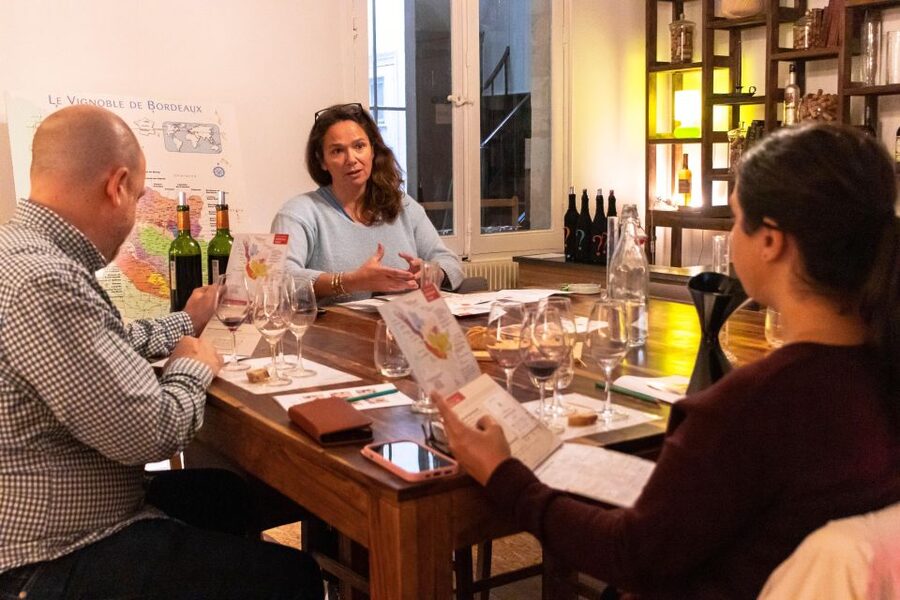
The included food is a traditional French apéritif rather than lunch. You can expect fresh bread, sausage, cheese, and dark chocolate to pair with the wines.
These foods matter because wine often changes when you eat. Cheese may soften a wine’s sharp edges, sausage can make a red feel fuller, and dark chocolate offers a different way to notice sweetness and bitterness. The pairings help you connect wine to the way it is usually enjoyed in France, at a table with simple food and conversation.
I would still eat a light breakfast before arriving. Six wines and snack portions may be enough for a morning tasting, but they are not designed to replace lunch. The class ends at noon, so you can easily continue to a Bordeaux restaurant afterward.
The food also makes this a more social experience. You are not simply moving from glass to glass. The apéritif gives you a natural reason to pause, compare impressions, and discuss what you taste with the guide and other participants.
Group Size, Teaching Style, and the 4.8 Rating
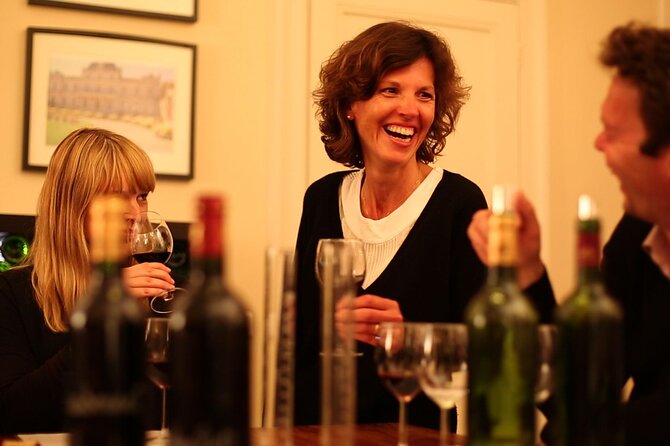
The maximum group size is 12 people. That is large enough for a little conversation but small enough for questions. One particularly positive experience came from a very small group, where the educator had time to answer questions and explain Bordeaux in more detail than a larger vineyard tour had allowed.
That point is worth noting if you have already visited the Left Bank and Right Bank. This workshop may add something different. A vineyard excursion shows you places and producers, while this class gives you a controlled comparison of wines in one room.
The overall rating is 4.8 from 54 reviews, with strong praise for the education and the small-group format. The feedback is not uniformly glowing. One participant in a two-person class felt uncomfortable with the way answers were handled and wished for a larger group. That is a fair warning for anyone who dislikes being put on the spot.
For me, the best fit is someone who asks questions and enjoys trying things. You do not need a developed palate, but you should be ready to participate. If you want to quietly sample wine while someone else does all the talking, a less interactive tasting may suit you better.
Is $53 a Fair Price?
At $53 per person, this is not the cheapest way to taste Bordeaux wine. Its value depends on what you want from the morning.
If you only want three or four small pours, you can probably find less expensive options. This class earns its price through the instruction, six wines, the blending activity, and the food. You are paying for a guided comparison rather than a series of unrelated samples.
The price also looks better if you planned to book a separate introductory wine lesson. You receive a compact course on Bordeaux grape varieties, tasting technique, blends, and food pairing in one 90-minute session.
The value is less clear for experienced wine students who already understand Bordeaux blends and can confidently compare Merlot with Cabernet Sauvignon. The class may still be enjoyable, but the educational gain could be smaller.
I see it as a good first step before a more expensive vineyard day trip. You arrive at the estates with a better sense of what to look for, and you may ask more useful questions about the wines you taste.
Who Should Book This Morning Class?
I would recommend this workshop to:
- First-time Bordeaux visitors who want a simple introduction to local wine
- People who feel intimidated by French wine lists
- Couples and small groups who enjoy guided tasting exercises
- Visitors with only one free morning in Bordeaux
- Wine drinkers who want to understand blending rather than only sample bottles
- Anyone who likes food pairing and social discussion
I would think twice if you have mobility impairments, since the experience is not suitable for people with those needs. Pets are not allowed, and the class is offered in English only.
The minimum operating group is two participants. If only one person books, the class may be cancelled, with a full refund. That rule is worth keeping in mind if you are visiting alone and building your schedule around this exact activity.
Cancellation is free up to 24 hours in advance, and you can reserve now while paying later. Those options help if your Bordeaux plans are still shifting.
My Booking Advice
Book this if you want to understand Bordeaux wine, not merely drink it. The six-pour format, hands-on cuvée exercise, blind tasting, and French apéritif make the morning feel active and useful.
I would especially choose it early in your stay, before a vineyard outing or a serious restaurant meal. You will have a better vocabulary for describing what you like, and you will understand why Bordeaux wines are often blends.
Skip it if you want a full meal, a countryside château visit, or a purely passive tasting. Also consider your comfort with direct participation. In a small class, your guesses and preferences will receive attention.
For $53, this is a well-priced introduction for curious beginners. It offers enough wine to compare, enough teaching to remember, and enough food to make the lesson feel like a French morning rather than a classroom.
FAQ
Where does the Bordeaux wine class meet?
The meeting point is À la Française’s apartment at 3 Rue d’Enghien, 33000 Bordeaux.
What time should I arrive?
You should arrive by 10:25 a.m. The class starts at 10:30 a.m. and ends at noon.
How long does the experience last?
The wine class lasts 90 minutes.
How many wines are included?
You taste six wines in total, including white and red wine, single-varietal wines, blended wines, and a wine used for blind tasting.
Is food included?
Yes. A French apéritif platter is included with fresh bread, sausage, cheese, and dark chocolate. Lunch is not included.
Is the class offered in English?
Yes. The live tour guide and wine educator provide the experience in English. French is not included as a tour language.
What happens if only one person books?
The class may be cancelled because at least two participants are legally required for the activity to operate. If that happens, you will be contacted and receive a full refund.
Can I cancel my booking?
Yes. You can cancel up to 24 hours before the activity for a full refund. You can also reserve now and pay later.
Newly added around Bordeaux
- Saint Emilion Full Day Wine and Bike Tour★ 5.0 · 167 reviews
- Luxurious full day Bordeaux wine tour in a Tesla★ 4.5 · 31 reviews
- Private Bordeaux History Tour with a glass of Bordeaux wine.★ 5.0 · 28 reviews
- Private – Best of Bordeaux Walking Tour + Glass of Bordeaux Wine★ 5.0 · 240 reviews
- Wine Masterclass & Cheese Tasting Workshop in Bordeaux★ 5.0 · 29 reviews
- Bordeaux wines tasting workshop including Food & Wine pairings★ 5.0 · 31 reviews
- Bordeaux Wine Masterclass: Blending workshop with appetizer★ 5.0 · 113 reviews
- Medoc Afternoon Wine Tour – 2 Wineries, tastings & delicacies★ 4.5 · 74 reviews
Bordeaux Wine Tours, compared.
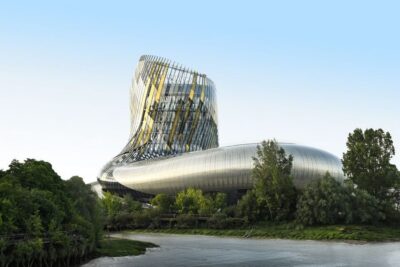
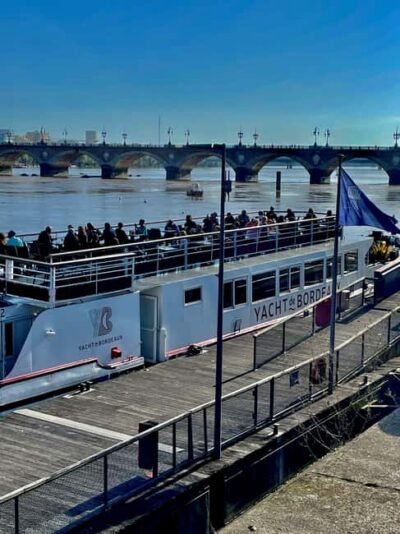
River Garonne Cruise with Glass of Wine and Canelé
Read our review →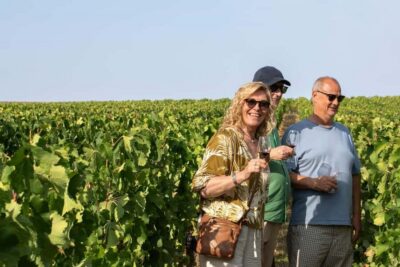
Afternoon Saint-Emilion Wine Tasting & snack
Read our review →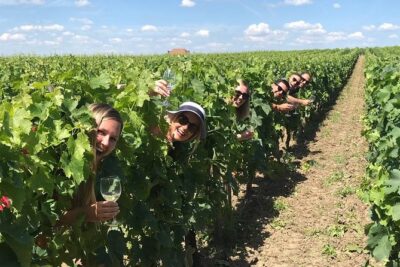
Medoc or Saint Emilion Wine Tasting and Chateau from Bordeaux
Read our review →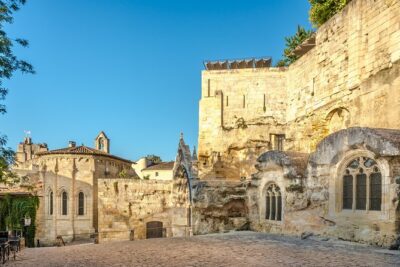
Saint Emilion Day Trip with Sightseeing Tour & Wine Tastings from Bordeaux
Read our review →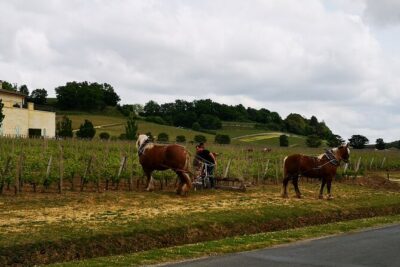
Saint Emilion Half-Day Trip with Wine Tasting & Winery Visit from Bordeaux
Read our review →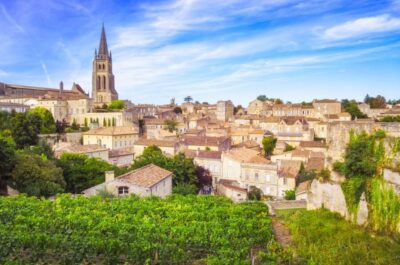
Browse the lists this tour appears in