
REVIEW · COOKING CLASSES
Paros: Greek Cooking Class with Meal and Wine
Come hungry, and bring room for dessert. This four-hour Paros cooking class offers a close look at Greek food through local ingredients, family recipes, and hands-on preparation. I especially like the focus on Paros-grown produce and island-made products, along with the chance to learn from Iro and George, experienced cooking instructors and owners of Parea Cuisine Paros.
The class also gets the balance right between instruction and eating. You will prepare familiar Greek favorites such as tzatziki, keftedakia, salad, and moussaka, then sit down to a generous meal with homemade wine. The main consideration is the price: at $160 per person, this is not a budget meal, though the four-hour class, tastings, drinks, dessert, and full lunch or dinner make it more than a simple cooking lesson.
I like that you can choose a main dish based on the season, from stuffed vegetables to fresh fish. I also appreciate the clear planning rules: classes require at least two participants, children under 14 cannot join, and allergies must be reported at least 24 hours ahead.
Key Points to Know Before You Book
- The class uses local Paros ingredients: Expect island cheeses, homemade olives, local olive oil, seasonal vegetables, and wine from the family farm.
- Iro and George teach more than recipes: You learn about Greek food traditions, farming, nutrition, knife skills, and the Mediterranean diet.
- The meal is generous: Plan to skip breakfast or eat lightly beforehand. The class includes appetizers, a main dish, dessert, tastings, and wine.
- You choose from seasonal Greek dishes: Options may include stuffed tomatoes, peppers, zucchini, or aubergine, as well as moussaka, pasticcio, or fresh fish.
- It is a social, hands-on activity: You help prepare the food rather than simply watching a chef work.
- Plan your own ride: Transportation to the meeting point at Parea Cuisine is not included.
Why This Paros Cooking Class Feels Personal
Many Greek cooking classes focus on a few recipes and send you home with a quick meal. This one aims for something broader. Iro and George bring their work as culinary instructors and restaurant owners into the kitchen, so the food comes with explanation, context, and practical technique.
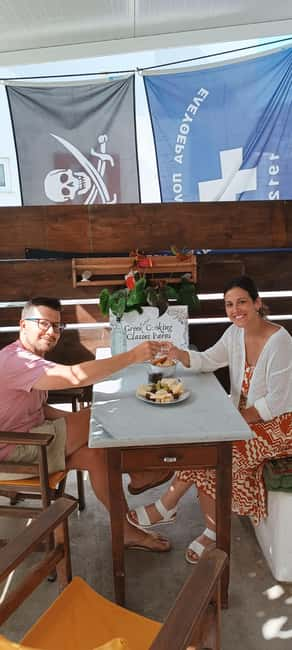
Iro is the main personality you will likely remember. She has been praised for her warmth, humor, and clear passion for food, nutrition, and local farming. George also helps host the class, and the pair create a relaxed setting where you are expected to take part, ask questions, and eat well.
The setting is tied closely to family and community. The class is associated with Parea Cuisine Paros, and the cooking has been described as taking place in the family home, using products from their farm. That gives the meal a more personal feel than a standard restaurant demonstration.
You should still keep the meeting details clear when booking. The stated meeting point is Parea Cuisine, and transportation is not included. Since classes are by appointment, confirm the start time and exact arrival instructions before the day of your class.
More Cooking Classes in Greece:
- Athens: Classic Cooking Class with Market Visit and Wine
★ 5.0 · 1,101 reviews - Athens: Food Market Visit and Cooking Class with Wine
★ 4.9 · 1,087 reviews - Greek Cuisine Cooking Class in Santorini with Recipes and Wine
★ 5.0 · 969 reviews
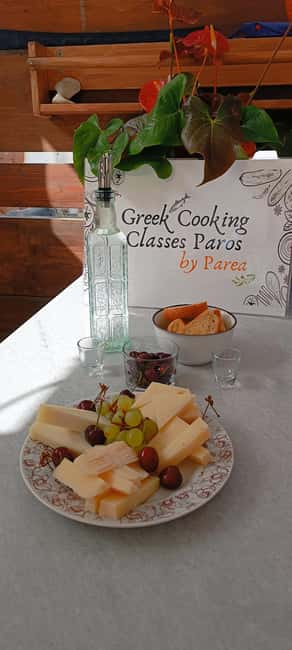
Starting with Olive Oil, Cheese, Olives, and Souma
The food begins before the cooking does. You start with an olive oil tasting, a good introduction to the ingredient that ties together so much Greek cooking. Rather than treating olive oil as a background item, the class gives it its own place at the table.
The tasting comes with a cheese platter featuring local varieties made by island farmers. The selection can include characteristic Paros cheeses, and one especially memorable example described by a participant was a six-month Gouda. That is a useful reminder that Greek island cheese is not limited to the familiar feta found in every tourist market.
You will also try local homemade olives and souma, a traditional spirit from a local distillery. Souma is not the same as wine, so take the tasting at your own pace. This opening spread gives you time to settle in, meet the other people in the class, and learn about the ingredients before you start chopping.
I like this opening because it puts Paros on the plate right away. You are not just making a generic Greek meal with supermarket ingredients. The tasting connects the recipes to local farmers, producers, and island customs.
Making Tzatziki, Keftedakia, and Greek Salad
The first cooking section centers on classic Greek appetizers. Tzatziki is simple on paper, but small choices matter: the balance of yogurt, cucumber, garlic, herbs, and seasoning can change the whole dish. You will see how the ingredients work together instead of merely receiving a finished bowl.
Keftedakia, the small Greek meatballs, add a different lesson in seasoning and texture. They are the sort of food that looks easy until you try to make the mixture hold together and taste properly seasoned. The class also includes a traditional Greek salad, where fresh vegetables and good olive oil do most of the work.
The instruction is hands-on, with practical cooking guidance mixed into the preparation. You may pick up knife skills, details about Greek ingredients, and tips that make sense in a home kitchen. The value here is not just learning how to reproduce one exact menu. You gain a better feel for how Greek cooks handle simple, fresh food.
The salad can also act as a lesson in restraint. Greek cooking often depends less on complicated sauces and more on the quality of tomatoes, herbs, olive oil, cheese, and vegetables. On Paros, using produce grown close to the kitchen makes that point clear.
Choosing a Seasonal Main Dish
The main course is where the class can change with the time of year. The available choices include fresh seasonal stuffed vegetables such as tomatoes, peppers, zucchini, or aubergine. You may also prepare moussaka, pasticcio, or traditionally cooked fresh fish of the day.
This flexibility is one of the strongest parts of the format. You are not locked into a single recipe that ignores the season. Stuffed vegetables make good use of local produce, while moussaka and pasticcio show the baked, layered side of Greek home cooking.
Moussaka is often the dish people most want to learn, but it also takes more work than a quick salad or appetizer. You may find the class especially useful if you want to understand the stages behind a traditional dish rather than simply order it at a taverna.
Fresh fish offers a different kind of lesson. The exact fish is not specified in advance, since it depends on what is available that day. That is part of the appeal, but it also means you should not book expecting one guaranteed main course.
The recipes are designed to be practical at home. You leave with cooking ideas that can be recreated rather than with a demonstration that only works in a professional kitchen. The emphasis on local ingredients also teaches you how to substitute based on what is fresh where you live.
A few more wine tours around Greece worth a look
- Santorini: Cooking Class with Lunch and Wine Tasting
★ 4.8 · 289 reviews - Mykonos: Cooking Class with Food and Wine
★ 4.9 · 282 reviews - Greek Cooking Class with a Local Chef, Wine, & Meal in Drios
★ 4.9 · 246 reviews - Rhodes: Cooking Lesson and Wine Tasting with Lunch
★ 4.9 · 93 reviews
Eating the Meal You Prepared
The reward comes at the table. Once the appetizers and main dish are ready, you eat the food as a full meal, with homemade local wine served throughout.
The wine comes from the family farm, giving the drink a direct connection to the people hosting you. It is a simple but important touch. Instead of adding one standard bottle to a packaged activity, the class presents wine as part of the family’s food culture.
Dessert is either Greek halva or baklava. Both are traditional choices, though they offer different endings. Halva is generally simpler and more crumbly, while baklava brings the familiar combination of pastry, nuts, and syrup.
Portions appear to be generous. My practical advice is to skip breakfast or eat only a light meal before arriving. The class includes the opening cheese and olive spread, appetizers, the main course, dessert, and wine. If you are visiting Paros during a busy food-focused trip, plan your evening around this meal rather than trying to squeeze in a second dinner.
The meal also gives you time to talk with the hosts and other participants. This is not a class where everyone immediately rushes away after the final recipe. The social side matters, especially if you enjoy meeting people through food.
What the Local-Farm Focus Adds
The strongest theme running through the class is support for Paros farmers and producers. The vegetables, olive oil, cheese, olives, wine, and other ingredients are tied to the island and its food economy.
That matters because Greek food can easily be reduced to a tourist checklist: feta, grilled meat, salad, and a whitewashed view. This class gives you a closer look at the work behind those foods. You hear about farming culture, local products, and the way the Mediterranean diet depends on fresh ingredients and regular home cooking.
I also like the focus on nutrition. Iro discusses the health benefits and basic ideas behind the Mediterranean diet, but the lesson is connected to actual food rather than presented as a lecture. You are cutting vegetables, tasting olive oil, and preparing dishes while learning why the ingredients matter.
The local approach does not mean everything will be unfamiliar. In fact, many dishes are recognizable Greek classics. The difference is that you see how they are made and where the ingredients come from.
Is $160 Per Person Good Value?
At $160 per person, this is a premium cooking activity for Paros. The price makes more sense when you count what is included: a four-hour class, olive oil tasting, cheese platter, olives, souma, appetizers, a traditional main course, dessert, and homemade wine.
You are also paying for instruction from people with professional culinary teaching experience and restaurant experience. If you only want a cooking demonstration, the price may feel high. If you want a full meal, drinks, local food education, and a personal connection with the hosts, the value is stronger.
The generous portions matter, too. This is not a small tasting menu that leaves you searching for dinner afterward. It functions as both a cooking lesson and a substantial meal.
For a couple, the class can be a memorable shared activity. For a food-focused visitor, it may offer more lasting value than another restaurant meal because you take home techniques and recipes. For a larger group, ask ahead, since larger classes can be arranged by request.
Who Will Enjoy It Most?
I would recommend this class to adults who enjoy food, conversation, and active participation. It suits people who want to understand Greek cooking rather than simply photograph a finished plate.
It is especially good for:
- Couples looking for a relaxed Paros activity
- Food lovers interested in local farming and ingredients
- Home cooks who want recipes they can repeat
- People curious about the Mediterranean diet
- Visitors who enjoy meeting hosts in a family setting
- Anyone who wants a long, generous meal built into the activity
It is not suitable for children under 14 or wheelchair users. The class also requires at least two participants, so solo visitors should check availability before making plans.
Allergies need to be reported at least 24 hours before the class. That notice is important because the menu includes several prepared dishes and may change with the season.
Timing, Transport, and Practical Planning
The activity lasts four hours, and starting times depend on availability. Since classes are by appointment with at least 24 hours notice, this is not a drop-in activity you can decide to do while walking around Paros.
The meeting point is Parea Cuisine. You must arrange your own transportation, so allow time to reach the location and confirm the directions before setting out.
English and Greek are spoken. The class has received very strong feedback, with a 5 out of 5 rating from 27 reviews, and the consistent praise centers on Iro’s warm hosting, the quality of the food, and the local ingredients.
Free cancellation is available up to 24 hours before the class for a full refund. You can also reserve and pay later, which helps if you are still arranging your Paros schedule.
Should You Book This Paros Cooking Class?
Book it if you want more than a recipe lesson. The combination of local cheese, olive oil, homemade olives, souma, seasonal vegetables, family wine, and a full meal gives the afternoon a strong sense of place.
I would skip it only if you dislike long meals, prefer a short demonstration, have strict dietary needs that cannot be discussed in advance, or are trying to keep activity costs low. For everyone else, this is a satisfying way to connect Greek food with the people and farms behind it.
Come hungry, tell the hosts about allergies early, and leave plenty of time afterward. Four hours is a long stretch, but here it is filled with cooking, eating, stories, and the kind of hospitality that can make a Paros visit feel personal.
FAQ
Where does the Greek cooking class meet?
The meeting point is Parea Cuisine in Paros. Transportation to the meeting point is not included.
How long does the cooking class last?
The class lasts four hours. Starting times depend on availability.
What food is included?
The class includes an olive oil tasting, a local cheese platter, homemade olives, souma, Greek appetizers, a traditional main meal, dessert, and homemade local wine.
Which Greek dishes will I learn to make?
You will learn to make appetizers such as tzatziki, keftedakia, and traditional Greek salad. The main dish may be stuffed seasonal vegetables, moussaka, pasticcio, or fresh fish of the day.
Is wine included?
Yes. Homemade local wine is included and is served with the meal.
Can I tell the hosts about food allergies?
Yes. You must inform the hosts about allergies at least 24 hours before the class.
Are children allowed to participate?
The class is not suitable for children under 14.
Can I cancel the booking?
Yes. You can cancel up to 24 hours in advance for a full refund. You can also reserve now and pay later.
Newly added around Greece
- From Chania Private half day Winery-Olive factory-Kournas lake★ 5.0 · 50 reviews
- Gastronomy tour and wine tasting in traditional villages★ 5.0 · 32 reviews
- Wine & Olive Oil Tour with lunch at the White Mountains★ 5.0 · 71 reviews
- Manousakis Winery Shuttle Service Tour and Taste★ 4.5 · 34 reviews
- Chania Walking Food And Wine Night Tour★ 4.5 · 31 reviews
- Kefalonia: Private Olive Oil, Honey & Wine Tasting Experience★ 5.0 · 32 reviews
- Dreamy Cruise sunset tour with dinner and unlimited wine!★ 5.0 · 41 reviews
- Kefalonia Island Bus Tour- Wine Tasting, Melissani & Fiscardo★ 5.0 · 301 reviews
Cooking Classes, compared.
Pasta & Tiramisu Cooking Class with Unlimited Wine
Read our review →
Pasta Making Class with Wine, Limoncello, and Dessert
Read our review →
Cooking Class Pasta & Tiramisu Making Unlimited Wine
Read our review →
Fettuccine & Tiramisù: Cooking Class with Wine & Limoncello
Read our review →
Pasta Making & Wine Tasting with Dinner in Frascati from Rome
Read our review →
Rome Cooking Class: Make Pasta, Dine & Drink Wine With Local Chef
Read our review →Browse the lists this tour appears in