
REVIEW · BORDEAUX WINE TOURS
Traditional Gourmet Food & Wine Tour in Bordeaux
Bordeaux tastes better on foot. This 3-hour-30-minute walk pairs local food with city history, moving from Saint-André Cathedral and medieval gates to bakeries, chocolate shops, specialty stores, and a wine cellar. I like the thoughtful route and the way Alexandra, the guide most often named by participants, adjusts food choices to the group.
I also like the small maximum of eight people. You are not being herded between large tour buses. The main consideration is that this is a walking and tasting tour, not a formal restaurant meal, so you should arrive ready to sample along the way and help gather food for the final wine pairing.
Key points at a glance
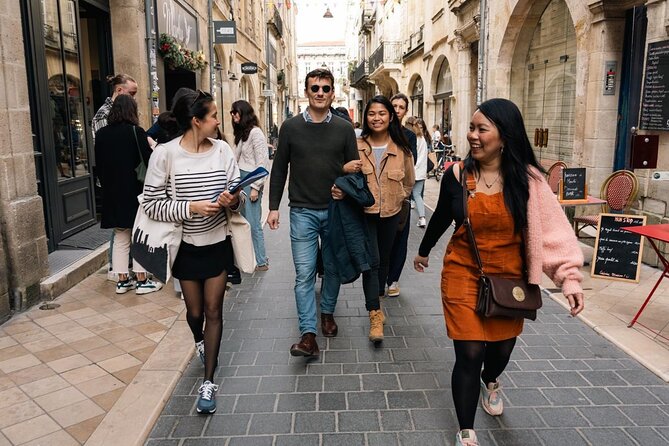
- A food crawl with a city tour built in: You see Pey-Berland, Saint-André Cathedral, Porte Dijeaux, the Grand Théâtre, and other central sights between tastings.
- Alexandra makes it personal: She asks about preferences and can help shape the bread, cheese, charcuterie, pastry, and other choices.
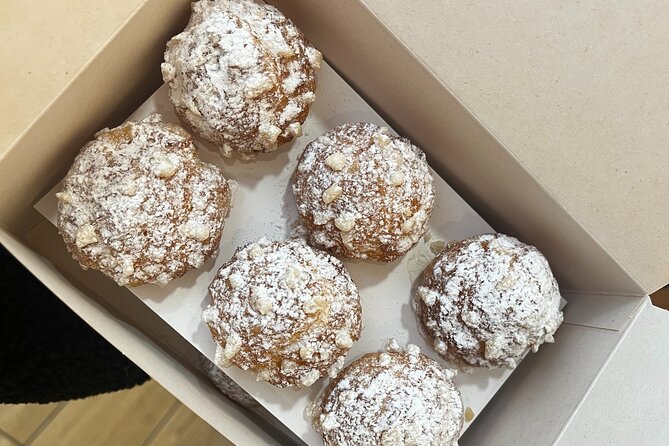
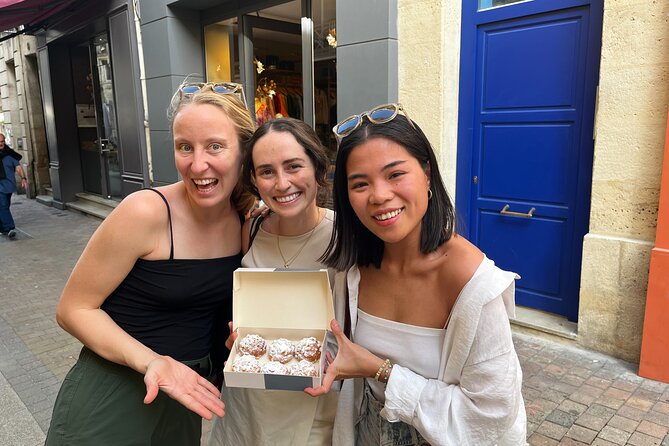
- The tastings cover Bordeaux beyond wine: Expect cannelés, bread, pastries, honey, chocolate, cheese, charcuterie, regional wine, and a famous local pastry.
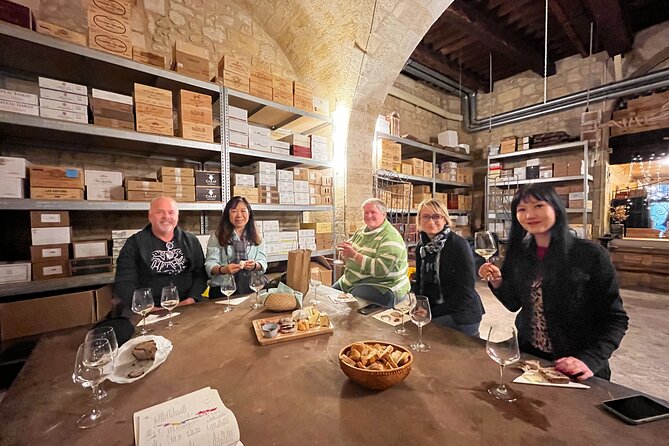
- The final stop is practical and atmospheric: Food collected during the walk is enjoyed with wine in a cozy cellar at the start of Rue Notre-Dame.
- The group stays small: With a maximum of eight people, conversation and individual attention are central to the outing.
- The price reflects more than samples: At $123.09 per person, you are paying for guided sightseeing, food shopping, tastings, local context, and the final wine stop.
Starting at Pey-Berland with Bordeaux’s signature pastry
The tour begins at Place Pey-Berland, in the center of Bordeaux. This is a useful meeting point because the square brings several major sights together: the Pey-Berland Tower, Saint-André Cathedral, and the city hall complex.
The opening discussion covers the bell tower, the cathedral, and notable weddings connected with the site. That gives you a quick sense of Bordeaux as a city where religious buildings, civic power, and public ceremony have shared the same streets for centuries.
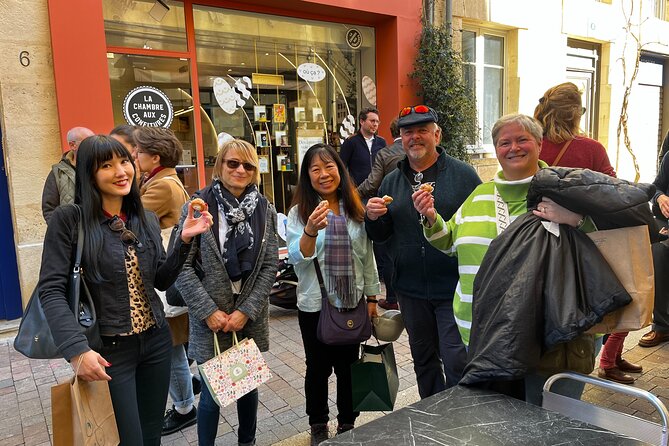
The first bite is one of Bordeaux’s essential specialties: the cannelé. This small pastry has a dark, caramelized exterior and a soft center. The stop is said to focus on one of the city’s best versions, which makes it a good early introduction to local food rather than a generic French pastry tasting.
You spend about 20 minutes here. That is enough time for an explanation and a taste, but not enough for a long visit inside every building. The emphasis is on seeing the square and eating something connected to Bordeaux.
More Food Experiences in Bordeaux:
- Saint-Emilion Food and Wine Day Tour
★ 5.0 · 323 reviews - Bordeaux Old Town Food and Wine Tour
★ 5.0 · 278 reviews - Devour Bordeaux: Ultimate Food & Wine Tasting Tour
★ 5.0 · 79 reviews
Saint-André Cathedral and the former archbishop’s palace
Saint-André Cathedral gets only about five minutes in the scheduled route, so set your expectations correctly. You will hear why the cathedral matters, but this is not a guided interior tour or an extended architectural visit.
Its importance comes from both faith and travel. The cathedral is linked to the Camino de Santiago pilgrimage route, and it hosted major medieval weddings. Those details add meaning to what might otherwise be a quick photo stop.
Next comes the Hôtel de Ville de Bordeaux, which began as the archbishop’s palace and was built between 1771 and 1784. Today it serves as Bordeaux’s administrative center and a setting for official events.
The stop here lasts about two minutes. That sounds brief, but it works as part of a walking route. You are not spending the morning inside museums. Instead, Alexandra uses the buildings around you to explain how Bordeaux developed and how old religious spaces became part of modern civic life.
Rue des Remparts, where the food shopping begins
Rue des Remparts is one of the more useful parts of the route because the sightseeing turns into active food shopping. The street follows the line of Bordeaux’s old defensive walls, and its small shops provide the setting for several tastings.
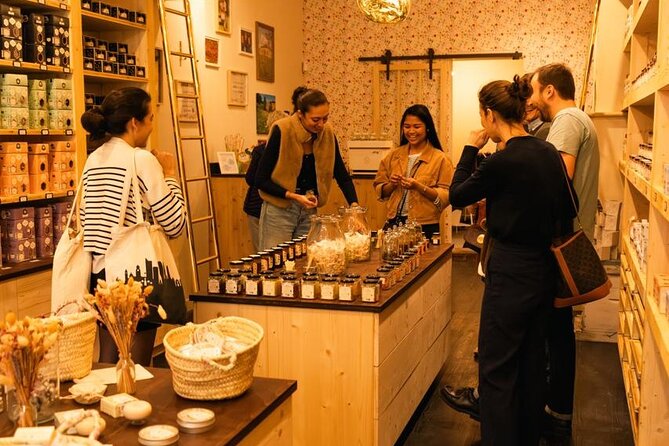
Here you may stop for bread and pastries, taste honey, and buy charcuterie. The food is not simply placed in front of you as a finished plate. You help build the selection that will later be eaten with wine.
That small detail makes the tour feel more personal. Alexandra asks about likes and dislikes, then helps the group choose items that fit different tastes. If you prefer one kind of cheese or have a strong opinion about sweet foods, this part gives you a chance to speak up rather than accept a fixed menu.
The route spends about 30 minutes on Rue des Remparts. You should be ready for several short shop visits rather than one long tasting. Previous groups have praised the bakeries, butcher shops, patisseries, wine stores, and specialty food businesses included along the walk.
This is also where the tour can be especially useful for the rest of your stay. You are shown places where you can return to buy bread, sweets, or picnic supplies on your own. One specific pastry highlighted along the route is Dune Blanche, a local favorite that may be easy to miss if you are only following the main sightseeing streets.
Porte Dijeaux and Bordeaux’s changing city center
Porte Dijeaux is a quick but worthwhile stop. The arched gate marks an old entry point into the city, with connections reaching back to ancient Bordeaux. One explanation links the location to a temple dedicated to Jupiter, while another places it near the boundary between the historic city and the Jewish district.
You have about five minutes here. That is enough to understand why the gate matters and to take in its position within the modern city. It is a reminder that Bordeaux’s central streets were shaped by older boundaries, entrances, and communities.
The tour then moves toward Galerie des Grands Hommes, in the Golden Triangle. The area once served as an old market during the 18th century and later became a polished district of shops, restaurants, and cultural venues.
The scheduled stop is about 15 minutes. It is not primarily a tasting stop, but it gives you a different view of Bordeaux. The city is not only grand façades and wine merchants. It also has an upscale commercial center where old market functions have been replaced by elegant stores and dining rooms.
A few more wine tours around Bordeaux worth a look
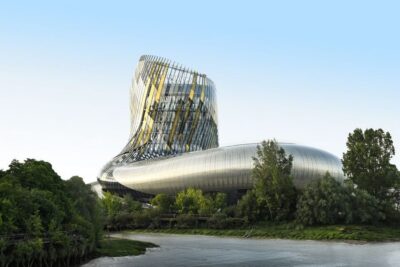
- Bordeaux: Cité du Vin Entry Ticket and Wine Tasting
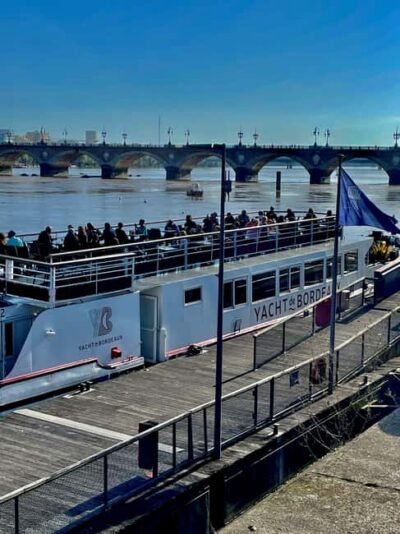
★ 4.6 · 3,885 reviews - Bordeaux: River Garonne Cruise with Glass of Wine and Canelé
★ 4.5 · 3,630 reviews - From Bordeaux: Afternoon Saint-Emilion Wine Tasting & snack
★ 4.8 · 1,581 reviews - Medoc or Saint Emilion Wine Tasting and Chateau from Bordeaux
★ 5.0 · 1,415 reviews
Chocolate near the Grand Théâtre
Place de la Comédie is one of the grandest city spaces on the route. The Grand Théâtre and the luxurious Grand Hôtel face one another, creating a formal setting at the heart of Bordeaux. The square also opens views toward major avenues and the Monument aux Girondins at Place des Quinconces.
This is one of the better sightseeing stops because you can take in several directions at once. You see how Bordeaux’s central plan uses broad avenues and ceremonial buildings to create a sense of scale.
Near the opera house, the group stops at one of Bordeaux’s oldest chocolate institutions. You taste several varieties of chocolate, adding a different texture and flavor to a day that already includes pastry, bread, honey, cheese, and charcuterie.
The chocolate tasting takes about 20 minutes. It also gives you a chance to compare Bordeaux’s sweet traditions. The cannelé is tied closely to the city, while chocolate offers a broader but still distinctly local shopping experience.
The 11-hectare garden and a slower pace
The route also includes an 11-hectare garden described as Bordeaux’s lungs. It contains many plant species and offers a picnic setting away from the city streets.
The available schedule does not assign a precise duration to this stop, so the amount of time may depend on the day and the group. Treat it as a change of pace rather than a formal garden tour. After the shops, samples, gates, and grand squares, a green open space gives the walk some breathing room.
This is a useful inclusion for anyone who enjoys variety. The tour is not a nonstop sequence of storefronts. You get architecture, history, food, and a quieter public space in the same outing.
Ending in a Chartrons wine cellar
The tour ends at 3 Rue Notre Dame, at the beginning of Rue Notre Dame in the Chartrons district. The final stop is a cozy wine cellar, where the group enjoys regional wine with food collected during the walk.
This is the point that gives the route a clear shape. You start with a cannelé, shop for bread and savory items, taste honey and chocolate, and finish by bringing the pieces together with wine.
The final meal appears to be a generous midday spread rather than a restaurant service with separate courses. You may have bread, local cheese, charcuterie, pastries, and other products chosen during the route, paired with regional wine in an informal setting.
I like this format because it connects the tasting to the shops. You are not just sampling isolated bites. You learn how the products work together, and you get a practical idea of what to buy for a picnic or simple meal in Bordeaux.
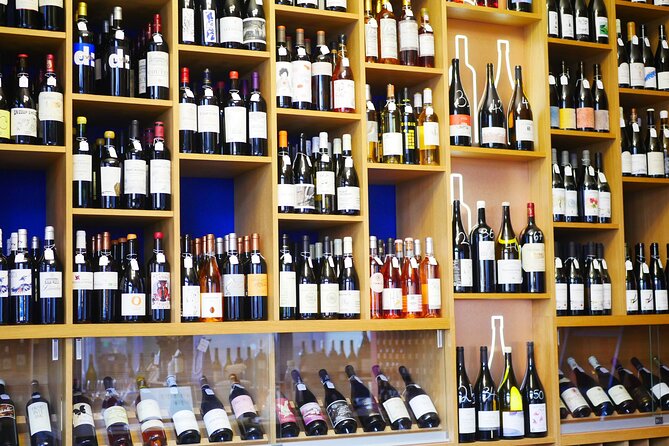
The wine component is also more focused than a full vineyard excursion. You stay in the city and taste in a local cellar. If you want château visits and vineyard views, this is not that tour. If you want to understand Bordeaux through food and wine without leaving the center, the format makes sense.
What Alexandra adds to the walk
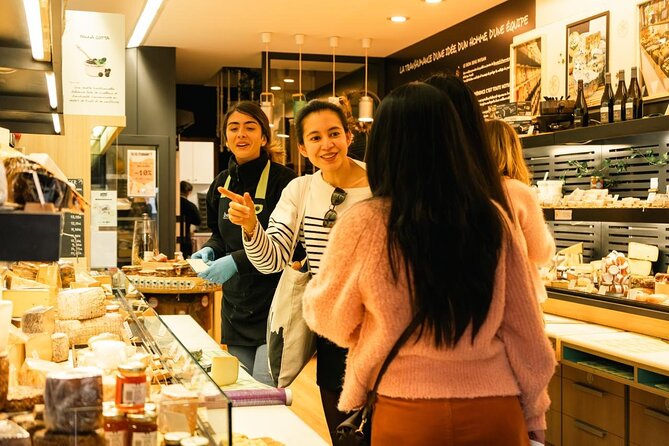
The guide is a major part of the tour’s appeal. Alexandra is repeatedly praised for her warmth, good humor, and attention to food preferences. She brings history and culture into the walk instead of treating the city as a backdrop for snacks.
Her approach appears especially helpful for first-time visitors. She can point out places you might walk past, explain why certain products matter, and suggest restaurants or wine bars for later. She has also helped arrange gluten-free options for a participant’s wife, although you should still communicate dietary needs before the tour.
The small group limit of eight supports this style. You can ask questions without shouting across a crowd, and the guide has a better chance to remember what you like. On one occasion, a couple ended up with a private-feeling outing because they were the only participants. That is possible, but it should not be treated as guaranteed.
The tour also benefits from Alexandra’s local connections. The bakeries, chocolate shop, butcher, wine store, and other specialty businesses are not just anonymous tasting stations. The focus is on family-run and independent food places, which gives the walk a more grounded feel.
Is $123.09 a fair price?
At $123.09 per person, this is not a cheap snack walk. The value depends on how much you want from the outing.
You are paying for about three and a half hours of guiding, city orientation, food tastings, shopping assistance, regional wine, and the final cellar gathering. The included food covers fresh bread, cannelés, chocolates, honey, cheese, charcuterie, pastries, and regional wine.
If you bought every item separately, you would still be paying for the guide’s time and local knowledge. The route also saves you the work of finding suitable shops and deciding what to order. For a first visit to Bordeaux, that practical help can be worth a good part of the price.
The value is weaker if you mainly want a large formal meal or a dedicated wine education session. This is a social grazing tour with sightseeing. Some stops are short, and the cathedral and city hall are viewed as part of the walk rather than visited in depth.
The strongest value comes when you enjoy trying many small portions, asking questions, and learning where to shop afterward.
Who should book this Bordeaux food tour?
I would suggest it to first-time visitors who want a quick orientation to central Bordeaux with food built into the route. It also suits couples, small groups, and solo visitors who prefer conversation over a large commercial tour.
It is a good match if you want:
- A compact introduction to Bordeaux’s central sights
- Local pastries, bread, chocolate, honey, cheese, charcuterie, and wine
- A small group capped at eight people
- Help choosing food based on your preferences
- A final tasting in a wine cellar
- Suggestions for shops and restaurants during the rest of your stay
You may want something else if you dislike walking, want a sit-down restaurant meal, or expect a long visit inside the cathedral and other monuments. The tour also depends on good weather and a minimum number of participants. If it is canceled for either reason, you are offered another date or a full refund.
The booking terms are straightforward: you can cancel up to 24 hours before the start for a full refund. Changes or cancellations inside that window are not refunded or accepted.
Final verdict: a smart first taste of Bordeaux
I would book this tour early in a Bordeaux stay, especially if you want food advice for the days that follow. The best parts are the independent shops, the ability to help choose the final spread, and Alexandra’s friendly way of joining local history to everyday eating.
At $123.09, it asks more than a simple market walk. But you receive a guided city tour, a broad run of tastings, regional wine, and a practical introduction to places you can return to. Book it if you want Bordeaux in small bites, with enough history to explain what you are seeing and enough food to make the lesson delicious.
FAQ
Where does the tour begin?
It begins at Place Pey Berland, Pl. Pey Berland, 33000 Bordeaux, France.
Where does the tour end?
It ends at 3 Rue Notre Dame, 33000 Bordeaux, in a cozy wine cellar at the beginning of Rue Notre Dame in the Chartrons district.
How long does the tour last?
The tour lasts approximately 3 hours and 30 minutes.
What food and drink are included?
The tour includes fresh bread, regional wines, Bordeaux cannelés, gourmet chocolates, honey, local cheese, charcuterie, and a famous local pastry.
How many people can join?
The tour has a maximum of eight participants.
Is the tour offered in English?
Yes. It is offered in English.
Is the tour suitable for most people?
Most people can participate, and the tour is near public transportation. Service animals are allowed.
Can I cancel for a full refund?
Yes. You can cancel at least 24 hours before the start time for a full refund. Cancellations or changes made less than 24 hours before the start are not refunded or accepted.
Newly added around Bordeaux
- Saint Emilion Full Day Wine and Bike Tour★ 5.0 · 167 reviews
- Luxurious full day Bordeaux wine tour in a Tesla★ 4.5 · 31 reviews
- Private Bordeaux History Tour with a glass of Bordeaux wine.★ 5.0 · 28 reviews
- Private – Best of Bordeaux Walking Tour + Glass of Bordeaux Wine★ 5.0 · 240 reviews
- Wine Masterclass & Cheese Tasting Workshop in Bordeaux★ 5.0 · 29 reviews
- Bordeaux wines tasting workshop including Food & Wine pairings★ 5.0 · 31 reviews
- Medoc Afternoon Wine Tour – 2 Wineries, tastings & delicacies★ 4.5 · 74 reviews
- Discovery of the Bordeaux vineyard in 3 wines★ 5.0 · 133 reviews
Bordeaux Wine Tours, compared.
River Garonne Cruise with Glass of Wine and Canelé
Read our review →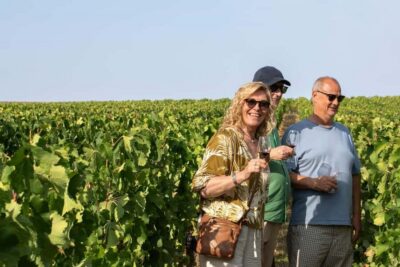
Afternoon Saint-Emilion Wine Tasting & snack
Read our review →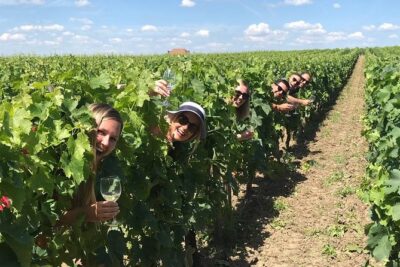
Medoc or Saint Emilion Wine Tasting and Chateau from Bordeaux
Read our review →
Saint Emilion Day Trip with Sightseeing Tour & Wine Tastings from Bordeaux
Read our review →
Saint Emilion Half-Day Trip with Wine Tasting & Winery Visit from Bordeaux
Read our review →
Browse the lists this tour appears in