
REVIEW · WINE TASTINGS
Bordeaux: Cité du Vin Entry Ticket and Wine Tasting
Wine gets the full museum treatment here. Bordeaux’s Cité du Vin turns wine culture into a lively, sensory experience, with 18 themed spaces, hands-on displays, films, and stories from vineyards around the world. I like the excellent digital guide and the way the museum welcomes beginners rather than assuming you already know your tannins from your terroir. The included glass of wine on the top floor is another strong point.
The main drawback is time. The advertised visit can take about three hours, but you could easily spend four or five if you stop at every station. Some interactive displays can also become slow when the museum is busy, and the headset system may not work perfectly with every hearing aid.
Key points to know before you go
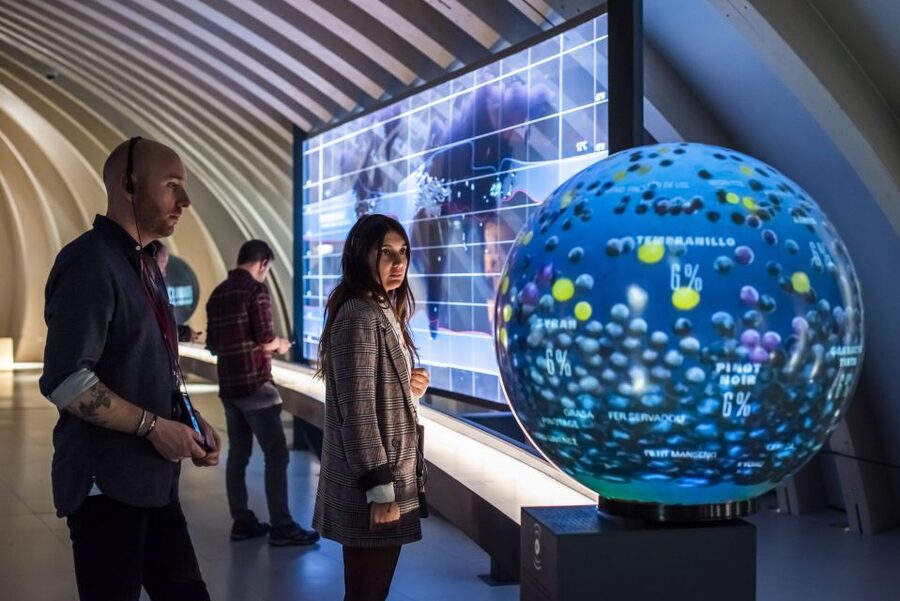
- The museum covers the whole world of wine: Bordeaux is important here, but the exhibition also looks at vineyards, customs, production, and drinking traditions far beyond France.
- You control the pace: Scan each station when you are ready, skip crowded areas, and return later if needed.
- The digital guide comes in eight languages: Choose from Chinese, Dutch, English, French, German, Italian, Spanish, and Portuguese.
- The tasting takes place at 35 meters high: Your ticket includes one glass from a changing selection of about 15 wines.
- Plan at least three hours: A quick visit is possible, but rushing would miss much of the museum’s appeal.
- The $27 ticket is strongest for curious beginners: Serious wine fans may want to add a separate tasting workshop.
What the Cité du Vin is trying to do
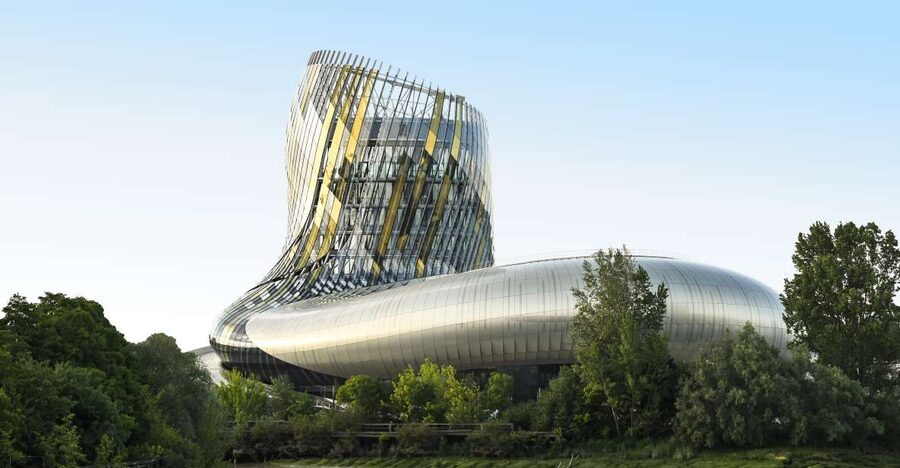
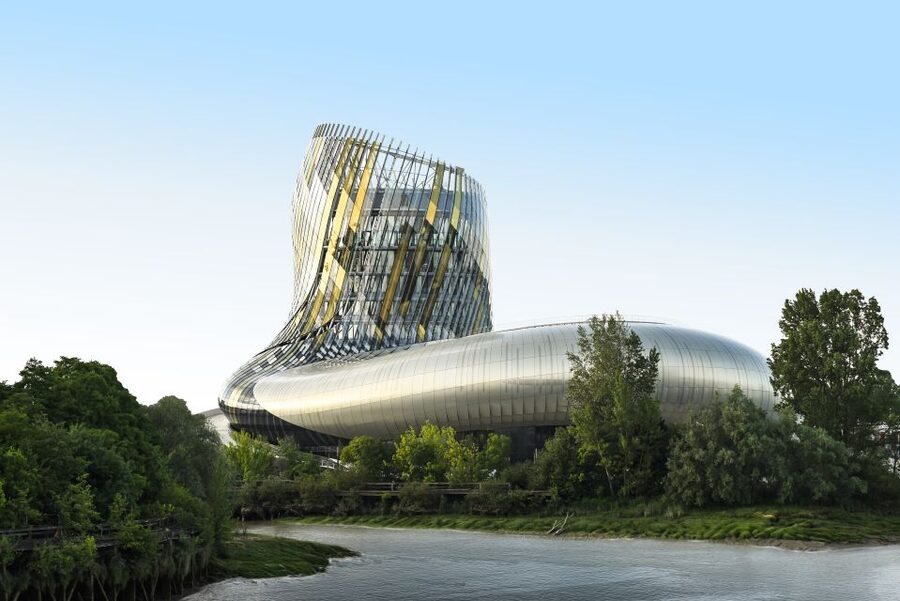
The Cité du Vin is not simply a museum about Bordeaux wine. Its wider aim is to explain wine as part of human culture, trade, farming, food, celebration, and daily life.
That broad approach is useful. You are not expected to arrive knowing the difference between a grape variety and an appellation. The exhibition explains wine production in plain terms, then gives you plenty of room to follow your own interests.
The 18 themed displays cover subjects such as vineyards around the world, the making of wine, the role of the senses, and wine through history. The material is delivered through videos, large screens, audio, visual effects, and hands-on activities rather than long blocks of text.
I especially like this format for mixed groups. One person can stop to learn about winemaking while another tests an aroma display or watches a short film. Children and adults can both find something to do, even if not everyone in your group is passionate about wine.
The museum also avoids treating Bordeaux as the only important wine region. You will encounter information about wine from different parts of the world, including regions that may be unfamiliar to you. That makes the experience feel more like an introduction to global wine culture than a sales pitch for local bottles.
More Wine Tastings in Bordeaux
- From Bordeaux: Afternoon Saint-Emilion Wine Tasting & snack
★ 4.8 · 1,581 reviews - Medoc or Saint Emilion Wine Tasting and Chateau from Bordeaux
★ 5.0 · 1,415 reviews - Saint Emilion Day Trip with Sightseeing Tour & Wine Tastings from Bordeaux
★ 5.0 · 1,120 reviews
Getting inside and finding the exhibition
If you book this ticket, go directly to the second floor and scan your voucher. You do not need to queue at the reception downstairs or visit the ticket desk first.
That detail matters because the building can feel a little imposing when you first arrive. The ticket saves you a trip downstairs, although it does not give you priority over other people already waiting to enter. You should still allow a little time for the entry process, especially at a busy hour.
Bring your passport or ID card, as these are listed among the required items. The building is wheelchair accessible.
Once inside, you receive access to the permanent exhibition and its digital guide. The guide works in eight languages and provides audio for the displays. It is a useful tool, but pay attention when using it. At some stations, the audio is connected to a particular display, and several people may need to wait before the next person can begin.
The 18 themed displays and how they work
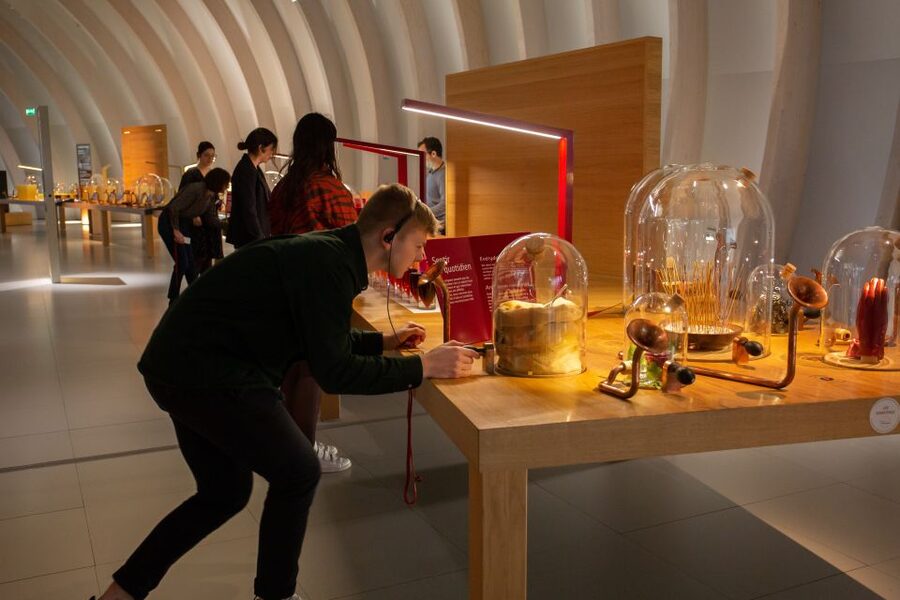
The exhibition does not force you through one strict route. You can scan individual points, listen to the related explanation, and move on when you are ready.
That freedom is one of the best design choices in the museum. If a display is crowded, you can visit another area and return later. It also means you can choose the level of detail that suits you. A casual visitor can cover the main ideas in about two hours, while an enthusiast can spend much longer with the material.
The displays are built around several senses. You may watch large video presentations, listen to spoken explanations, examine visual material, or test your sense of smell. The sensory section on the second level is particularly memorable because it gives you a practical way to think about aromas instead of simply listing technical wine terms.
This is where the museum helps beginners most. Wine descriptions can sound vague when you only read them on a menu. Seeing and smelling examples gives those descriptions more meaning. If you have ever wondered how people identify notes such as fruit, spice, flowers, or even rubber, this section gives you a way to connect the words to actual sensations.
The museum’s interactive design does have a tradeoff. You may occasionally find yourself waiting for someone else to finish with a station. In a quieter period, this is hardly a problem. At peak times, the free-flowing layout can become less comfortable because several people gather around the same popular displays.
Learning about vineyards and winemaking
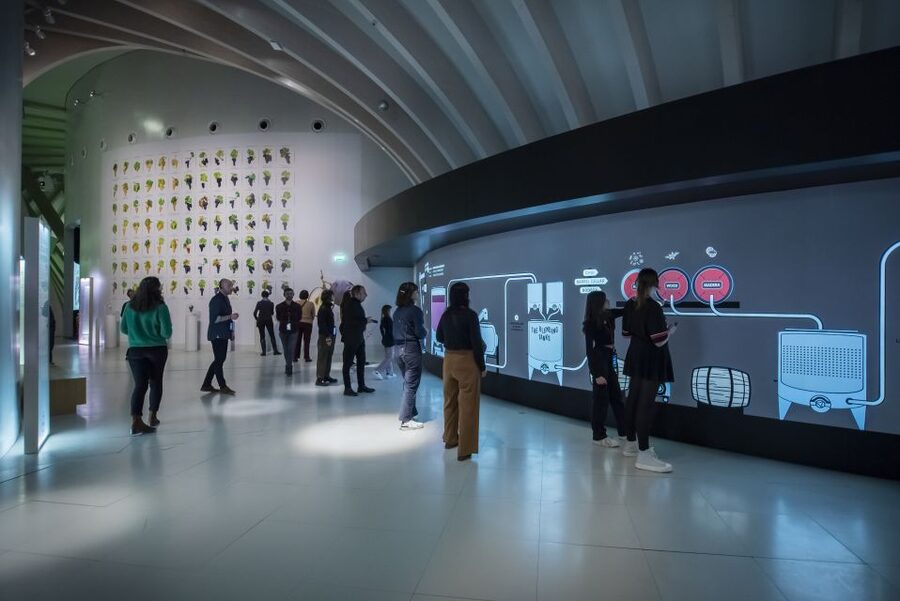
The wine-making material explains the work behind the bottle, from vineyard conditions to production methods. You get a look at how much depends on farming, climate, timing, and careful decisions.
I would not treat the museum as a technical course. It gives you a broad foundation rather than training you to taste professionally. That is exactly why it works well for someone who enjoys wine but has never had formal instruction.
The exhibition also helps correct the idea that wine begins and ends with a famous French label. You can compare traditions from different wine-producing parts of the world and see how wine has developed in different settings.
The global approach is valuable in Bordeaux. You may be visiting because of the city’s famous châteaux, but the museum gives you a wider frame before you start tasting local bottles. It helps explain why geography, history, farming, and culture all matter in the final drink.
The information is delivered in short, manageable pieces. You do not need to read every panel or listen to every recording. You can choose the stops that interest you and still leave with a clear sense of how wine is made and why it varies so much from place to place.
More Wine Tastings in France
- Saint Emilion Half-Day Trip with Wine Tasting & Winery Visit from Bordeaux
★ 4.5 · 1,034 reviews - From Bordeaux: Half-Day Saint-Émilion Tour and Wine Tasting
★ 4.7 · 699 reviews - Saint-Emilion Electric Bike Day Tour with Wine Tastings & Lunch
★ 5.0 · 696 reviews - Bordeaux Wine and Trade Museum Admission Ticket with Wine Tasting
★ 4.5 · 599 reviews
The sensory section is the museum’s strongest area
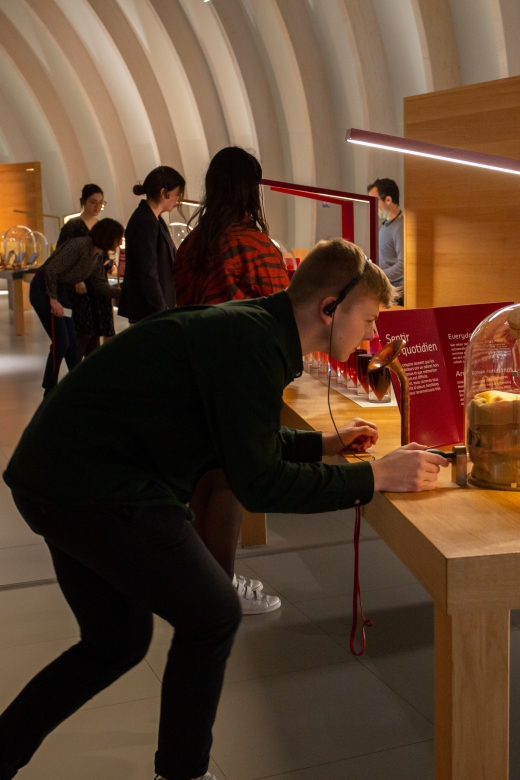
If your time is limited, give special attention to the sensory displays. This part turns abstract wine language into something you can explore with your own senses.
The visual and aromatic activities are not just decoration. They help you understand why a tasting involves more than taking a sip. Appearance, smell, texture, and aftertaste all shape the experience.
This area can also be useful if you are joining a winery visit later in your trip. You will have a better vocabulary for asking questions and a clearer idea of what a guide is describing.
The museum is not only for dedicated wine drinkers. A few visitors have found it worthwhile even without much interest in wine because the exhibition also covers culture, history, farming, design, and technology. I would still say the experience works best if you are willing to spend time with the displays rather than treating it as a quick photo stop.
The digital guide in eight languages
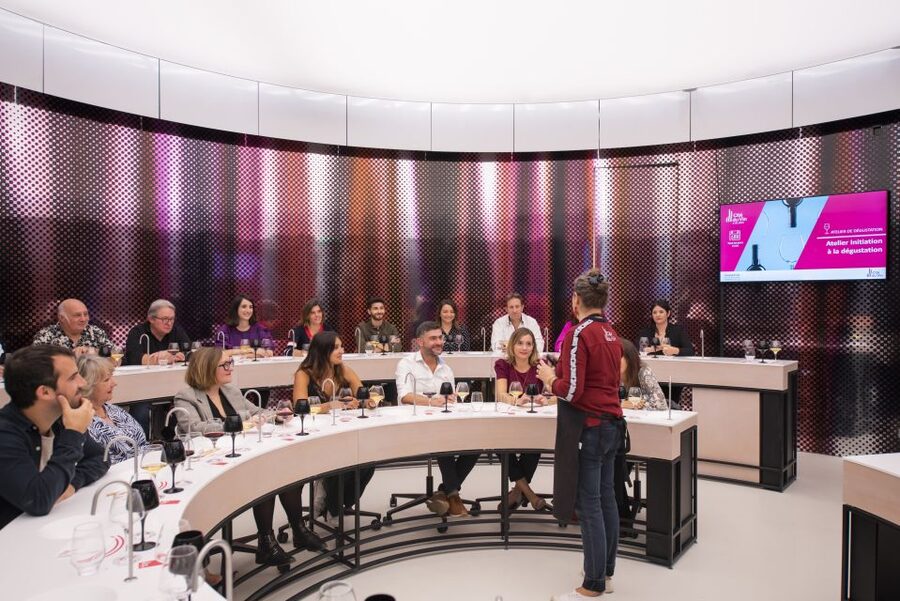
The portable digital guide makes the museum accessible to international visitors. You can use it in Chinese, Dutch, English, French, German, Italian, Spanish, or Portuguese.
That language range is a real advantage, particularly in a museum with this much information. You can follow the explanations in a language you understand comfortably instead of relying only on translated labels.
The audio is generally easy to follow and lets you explore at your own pace. You can stop, move ahead, or return to a display without waiting for a scheduled group tour.
There are a few practical limitations. The equipment may require some patience at busy stations, and it may not connect properly with every hearing aid. If you use a hearing aid, it is sensible to ask staff for help at the start and check how the audio works before you get far into the exhibition.
The Belvedere tasting at 35 meters
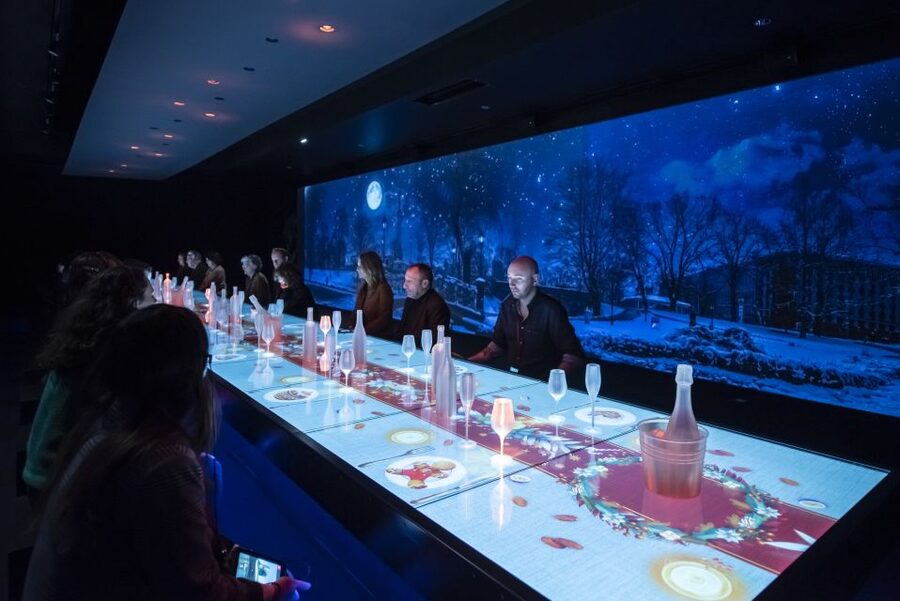
The final stop is the eighth-floor Belvedere, 35 meters above the ground. Here you get a 360-degree view over Bordeaux and the surrounding area.
The view gives the visit a satisfying finish. After spending hours indoors with screens, aromas, and explanations, you step into an open space and see the city from above. It helps place Bordeaux in context and gives you a chance to pause.
Your ticket includes one glass of wine from a changing selection of about 15 wines. The exact choice can vary, so consider this a tasting opportunity rather than a guaranteed glass from a particular château.
The included tasting is generous for a museum ticket. It also keeps the experience from feeling too academic. You learn about wine, then finish with a real sample while looking over the city.
Do not confuse this with a full guided tasting workshop. The standard ticket provides one glass, while separate tasting workshops require an additional charge. If you want detailed instruction, comparisons between several wines, or help from a specialist, the workshop may suit you better.
The Belvedere can be a popular ending point, so do not plan to rush through the museum just to arrive at a particular minute. Your ticket is valid for one day, and the main value comes from using the exhibition at your own speed.
How long should you allow?
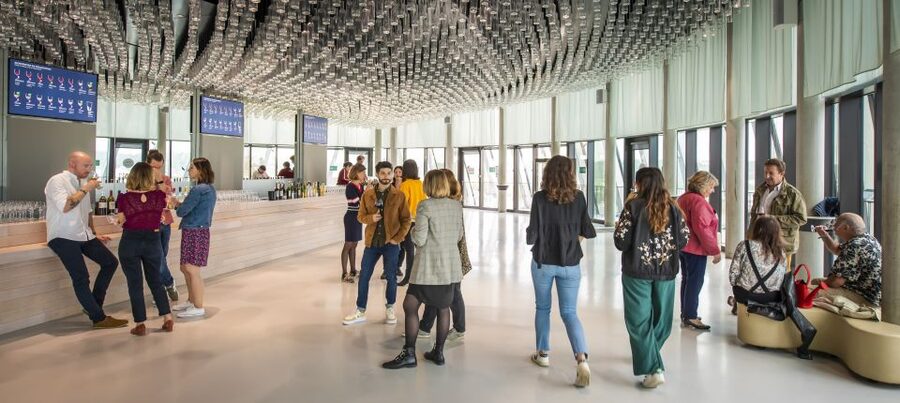
The official guidance suggests around three hours for the permanent exhibition. That is a sensible minimum for a relaxed visit.
You can move through in roughly 90 minutes to two hours if you select only the main displays. That works if you have limited time or want to combine the museum with another Bordeaux activity.
For a fuller visit, allow four hours or more. The displays are easy to underestimate because each one is self-contained. You may think you will spend five minutes at a station, then stay longer because the material is presented as an activity rather than a static panel.
I would schedule the Cité du Vin as a half-day outing. That leaves enough time for the exhibition, the Belvedere, and a look around the shop or wine cellar afterward without turning the visit into a race.
The museum closes at 4 PM on December 24, so check the opening details carefully if you are visiting during the holiday period.
Boutique, wine cellar, reading room, and restaurants
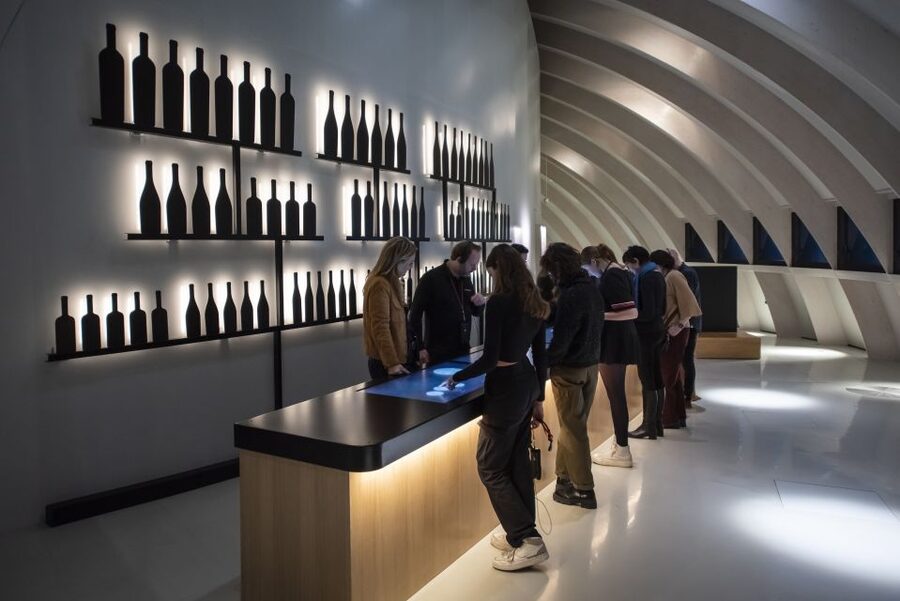
After the exhibition, you can browse the on-site boutique, international wine cellar, restaurants, and reading room.
The wine cellar is a useful follow-up to the museum because it gives you a chance to continue the global theme. You can look through a broad international selection rather than only Bordeaux bottles.
There is also a restaurant on the seventh floor with panoramic views. The supplied information does not promise that a meal is included, so treat the restaurant as an optional extra rather than part of the ticket.
The reading room offers another quiet way to continue with the subject. If you have had enough screens and interactive stations, it may be a welcome change of pace.
These extras make the Cité du Vin more than a single exhibition. You can keep the visit short, or make it part of a longer afternoon. Just remember that the $27 admission covers the permanent exhibition, digital guide, Belvedere access, and one glass of wine. Tasting workshops and temporary exhibitions are not included.
Is $27 good value?
At $27 per person, the ticket is not a bargain-basement museum admission, but it offers a strong amount of content.
The value depends on how long you stay. If you spend only an hour moving quickly through the displays, the price may feel high. If you give the museum three to five hours, use the guide, explore the sensory stations, enjoy the Belvedere, and take the included tasting, the cost becomes easier to justify.
I think the ticket is particularly good for three groups:
- Wine beginners who want a friendly introduction without booking a formal class.
- Couples or families with different interests who need a self-guided activity with several kinds of displays.
- Bordeaux visitors on a rainy or very hot day who want an indoor attraction with a strong connection to the city.
Dedicated wine lovers may find the standard tasting too limited. For them, the extra workshop is likely the better investment, especially if they want expert guidance and several wines rather than one glass.
The flexible cancellation policy also helps with planning. You can cancel up to 24 hours in advance for a full refund, and the reserve-now, pay-later option lets you keep your itinerary open.
Who should book the Cité du Vin?
You do not need to be a wine expert. In fact, beginners may gain the most because the displays explain basic ideas without making you feel behind.
Families can also make good use of the museum, though very young children may not follow every audio explanation. The interactive format gives younger visitors something to look at and touch, and one visit was described as engaging even with an eight-month-old baby.
The museum is a good choice if you enjoy learning at your own pace. It is less suitable if you want a short, traditional museum with a simple line of paintings and labels. The technology is central to the experience, and some stations require listening, scanning, or waiting.
People with hearing aids should check the audio equipment at the beginning. The building is wheelchair accessible, but the information provided does not give further details about every display or route.
Should you book this Bordeaux wine experience?
Yes, if you want more than a quick glass of Bordeaux wine. The Cité du Vin gives you a useful introduction to wine production and culture, presents it through lively hands-on displays, and finishes with a drink and a city view.
Book it if you can spare at least three hours and enjoy learning through audio, video, and sensory activities. Go early if you want a quieter visit, and head straight to the second floor with your voucher.
Skip the standard ticket only if you want a serious guided tasting rather than a museum visit. In that case, look at the separate workshops. For everyone else, the combination of global wine education, a panoramic Belvedere, and one included glass makes this one of Bordeaux’s more worthwhile indoor attractions.
FAQ
Where is the Bordeaux Cité du Vin experience located?
It is located in Bordeaux, in the Nouvelle-Aquitaine region of France.
How much does the entry ticket cost?
The listed price is $27 per person.
How long does the visit take?
Plan around three hours for a comfortable visit. You can finish in about 90 minutes to two hours if you move quickly, or spend four to five hours exploring the displays in detail.
What does the ticket include?
The ticket includes direct entry to the permanent exhibition, access to 18 themed displays, a digital guide, entry to the eighth-floor Belvedere, one glass of wine, and access to the boutique, wine cellar, restaurant areas, and reading room.
Where do I enter with a prepaid ticket?
Go directly to the second floor and scan your voucher. You do not need to queue at the reception downstairs or visit the ticket desk first.
Is the tasting included?
Yes. The ticket includes one glass of wine from a selection of approximately 15 wines.
Are wine-tasting workshops included?
No. Separate tasting workshops and temporary exhibitions are not included in this ticket.
Which languages are available for the digital guide?
The guide is available in Chinese, Dutch, English, French, German, Italian, Spanish, and Portuguese.
Is the Cité du Vin wheelchair accessible?
Yes, the experience is wheelchair accessible. Bring a passport or ID card, as these are listed among the required items for entry.
Newly added around Bordeaux
- Saint Emilion Full Day Wine and Bike Tour★ 5.0 · 167 reviews
- Luxurious full day Bordeaux wine tour in a Tesla★ 4.5 · 31 reviews
- Private Bordeaux History Tour with a glass of Bordeaux wine.★ 5.0 · 28 reviews
- Private – Best of Bordeaux Walking Tour + Glass of Bordeaux Wine★ 5.0 · 240 reviews
- Wine Masterclass & Cheese Tasting Workshop in Bordeaux★ 5.0 · 29 reviews
- Bordeaux wines tasting workshop including Food & Wine pairings★ 5.0 · 31 reviews
- Discovery of the Bordeaux vineyard in 3 wines★ 5.0 · 133 reviews
- Bordeaux Wine Masterclass: Blending workshop with appetizer★ 5.0 · 113 reviews
Wine Tastings, compared.
Douro Valley w/ Boat Tour, Wine Tasting & Lunch
Read our review →
Complete Douro Valley Wine Tour with Lunch, Wine Tastings and River Cruise
Read our review →

Small-Group Wine Tasting Experience in the Tuscan Countryside
Read our review →
Montserrat & Cogwheel Train, Gourmet Wine Tasting & Tapas/Lunch
Read our review →
Tuscany & Montepulciano Day Trip with Lunch & Wine Tasting
Read our review →Browse the lists this tour appears in