
REVIEW · WINE TASTINGS
Bordeaux Wine and Trade Museum Admission Ticket with Wine Tasting
Bordeaux keeps its best lessons underground. This small museum occupies vaulted cellars from 1720, where you can trace the city’s wine merchants, barrel makers, aging methods, and trade routes before tasting two local wines. I like the authentic old-cellar setting and the clear introduction to Merlot, Cabernet Sauvignon, merchant wines, and château wines. The main drawback is that the museum is compact and self-guided, so visitors expecting a full guided tour or a high-tech museum may feel shortchanged.
I also like the excellent value: admission costs about $14.51 and includes the tasting, with staff available to answer questions in English. You should know that the cellars can smell musty or moldy, and the tasting is fairly brief. Still, if you want a focused introduction to how Bordeaux wine is made, aged, sold, and explained, this is an easy addition to a day in the historic center.
Key points to know before you go
- The museum sits in 18th-century vaulted cellars, including spaces built in 1720 for Bordeaux’s wine trade.
- The visit is self-guided, with English explanations, folders, displays, archival material, and videos.
- The tasting includes two wines, usually used to explain the differences between Merlot and Cabernet Sauvignon.
- You learn about Bordeaux commerce, including the difference between a merchant wine and a château wine.
- The entire experience usually takes one to two hours, though a quick reader could finish the museum in about 45 minutes.
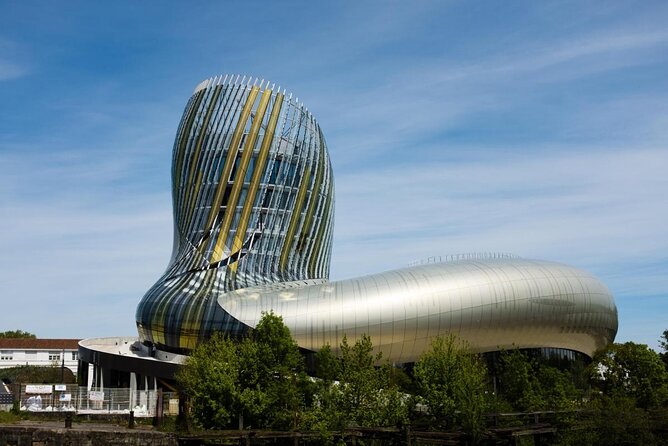
- Do not confuse it with the Cité du Vin, Bordeaux’s larger, more modern wine museum.
What the Wine and Trade Museum actually offers
The Musée du Vin et du Négoce is not a grand national museum with sweeping galleries. It is a small, specialized museum in the Chartrons district, an area closely tied to Bordeaux’s wine merchants.
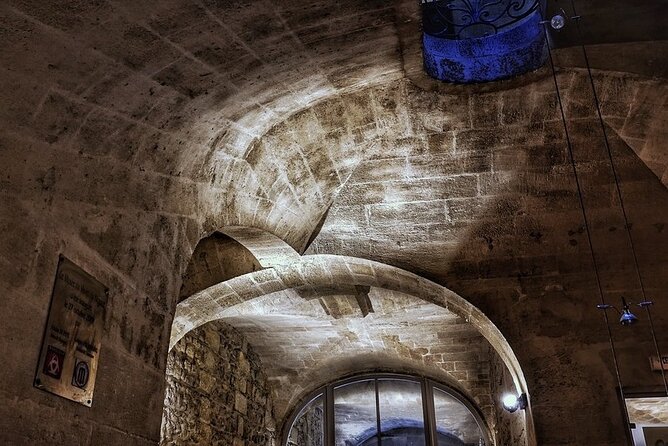
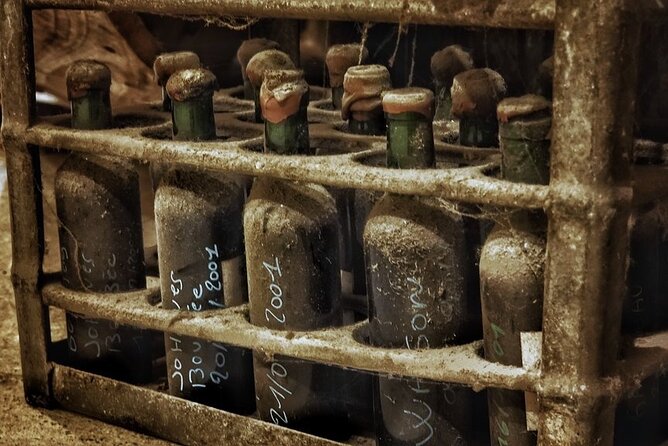
The building once belonged to Louis XV’s royal broker. Its vaulted cellars were built in 1720, and the low, enclosed rooms give the visit a strong sense of place. You are not simply looking at old bottles in a modern display case. You are standing in the kind of underground space where wine was stored, handled, and prepared for trade.
I find that setting especially useful because Bordeaux wine can seem confusing when you only see the famous château names. The museum shifts your attention from grand labels to the people and work behind them: merchants, coopers, cellar workers, brokers, and trading families.
The museum explains three centuries of Bordeaux wine and commerce. Displays and archival documents trace the careers of merchant families, while objects show the traditional work of coopers and the methods once used to age wine.
This is also a lesson in Bordeaux architecture. The Chartrons quarter developed around trade, and the museum helps explain why so many of the city’s old buildings have elegant façades paired with practical storage cellars below.
More Wine Tastings in Bordeaux
- Bordeaux: Cité du Vin Entry Ticket and Wine Tasting
★ 4.6 · 3,885 reviews - From Bordeaux: Afternoon Saint-Emilion Wine Tasting & snack
★ 4.8 · 1,581 reviews - Medoc or Saint Emilion Wine Tasting and Chateau from Bordeaux
★ 5.0 · 1,415 reviews
Exploring the 1720 cellars
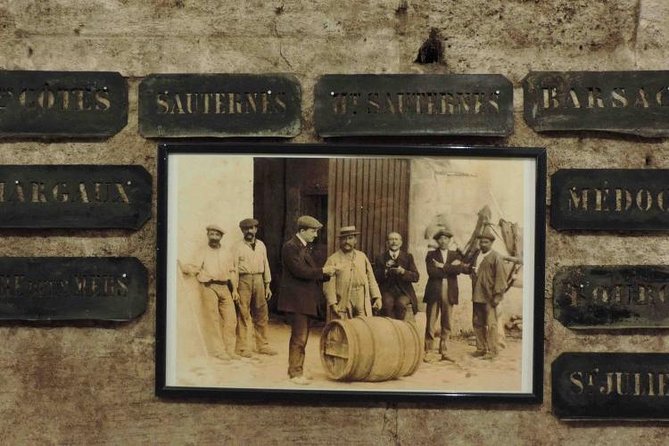
The museum portion is self-guided. You receive written material in English, and the displays include explanations, documents, artifacts, and videos.
That format gives you freedom. You can move quickly if you have a cruise stop or a packed sightseeing day, or slow down and read about the wine regions, production methods, and trading system. I would allow about an hour for the museum if you enjoy reading carefully.
The space itself is physically small. It occupies two semi-underground cellars, which limits the number of objects on display. That is important to understand before booking. You will not find a vast collection or a long route through many rooms.
Some of the information is presented in folders or in small print on the walls. One audio component has been described as confusing, so the written English material may be easier for you to follow. The museum is informative, but it is not strongly interactive. If you prefer touchscreens, large projections, and polished multimedia displays, you may prefer the Cité du Vin.
The museum works best when you take its scale seriously. Think of it as an intimate historical introduction, not a full day attraction. Read the material, inspect the old cellar spaces, watch the videos, and ask questions before moving to the tasting.
The Bordeaux wine trade, explained without the usual fuss
The strongest part of the museum is its focus on trade. Bordeaux wine is not only a story of grapes and soil. It is also a story of merchants who bought, blended, stored, marketed, and shipped wine.
The displays explain how merchant families helped build Bordeaux’s commercial reputation. You also see how the city’s wine business connected the river, the port, and markets beyond the two seas.
For you, this makes the museum a useful companion to a château visit. A château visit usually focuses on vineyards, production, and one estate. Here, the emphasis is broader. You learn how wine moved from producers into the commercial system and how the city itself prospered from that trade.
The museum also covers the workers who made the trade possible. Coopers built and repaired barrels, cellar workers managed aging, and merchants handled the business side. That practical angle gives you a better grasp of why Bordeaux became such an important wine center.
The displays are not always presented in a polished or dramatic way. Some areas feel old-fashioned, and the amount of text can be heavy. Yet that simplicity can work in your favor if you want information rather than spectacle.
The two-wine tasting at the museum shop
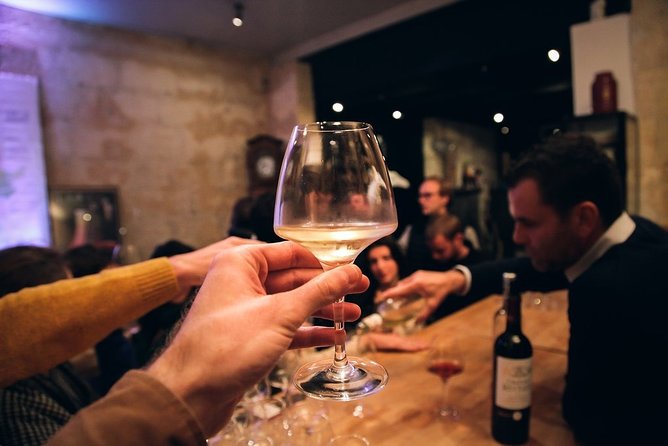
At the end of the museum visit, you go to the boutique for the included tasting. Two wines are served, with the session focused on Merlot and Cabernet Sauvignon.
The tasting is not simply a chance to drink two glasses. Staff explain how the grape varieties differ and discuss Bordeaux appellations, regional conditions, soil, climate, and the relationship between a merchant wine and a château wine.
The best part is the chance to ask questions. Staff members have been praised for giving detailed answers, and English-speaking employees are available. One host named Cristina received particularly warm praise for her attentive presentation. Other comments describe the museum director and younger staff members as generous with their time and fluent in English.
You should keep your expectations realistic. The pours are not large, and the tasting does not last a long time. If you want an afternoon of wine sampling, this is not that experience. You are receiving an educational tasting, not a wine bar session.
Still, the tasting may justify the admission price by itself. The museum is small, but the staff-led explanation gives the visit a personal finish. You can ask about the wines in front of you, then use the answers to make more sense of the museum displays.
A small chocolate or complimentary bottle has occasionally been provided, but these extras should not be treated as guaranteed. The confirmed inclusion is the tasting of two wines.
More Wine Tastings in France
- Saint Emilion Day Trip with Sightseeing Tour & Wine Tastings from Bordeaux
★ 5.0 · 1,120 reviews - Saint Emilion Half-Day Trip with Wine Tasting & Winery Visit from Bordeaux
★ 4.5 · 1,034 reviews - From Bordeaux: Half-Day Saint-Émilion Tour and Wine Tasting
★ 4.7 · 699 reviews - Saint-Emilion Electric Bike Day Tour with Wine Tastings & Lunch
★ 5.0 · 696 reviews
Merlot and Cabernet Sauvignon in plain terms
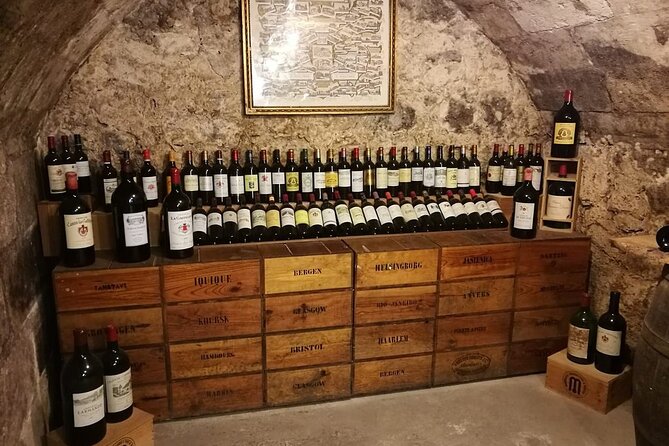
The tasting’s grape comparison is useful because Bordeaux blends can seem abstract when you only read about them.
Merlot and Cabernet Sauvignon are both central to Bordeaux wine, but they contribute different characteristics to a blend. The tasting helps you compare them directly rather than memorizing isolated facts from a wall panel.
You also learn that Bordeaux wine labels involve more than grape variety. The distinction between a merchant wine and a château wine is part of the region’s commercial system, and the tasting gives staff a chance to explain that difference in everyday language.
This is where I think the experience serves beginners best. You do not need to know Bordeaux’s appellations before arriving. The staff can connect the wine in your glass to the regions, production methods, and trade practices described in the museum.
If you already know Bordeaux wine well, you may find the formal museum material basic. You can still get value from the questions and the tasting, especially if you ask about the two wines rather than simply accepting the samples and leaving.
How long should you plan?
The stated duration is about one to two hours. That estimate makes sense if you read the material, watch the videos, inspect the objects, and take part in the tasting.
A faster visit may take around 45 minutes, particularly if you skim the folders and focus on the main displays. A careful visit can approach two hours, especially if your tasting includes a long question-and-answer period.
The museum is open daily from 10 a.m. to 6 p.m. for the stated operating period, which runs from January 3, 2025, through February 16, 2027. Since opening dates and hours can change, check the current details when you reserve.
Multiple entry times are offered during the day. That makes this practical for a morning visit, a stop between city sights, or a final activity before leaving Bordeaux.
If you arrive by cruise ship, the museum may be especially convenient. It has been described as about a five-minute walk from a cruise boat, though you should confirm your route from your own dock. The museum is also near public transportation.
Price, value, and what you receive
At about $14.51 per person, this is one of the less expensive wine-focused activities in Bordeaux. The price includes museum admission and the two-wine tasting, while extra food and drinks are not included.
I consider the value good if you want a short introduction to Bordeaux wine and trade. The old cellars, historical material, English explanations, and staff-led tasting offer more than a simple drink stop.
The value is weaker if you expect a large museum, a formal guided tour, or an interactive production experience. You may finish the exhibition quickly, and the tasting is not generous in quantity.
The boutique also sells wine and souvenirs. That can be useful if you want to take a bottle home, but shopping is separate from the admission experience. You should not feel pressured to buy anything in order to benefit from the visit.
Compared with the Cité du Vin, this museum is smaller, more traditional, and more focused on Bordeaux’s local trade history. The Cité du Vin offers a larger, more polished presentation. I would not treat the two as identical attractions. If you have time and interest, they serve different purposes.
The cellar atmosphere and practical drawbacks
The underground setting is part of the appeal, but it is also the main physical drawback. Several people have found the cellars strongly musty or moldy smelling.
That odor may be linked to the humidity of an old wine-storage building, but the explanation does not make it pleasant for everyone. If you are sensitive to damp spaces, you should consider this before booking.
The toilets have also received criticism for their condition. That is a small part of the visit, but it is worth knowing because the museum is otherwise praised for friendly staff and a good tasting.
The exhibition is not especially interactive. Most people will rely on written explanations, folders, videos, and the objects in the cellars. I would choose this experience for its atmosphere and information, not for modern museum technology.
Most people can participate, and the site is near public transportation. The supplied information does not give detailed accessibility specifications, so if you need step-free access or have mobility concerns, ask the provider before booking.
Who will enjoy this experience most?
I would recommend this museum to you if you fit one or more of these descriptions:
- You want a short introduction to Bordeaux wine before visiting vineyards.
- You are curious about merchants, brokers, barrels, and the commercial side of wine.
- You prefer historic buildings and original cellar spaces to large modern museums.
- You want an English-friendly tasting without paying for a full-day wine excursion.
- You have a few hours in Bordeaux and need an activity with flexible daytime entry.
- You are traveling with children who can enjoy the displays and a scent game, while adults taste wine.
It can also work well for non-drinkers. One visitor who did not drink alcohol received grape juice while accompanying a spouse at the tasting. That option is not listed as a formal inclusion, so you should ask staff about it, but the museum itself remains worthwhile without drinking.
I would be less likely to recommend it if you want extensive vineyard scenery, several tastings, a full meal, or a large-scale multimedia show. You should also think twice if damp cellar odors are a serious concern.
Booking, cancellation, and getting the most from your visit
Confirmation is provided at booking, and free cancellation is available up to 24 hours before the start time. Cancellations or changes made within 24 hours are not accepted for a refund, with cut-off times based on local Bordeaux time.
Before entering, decide how much time you want to spend reading. If you rush through the displays, the museum may feel too small. If you read the English material and watch the videos, the visit becomes a fuller lesson in Bordeaux’s wine economy.
During the tasting, ask direct questions. Ask how Merlot differs from Cabernet Sauvignon, how appellations relate to the wines being poured, and what separates merchant wine from château wine. The staff’s answers are where the visit becomes more personal and useful.
Also check that you are booking the Wine and Trade Museum, not the Cité du Vin. The two names are easy to confuse, and they are very different experiences.
Should you book the Bordeaux Wine and Trade Museum?
You should book it if you want an affordable, compact, and historically grounded introduction to Bordeaux wine. The vaulted 1720 cellars give the visit a real sense of place, while the tasting staff add the practical explanation that the self-guided displays cannot provide.
I would not book it expecting a grand museum or a long guided tour. The exhibition is small, some information is dense, and the cellar can smell damp. But for about $14.51, you receive access to a distinctive historic space, a useful lesson in wine commerce, and two tastings with English-speaking staff.
For a first visit to Bordeaux, I see this as a sensible one-to-two-hour stop, especially if you are near the cruise port or already exploring the Chartrons district. Pair it with a vineyard visit or the Cité du Vin if you want a broader picture of the region.
FAQ
How much does admission cost?
The listed price is about $14.51 per person. Prices can change, so check the current amount when booking.
How long does the visit take?
The experience lasts approximately one to two hours. If you move quickly through the self-guided museum, you may finish the exhibition in about 45 minutes.
Is the wine tasting included?
Yes. Admission includes a tasting of two wines at the museum boutique.
Which wines are included in the tasting?
The tasting explains the differences between Merlot and Cabernet Sauvignon. The specific bottles may vary.
Is the experience offered in English?
Yes. English is offered, and English notes or explanations are available in the museum. Staff members also speak English.
Is this the Cité du Vin?
No. The Musée du Vin et du Négoce is a separate, smaller museum focused on Bordeaux’s wine trade and historic cellars.
What are the opening hours?
The stated opening hours are daily from 10 a.m. to 6 p.m. for the operating period from January 3, 2025, through February 16, 2027.
Can I cancel for a full refund?
Yes, if you cancel at least 24 hours before the experience start time. Cancellations or changes made less than 24 hours in advance are not refunded.
More Museum Visits in Bordeaux
- Bordeaux: Wine and Trade Museum Entry Ticket & Wine Tasting
★ 4.4 · 121 reviews - Porto: Cálem Cellar Tour, Interactive Museum & Wine Tasting
★ 4.5 · 4,113 reviews - Porto: The Wine Experience, Best Wine Museum in the World
★ 4.7 · 621 reviews - Picasso Museum and Walking Tour Plus Optional Wine & Food Tasting
★ 5.0 · 596 reviews
Newly added around Bordeaux
- Saint Emilion Full Day Wine and Bike Tour★ 5.0 · 167 reviews
- Luxurious full day Bordeaux wine tour in a Tesla★ 4.5 · 31 reviews
- Private Bordeaux History Tour with a glass of Bordeaux wine.★ 5.0 · 28 reviews
- Private – Best of Bordeaux Walking Tour + Glass of Bordeaux Wine★ 5.0 · 240 reviews
- Wine Masterclass & Cheese Tasting Workshop in Bordeaux★ 5.0 · 29 reviews
- Bordeaux wines tasting workshop including Food & Wine pairings★ 5.0 · 31 reviews
- Bordeaux Wine Masterclass: Blending workshop with appetizer★ 5.0 · 113 reviews
- Medoc Afternoon Wine Tour – 2 Wineries, tastings & delicacies★ 4.5 · 74 reviews
Wine Tastings, compared.
Douro Valley w/ Boat Tour, Wine Tasting & Lunch
Read our review →
Complete Douro Valley Wine Tour with Lunch, Wine Tastings and River Cruise
Read our review →

Small-Group Wine Tasting Experience in the Tuscan Countryside
Read our review →
Montserrat & Cogwheel Train, Gourmet Wine Tasting & Tapas/Lunch
Read our review →
Tuscany & Montepulciano Day Trip with Lunch & Wine Tasting
Read our review →Browse the lists this tour appears in