
REVIEW · WINE TASTINGS
Bordeaux: Wine and Trade Museum Entry Ticket & Wine Tasting
Bordeaux’s wine story begins underground. This $14 experience combines museum entry, atmospheric cellars, a vineyard presentation, and a tasting of two local wines, making it a practical introduction to the city’s wine trade without the cost or travel time of a full-day vineyard excursion. I especially like the audio guide in several languages and the chance to see old barrel cellars rather than just read about Bordeaux wine in a modern exhibit.
I also like the tasting format, which pairs the wines with raisins dorés and canelés de Bordeaux, two local-style sweets that add a bit of fun to the lesson. The main consideration is that this is not a fully guided museum tour. You explore the two cellars at your own pace, then join a presentation and guided tasting, so visitors wanting constant narration may find the self-guided portion a little quiet.
- The cellars date to around 1720, giving the museum a genuine setting for its story about Bordeaux merchants and barrel aging.
- Two wines are included, with a presentation covering grape varieties, AOC rules, terroir, and regional classifications.
- You can choose a paper guide or audio guide, with support in French, English, Spanish, Italian, German, Portuguese, Russian, Chinese, Japanese, Korean, and Dutch.
- The tasting includes local sweets, especially chocolate-coated raisins and traditional Bordeaux canelés.
- The small group is limited to nine people, which keeps the tasting more personal than a large museum event.
- The $14 price is strong value, especially if you want a short introduction rather than a costly day trip to the vineyards.
Why This Museum Makes Sense in Bordeaux
Bordeaux is famous for wine, but the city’s wine identity is not only about châteaux and vineyards outside town. It is also about merchants, shipping, barrel storage, and commercial networks that helped Bordeaux bottles reach the wider world.
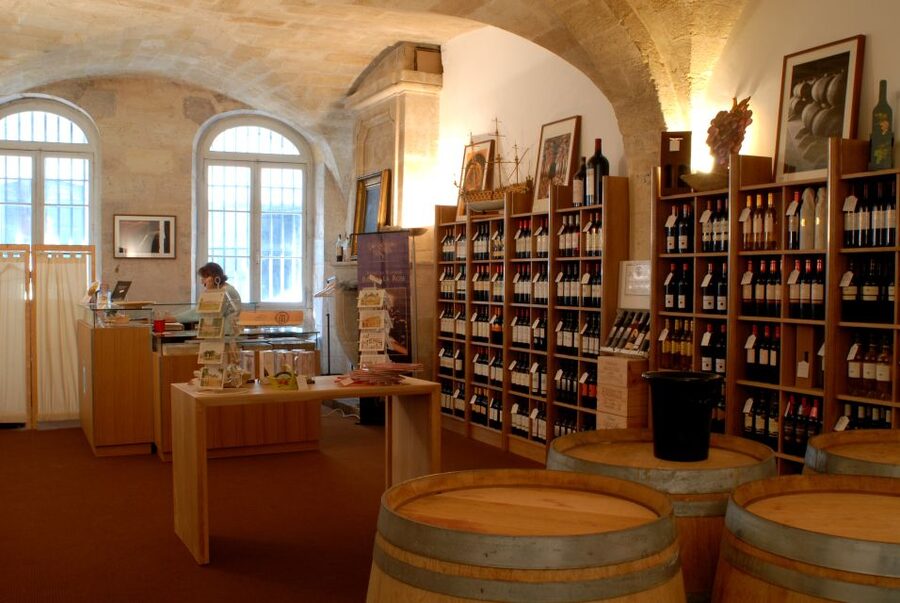
The Wine and Trade Museum occupies the former residence of Louis XV’s royal broker. That detail gives the visit a useful angle. You are not simply looking at bottles or learning a list of grape names. You are seeing how wine became part of Bordeaux’s civic and commercial life over more than three centuries.
I like this approach because it gives you context before the tasting. A sip of wine means more when you understand that Bordeaux’s reputation grew through both vineyard work and the business of selecting, aging, storing, and trading wine.
At $14, this is also one of the easier Bordeaux wine experiences to fit into a city itinerary. You do not need transportation to a distant estate, a full free afternoon, or a large budget. The price covers museum entry, a guide format, the vineyard presentation, and two tastings.
Entering the Former Royal Broker’s Residence
You begin at the Wine and Trade Museum itself. The meeting point is simple: go directly to the museum rather than looking for a separate departure location or meeting a guide elsewhere in Bordeaux.
The building’s former role as the home of Louis XV’s royal broker sets the tone before you reach the tasting. It connects the museum to the people who helped handle and promote wine, not only to the growers who produced it.
The museum covers more than three centuries of Bordeaux wine and trade. You can use the paper guidebook or an audio guide, depending on how you prefer to take in information.
The audio guide is particularly useful if you want to move at your own speed. It also helps if you are visiting in a language other than French. The available languages are unusually broad: French, Portuguese, Spanish, Russian, Korean, Chinese, Japanese, Italian, English, German, and Dutch.
Do not expect a conventional, continuous guided tour through every room. The included format is self-guided, with the paper or audio material helping you understand what you are seeing. That gives you freedom, but it also means you need to pay attention and set your own pace.
More Wine Tastings in Bordeaux
- Bordeaux: Cité du Vin Entry Ticket and Wine Tasting
★ 4.6 · 3,885 reviews - From Bordeaux: Afternoon Saint-Emilion Wine Tasting & snack
★ 4.8 · 1,581 reviews - Medoc or Saint Emilion Wine Tasting and Chateau from Bordeaux
★ 5.0 · 1,415 reviews
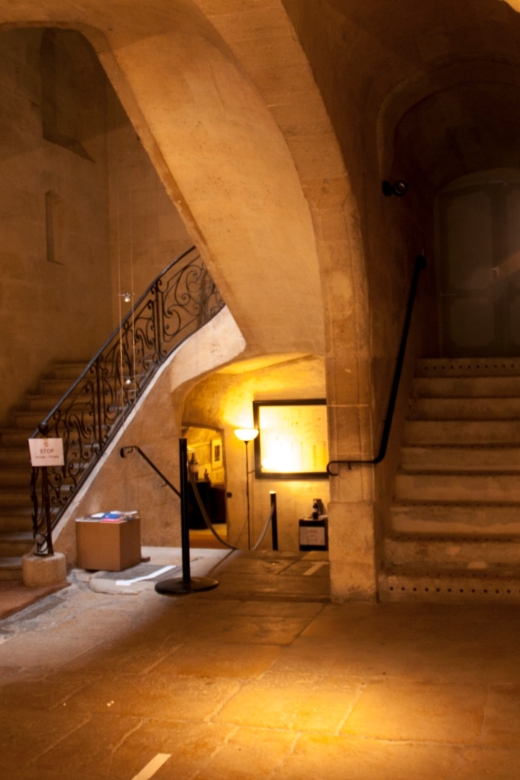
Walking Through Two Cellars Dating to About 1720
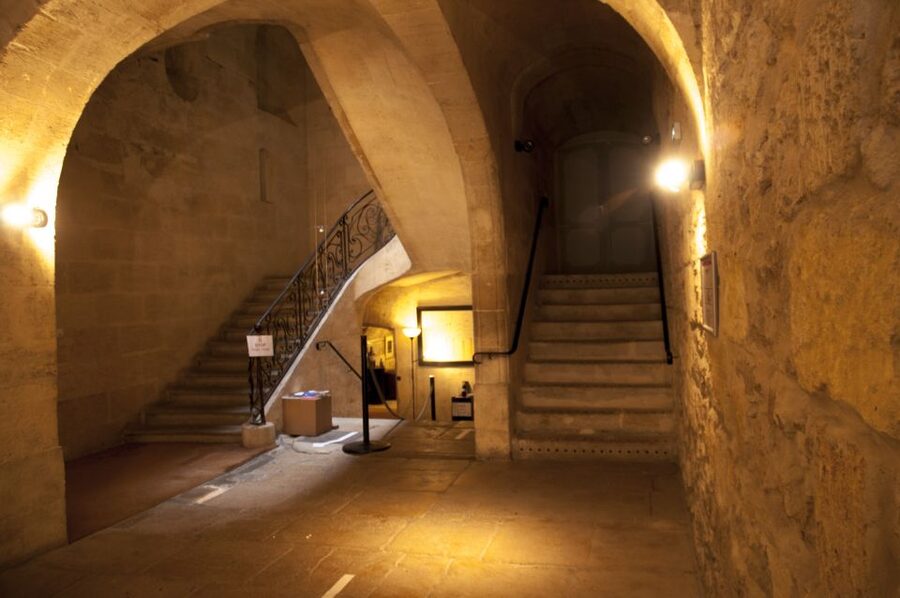
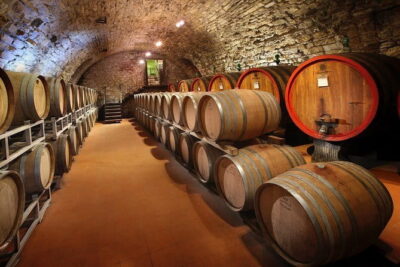
The most atmospheric part of the visit is the pair of vaulted historic cellars. They date to around 1720 and show how wine was stored and aged in an earlier period.
The cellars help put barrel aging into physical perspective. Instead of hearing only that wine was kept in oak, you see the kind of enclosed space associated with traditional storage and the work of coopers, the craftspeople who made and maintained barrels.
This is also where the museum’s connection to 19th-century wine merchants becomes clearer. The setting reflects a working system in which wine was held, aged, and prepared for trade. The barrels are not just decorative props in a tasting room. They represent a practical stage in the movement of wine from producer to customer.
I would give the cellars time rather than rushing through them. They are a reason to choose this museum over a generic wine shop tasting. The setting adds texture to the explanation, even though the museum visit itself is not led continuously by a guide.
If you prefer bright, modern displays and highly interactive exhibits, the old cellar atmosphere may feel modest. Its appeal is less about spectacle and more about place. You are seeing a preserved setting tied to the work being explained.
The Vineyard Presentation Explains Bordeaux’s Basic Vocabulary
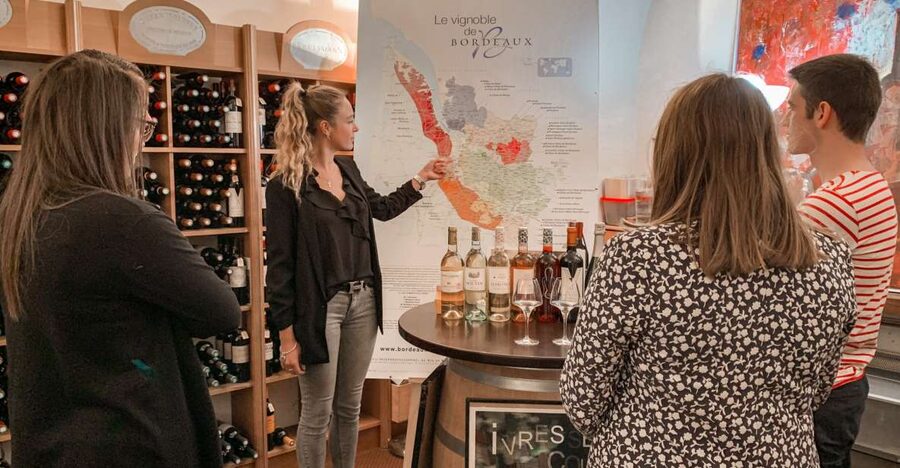
After the self-guided museum portion, you attend a dedicated presentation about the Bordeaux vineyards. This is the bridge between the historical displays and the wine in your glass.
The presentation introduces several ideas that can otherwise make Bordeaux labels seem needlessly complicated:
- Grape varieties, which help explain the character of the wine.
- Appellation d’origine contrôlée, or AOC, the French system that links wine to defined geographic and production rules.
- Terroir, the combination of environmental conditions that affect how grapes grow.
- Regional classifications, which help explain Bordeaux’s layered system of names and quality labels.
The discussion of environment matters because wine does not taste the same simply because it comes from France or even from Bordeaux. Soil, weather, location, and growing conditions all play a part. The presentation is designed to show how those factors influence the finished wine.
I appreciate that this lesson comes before the tasting. You get a few ideas to listen for instead of being handed a glass and told only that it is good. You can think about the grape, the area, the style, and the effect of the local conditions.
Still, keep your expectations sensible. This is an introduction, not a professional wine qualification. If you already know Bordeaux’s appellations and classifications well, the information may feel basic. For a first visit to the region, though, it provides a helpful foundation.
Tasting Two Bordeaux Wines With Local Sweets
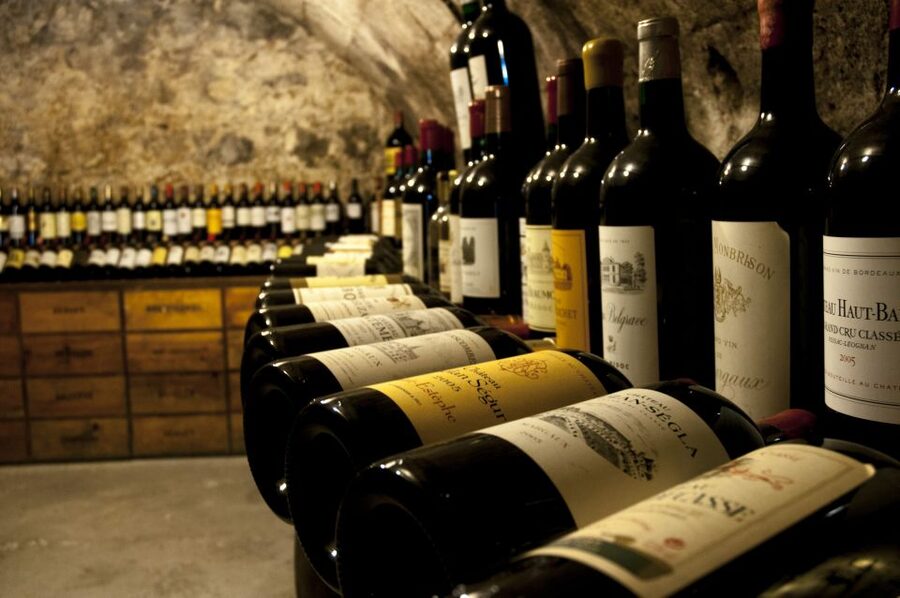
The tasting follows the vineyard presentation and includes two locally selected wines. The tasting is guided, so this is the part of the experience where you receive direct explanation rather than simply listening to an audio track.
The stated format includes two wines. One booking account described receiving three wines, but I would plan around two and treat any extra pour as unexpected. The experience is priced and presented as a two-wine tasting.
The pairing is deliberately small and local. You receive raisins dorés, or chocolate-coated raisins, along with traditional canelés de Bordeaux. Canelés are small French pastries associated with Bordeaux, known for their dark, caramelized exterior and soft center.
These treats are not a meal. One account specifically wished for a more substantial snack, and that is fair. If you are hungry, eat beforehand. The sweets are there to sharpen the tasting and give you a taste of local food culture, not to replace lunch.
I like the pairing because it keeps the experience connected to Bordeaux rather than relying on generic crackers. The chocolate-coated raisins add sweetness and texture, while the canelé gives you a pastry strongly linked with the city.
The tasting also gives you a chance to compare the two wines directly. With only two glasses, you can focus on the explanation and notice differences without becoming overwhelmed. That makes this a good first wine experience for someone who knows little about Bordeaux.
The group limit of nine people is another plus. A small group makes it easier to hear the presenter and ask a question. It also avoids the crowded feeling that can make a museum tasting feel like a queue with glasses.
More Wine Tastings in France
- Saint Emilion Day Trip with Sightseeing Tour & Wine Tastings from Bordeaux
★ 5.0 · 1,120 reviews - Saint Emilion Half-Day Trip with Wine Tasting & Winery Visit from Bordeaux
★ 4.5 · 1,034 reviews - From Bordeaux: Half-Day Saint-Émilion Tour and Wine Tasting
★ 4.7 · 699 reviews - Saint-Emilion Electric Bike Day Tour with Wine Tastings & Lunch
★ 5.0 · 696 reviews
How the Self-Guided Format Affects the Visit
The structure is worth understanding before you book. You are not signing up for a guide-led walk through every museum display.
Instead, the visit has two different moods. First comes the self-guided exploration of the museum and cellars, using a paper guidebook or audio guide. Then comes the more organized vineyard presentation and guided tasting.
That division works well if you enjoy setting your own pace. You can linger over the historical material that interests you and move quickly through information you already know. The audio guide is a strong choice if you want clear direction without being attached to a group.
It may be less satisfying if you want to ask questions throughout the museum visit. You should think of the final presentation and tasting as the social and explanatory center of the experience, not the entire museum portion.
The listed host and greeter languages are broad, but the information does not identify a specific guide by name. Language availability can therefore be an important reason to check the selected time when booking. The published options include English, French, Spanish, Italian, German, Portuguese, Russian, Chinese, Japanese, Korean, and Dutch.
Is $14 Good Value for Bordeaux?
Yes, especially if you want a compact city activity with a real wine component. For $14, you receive museum admission, access to the historic cellars, a guide format, a vineyard presentation, two local wines, and small regional sweets.
The value is strongest for three kinds of visitors. First, it suits anyone visiting Bordeaux for the first time who wants basic wine knowledge without committing to a day outside the city. Second, it works for travelers who enjoy history and architecture as much as tasting. Third, it is useful for people on a budget who want a structured experience at a modest price.
The value is weaker if you are seeking a full château visit, extensive vineyard views, several hours of instruction, or a large food pairing. None of those are part of the stated experience.
The duration is listed as one day of validity, with starting times based on availability. That does not mean you spend an entire day inside the museum. It means the ticket is valid for the selected date and time arrangement. Plan it as a short museum and tasting stop, then leave room in your Bordeaux schedule for other sights.
Free cancellation up to 24 hours in advance adds useful flexibility. You can also reserve and pay later, which helps if your Bordeaux plans are still changing.
Who Will Enjoy This Bordeaux Wine Experience?
I would choose this for a first-time Bordeaux visitor, a couple wanting a low-cost tasting, or anyone who wants wine context before visiting shops and restaurants around the city.
It also suits mixed-interest groups. A serious wine fan may appreciate the cellar setting, while a companion who knows little about wine can follow the basic presentation without feeling lost.
The small group limit is helpful for anyone who dislikes large organized excursions. Since the museum section is self-guided, you also avoid being marched from room to room.
Families and non-drinkers should think about the balance of the visit. The museum and historical cellars provide content beyond the tasting, but wine remains the central subject. The experience is most rewarding if everyone in your group has at least some interest in Bordeaux wine or local food.
I would not make this my only wine activity in the region if I had several days. A visit to a vineyard would offer a different setting and a closer look at grape growing. But as a city-based introduction, this museum fills its role well.
Practical Advice Before You Go
Start with a light meal or snack if you are visiting near lunchtime. The raisins and canelés are enjoyable, but they are tasting accompaniments rather than a full food service.
Choose the audio guide if you want more freedom and prefer listening in your own language. Pick the paper guide if you like to scan information quickly or avoid using your phone during a museum visit.
Allow enough time to appreciate both the cellars and the final presentation. The tasting is the part with a fixed social rhythm, while the museum portion lets you control your pace.
Also, remember the difference between a guided tasting and a guided museum tour. You receive direct commentary for the vineyard presentation and wine tasting, but the two cellars are explored independently with a paper or audio guide.
The experience has a 4.4 rating from 121 bookings, and the strongest praise centers on the complete audio guide, the staff’s professionalism, the historical account of Bordeaux wine, and the tasting itself. Those points match the design of the visit: it is organized, informative, and modest in scale rather than theatrical.
Should You Book the Wine and Trade Museum?
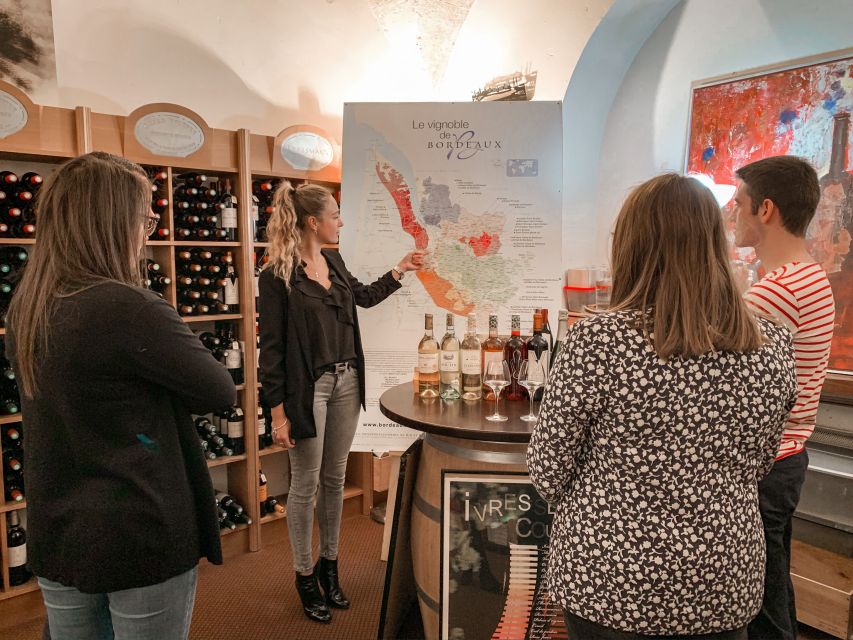
Book it if you want an affordable, central introduction to Bordeaux wine with genuine historic cellars and a small guided tasting. The $14 price is hard to fault, and the combination of audio or paper guidance, a vineyard presentation, two wines, and local sweets gives you more substance than a quick bar tasting.
Skip it if you need a full meal, a countryside château, or an all-day wine program. Also skip it if you strongly prefer a guide beside you from the entrance to the exit.
For most first-time visitors, I would book this early in a Bordeaux stay. The presentation gives you useful vocabulary for the rest of your trip, and the old cellars make the lesson feel grounded in the city’s working wine past.
FAQ
Where does the experience begin?
It begins at the Bordeaux Wine and Trade Museum in Nouvelle-Aquitaine, France.
How much does the experience cost?
The listed price is $14 per person.
How long is the ticket valid?
The ticket is valid for one day. Available starting times depend on the selected date and availability.
Is a guided museum tour included?
No. The museum and two historic cellars are explored at your own pace with either a paper guidebook or an audio guide. A vineyard presentation and guided wine tasting are included.
How many wines are included?
The stated experience includes a guided tasting of two locally selected Bordeaux wines.
What food is served with the wine?
The tasting includes raisins dorés, which are chocolate-coated raisins. The experience information also identifies traditional canelés de Bordeaux as a tasting accompaniment.
Which languages are available?
The listed languages are French, Portuguese, Spanish, Russian, Korean, Chinese, Japanese, Italian, English, German, and Dutch.
How large is the group?
The experience is limited to nine participants.
Can I cancel the booking?
Yes. You can cancel up to 24 hours in advance for a full refund.
Can I reserve now and pay later?
Yes. The booking option allows you to reserve your place and pay later.
More Museum Visits in Bordeaux
- Bordeaux Wine and Trade Museum Admission Ticket with Wine Tasting
★ 4.5 · 599 reviews - Porto: Cálem Cellar Tour, Interactive Museum & Wine Tasting
★ 4.5 · 4,113 reviews - Porto: The Wine Experience, Best Wine Museum in the World
★ 4.7 · 621 reviews - Picasso Museum and Walking Tour Plus Optional Wine & Food Tasting
★ 5.0 · 596 reviews
Newly added around Bordeaux
- Saint Emilion Full Day Wine and Bike Tour★ 5.0 · 167 reviews
- Luxurious full day Bordeaux wine tour in a Tesla★ 4.5 · 31 reviews
- Private Bordeaux History Tour with a glass of Bordeaux wine.★ 5.0 · 28 reviews
- Private – Best of Bordeaux Walking Tour + Glass of Bordeaux Wine★ 5.0 · 240 reviews
- Wine Masterclass & Cheese Tasting Workshop in Bordeaux★ 5.0 · 29 reviews
- Bordeaux wines tasting workshop including Food & Wine pairings★ 5.0 · 31 reviews
- Bordeaux Wine Masterclass: Blending workshop with appetizer★ 5.0 · 113 reviews
- Medoc Afternoon Wine Tour – 2 Wineries, tastings & delicacies★ 4.5 · 74 reviews
Wine Tastings, compared.
Douro Valley w/ Boat Tour, Wine Tasting & Lunch
Read our review →
Complete Douro Valley Wine Tour with Lunch, Wine Tastings and River Cruise
Read our review →

Small-Group Wine Tasting Experience in the Tuscan Countryside
Read our review →
Montserrat & Cogwheel Train, Gourmet Wine Tasting & Tapas/Lunch
Read our review →
Tuscany & Montepulciano Day Trip with Lunch & Wine Tasting
Read our review →Browse the lists this tour appears in