
REVIEW · ORGANIC & BIODYNAMIC WINERIES
Blind Tasting: 4 Bordeaux Natural Wine + Cheese experience
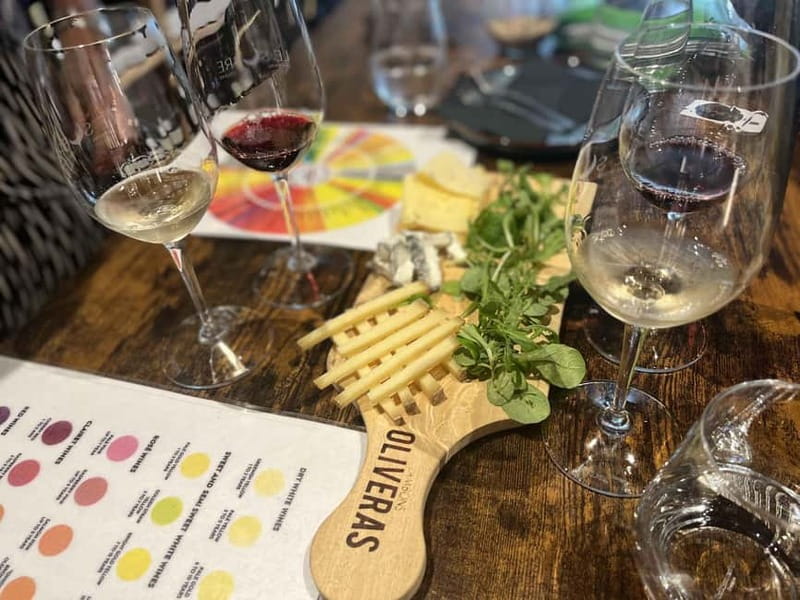
Wine can be a delicious guessing game. This one-hour tasting gives you four Bordeaux wines from different areas, three cheeses, two types of dry meat, and a friendly sommelier who explains what is in your glass and why it matters. The tasting takes place in front of the Flamboyant Saint Michel Church in Nouvelle-Aquitaine, making it an easy add-on to time in Bordeaux.
I like the blind-tasting format, because you judge the wine by smell and flavor before a famous name or price changes your mind. I also like the focus on small family chateaux, local production, and organic wines, rather than a parade of anonymous bottles.
The main drawback is the short one-hour schedule. You will cover grape varieties, Bordeaux regions, labels, food pairing, the 1855 classification, and natural-wine questions in a compact sitting. That can make the session feel brisk, and the tasting is only for adults.
Key points before you book
- Four Bordeaux wines in one sitting: You taste one white, two reds, and one sweet wine from different Bordeaux wine regions.
- A useful blind-tasting lesson: Your sommelier helps you identify aromas and flavors before revealing each bottle.
- Local food with the wine: Three cheeses and two types of dry meat are included, giving you simple pairing examples.
- Small family producers: The wines are described as 100 percent local, organic, and made by small family chateaux.
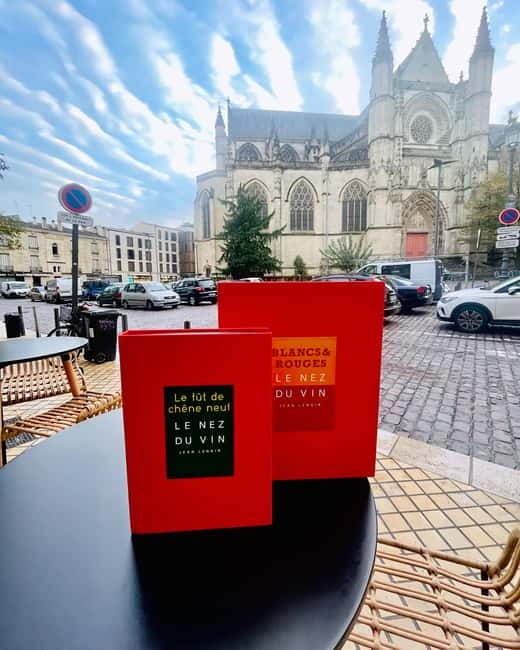
- A short, central meeting point: Meet in front of the Flamboyant Saint Michel Church for a one-hour experience.
- Strong guest satisfaction: The activity holds a 4.8 rating from 35 reviews, with special praise for the host’s explanations and the quality of the wine and cheese.
Four Bordeaux wines, four different lessons
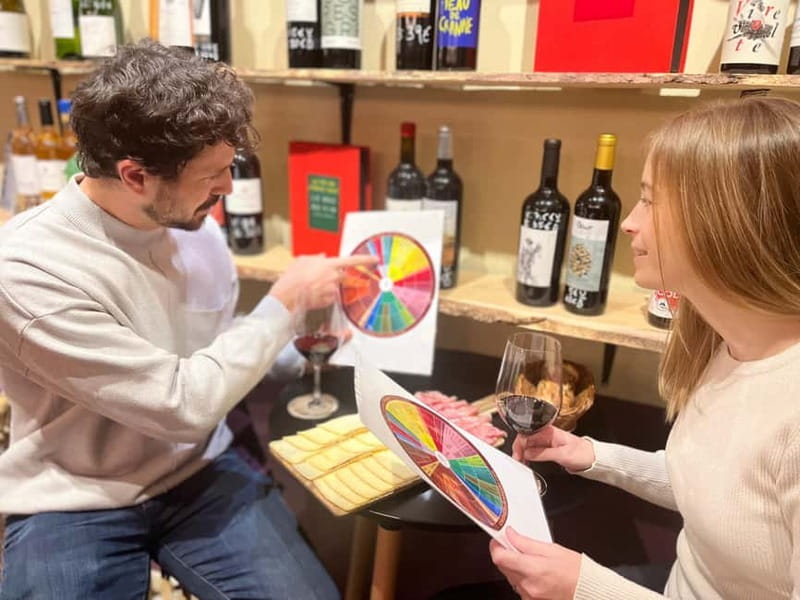
The tasting is built around four wines: one white, two reds, and one sweet wine. That range matters. Bordeaux is often reduced to red wine, yet this lineup gives you a broader picture of the area’s wine traditions.
The white wine gives you a chance to notice how freshness, fruit, and texture work without the weight of a red. You may find it easier to identify individual aromas in a white, especially when you are tasting without seeing the label. The sommelier can then connect those sensations to grape varieties and regional styles.
The two reds let you compare wines within the category most closely linked with Bordeaux. This is where the blind format earns its keep. A familiar name or well-known appellation can create expectations, but smelling and tasting first keeps your attention on the wine itself.
The sweet wine provides a clear change of pace. It also gives the sommelier a natural opening to discuss food pairing, since sweetness can work very differently with cheese and savory foods than a dry red or white wine.
You should not expect a full bottle of every wine. This is a guided tasting, not an open-ended drinking session. The point is to understand the differences among the wines and to learn a method you can use later in a shop, restaurant, or French wine bar.
More Wine and Cheese Tastings in Bordeaux
- Professional – Bordeaux Wine and Cheese Tasting with a walking tour
★ 5.0 · 218 reviews - Tasting of 6 Bordeaux wines and pairing charcuterie & cheese
★ 5.0 · 199 reviews - Bordeaux: Wine Masterclass with Cheese and Charcuterie Board
★ 4.9 · 184 reviews
What happens when the labels stay hidden
Blind tasting sounds formal, but this experience appears designed to keep it playful. You sniff, taste, compare impressions, and try to work out what is in the glass before the reveal. The activity description even frames the sniffing around friends and family as part of the fun.
That light tone is useful for beginners. You do not need a trained palate or a large wine vocabulary. You simply need to pay attention and describe what you notice. The sommelier then helps connect those impressions to grape varieties, regions, and production methods.
A good blind tasting is not about guessing correctly every time. It teaches you how much your first impression can change after a wine is identified. You might initially focus on fruit, then notice acidity, tannin, sweetness, or a lingering finish once someone gives you a little direction.
The reveal also gives the session a sense of movement. Each bottle becomes a small puzzle, followed by an explanation of the winemaker, vintage, region, and style. That is more memorable than hearing a general lecture before tasting anything.
Learning Bordeaux without getting lost in jargon
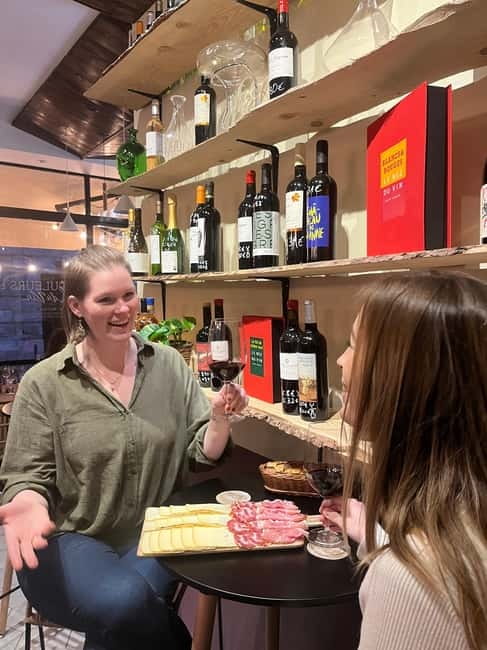
Bordeaux can seem complicated because French labels often emphasize place more than grape variety. This tasting addresses that problem directly by teaching you how to read a French wine label like a professional.
You will learn about the main grape varieties used in Bordeaux and how they relate to the wine in your glass. The session also introduces the important Bordeaux wine regions, so you can begin to understand why two wines from the same broad area may taste different.
The 1855 classification is another key subject. This classification remains one of the famous reference points in Bordeaux, and learning what it means helps you understand why certain names carry extra weight. The sommelier can also put that system into perspective, especially since the tasting focuses on small family chateaux rather than only prestigious classified estates.
That contrast is one of the most useful parts of the experience. You are not being told that the most famous label is automatically the best choice. Instead, you are tasting wines made by smaller producers and learning how to pay attention to what is actually in the glass.
The natural-wine angle, explained plainly
The experience centers on Bordeaux natural wines, with all four bottles described as local and organic. Natural wine can mean different things to different producers, so I would treat the tasting as a chance to ask questions rather than expect one rigid definition.
The sommelier also addresses a common concern about sulfites and hangovers. The session explains why a hangover is not simply caused by sulfur and points out that fruits and vegetables can contain more sulfur than a bottle of wine. That is a useful correction to a popular assumption, though it should not be taken as a promise that any wine will leave you feeling fine the next morning.
This topic gives you a practical reason to listen closely. Wine conversations often get tangled in claims about additives, headaches, and natural production. A direct explanation from a trained host can help you separate winemaking facts from easy slogans.
The organic and small-producer focus may appeal to you if you want to support family wineries and taste wines with a clear local identity. It may be less suitable if you are looking for a tasting built around prestigious classified Bordeaux names or detailed technical analysis of vineyard chemistry.
More Wine and Cheese Tastings in France
- Introduction to Bordeaux wines paired with cheeses & charcuterie
★ 5.0 · 175 reviews - Bordeaux Gourmet Experience: Cheese & Wine Tasting
★ 4.6 · 169 reviews - Bordeaux Wines Masterclass paired with cheeses & charcuterie
★ 5.0 · 110 reviews - Bordeaux Gourmet Experience : tasting of French cheeses & wines
★ 4.5 · 71 reviews
Cheese, dry meat, and the art of pairing
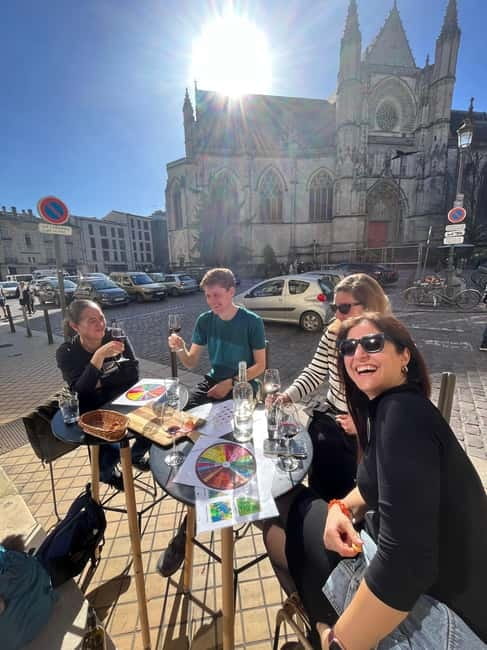
Three cheeses and two types of dry meat accompany the wine. The food is not just a snack between glasses. It gives you a simple way to see how the same wine can change when you take a bite.
Cheese can soften the perception of acidity or tannin, while dry meat brings salt, spice, and a firmer texture. The white wine may show one side of a pairing, the reds another, and the sweet wine may create the clearest contrast with salty or creamy foods.
You will learn how to pair food and Bordeaux wine without turning the subject into a list of strict rules. That is important because pairing is often more useful when treated as a set of observations. Notice what makes a wine seem smoother, sharper, sweeter, or more balanced after you eat.
The food selection is modest but well matched to a one-hour tasting. Do not book this expecting a full meal. The included cheese and dry meat should help you taste, but you may still want a separate lunch or dinner.
If you have allergies, mention them in advance. The activity specifically asks you to report allergies, and that is especially important with cheese and prepared meat.
The sommelier makes the difference
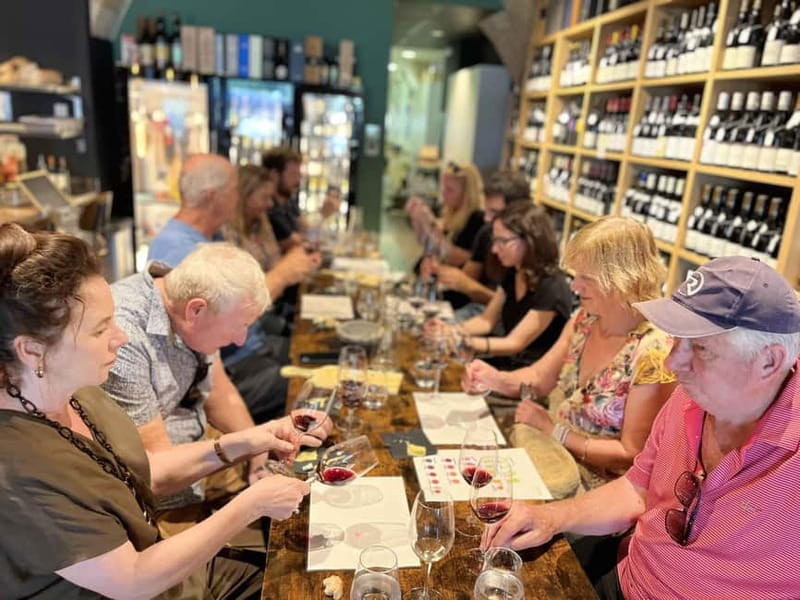
The host is central to this experience. You are not simply being handed four glasses and left to work things out. The sommelier explains the winemakers, vintages, grape varieties, regions, labels, classification, food pairings, and natural-wine questions.
A strong example comes from Ani, who received special praise for being an excellent teacher, highly skilled, and ready to answer questions. That detail matters because the best tasting is usually the one that allows room for curiosity. If you want to know why a wine smells different from the last one, or why a label emphasizes a place rather than a grape, this is the sort of setting where you can ask.
The host also leads the blind reveals, which keeps the session interactive. You are encouraged to form your own opinion before receiving the explanation. That approach works well for couples, friends, and families with adult children who enjoy a little friendly competition.
English and French are available. If you are comfortable in either language, you can choose the one that lets you ask the most questions.
One hour at Saint Michel Church
The meeting point is in front of the Flamboyant Saint Michel Church. That makes the starting place clear, but you should still allow enough time to find the exact meeting spot before the tasting begins.
The one-hour duration is both a strength and a limitation. It fits neatly into a day of sightseeing, and you can add it between other plans without giving up half a day. It also works well if you want an introduction to Bordeaux wine before deciding whether to visit wineries or buy bottles later.
At the same time, the material is ambitious for 60 minutes. Four wines, food pairings, Bordeaux regions, grape varieties, label reading, the 1855 classification, winemaker stories, and natural-wine questions all compete for attention.
One review described an experience that continued for two hours, despite the scheduled one-hour duration. That suggests the conversation can run long when the group is engaged, though you should plan around the official one-hour duration rather than count on extra time.
Is $34 a fair price?
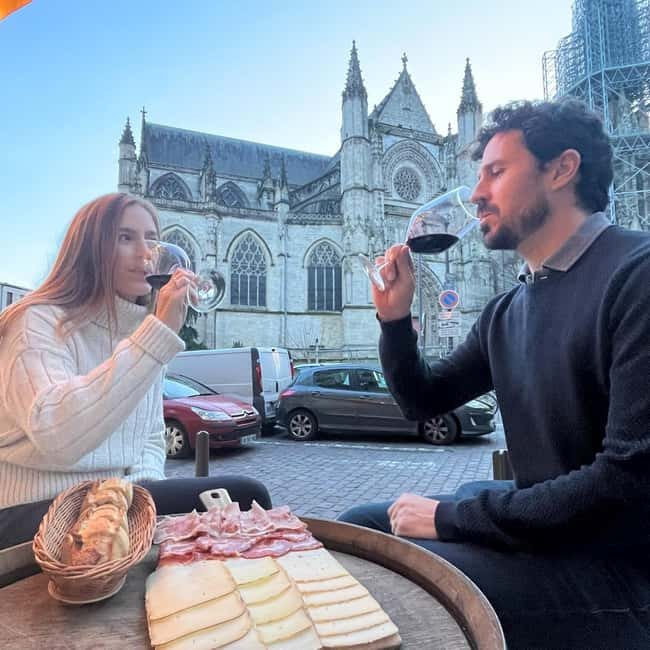
At $34 per person, the experience offers a solid package for a short tasting. You receive four wines, three types of cheese, two types of dry meat, and direct instruction from a sommelier. The value is strongest if you are new to Bordeaux or want a clear introduction without committing to a full-day wine excursion.
The price also includes access to wines from small family chateaux, described as local and organic. That gives the tasting a distinct point of view rather than making it a generic wine sampler.
You should compare the cost with what a similar amount of wine and food would cost in a bar, but the real extra is the explanation. A glass of wine alone does not teach you how to read a French label or understand the 1855 classification.
The value is weaker if you already know Bordeaux well and mainly want rare or expensive bottles. This is an educational tasting with approachable food, not a collector’s event.
Who will enjoy this tasting most?
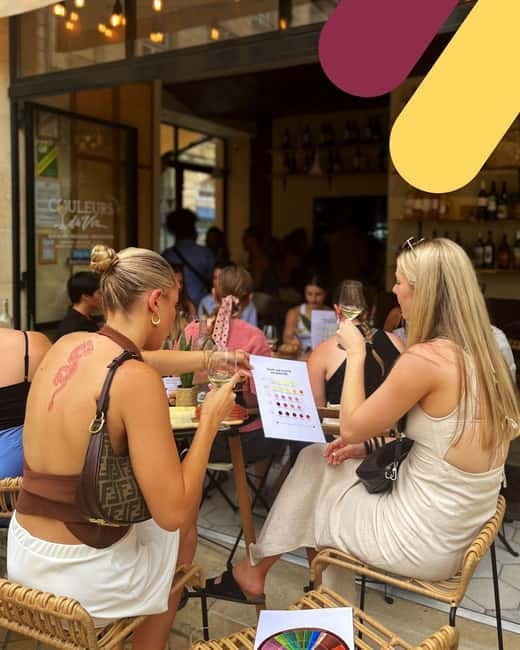
I would recommend it to first-time Bordeaux visitors, curious wine drinkers, and anyone who wants to understand French labels without taking a formal course. It also suits couples and adult groups who enjoy comparing impressions and asking questions.
The experience is a good fit if you like local products and small producers. It is especially useful before shopping for wine, since you will have a better idea of how regions, grape varieties, and producer names connect.
It is not suitable for pregnant women or children under 18. Extra glasses of wine, additional drinks, and other food are not included, so you should not expect to turn the session into an all-evening bar visit.
The activity is wheelchair accessible, and it is offered in French and English. Free cancellation is available up to 24 hours before the start time, and you can reserve now and pay later, which helps if your Bordeaux schedule is still changing.
Should you book the Bordeaux blind tasting?
I would book this if you want an affordable, friendly introduction to Bordeaux wine with enough structure to keep the hour useful. The best reasons are the four-wine range, the blind reveals, the local organic family producers, and the chance to ask Ani or another sommelier direct questions.
I would skip it if you want a long vineyard visit, a full meal, or a tasting devoted only to famous classified chateaux. For everyone else, $34 buys more than four samples. You get a practical way to taste, compare, and understand Bordeaux without taking wine too seriously.
FAQ
Where does the blind tasting meet?
The meeting point is in front of the Flamboyant Saint Michel Church.
How long does the experience last?
The scheduled duration is one hour. Availability should be checked for the specific starting time.
How many wines are included?
Four Bordeaux wines are included: one white, two reds, and one sweet wine.
Are the wines local and organic?
Yes. The wines are described as 100 percent local, organic, and made by small family chateaux.
What food is included?
The tasting includes three different types of cheese and two different types of dry meat.
Is the experience offered in English?
Yes. The activity is available in English and French, with a live guide.
Can children join the tasting?
No. Children under 18 are not permitted, and the activity is also not suitable for pregnant women.
Can I cancel my booking?
Yes. You can cancel up to 24 hours in advance for a full refund.
Is the experience wheelchair accessible?
Yes. The activity is wheelchair accessible.
More Organic and Biodynamic Wineries in Bordeaux
- Malaga Organic Vineyard and Winery Six Wines Tapas and Transfer
★ 5.0 · 356 reviews - Malaga: Organic Vineyard Tour with 6 Wines, Tapas & Transfer
★ 4.8 · 334 reviews - Wine and food tasting in an organic family winery
★ 5.0 · 170 reviews - Organic Wine Tasting with Saint paul Half Day Tour from Nice
★ 4.1 · 146 reviews
Newly added around Bordeaux
- Saint Emilion Full Day Wine and Bike Tour★ 5.0 · 167 reviews
- Luxurious full day Bordeaux wine tour in a Tesla★ 4.5 · 31 reviews
- Private Bordeaux History Tour with a glass of Bordeaux wine.★ 5.0 · 28 reviews
- Private – Best of Bordeaux Walking Tour + Glass of Bordeaux Wine★ 5.0 · 240 reviews
- Wine Masterclass & Cheese Tasting Workshop in Bordeaux★ 5.0 · 29 reviews
- Bordeaux wines tasting workshop including Food & Wine pairings★ 5.0 · 31 reviews
- Medoc Afternoon Wine Tour – 2 Wineries, tastings & delicacies★ 4.5 · 74 reviews
- Discovery of the Bordeaux vineyard in 3 wines★ 5.0 · 133 reviews
Organic & Biodynamic Wineries, compared.
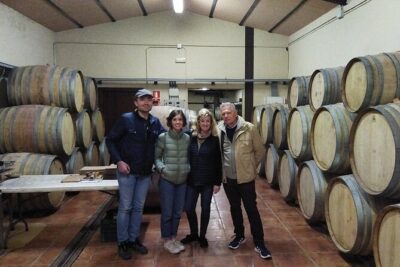
Malaga Organic Vineyard and Winery Six Wines Tapas and Transfer
Read our review →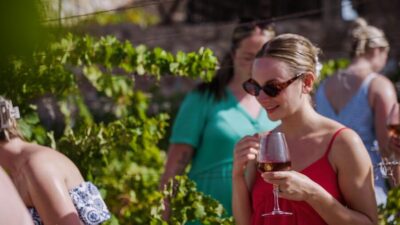
Organic Vineyard Tour with 6 Wines, Tapas & Transfer
Read our review →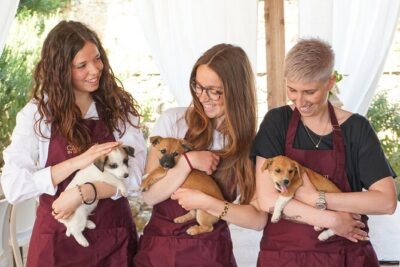
Wine and food tasting in an organic family winery
Read our review →
Organic Wine Tasting with Saint paul Half Day Tour from Nice
Read our review →
Sailboat Cruise with Lunch, Swim & Organic Wine
Read our review →
Reil, Mosel: Guided organic wine tasting and cellar tour
Read our review →Browse the lists this tour appears in